

Solid hardwood stair treads, built for real install jobs.
Stocked bullnose, square-edge, retro-fit, landing, and platform treads in Red Oak and White Oak — Hickory, Maple, and Walnut milled to order, with custom sizing from our NW Houston / Tanner Rd shop.
Stocked in Houston
Red Oak & White Oak — more species milled to order
Built for jobsite use
Unfinished, stain-ready, contractor-friendly
Custom available
Special sizes, species, widths & edge profiles
- Tread species
- 5
- Lengths
- 24″–96″
- Lead time
- Confirmed
- Construction
- Solid
Red Oak, White Oak, Hickory, Maple & Walnut
Stocked runs plus custom sizing
Reviewed with material and shop capacity
Edge-glued and never veneered
Pick a tread type.
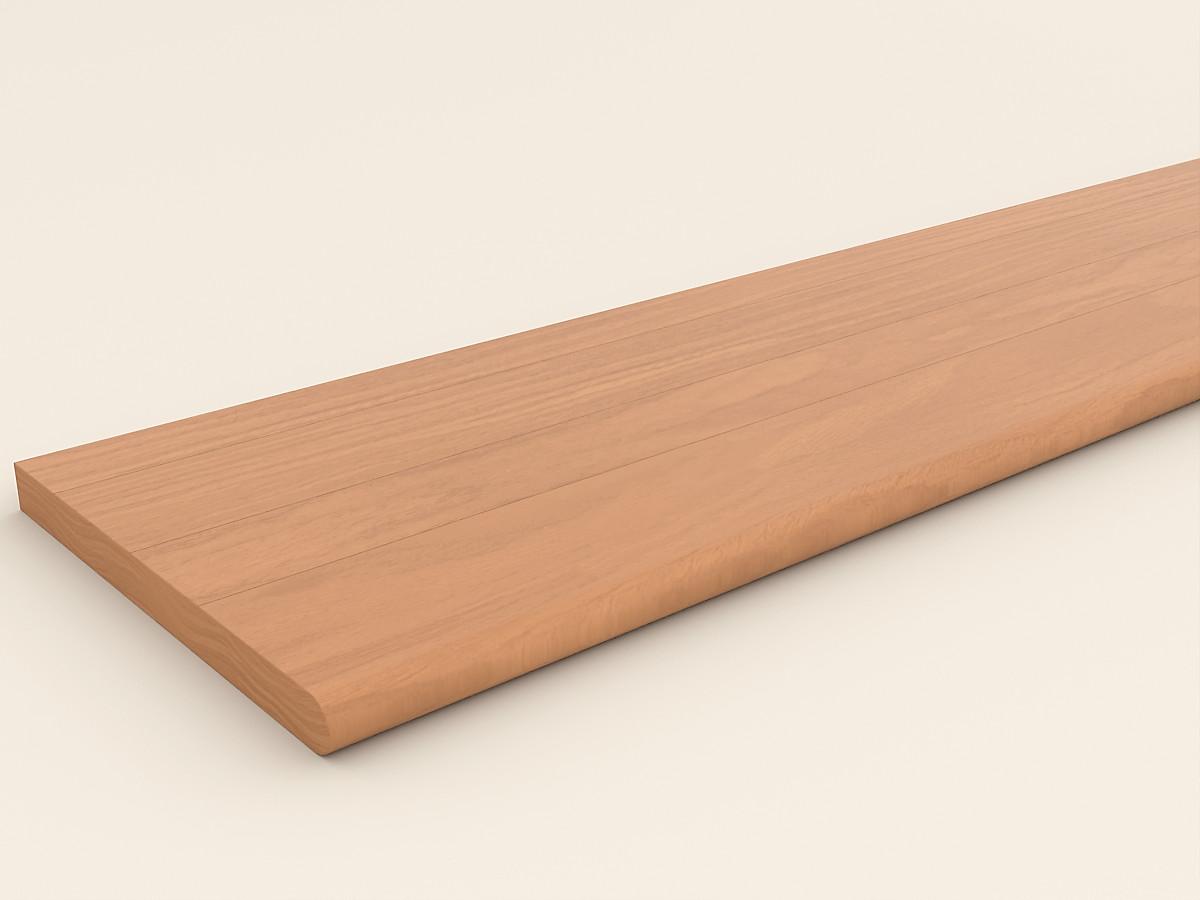
8070 Bullnose Stair Tread
Solid 1" hardwood, full bullnose, edge-glued. Stocked in Red Oak & White Oak — 42", 48", 60" (to 96" in Red Oak), plus 48" & 60" reversible returned end.
View product →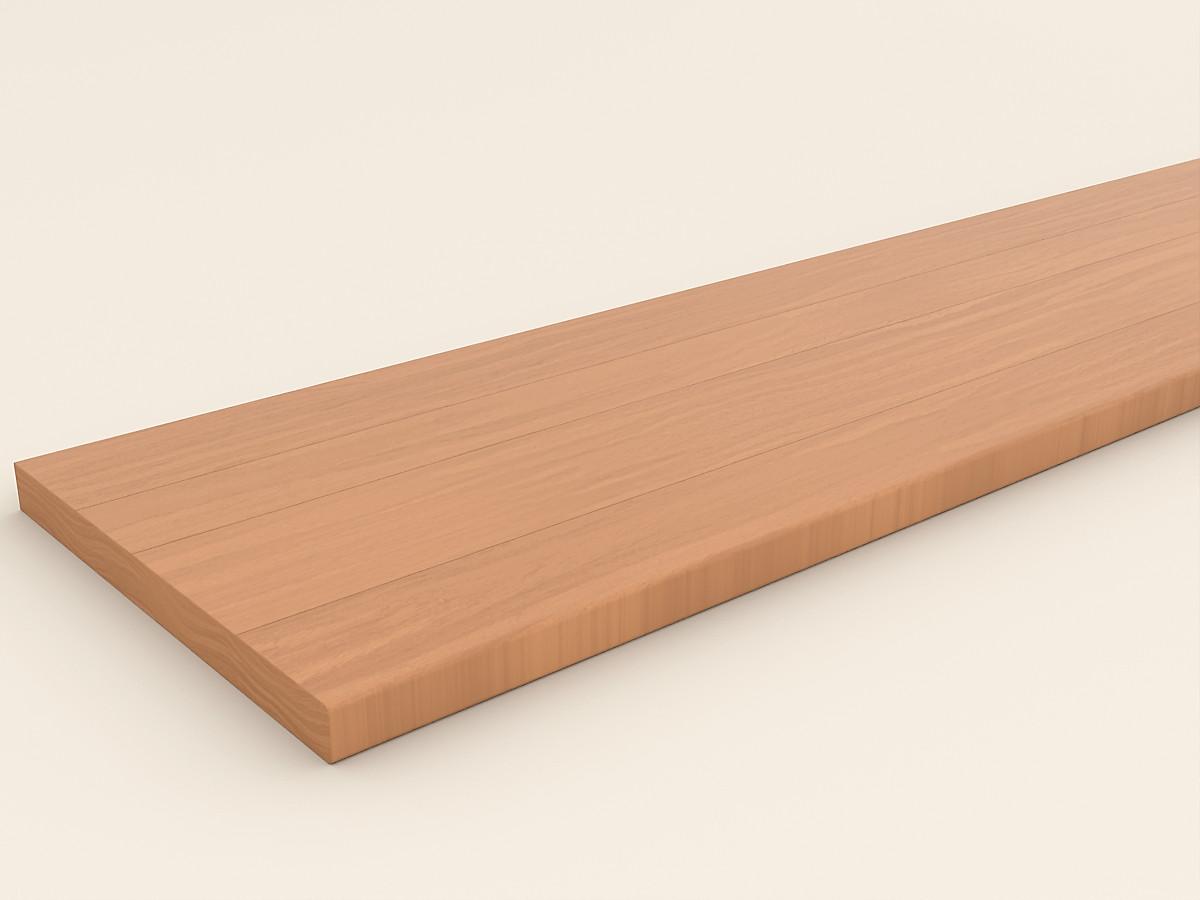
8072 Square / Eased Edge Tread
The same solid 1" body as the 8070 with a clean square / eased front edge instead of a bullnose. Stocked Red Oak & White Oak.
View product →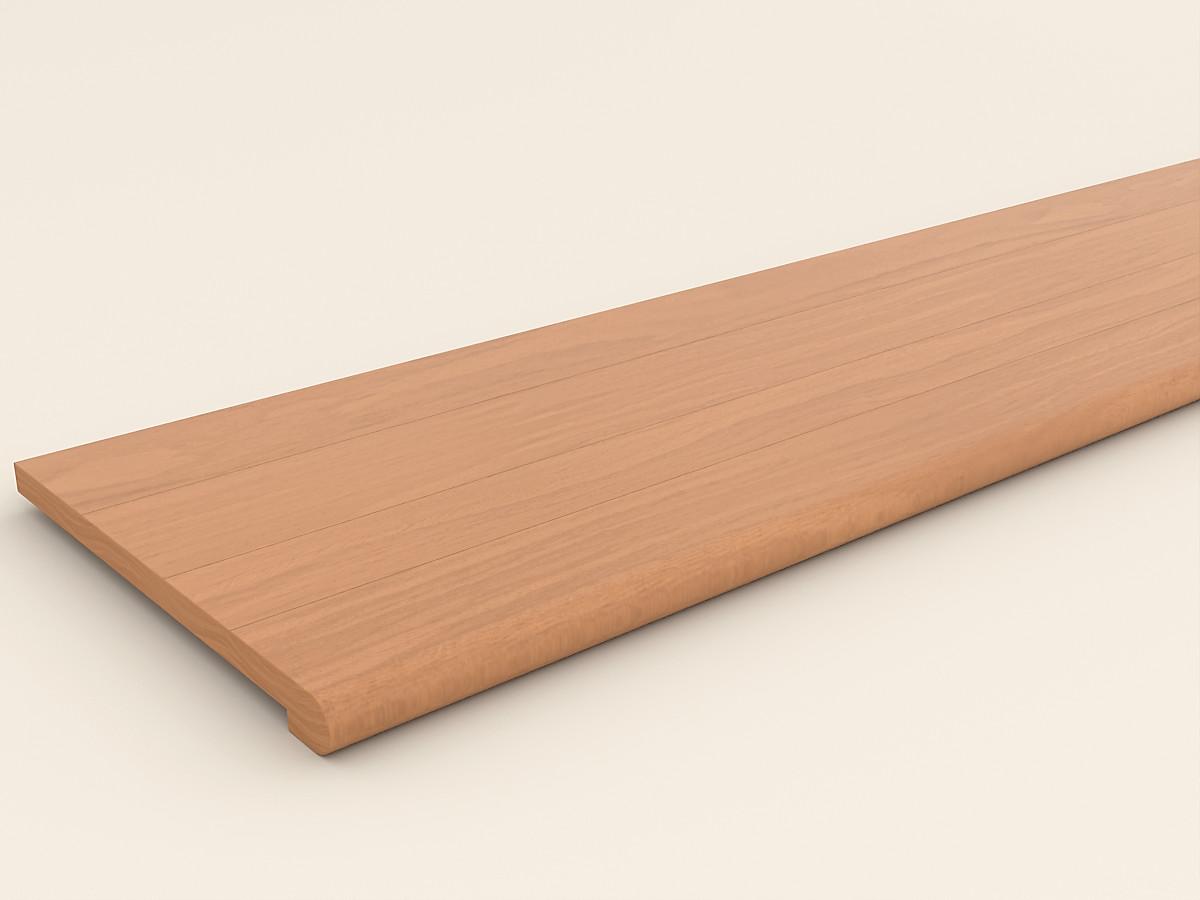
8071 Retro-Fit Tread
Renovation overlay — a 5/8" body with a built-up 1" bullnose nose that caps an existing stair without demolition.
View product →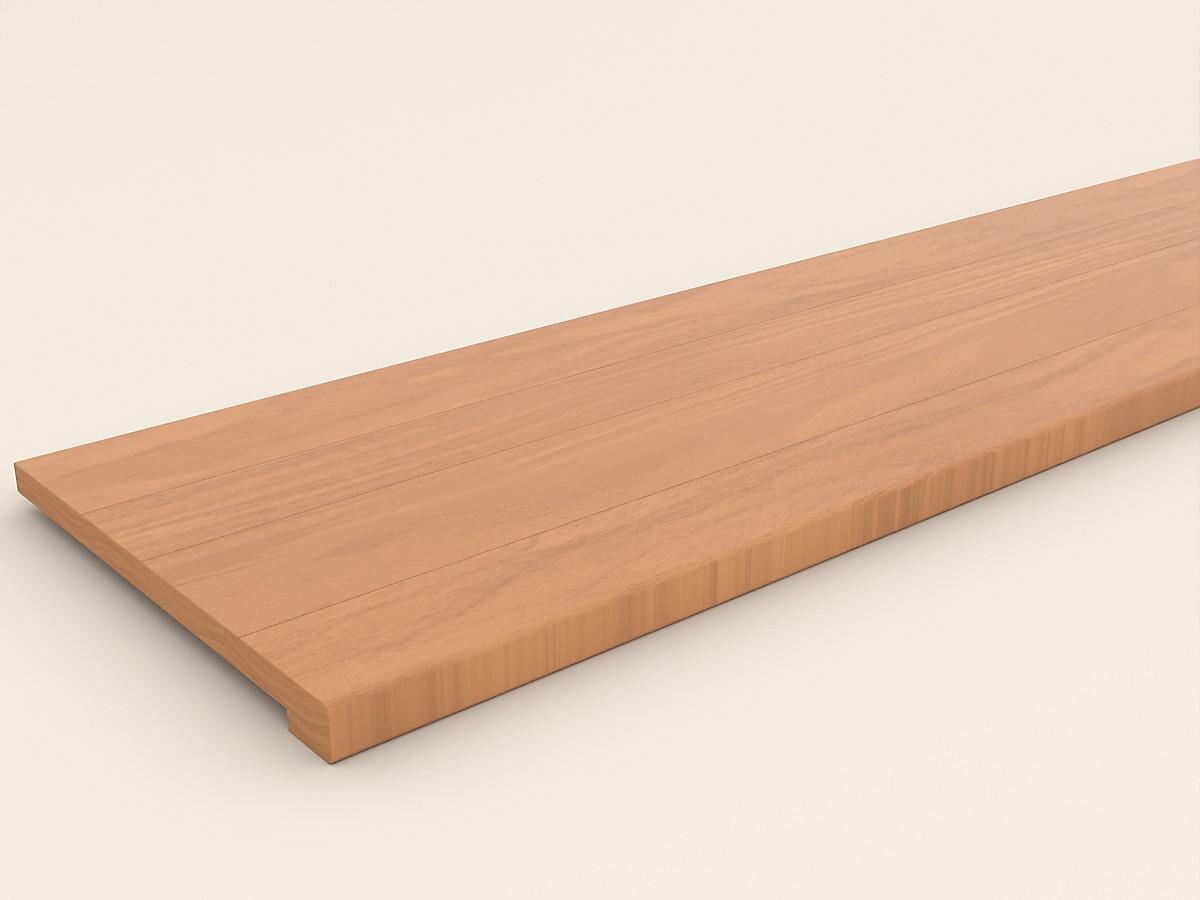
8073 Square Retro-Fit Tread
The same 5/8" retro-fit overlay as the 8071 with a clean square / eased edge instead of a bullnose. Stocked Red Oak & White Oak.
View product →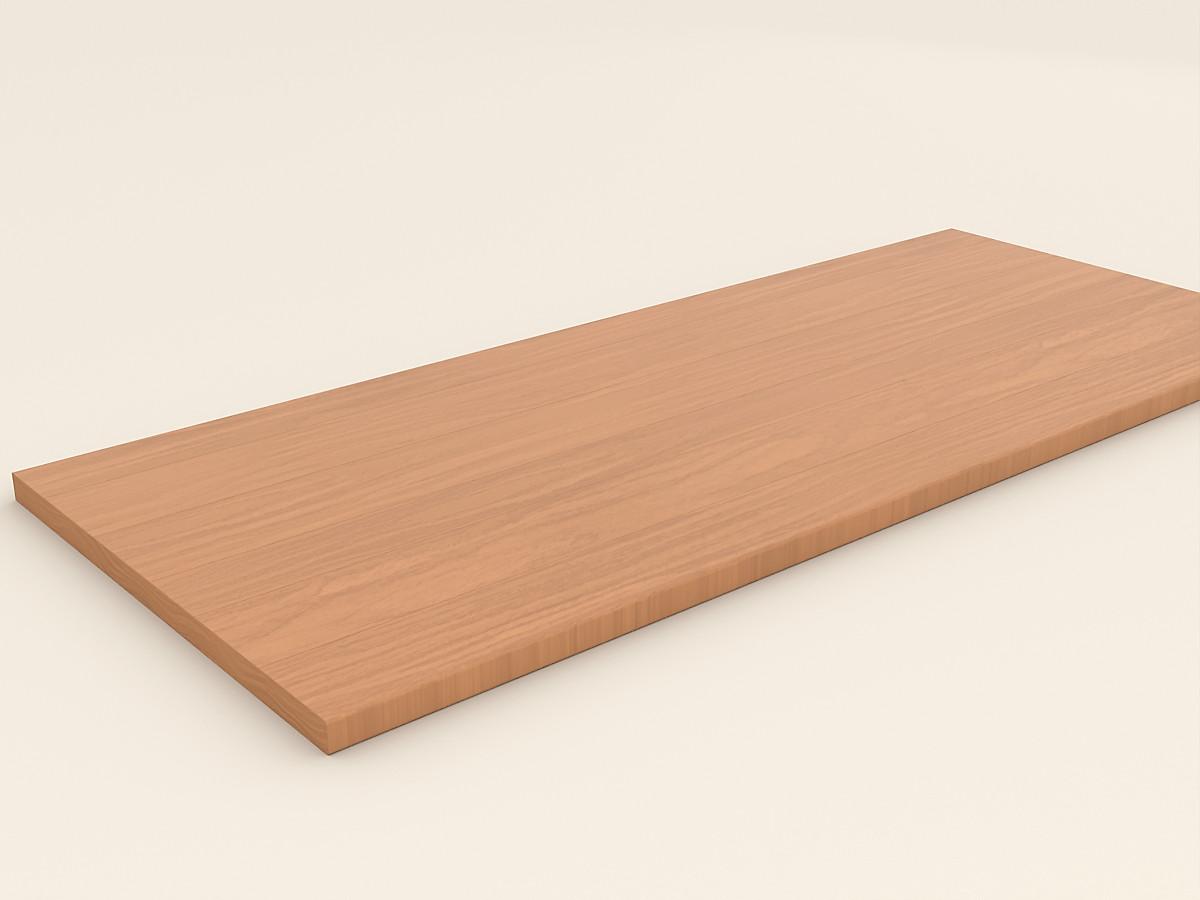
Wide & Deep Treads
Oversized stocked blanks for curved and winder staircases — 20" and 30" deep, to 60" wide, so a pie-shaped tread cuts from one solid piece. Bullnose, square-edge and retro-fit profiles. Red Oak (White Oak in 30" × 60").
View product →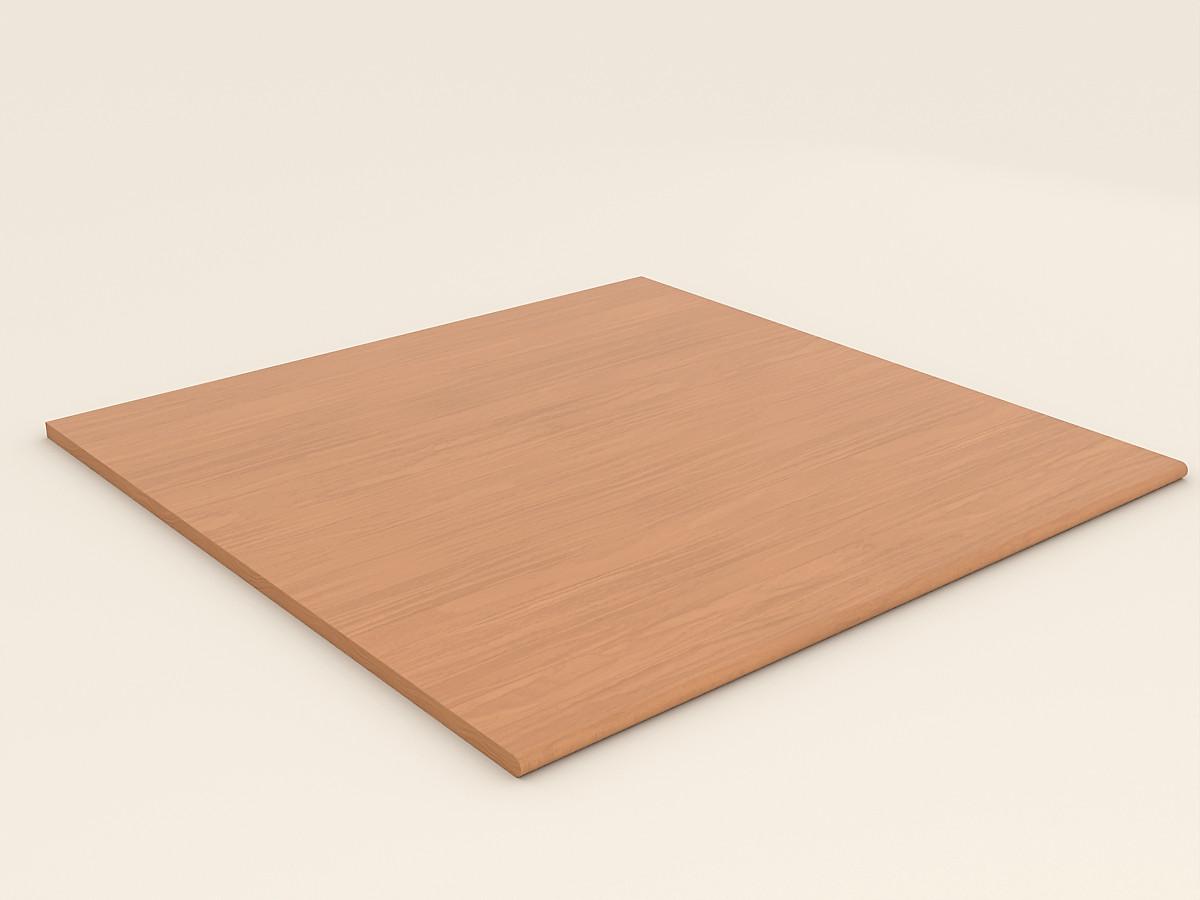
8070 Platform Landing
Edge-glued solid hardwood platform for L-shape and U-shape stair landings. Stocked 48" × 48" × 1".
View product →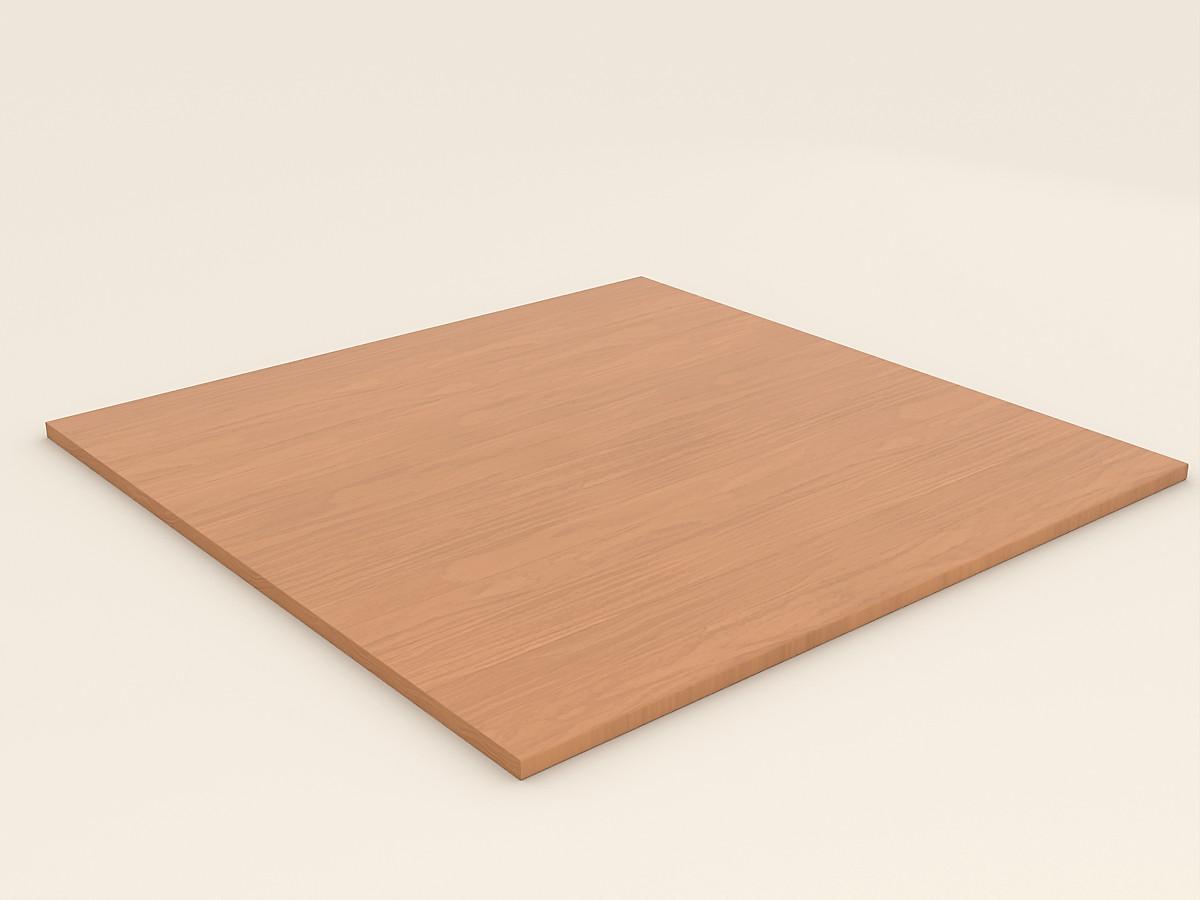
8072 Square-Edge Landing
The same solid 1" platform landing as the 8070 with a clean square / eased front edge instead of a bullnose. Stocked 48" × 48" × 1".
View product →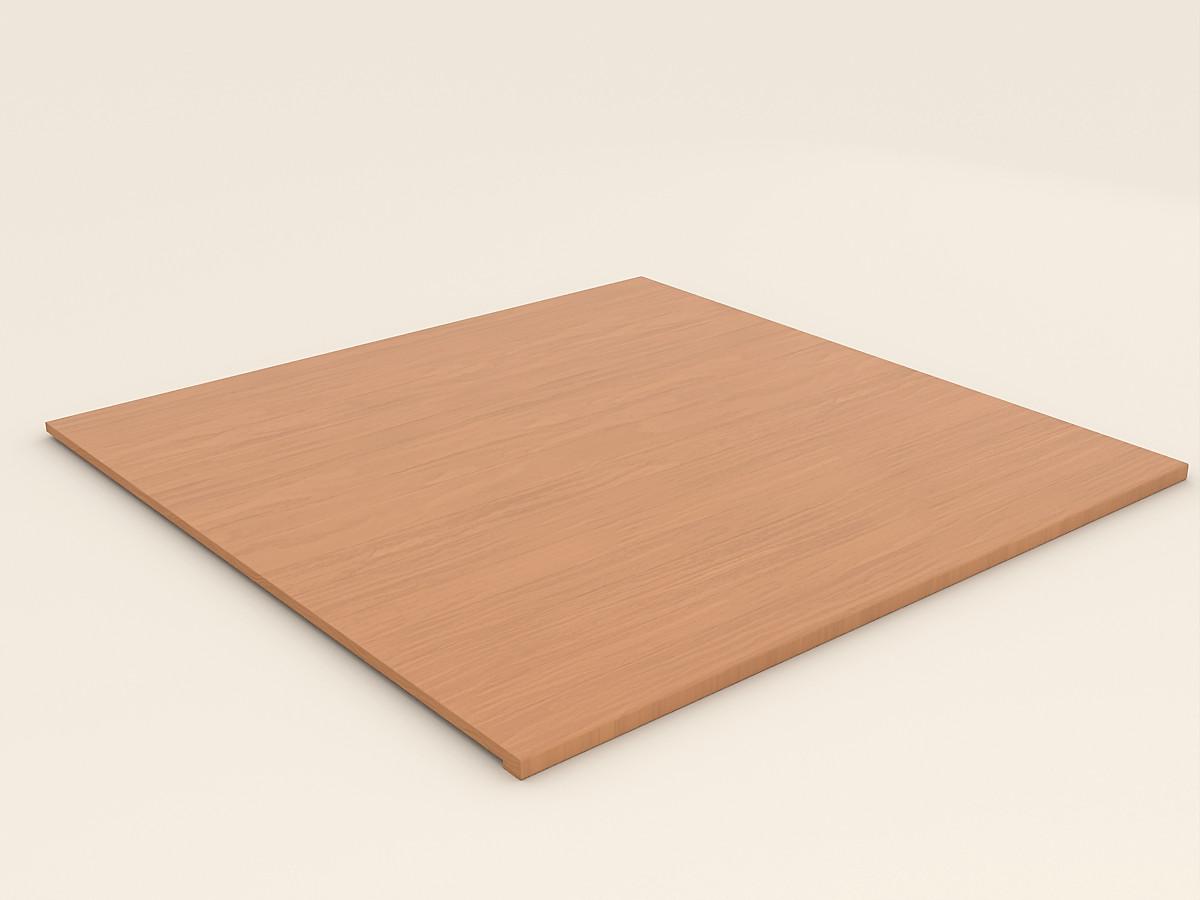
8073 Square Retro-Fit Landing
Renovation overlay for a landing — a 5/8" body with a built-up 1" square / eased edge that caps an existing landing without demolition. Stocked 48" × 48".
View product →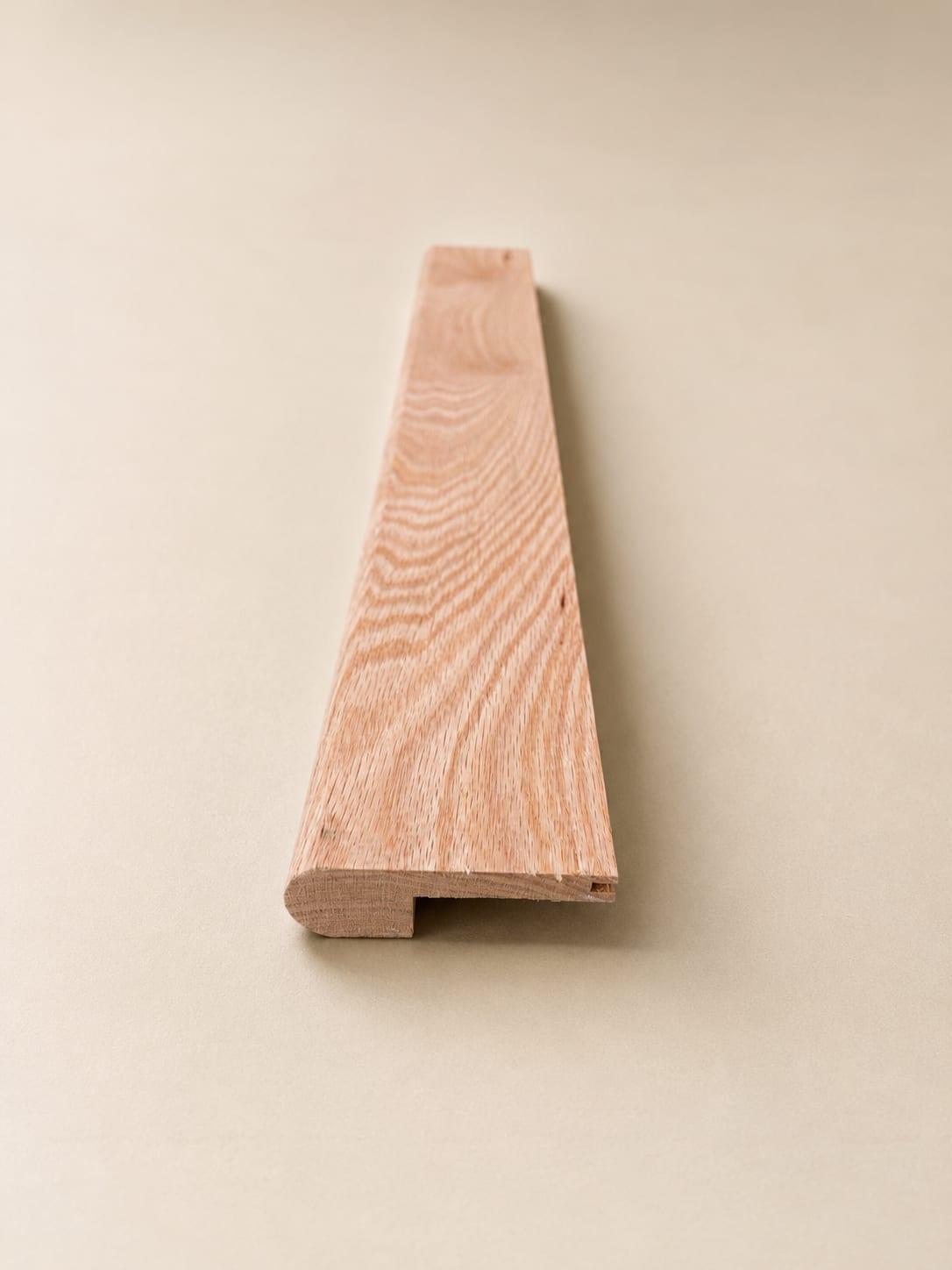
8091 Landing Tread
Narrow bullnose nosing strip for the top of a stair, where the run meets the upstairs flooring. Built-in rabbet.
View product →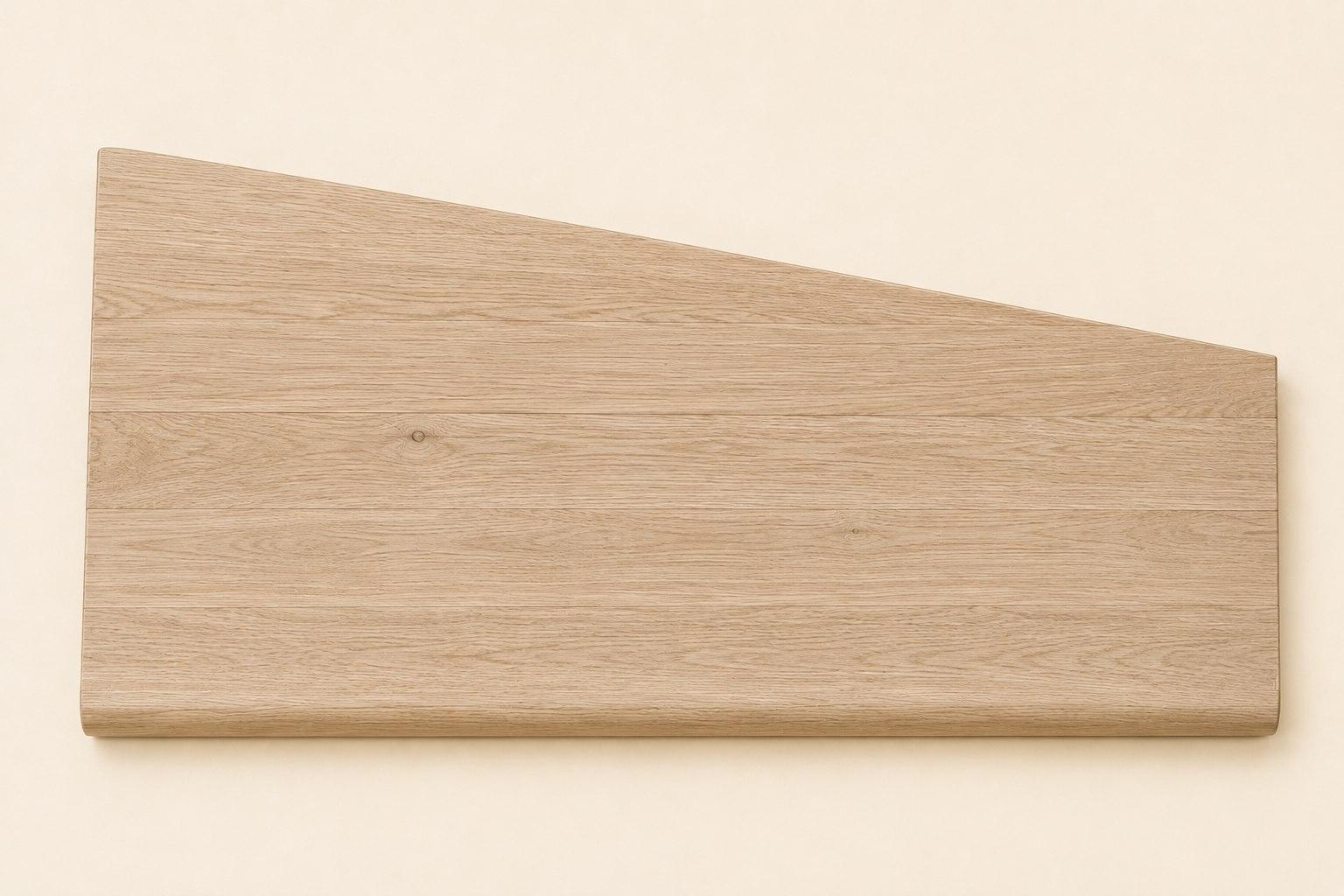
Pie-Shaped & Winder Treads
Trapezoidal and triangular treads for stair winders and tight turns — built to your exact geometry.
Configure →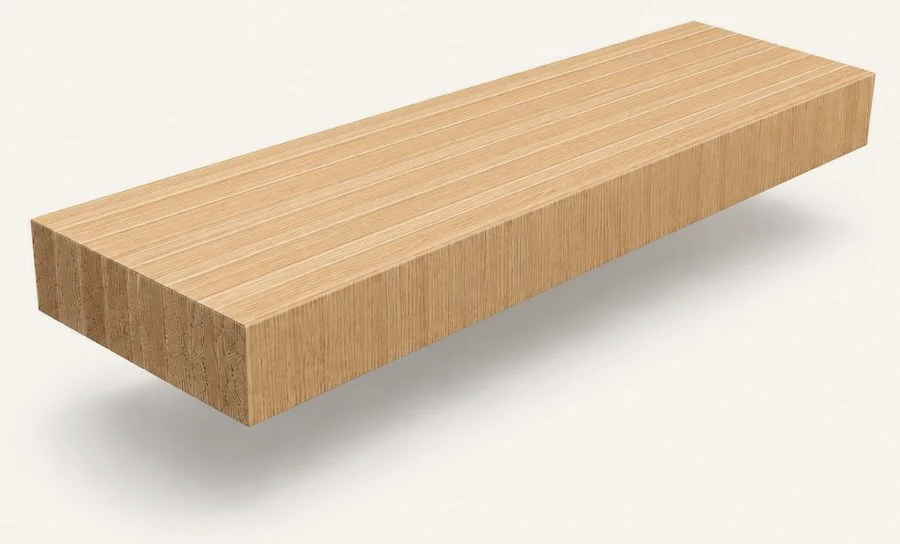
Thick Stair Treads
Every thick tread on one page: butcher block or face grain, five species, thickness and width presets that open the configurator. Solid through, unfinished.
Browse thick treads →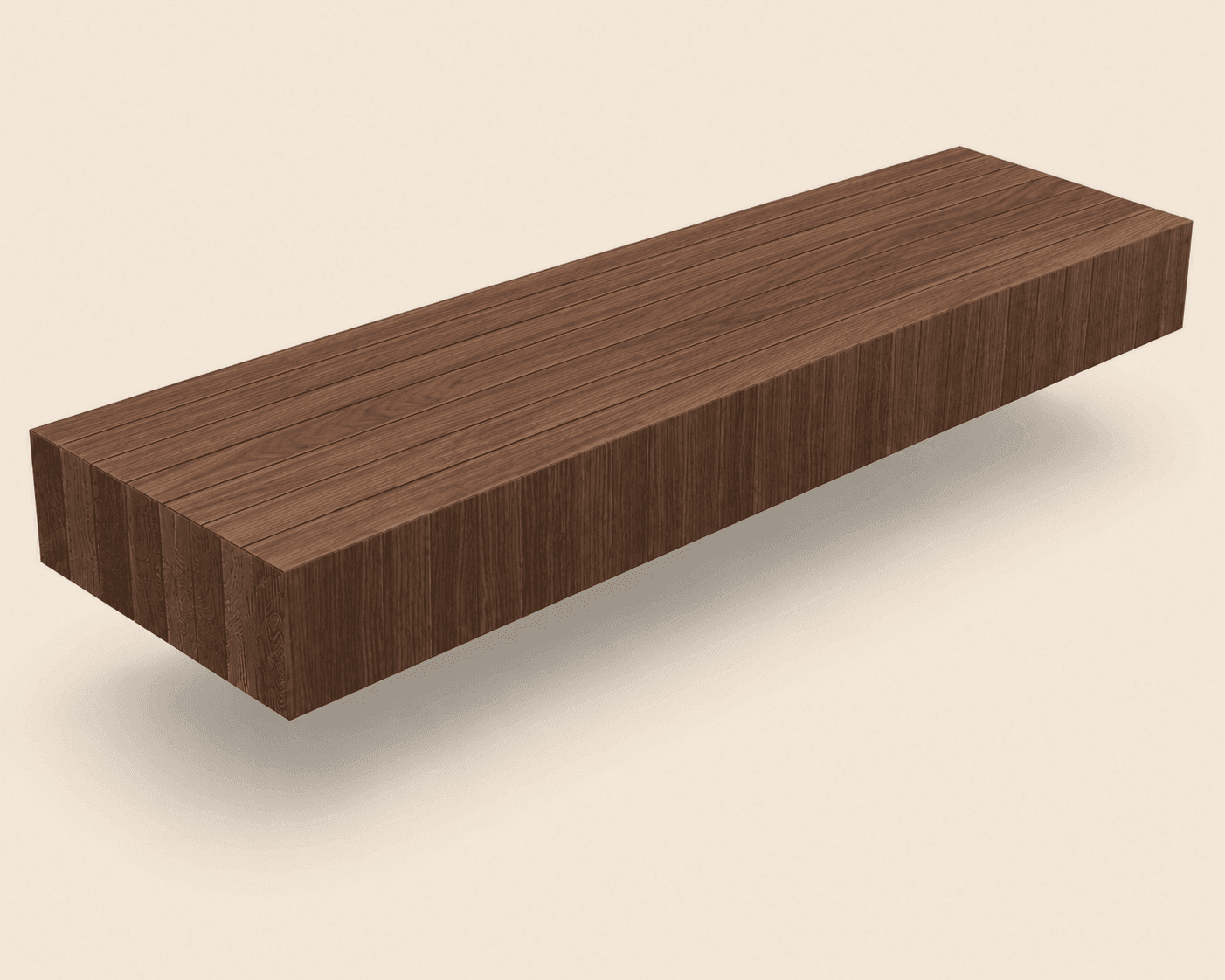
Butcher Block Thick Treads (EGU)
Butcher-block thick treads, 2"–4" thick, for modern floating stairs. Edge grain up for strength. Any species — custom quoted.
Configure & quote →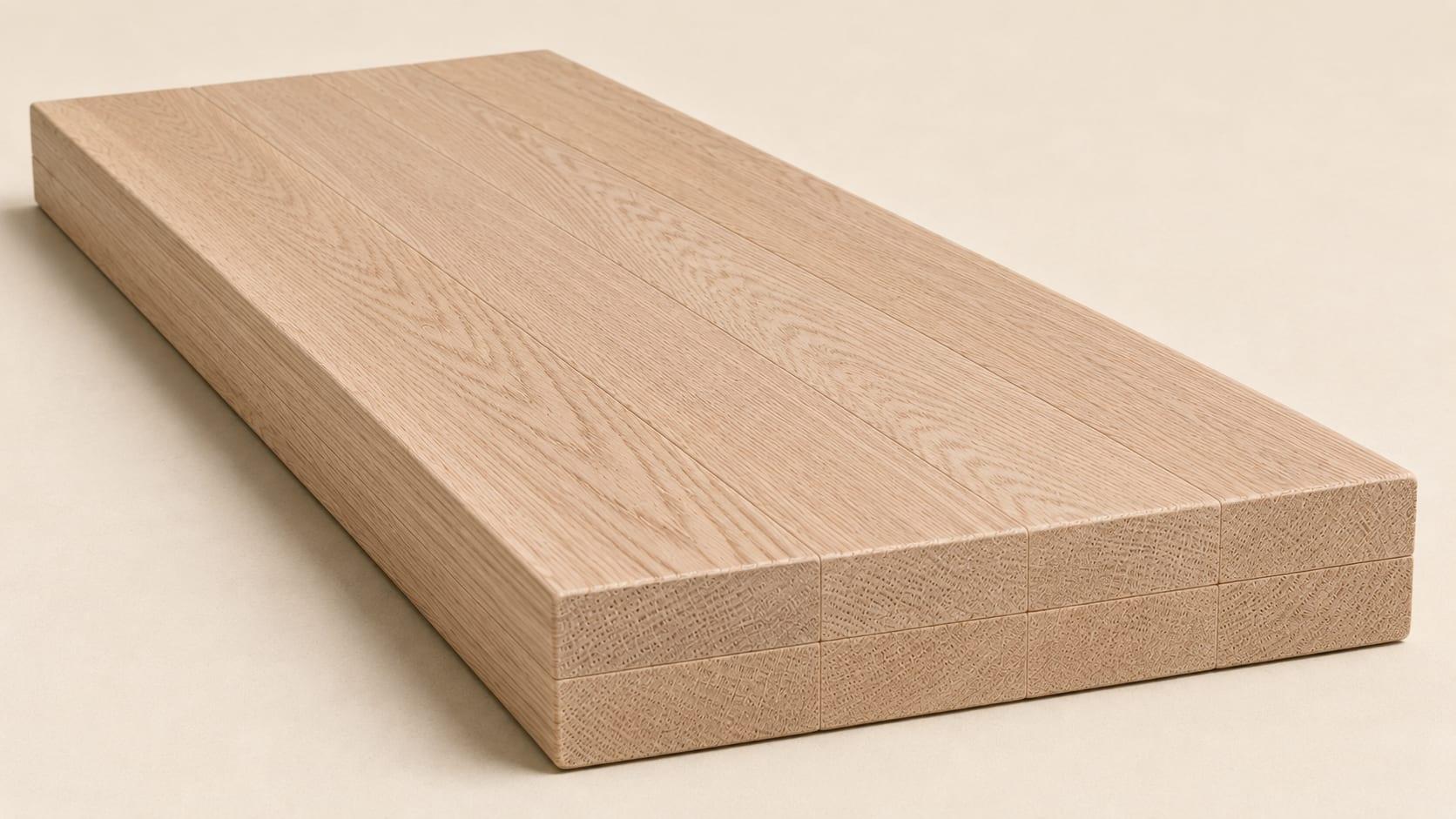
Thick Face-Grain Treads
Wide-plank face-grain thick treads, 1¾"–3½" thick, for modern floating stairs. Solid boards glued for depth, laminated for thickness. Any species — custom quoted.
Configure & quote →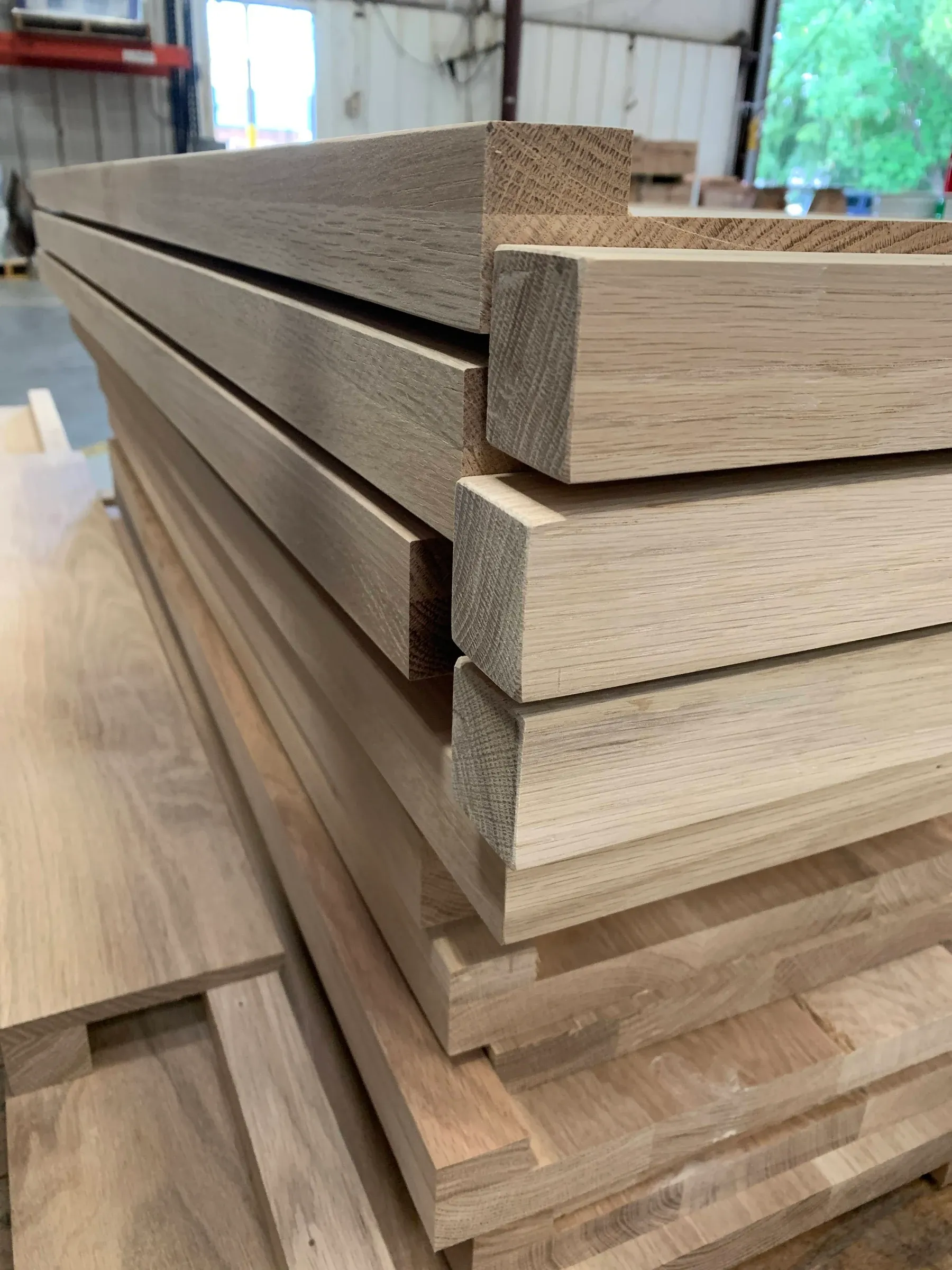
Crafted in-house · NW Houston / Tanner Rd
Custom stair work, up close.
Explore photographs of UWP treads, curved details, and custom fabrication.
Not sure which tread fits?
Practical comparisons from the UWP shop floor — when each tread type fits, when to pick which species, and what the IRC actually requires for retrofit installs.
8070 vs 8071 Stair Tread
Full-thickness bullnose vs retro-fit overlay — when each fits, the IRC rise-variation rule, and the labor delta on a Houston stair.
Read →Decision GuideRetrofit Stair Tread Guide
Field-check guide for retrofit installs — five things to verify before you order, install sequence, and curved-stair templating.
Read →Decision GuideRed Oak vs White Oak
Tone, grain, Janka hardness, Houston-humidity behavior — and how the 20/20 supply policy affects your White Oak order.
Read →Solid hardwood treads, at home.
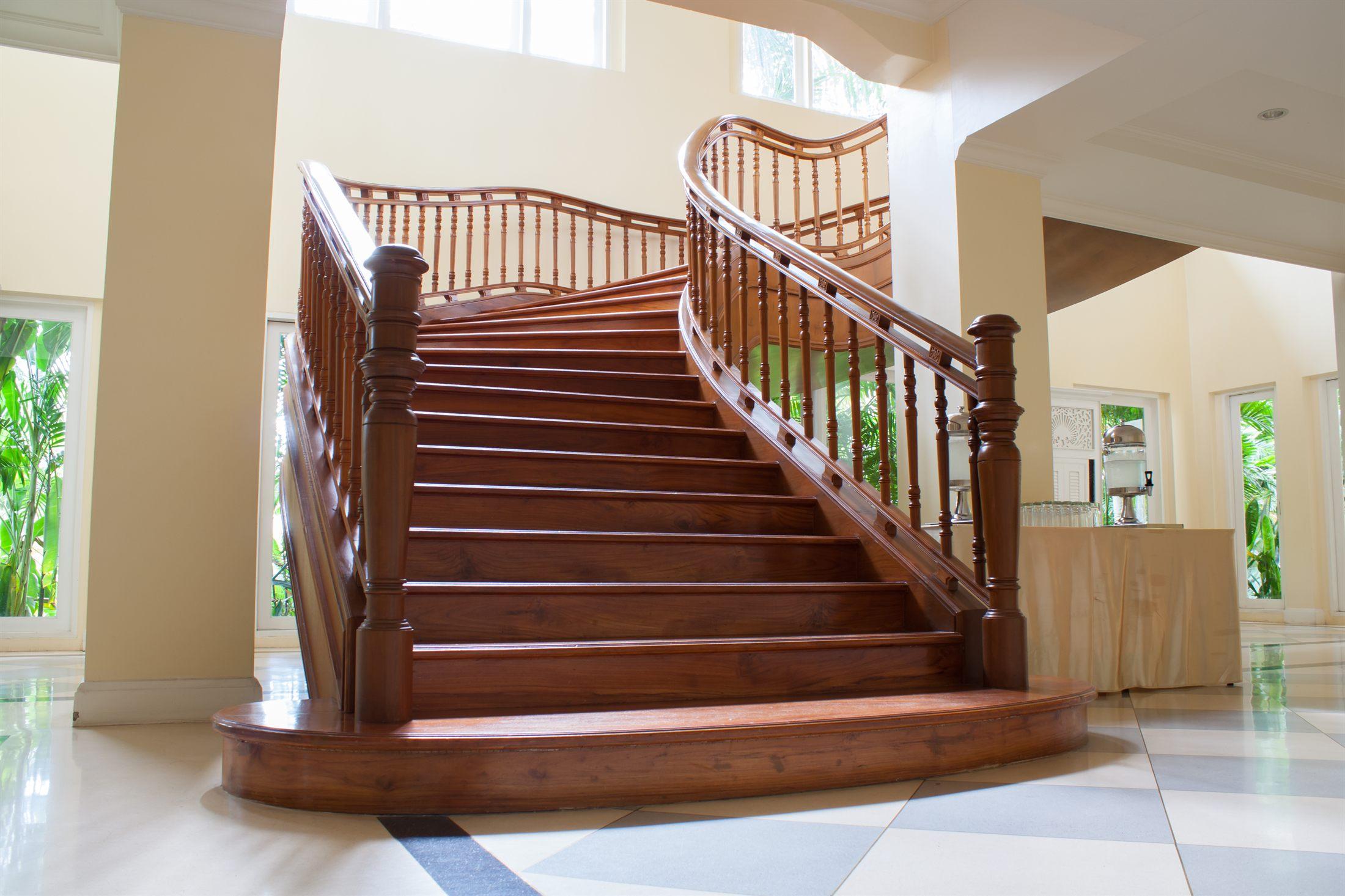
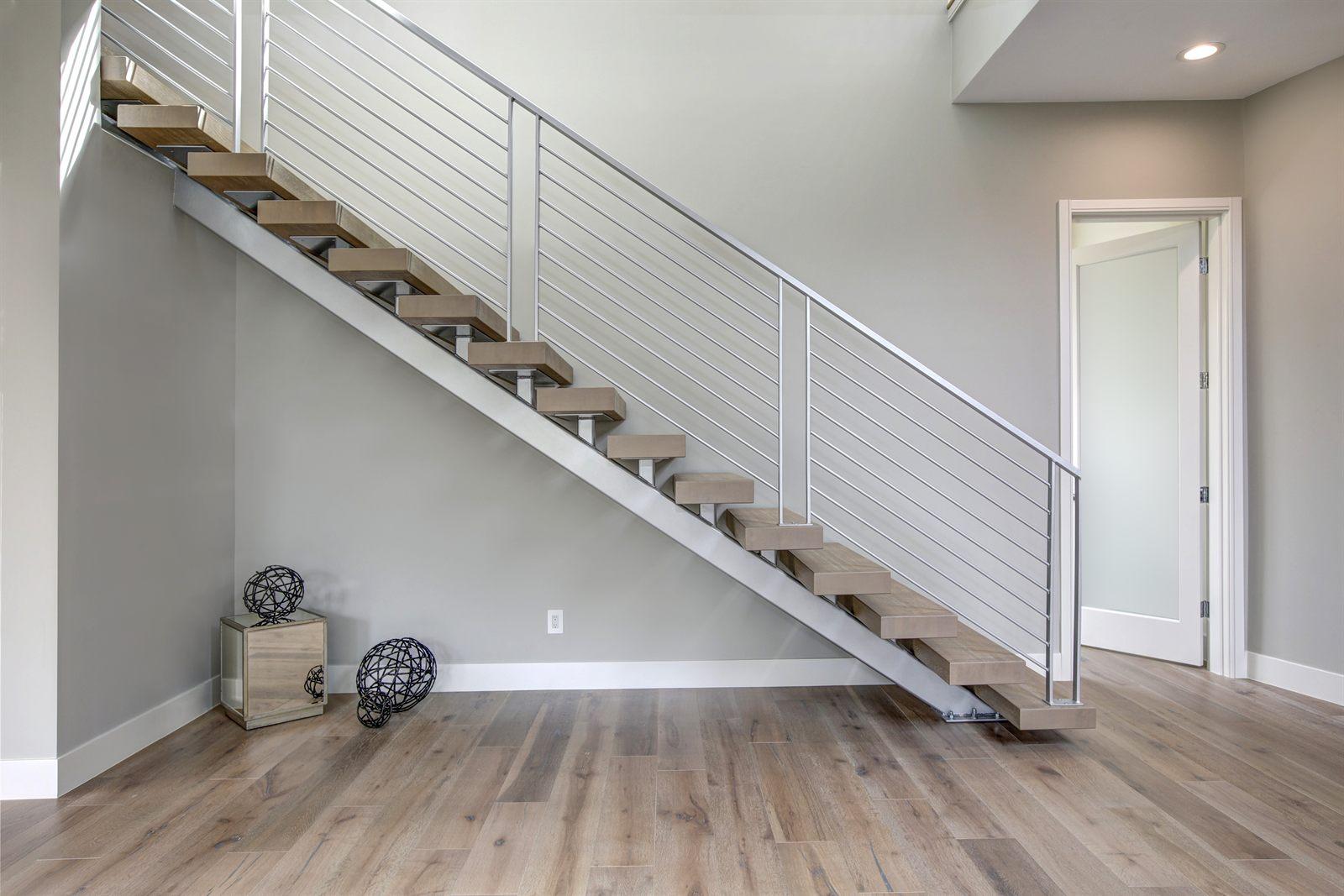
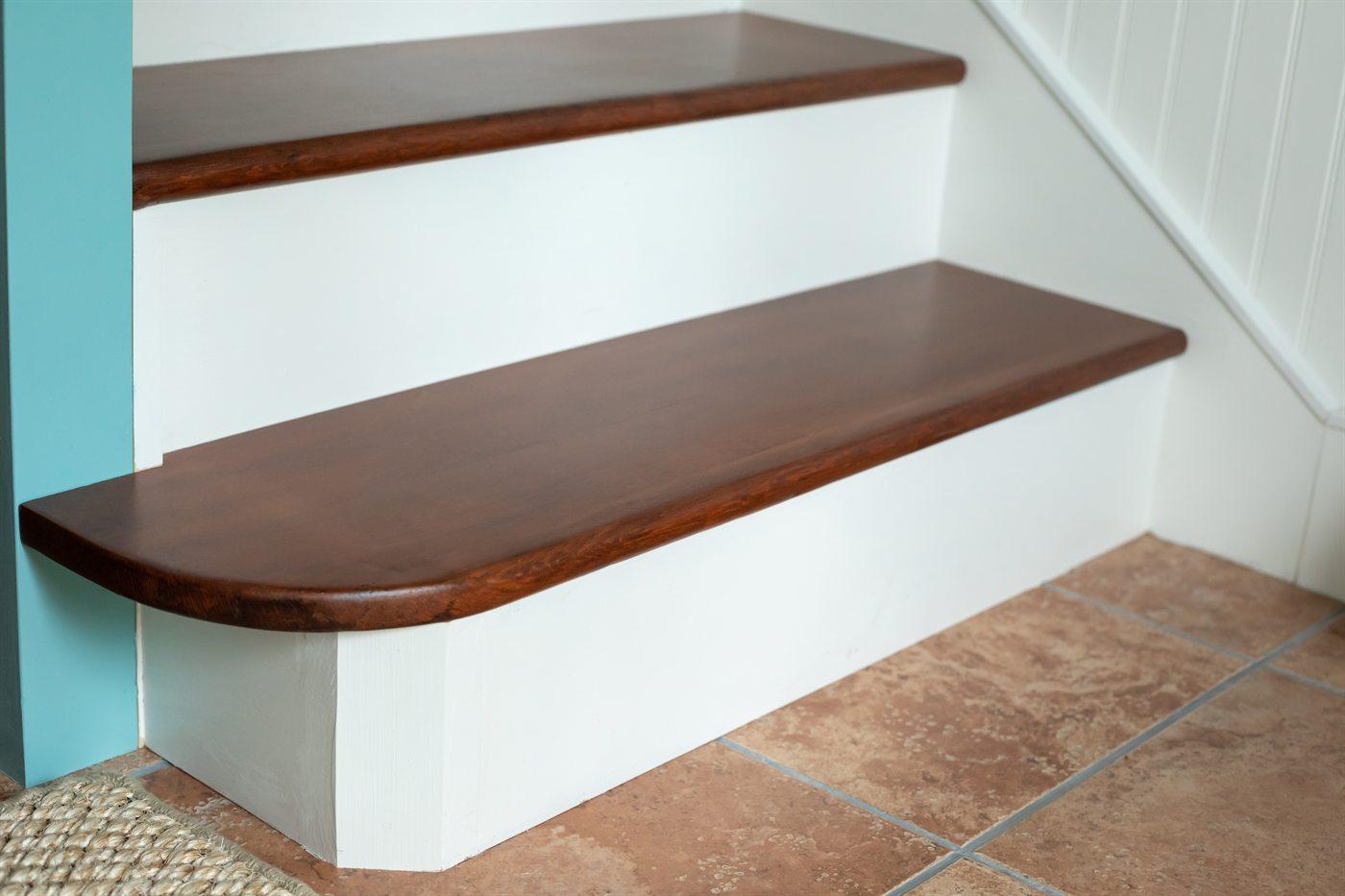
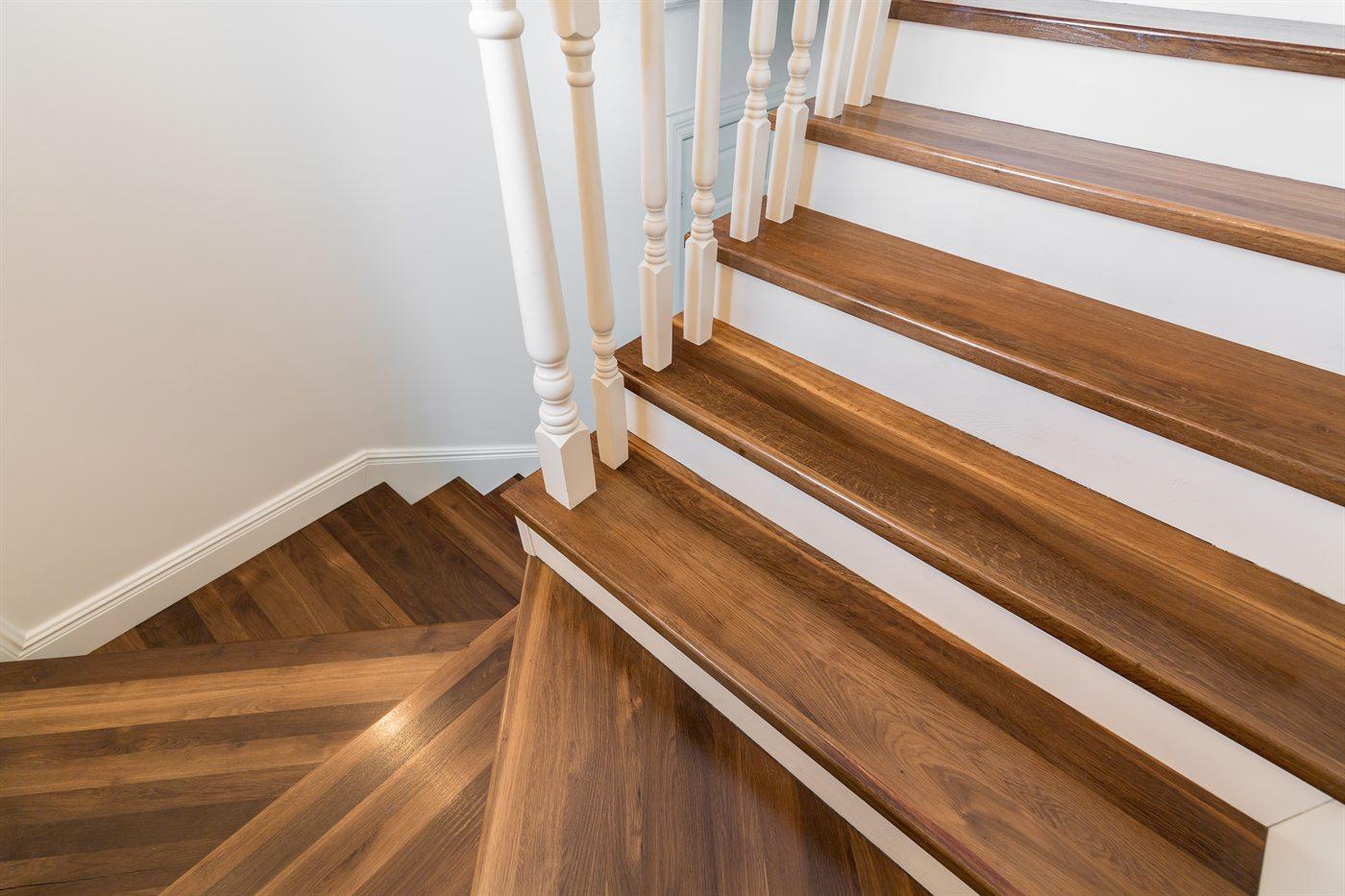
Custom Stair Treads — eight configurators, your exact rise & run.
Bullnose, eased, retro-fit, pie-shaped, winder, landing platforms — five configured hardwoods, planning estimates, plus on-site precision templating for curved and complex stairs.
Curved or complex stair? We'll template it on site.
On-site precision templating for curved, pie-shaped, and double-circle starts — guaranteed fit. $125–$175 field-service fee.
The board you see,
not the one you step on.
A riser is the upright board that closes each step. It stands on the tread below, the tread above sits on it, and the tread's nose hangs 1-1/4" past its face. Every step has one, and a flight has one more rise than it has treads.
Pick painted or stained
Most staircases run a painted white riser under a stained tread — that is the primed 1/2" piece. For a riser in the same wood as the tread, use 3/4" hardwood S4S from the yard in Red Oak, White Oak, Maple or Hickory and stain it with the treads.
Measure the rise
Top of one tread to the top of the next, on three steps of the flight. Stock is 7-1/2" tall, which is more than any residential rise leaves showing once the tread sits on it, so the riser is ripped down to fit on site — never built up.
Measure the width
Skirt to skirt across the step, at the back where the riser sits. On an open side, to the finished face of the stringer. Measure the top, middle and bottom steps.
Count the rises, not the treads
A flight has one more rise than treads. Each 90" primed piece cuts into 2 risers for any stair up to 44" wide; wider than that, count one piece per rise. Hardwood S4S comes in random lengths — give us the count and the width and the yard pulls boards to yield it.
It goes in before the tread
The riser is fitted first and the tread lands on it, nose 1-1/4" proud of the riser face. A small cove or bull nosing from the stair-moulding line covers the joint between them.
| Primed white riser | Hardwood S4S riser | |
|---|---|---|
| Size | 1/2" thick × 7-1/2" tall | 3/4" thick × 7-1/2" tall |
| Length | 90" long — usually two standard risers per piece | Random lengths as the yard has them — cut to the width of each step on site |
| Species | Paint-grade, primed white | Red Oak · White Oak · Maple · Hickory |
| Finish | Ready for your topcoat | Unfinished, surfaced four sides — stain to match the treads |
| Sold as | By the 90" piece | By the board, from the yard |
| Best for | The classic painted riser under a stained tread — and the retro-fit overlay, thin enough to cap an existing riser without moving the nose. | A stained riser that matches the tread species, or a painted riser in solid wood on a new build. |
Hardwood S4S lengths and species on hand are the yard's day-to-day stock — confirmed at quote. See hardwood S4S & S3S for the dimension-stock program.
Worked count
A straight flight of 12 treads has 13 rises — one more than the treads, because the first rise is from the floor to the first tread and the last is up onto the landing. On a stair 42" wide, each primed piece cuts into 2, so order 7 primed pieces. In hardwood S4S, tell us 13 risers at 42" and the yard pulls the boards to yield it.
Questions people ask before ordering
8070 vs. 8071 — which stair tread fits my existing staircase?
The 8070 is a full 1″ tread for new builds or full demos. The 8071 is a 5/8″ retro-fit overlay built to drop over carpeted stairs without demolition. The key reason: when you pull the carpet, the wood skirt board next to the staircase is roughly 11/16″ thick. The 8071 lands flush against it. The 8070 sits about 1/4″ proud and looks unfinished.
Read the answer →What’s the difference between a 1″ and a 1¾″ stair tread?
A 1″ stair tread is a retrofit cap that drops over an existing staircase — fast, affordable, and the right choice for most closed-stringer residential stairs. A 1¾″ thick tread is a structural-looking slab built for open, floating, or modern stairs where the tread itself is part of the architecture. Thickness changes the price, the install, and the entire look of the stair — not just the dimension.
Read the answer →Red oak vs. white oak for stair treads in Houston humidity
Both red oak and white oak make excellent stair treads in Houston — once acclimated, indoor performance is nearly identical. The real choice is look and budget. Red oak runs warm pink-brown with a busy grain at a lower cost; white oak runs golden-tan, takes modern stains more cleanly, and costs more. White oak also needs stainless fasteners — its tannins react with steel.
Read the answer →How much do hardwood stair treads cost?
Hardwood stair tread cost depends on three things: species, thickness, and width. A standard 1″ red oak tread is the most affordable; white oak, hickory, and hard maple step up; walnut and brazilian cherry are premium. Thick treads (1¾″ to 3½″) cost meaningfully more than 1″ treads in any species. Use the configurator for an exact number before you spec.
Read the answer →