

Species
Relative material cost, red oak as the baseline: Red Oak · everyday, White Oak · premium, Maple · mid, Walnut · feature, Hickory · mid. Rift & quartered cuts and named species outside the tiles are quoted on the lumber available that week.
Edge-grain-up butcher-block treads for floating and open-riser stairs, 2" to 4" thick, milled to your spec at NW Houston / Tanner Rd. Square or eased edge, supplied unfinished.
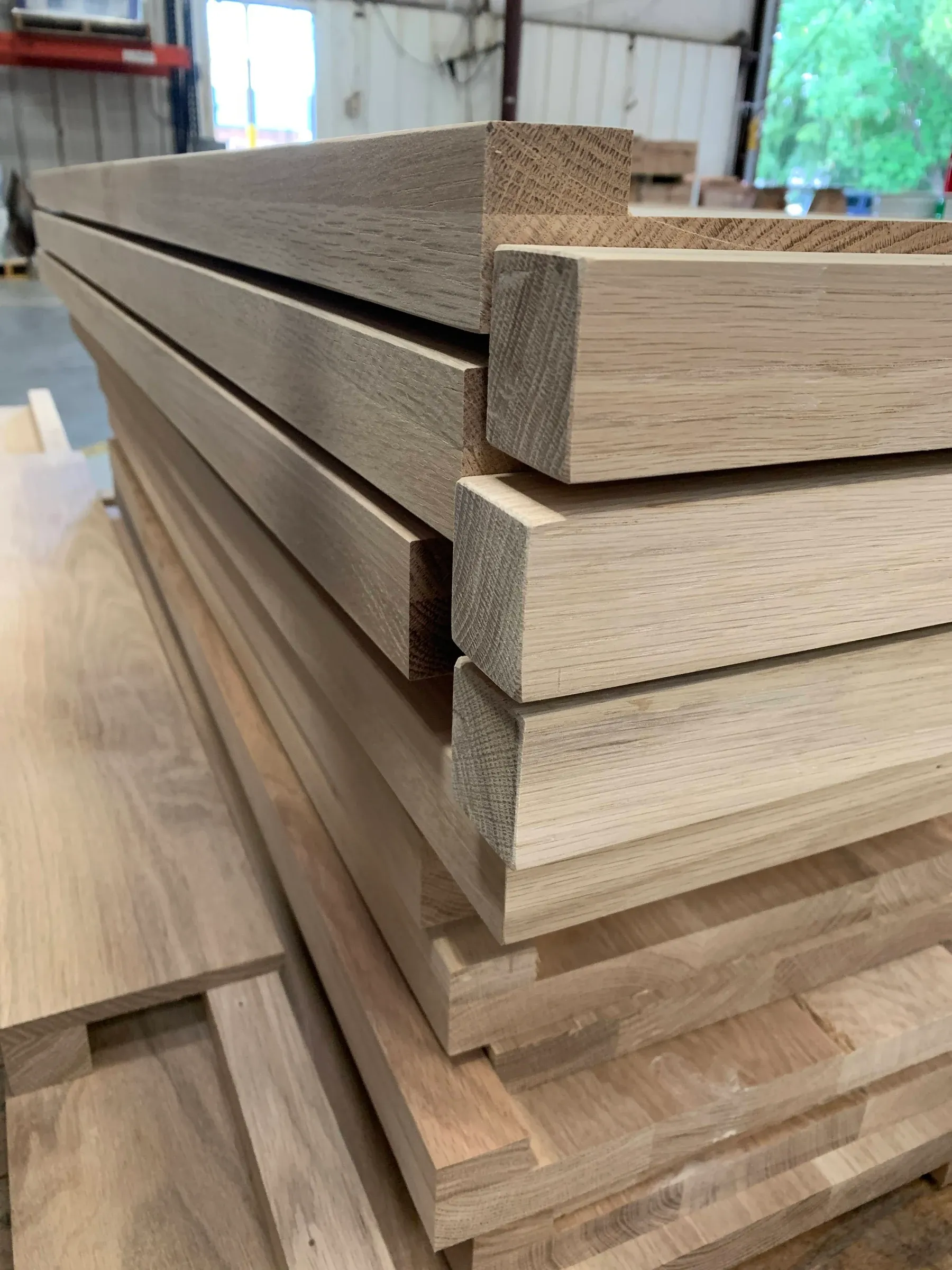
Crafted in-house · NW Houston / Tanner Rd
Explore photographs of UWP treads, curved details, and custom fabrication.
This configurator specifies a solid edge-grain-up stair tread — narrow hardwood staves turned on edge and glued like a butcher block — cut to your exact length, depth and thickness for an open-riser or floating stair. There is no nosing on a thick tread: the slab is the whole step, with a square or 1/8" eased edge, supplied unfinished. Every tread is fabricated in-house at the NW Houston / Tanner Rd mill and, because species, size and quantity all move the number, priced by hand rather than by the page.
We supply building-material suppliers, wholesale distributors and commercial contractors. The configuration you build here hands back an ANSI A shop drawing with the construction shown in section and a DXF for the architect's set, both carrying the same reference as the spec sheet — so the sheet a GC drops into a submittal is the part the shop cuts. Need the wide-plank look instead? The face-grain thick tread is built boards-for-depth, layers-for-thickness. For a standard stair, the stocked and custom 1" line is in the stair tread catalog.
Floating and open-riser stairs have no riser board and no nosing — each thick slab sits on a steel stringer or wall bracket and carries the load on its own. Edge-grain-up construction turns the staves on edge like a butcher block, the stiffest way to build a tread that spans between brackets.
Bracket to bracket plus the overhang you want each side, or wall to the open end on a wall-hung stair. 36"–72" in the configurator; longer by quote.
Front edge to back edge. There is no separate nose to add — what you measure is the finished tread. 10"–24".
2" reads as a floating slab; 3"–4" for longer spans and a heavier modern profile. Every thick tread is quoted by hand.
The 1" tread is priced on its page; both thick treads are quoted by hand. Everything else that separates them is here.
| Custom 1" tread | Butcher block (EGU) · this page | Face-grain thick tread | |
|---|---|---|---|
| Thickness | 1" solid | 2" to 4" | 1-3/4" to 3-1/2" |
| Construction | Edge-glued solid boards, face up | Narrow staves on edge, glued butcher-block style | Boards edge-glued for depth, laminated in horizontal layers |
| Walking surface | Plank grain | Tight, linear edge grain | Plank grain |
| Cut end shows | Board end grain | Each stave’s end grain, side by side | The laminated layers |
| Front edge | Full bullnose (8070) or 1/8" eased (8072) | Square or 1/8" eased | Square or 1/8" eased |
| Returns & nosing | Mitred returns either end; nosing on any edge | None — the slab is the whole step | None — the slab is the whole step |
| Where it goes | Closed-stringer stairs over a riser; retro-fit | Open-riser and floating stairs on brackets or a mono stringer | Open-riser and floating stairs on brackets or a mono stringer |
| Stability in Houston humidity | Good | Best — alternating staves cancel movement | Good — layers stiffen the slab |
| Size range | 24–96" long · 6–32" deep | 36–72" long · 10–24" deep | 36–72" long · 10–24" deep |
| Price | Planning estimate on the page | Quoted by hand — the most labour of the three | Quoted by hand |
| Documents | Estimate · shop drawing · DXF | Spec sheet · shop drawing · DXF | Spec sheet · shop drawing · DXF |
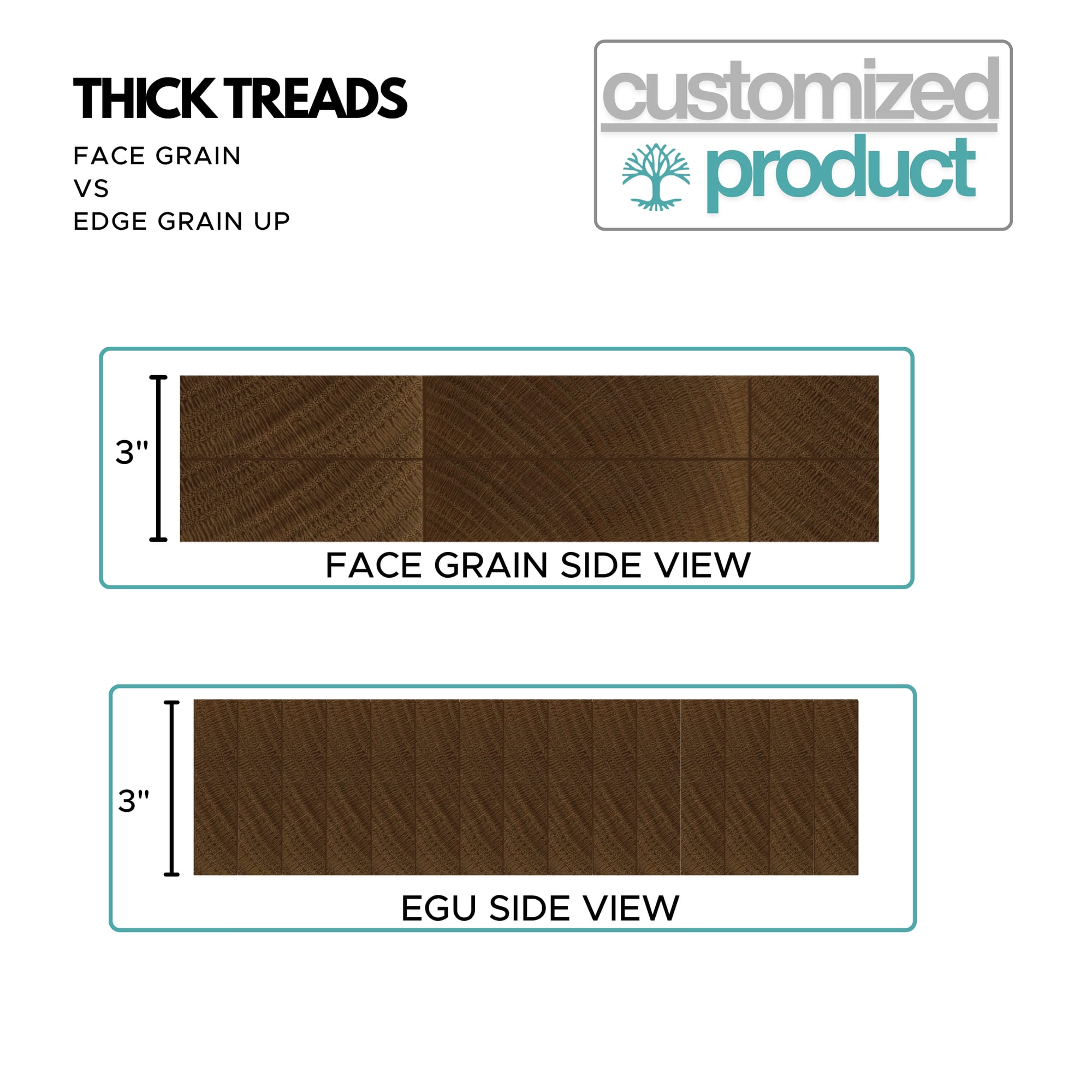
In an edge-grain-up (EGU) tread, narrow staves are turned on edge and glued together — like a butcher block. The edge grain faces up, which is harder underfoot and far more dimensionally stable than a wide face-grain slab that can cup and check as it moves. It's the construction we recommend for any tread 2" and thicker.
Six steps, forty seconds. The boards are planed flat, ripped into staves, then laid out by hand so the color and grain run true from one stave to the next before anything is glued. The block is glued on edge, grain up, and milled square with the edge you specify. Every thick tread follows this sequence at the NW Houston / Tanner Rd mill.
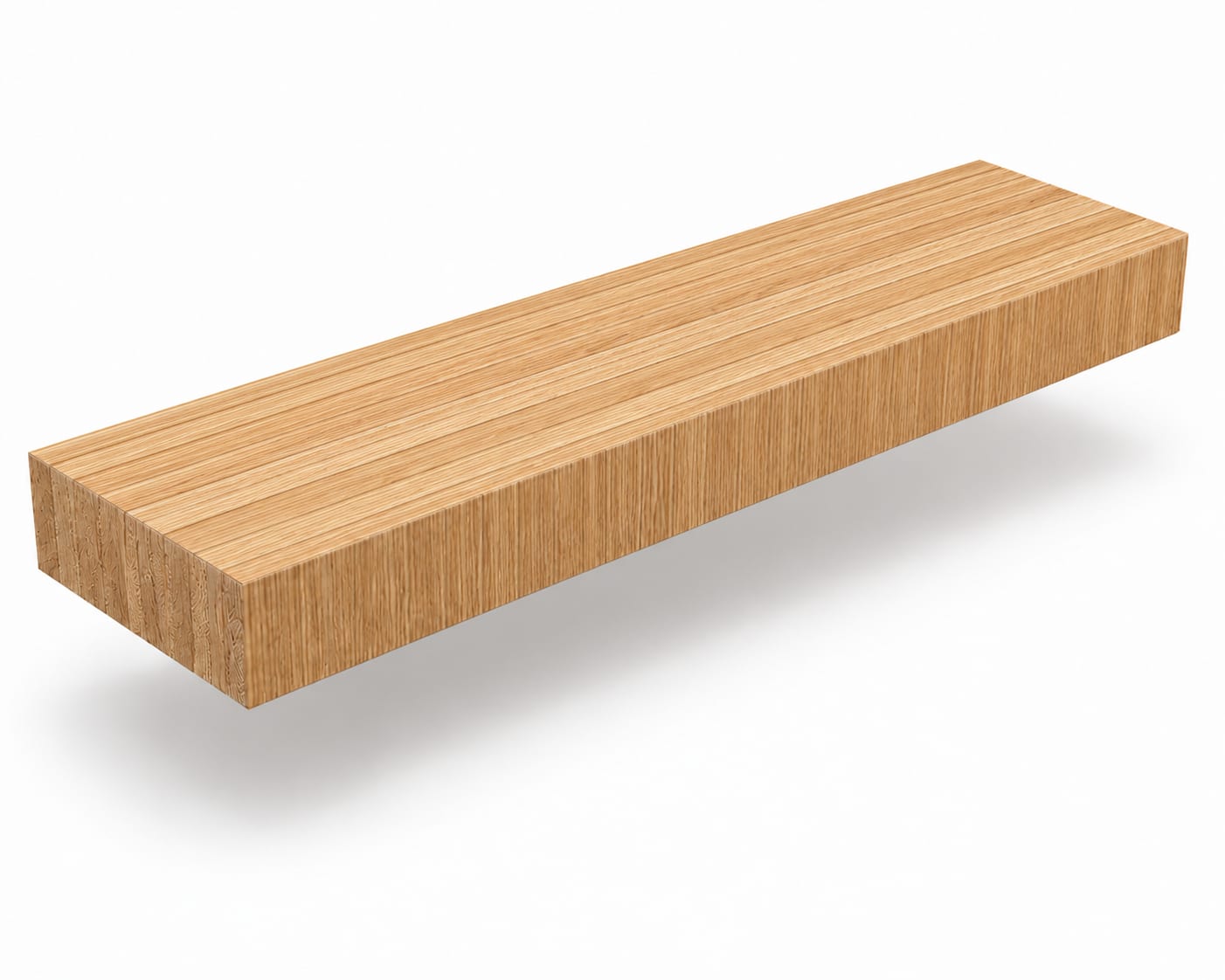
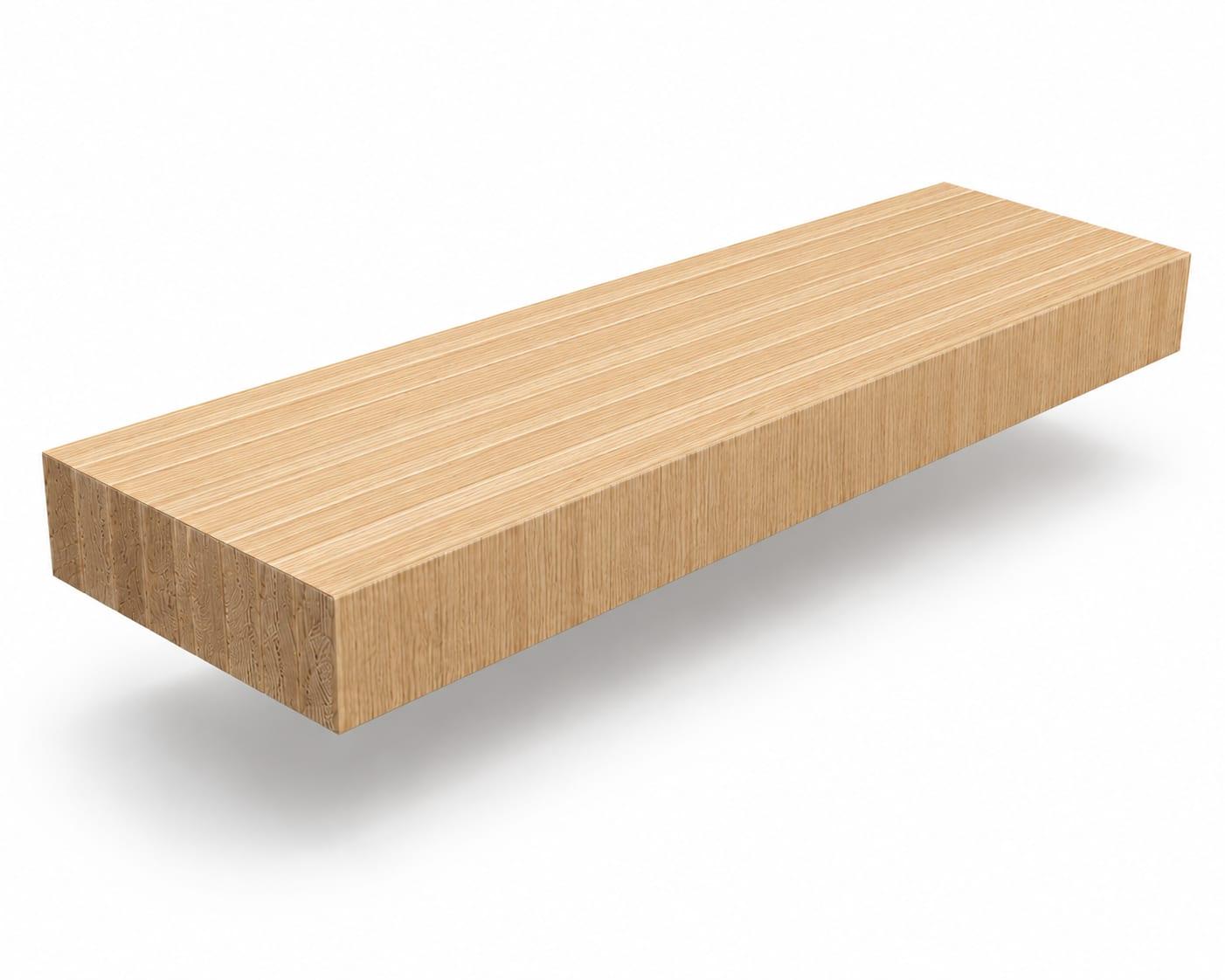
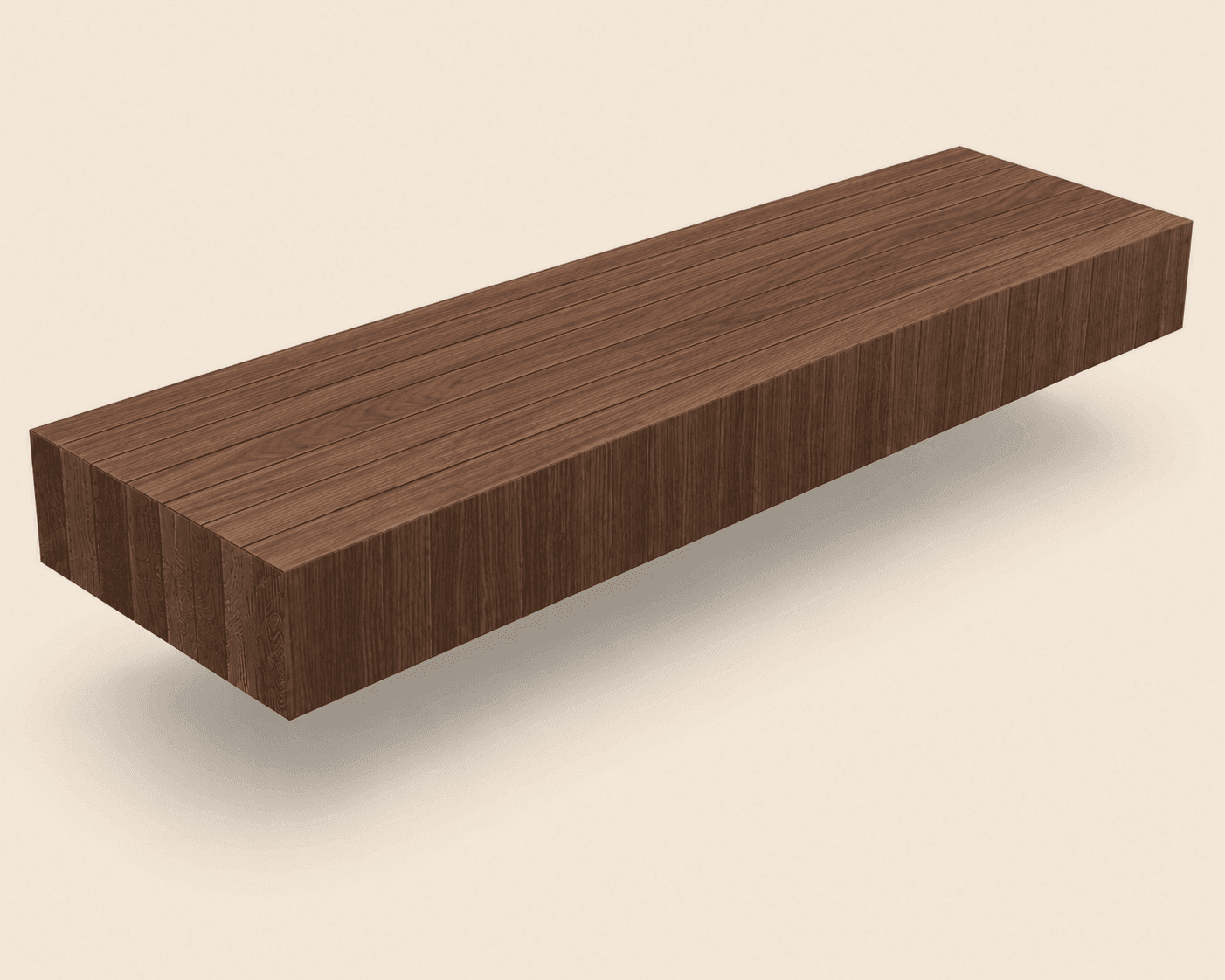
Red Oak, White Oak, and Walnut. Maple, Hickory and custom species are milled the same way; name yours in the configurator. All shown 48" × 12" × 4".
Looking for stocked 1" treads instead? Browse the stair tread catalog.
Six things decide the number the office sends back. None of them is a secret, so they are listed. The relative cost tiers come from the same species catalogue as /wood-species.
Relative material cost, red oak as the baseline: Red Oak · everyday, White Oak · premium, Maple · mid, Walnut · feature, Hickory · mid. Rift & quartered cuts and named species outside the tiles are quoted on the lumber available that week.
Length × depth × thickness. Thickness is the lever most people underestimate: a 4" tread is twice the wood of a 2" one, and thick stock is scarcer per board foot than 4/4.
Ripping, jointing and gluing staves on edge is more bench time than laminating boards; both are more than a 1" tread. The shop prices the hours, not just the wood.
A stair of twelve matched treads and one replacement tread are different jobs: setup, grain selection and glue-up are spread across the run. Put the whole count on the quote list.
Past 72" long or 24" deep the tread is a special glue-up from longer stock and is quoted on request.
The 1" tread has a stable schedule behind it. A thick glue-up depends on which boards are on the rack that week, so a number on the page would be either padded or wrong. The office quotes what it will actually build.
| Species on the tiles | Relative material cost | Approx. density | Availability |
|---|---|---|---|
| Red Oak | Everyday | 44 lb/ft³ | Made to order · confirmed at quote |
| White Oak | Premium | 47 lb/ft³ | Made to order · confirmed at quote |
| Maple | Mid | 44 lb/ft³ | Made to order · confirmed at quote |
| Walnut | Feature | 38 lb/ft³ | Made to order · confirmed at quote |
| Hickory | Mid | 51 lb/ft³ | Made to order · confirmed at quote |
Cost tiers are relative positions, not prices. Densities are published air-dry averages (USDA Wood Handbook) and drive the approximate weight the configurator shows — plan brackets and handling from that figure, not from the species name.
Coverage per the UWP stair parts warranty. Movement, checking and colour change from site conditions or finishing are not defects.
The line carries every choice you made, the same reference the documents print, and no price.
One form for the whole list. Attach a drawing if the stair or the kitchen has one; a photo of the space helps.
Species against the rack, construction against the size, anything that will not glue up as drawn. Questions come back to you before a number does.
Price per piece, the lead time the shop can actually hold that week, and the seam or stock notes that apply. Valid as stated on the quote.
Custom and special orders take a 50% non-refundable deposit and are non-returnable; the balance is due at pickup. Changes after release are re-quoted.
Terms as published in the store policies: payment on receipt unless a credit account is established, shortage or damage claims within 3 business days, Texas sales-tax exemption by certificate before invoicing.
A staircase reads best when the treads match the floor they meet. Species is chosen for tone, not just hardness — pick the one closest to your flooring and the stair disappears into the room instead of fighting it.
Images simulate a water-clear matte coat to show natural species color. UWP material ships unfinished; tone and figure vary by board.
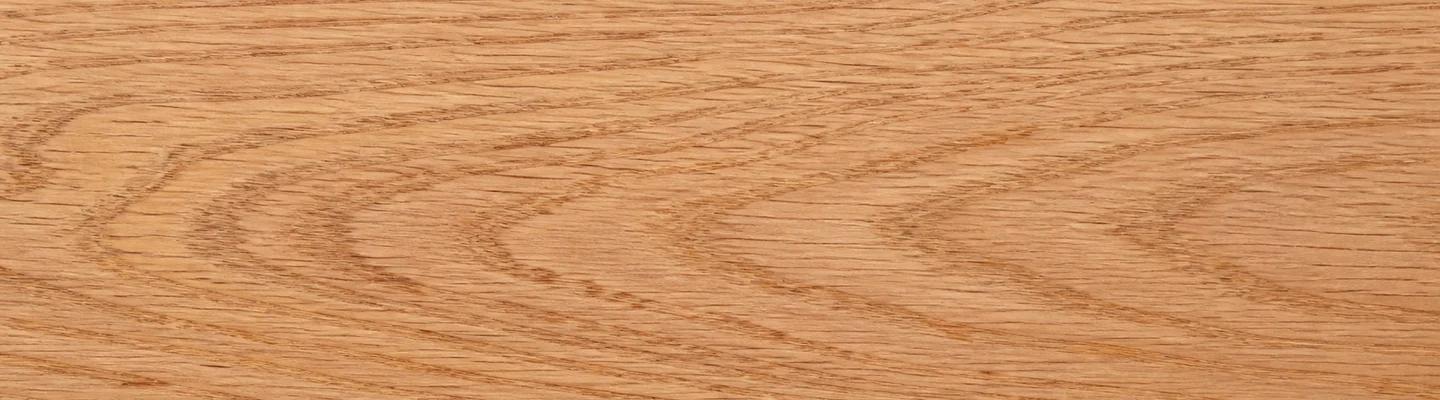
Pairs with — Medium-tone floors with a warm, slightly pink-red cast — the default for red oak flooring in most American homes.
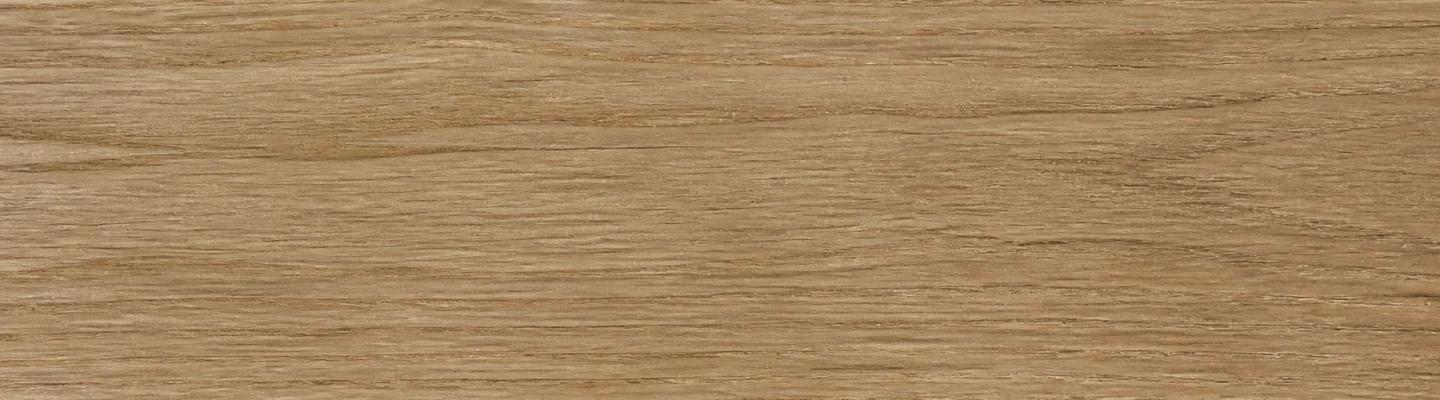
Pairs with — Lighter, cooler floors — white oak, natural, wire-brushed, and modern light finishes. Reads warm-tan, not pink.
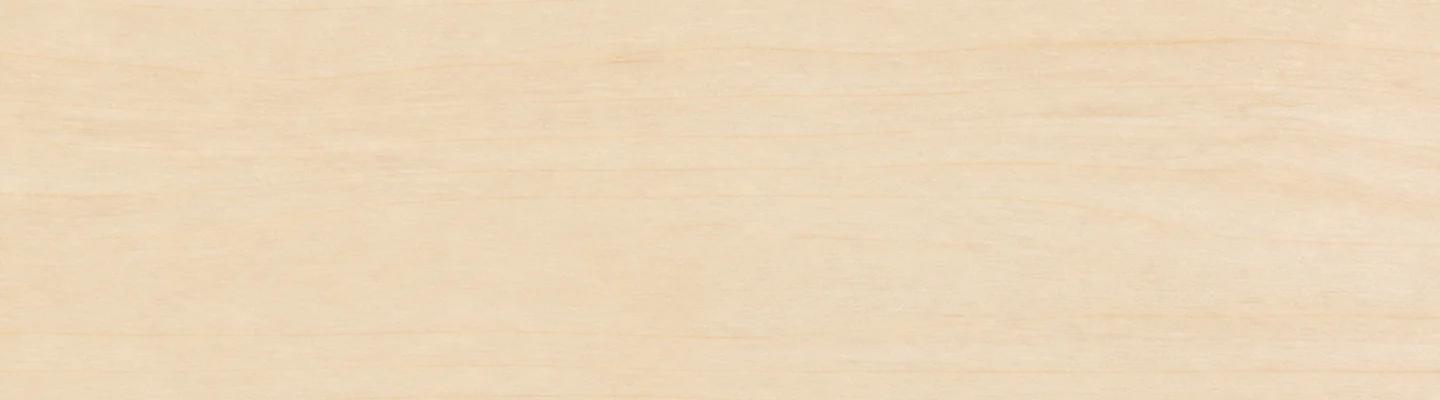
Pairs with — Pale, clean, contemporary floors where an even, near-white tone is wanted.
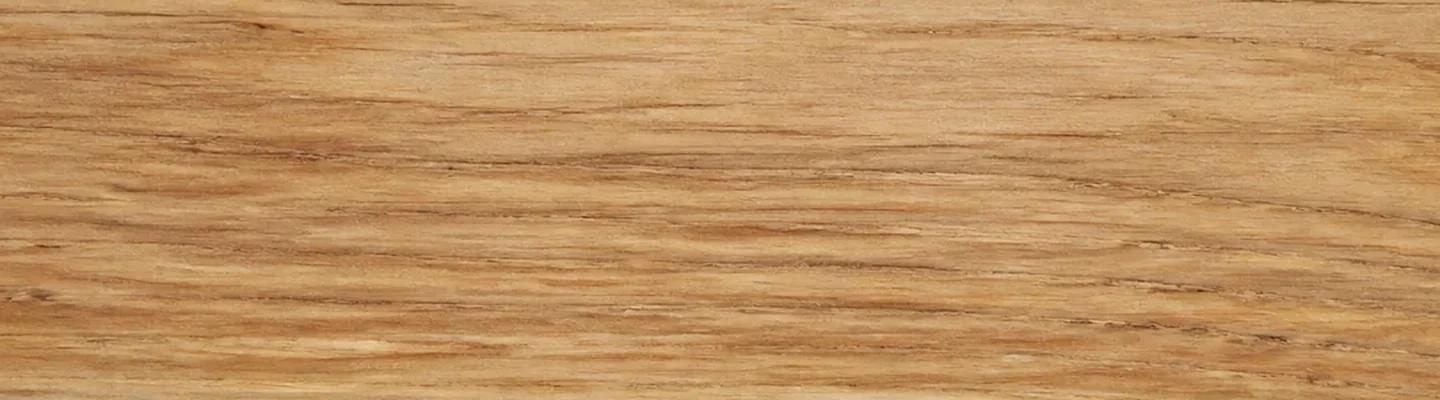
Pairs with — Rustic and character-grade floors with high light-to-dark contrast.
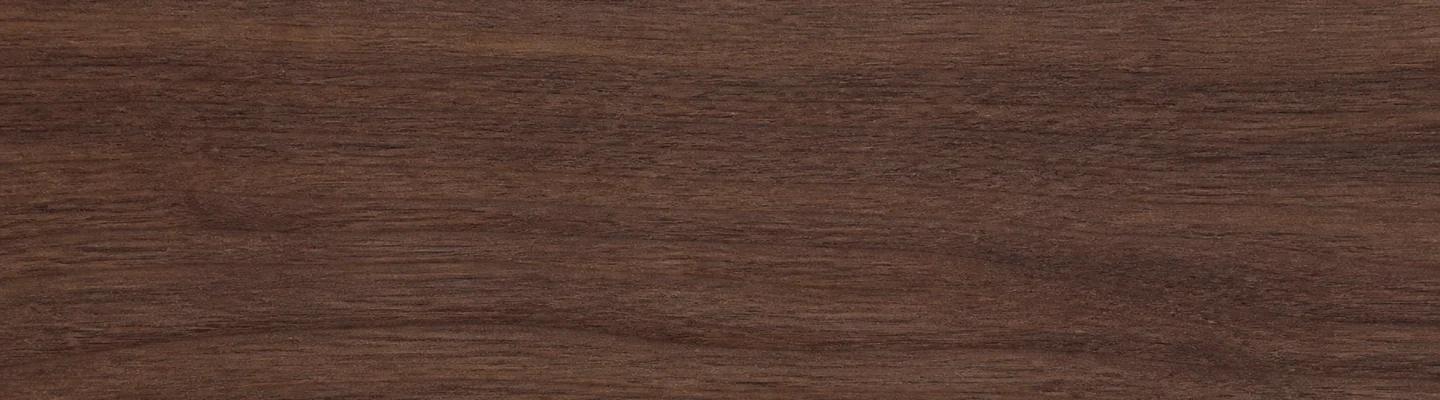
Pairs with — Dark, rich floors and high-end interiors where a deep chocolate tone is the statement.
Send a sample of your floor — we'll species-match the run.
Every species here is custom-milled to order — Janka hardness is listed for reference. All are solid hardwood, glued up, and refinishable for decades.
Red OakWhite OakHard MapleHickoryWalnut| Species | Hardness | Color & appearance | Grain & texture | Availability |
|---|---|---|---|---|
| Red Oak | 1290 lbf | Light-to-medium brown with a reddish cast; stains slightly pink. | Bold, prominent grain lines with occasional swirl. | Made to order |
| White Oak | 1350 lbf | Light-to-medium brown with an olive, not pink, cast. | Medium-to-coarse, slightly open structure. | Made to order |
| Hard Maple | 1450 lbf | Creamy white to light reddish-brown; clean and modern. | Mostly straight, sometimes wavy; fine, even texture. | Made to order |
| Hickory | 1820 lbf | Creamy lights against rich browns; rustic and striking. | Coarse, pronounced, high-contrast figure. | Made to order |
| Walnut | 1010 lbf | Deep, luxurious chocolate tones; warm and refined. | Fine-to-medium grain, smooth and elegant. | Made to order |
These are the species that match or complement common hardwood flooring. Running the stair in the same species as the floor keeps grain and tone consistent, so the staircase reads as a deliberate extension of the room rather than a separate part.
Want the full picture — Janka hardness, tone, grain, and the species we source to order? Read the complete wood species guide →
No engineered cores, no veneer, no compromises — the reasons a solid UWP tread is still there decades after the trends move on.
Full-thickness hardwood the whole way through — not a veneer skin over a cheap core. What you sand into is more of the same wood.
Sand and recoat it many times over its life. A solid tread outlasts the carpet, the paint, and usually the renovation that put it in.
North American hardwood, milled in-house for a short supply chain and a solid-wood result without imported-veneer surprises.
Solid wood absorbs footfall and holds room temperature — none of the cold, hollow click of tile, stone, or hollow-core treads.
Straight answers to the questions we field at the will-call counter — not a marketing FAQ.
EGU (edge grain up — staves turned on edge, glued like a butcher block) and face-grain (boards glued for the depth, laminated for the thickness) are UWP’s two custom thick-tread programs. EGU shows tight, linear butcher-block grain and offers the best dimensional stability for Houston humidity. Face-grain looks like a thicker version of a standard plank tread. Both are milled with a square or 1/8″ eased edge only and quoted by hand. Pick EGU for a modern statement; face-grain for traditional substance.
Read the answer →A 1″ stair tread is a retrofit cap that drops over an existing staircase — fast, affordable, and the right choice for most closed-stringer residential stairs. A 1¾″ thick tread is a structural-looking slab built for open, floating, or modern stairs where the tread itself is part of the architecture. Thickness changes the price, the install, and the entire look of the stair — not just the dimension.
Read the answer →Thick stair treads (1¾″ to 3½″) aren’t retrofit material — adding that much thickness changes the rise of the top step, puts the stair out of code, and creates a visible step where the new tread meets the upstairs floor. For the thick-tread look on existing stairs, the honest answer is a full tear-down to the stringers and a rebuild from the framing up.
Read the answer →Yes. UWP builds curved stair treads to order — spiral stairs, radius stairs, elliptical winders, and irregular flares. Each curved tread is templated on-site before milling: we send a templater to the jobsite to capture the exact shape of every step, then mill from the template. The production date is confirmed once the template is approved.
Read the answer →