

Sundries
Fasteners · Caulk · Blades
The consumables that finish a trim or flooring job — kept on the shelf at the NW Houston yard so a baseboard order leaves with the nails, caulk, and blades it needs. Order by code at will-call; pricing is quoted at the counter.
16 ga for the base. 18 ga for the shoe. White caulk for the top edge.
Fasteners.
Galvanized straight finish nails and brad nails for trim, baseboard, and shoe. Run a 2-gun setup: 16 ga for baseboard into framing, 18 ga for base shoe and light trim.
16 GA Galvanized Finish Nail — 1-1/4"
Pro-Drive Fasteners · 2,500 / box
View item →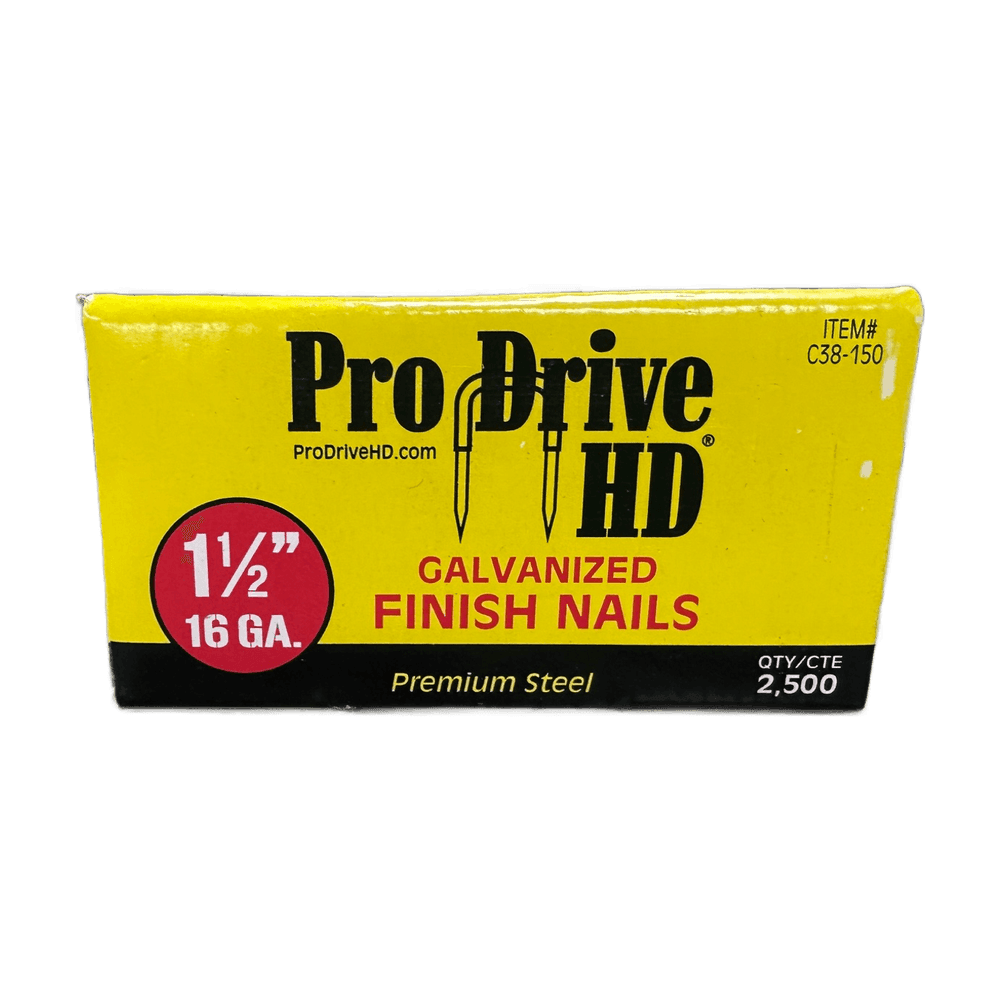
16 GA Galvanized Finish Nail — 1-1/2"
Pro-Drive Fasteners · 2,500 / box
View item →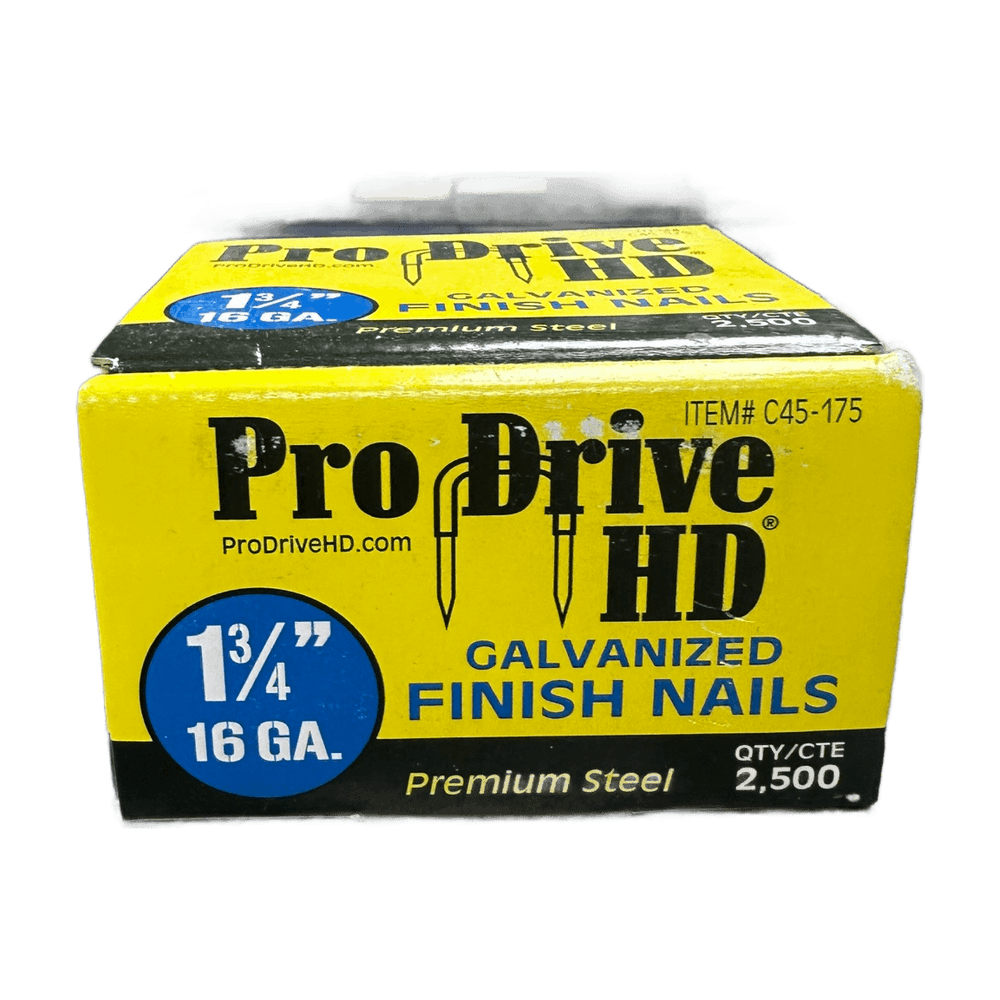
16 GA Galvanized Finish Nail — 1-3/4"
Pro-Drive Fasteners · 2,500 / box
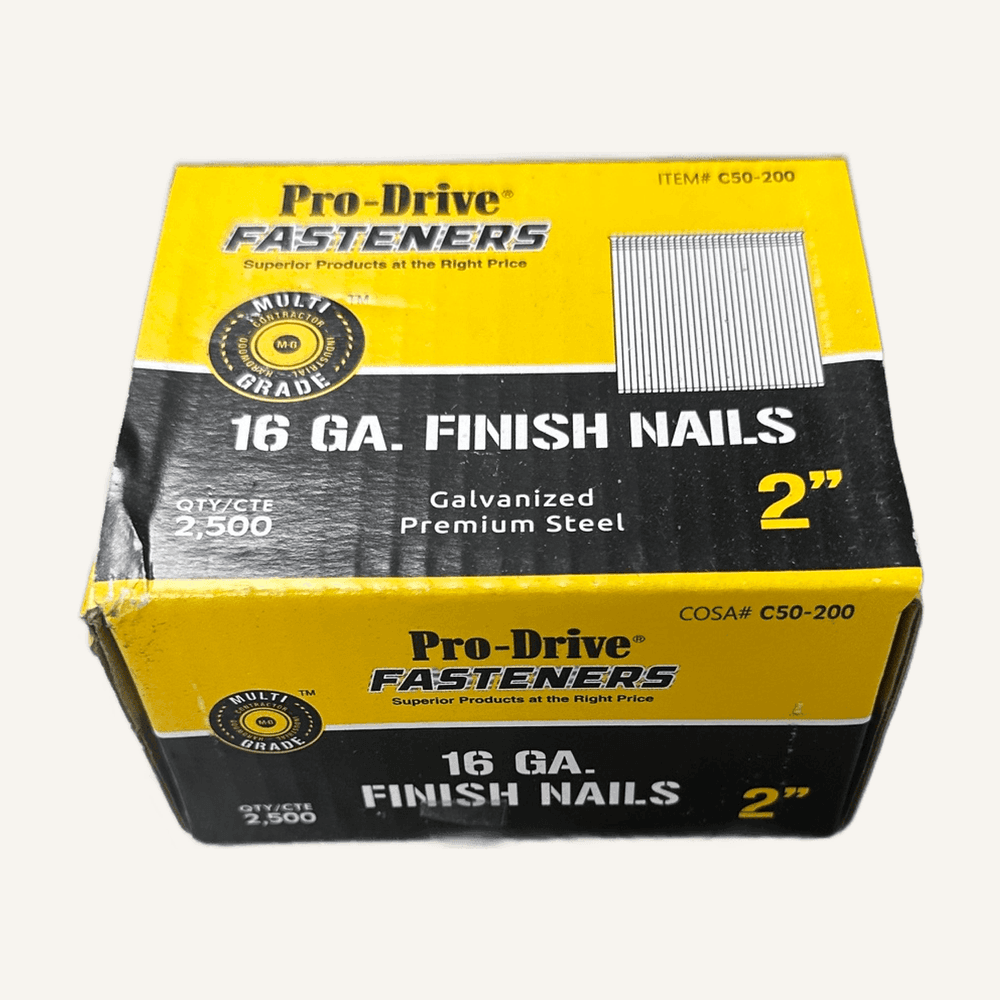
View item →16 GA Galvanized Finish Nail — 2"
Pro-Drive Fasteners · 2,500 / box
View item →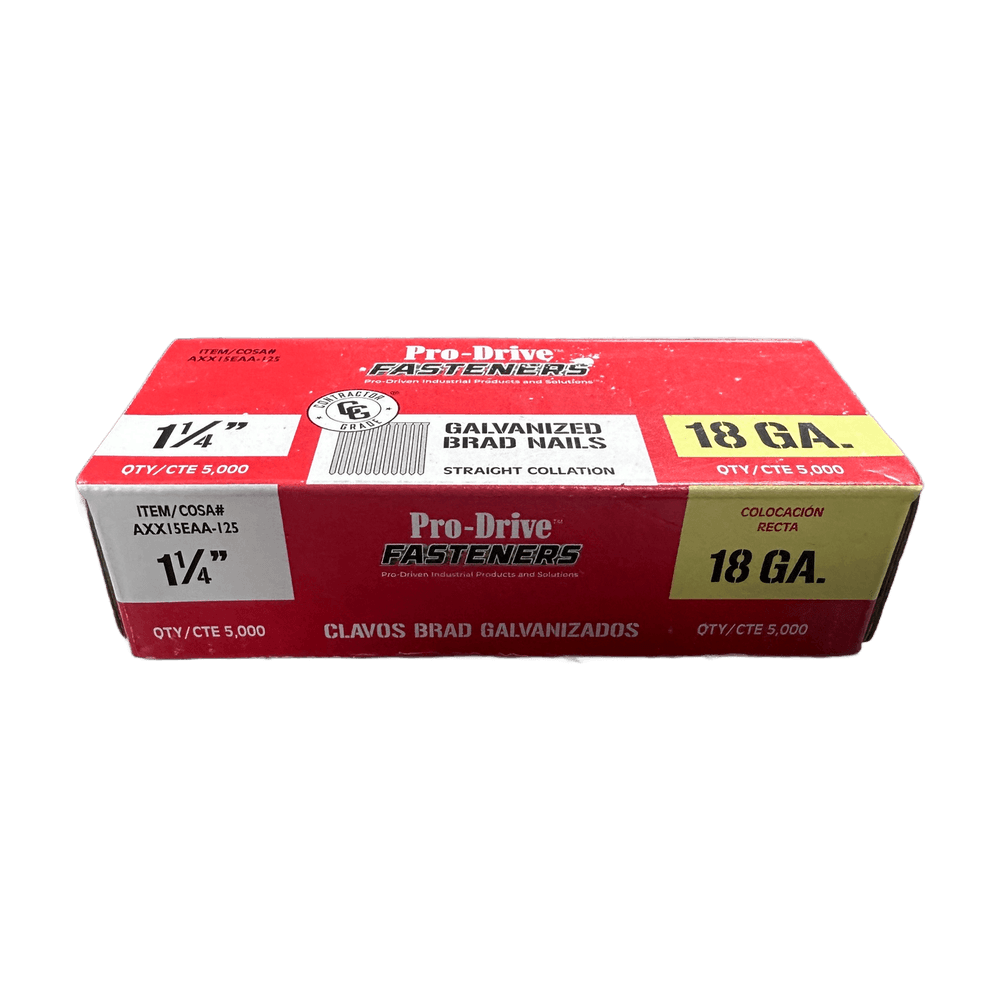
18 GA Galvanized Brad Nail — 1-1/4"
Pro-Drive Fasteners · 5,000 / box
View item →18 GA Galvanized Brad Nail — 1-1/2"
Pro-Drive Fasteners · 5,000 / box
View item →Caulk.
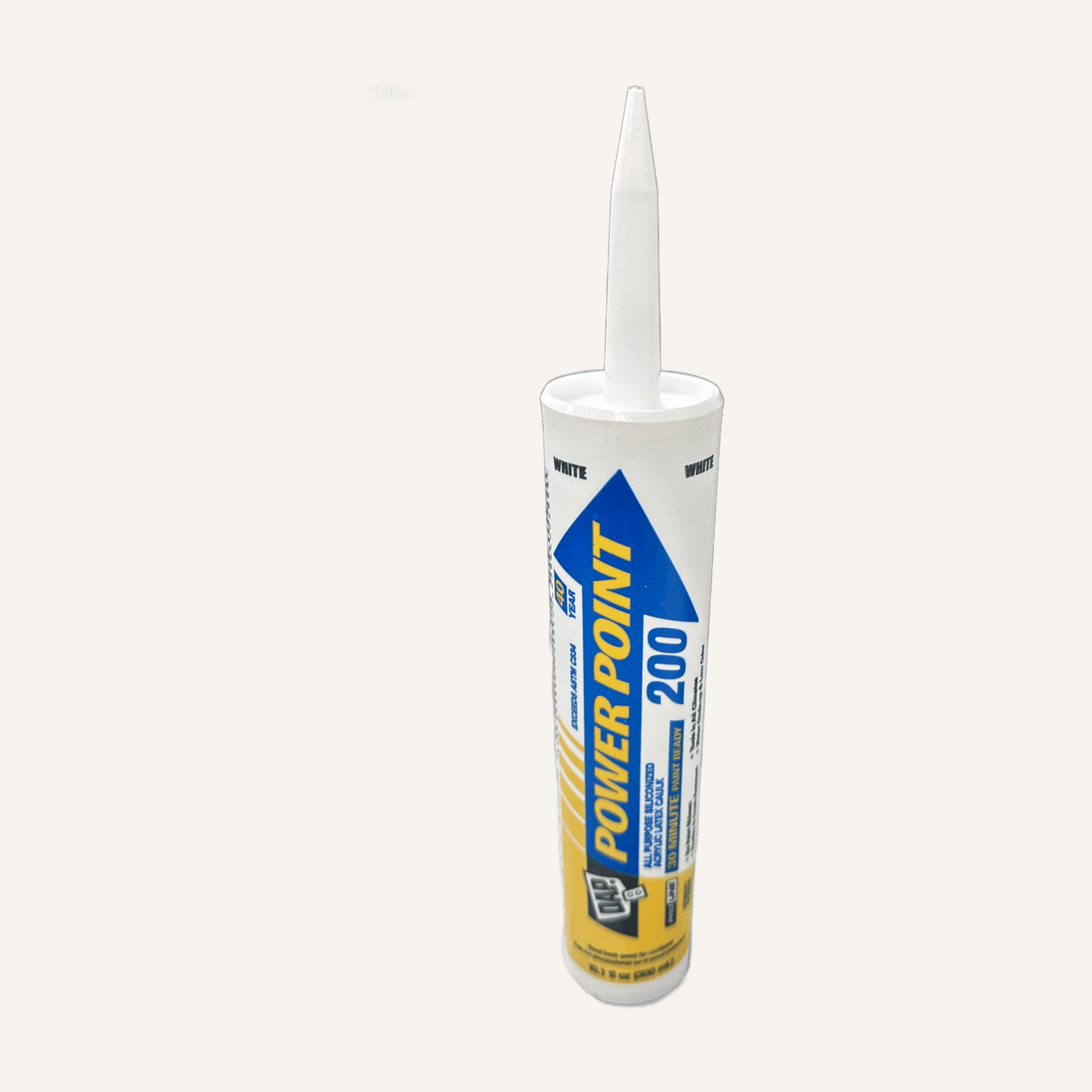
Paintable white caulk for the top edge of baseboard and casing, inside corners, and trim-to-wall seams — the finish detail that makes a paint-grade trim job read clean.
Blades.
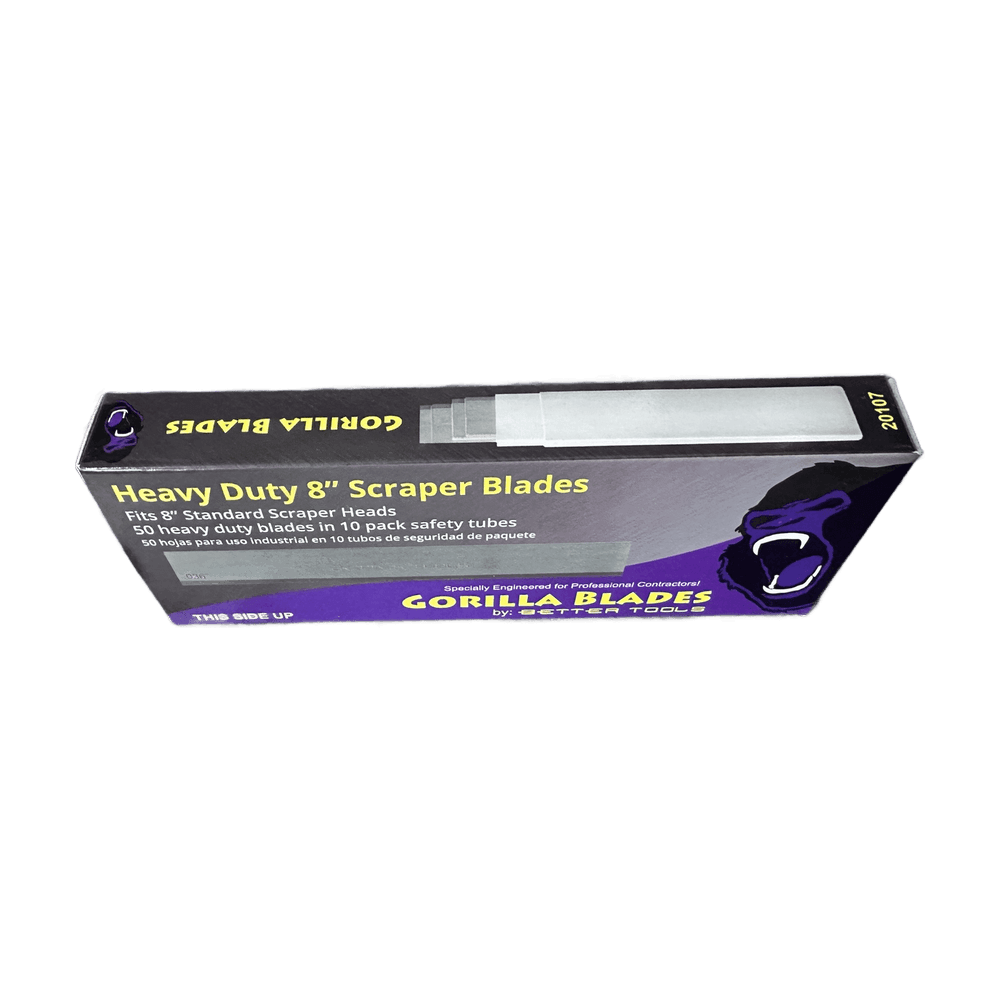
Heavy-duty scraper and utility blades for floor prep, adhesive and finish removal, and general jobsite cutting.

Add sundries to your trim order.
Open a cash account to order by code at will-call, or send the yard your list and we'll stage it with your baseboard, shoe, and casing for one pickup.
Before you order
The consumables a trim job runs on
Fasteners, blades and caulk, kept at the same counter as the millwork. Gauge, length and where caulk does not belong are the decisions worth two minutes before the trailer leaves.
Why a mill stocks consumables at all
Because the trim does not go on without them, and a trip across town for brads in the middle of a trim-out costs more than the brads. These are the fasteners, blades and caulk that a moulding or stair order actually consumes, bought at the same counter as the millwork.
Gauge decides the hole and the hold
The lower the gauge number, the thicker the nail. That single trade-off runs the whole decision: a thicker nail holds better and leaves a bigger hole to fill.
- 16-gauge finish nails — baseboard, casing, crown, anything going into framing and expected to stay put
- 18-gauge brads — delicate profiles, shoe and quarter round, returns, and holding a mitre while the glue grabs
- Split risk rises as the nail thickens and the stock thins. On a narrow return, 18-gauge is not the cheap option, it is the correct one
Pick the length from what the nail has to reach
The fastener has to pass through the trim, through the drywall, and far enough into solid framing to hold — around an inch of penetration into the stud is the usual target.
Add the trim thickness to the drywall thickness and then add that penetration. Three-quarter-inch trim over half-inch drywall wants roughly a 2-inch fastener; a thin shoe pinned into a baseboard wants far less. Too long is not the safe default — it finds wiring and plumbing.
Blades are a consumable, not a tool
A dull scraper blade tears the surface it is supposed to clean and a dull utility blade wanders off the line. Both cost less than the time spent fighting them, which is why they are stocked in packs.
Scraper blades come in 4-inch and 8-inch to match the scraper body — check which one your handle takes before ordering, they are not interchangeable.
Caulk is the last five per cent, on paint-grade only
Paintable caulk closes the hairline where trim meets a wall that is not flat, and it is what makes painted trim look milled rather than nailed on. Applied thin, tooled once, painted over.
It has no place on stain-grade work. Caulk does not take stain, and a bead along a stained casing stays visible under every coat that follows. On stain-grade, the joint has to be cut right instead.
Questions people ask before ordering
How do I install hardwood stair treads?
A confident DIYer can install a hardwood stair tread retrofit in a weekend. The sequence: pull carpet and staples, prep the substrate flat and quiet, acclimate the treads for 5 to 7 days, dry-fit each tread, glue with a urethane construction adhesive, fasten with stainless trim screws (countersunk), plug, sand, and finish. Risers go in before treads on a full build; after, on a retrofit.
Read the answer →Shoe moulding vs. quarter round — what’s the difference and which one do I need?
Quarter round is a true quarter-circle profile — equal on both faces, typically 3/4″ × 3/4″. Shoe moulding is taller than it is wide — typically 1/2″ × 3/4″, with a softer rounded face — sitting more discretely against the baseboard. Both finish the seam between baseboard and floor. Pick shoe moulding when you want a quieter look; quarter round when you have a wider gap to cover.
Read the answer →How do I fix squeaky stairs?
Squeaky stairs are usually caused by wood components rubbing against each other or against loose fasteners — most often the tread-to-riser joint or the tread-to-stringer connection. Fix from below if your stairs have open underside access (basement stair), or from above by screwing through the tread into the riser and plugging the holes. Severe or widespread squeaks usually mean a re-tread job.
Read the answer →What trim goes where? A room-by-room guide.
Trim choice should read as a consistent system across the house, not a room-by-room patchwork. Baseboard and casing run everywhere, sized to ceiling height and door scale. Crown is reserved for formal rooms in traditional homes and skipped in modern ones. Chair rail and panel mould go in formal dining and entry. Stair trim ties the upstairs and downstairs together.
Read the answer →