

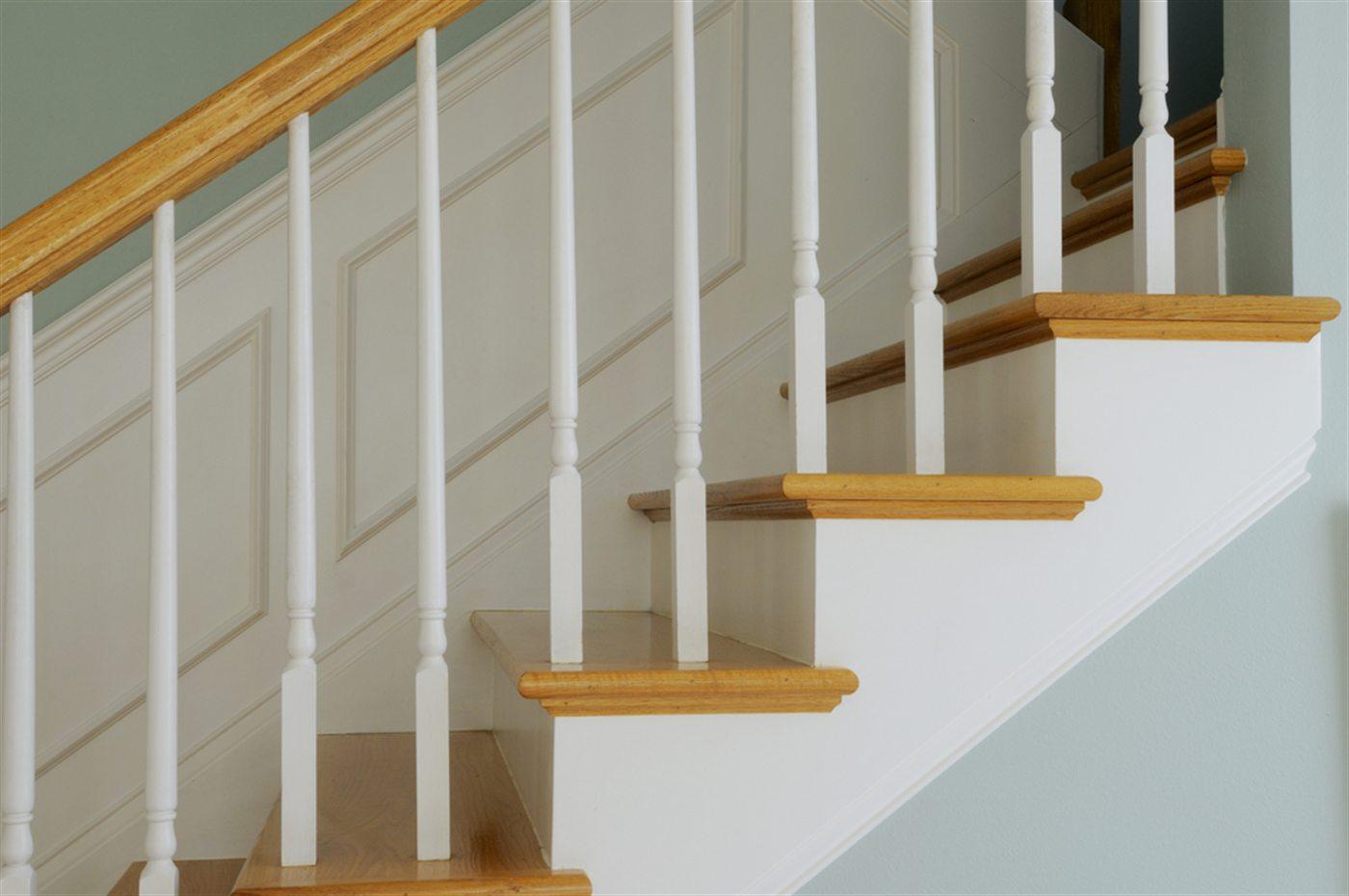
Red oak and white oak are both domestic US hardwoods, both in the UWP tread catalog, and both fit for purpose as solid stair treads in Houston. Red oak rates 1,290 lbf on the Janka scale, white oak 1,350 — a difference you will never feel underfoot. The real decision is color tone, grain character, cost, and whether the White Oak 20/20 supply policy changes how you order.
Match the existing floor — or pick by tone.
If the home already has hardwood floors, match the species. Red oak floors get red oak treads; white oak floors get white oak treads. Switching species inside the same line of sight reads as inconsistent under any finish — even at the bottom of the stair where the floor and treads meet.
If the home is new construction, mixed-material, or the floor is anything other than hardwood (tile, LVT, carpet), pick by tone. Red oak runs warm and reddish under most stains. White oak runs cool, grey-tan and modern — and is the species under nearly every wire-brushed, fumed, or rift-and-quartered floor of the last decade.
The spec sheet, in one table.
| Attribute | Red Oak | White Oak |
|---|---|---|
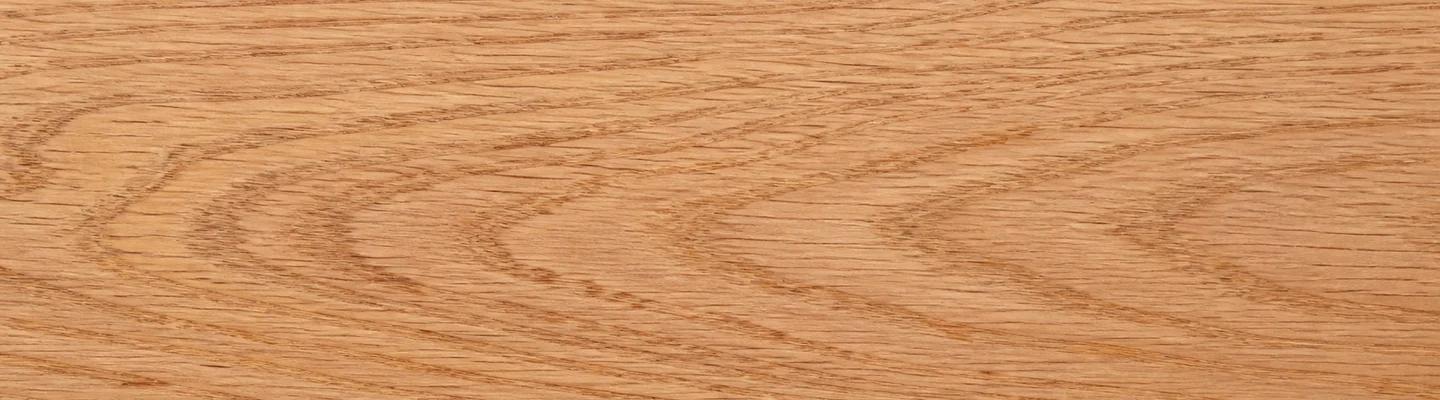
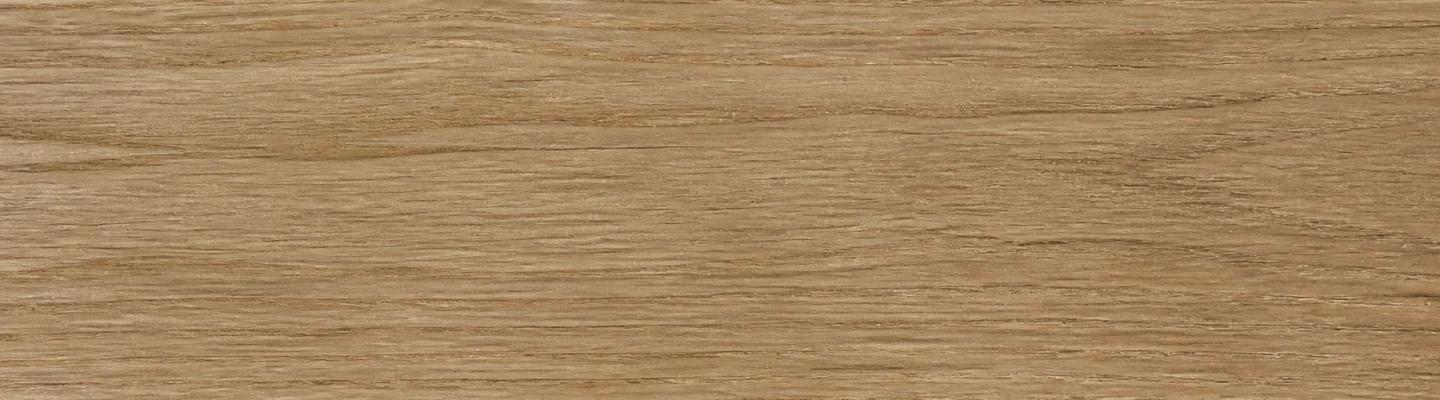
| Color (raw) | Pink-to-reddish brown with creamy sapwood | Light tan to greyish brown, more uniform |
| Color under stain | Warmer; takes red and brown stains deeply | Cooler; takes natural, smoked and weathered finishes well |
| Grain pattern | Coarse, open, prominent rings — busier visual | Tighter, straighter, more linear — cleaner visual |
| Janka hardness | 1,290 lbf | 1,350 lbf |
| Tannin content | Lower — less iron-reaction risk | High — turns black where it meets iron and moisture (rust-stain risk under bare iron baluster shoes) |
| Pore structure | Open pores — wicks water when unfinished | Pores plugged with tyloses — water-resistant; the barrel and boat-deck oak |
| Shrinkage, green to oven-dry (Wood Handbook) | Radial 4.0% · tangential 8.6% | Radial 5.6% · tangential 10.5% |
| Movement in service (per 1% MC change, flatsawn) | ≈0.37% of width | ≈0.37% of width — the same |
| Cost (relative) | 1.00× — the baseline | ≈1.5× on the UWP 1″ tread schedule |
| UWP catalog lengths, 8070 | 42″, 48″, 60″ · plus 72″, 84″, 96″ | 42″, 48″, 60″ |
| 20/20 supply policy applies? | No | Yes — see below |
What each species actually looks like on a stair.
Red oak — warm, busy, traditional.
Red oak is the warm-toned American oak. Raw, it reads pink-to-reddish under shop lights, and the grain rings are big, open and visually busy. Under traditional stains — Provincial, Early American, Special Walnut, Jacobean — it pulls deep, rich and consistent. Red oak treads on a Houston traditional stair with painted risers and white turned balusters is the most-installed combination in the city, by far. It looks at home in Tanglewood, Garden Oaks, the Heights and West U.
White oak — cool, calm, modern.
White oak is the cooler, quieter American oak. Raw, it reads light tan to grey-brown, and the grain is tighter and more linear. Under a natural finish (clear poly or hardwax oil) it stays pale and modern — the look that drives most current Houston new-build interiors. Under fumed, smoked or weathered finishes it goes greyer and more European. It pairs cleanly with iron balusters, white wall paneling and minimal stair detail.
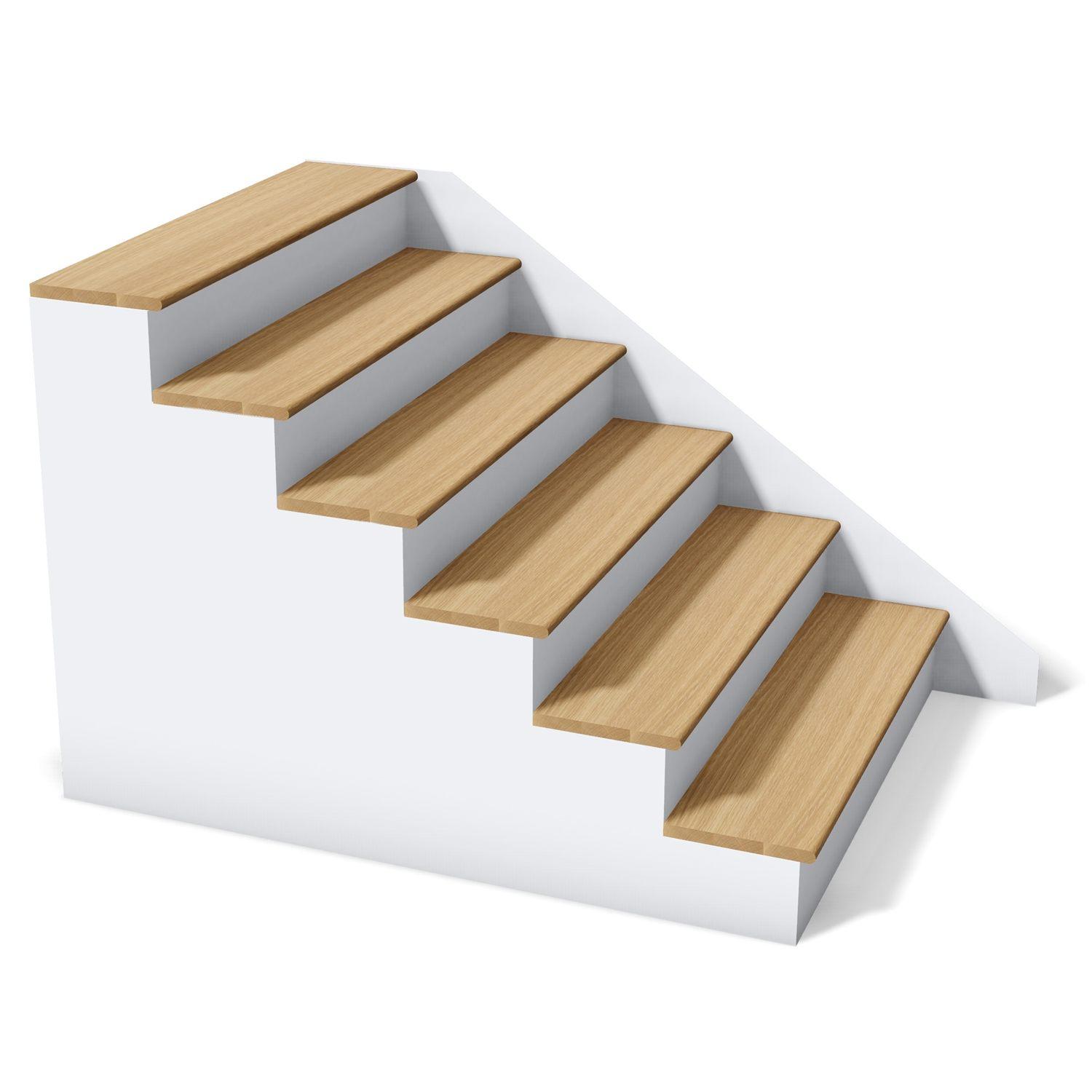
Both species are hard enough. Neither is hardest.
Janka hardness measures the force required to embed an 11.28 mm steel ball halfway into the wood. Red oak rates 1,290 lbf; white oak rates 1,350 lbf — about 5% harder. In day-to-day stair use, the difference is invisible. Both handle pet claws, hard-soled shoes and dropped tools. Both will mark under a stiletto heel or a dropped wrench — that is wood, not the species.
If dent resistance is the priority, hickory (1,820 lbf) and hard maple (1,450 lbf) are harder — both are custom-run tread species at UWP rather than catalog stock. On a standard residential stair, red oak and white oak are the right answer 95% of the time.
White oak resists water. It does not move less.
Houston runs 60–80% relative humidity most of the year, with seasonal swings wider than most US markets. Solid hardwood treads acclimate to that — both species. The common claim that white oak is "the more stable oak" gets the mechanism wrong, and the Wood Handbook numbers show it:
- White oak's pores are plugged with tyloses, which is why it holds liquid — barrels, boat decks, exterior thresholds. That slows how fast it takes up moisture; it does not reduce how far it moves once it has. On an interior stair, sealed on all faces, the two behave the same.
- Red oak's open pores wick water faster if the surface is unfinished. Once sealed (poly, oil or hardwax) the difference disappears. Seal every face of a tread, including the underside and the ends — that is what stops a tread taking up moisture unevenly and cupping.
- Both species need the same jobsite conditions: HVAC running and holding 35–55% RH, and 5–7 days of acclimation in the room, stickered, before installation. UWP hardwood leaves the mill at 6–9% moisture content.
Why a White Oak order includes 20% shorts.
Long white oak is the constrained part of the log — European demand, the barrel industry and architectural work all pull on the same US-grown stock. While supply is tight, every UWP white oak order includes 20% short lengths (6 to 8 feet) at standard pricing. A customer who declines the shorts pays a 20% premium on the order instead. A 100 board-foot order arrives as 80 BF long and 20 BF short, or 100 BF long at 1.2× the price.
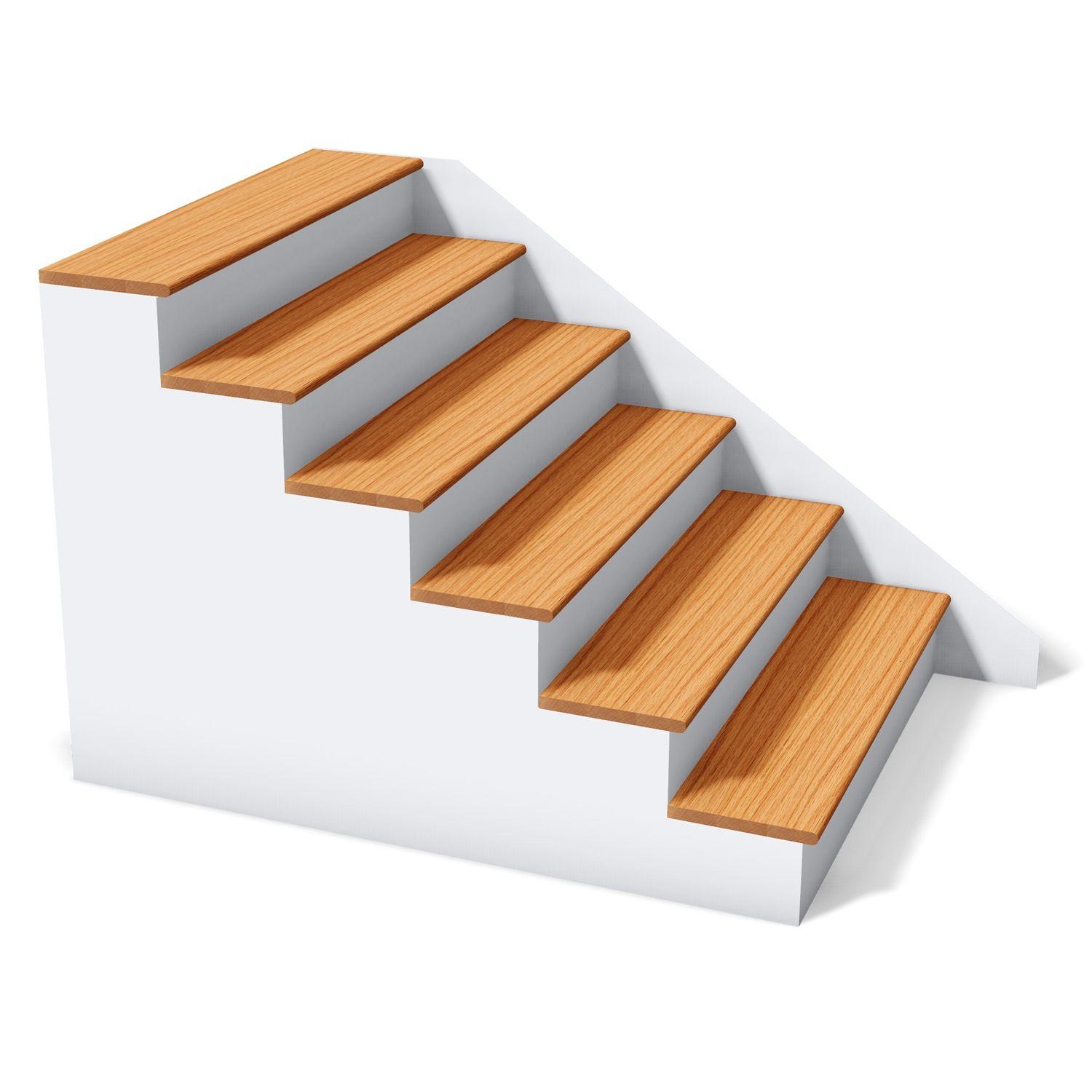
For stair treads the shorts are rarely a problem: 6–8 feet covers most treads, all risers and nearly every return. A 12-tread white oak order lands comfortably inside the long stock, and the shorts go into risers, short pie treads and blocking. The lengths that genuinely need to be long — an unbroken handrail down a long hall, a 96″ tread — are the exception, and worth planning around rather than paying the premium for the whole order.
The White Oak 20/20 calculator works the split from any order quantity — board feet, linear feet, pieces or dollars — in English or Spanish. Linked below.
Quick answers.
- Can I mix red oak and white oak on the same stair?
- Technically yes, visually no. Even under stain, the grain patterns and tones differ enough that side-by-side they read as inconsistent. The exception: a red oak stair with a white oak handrail (or vice versa) can work as an intentional contrast — but tread-to-tread mixing reads as a mistake.
- Will my red oak treads look orange-pink under modern finishes?
- Possibly. Red oak under a clear or natural finish keeps its pink-red tone. To pull red oak toward a greyer, more modern look, use a smoked or weathered stain system — or pick white oak from the start.
- Is white oak worth the price premium for stair treads?
- For modern-design homes with natural or low-sheen finishes — yes. For traditional or stained finishes — no, red oak does the same job for less. The premium buys the look, not structural performance.
- How does the 20/20 policy affect my install timeline?
- It does not. The policy is about order composition and material recovery, not lead time. UWP confirms current material availability and production timing for Red Oak and White Oak on the written quote.
- Can I see both species under my finish before ordering?
- Yes — the Tanner Rd counter keeps sample boards of both species in the clear and under common stains, and a piece of your existing floor next to them settles most decisions in a minute. Ask about a sample on your quote if you cannot make it to the yard.
Spec a tread or run the supply math.
8070 Bullnose Stair Tread
Solid 1″ hardwood, Red Oak and White Oak in the catalog.
View →CalculatorWhite Oak 20 / 20 Calculator
Work the 80/20 split on your order — or the premium to skip the shorts.
View →ReferenceWood Species Guide
Every species UWP mills — tone, Janka hardness, shrinkage, cost ladder and how the log is sawn.
View →ConfiguratorCustom Stair Treads Configurator
Other species, custom lengths, curved or pie-shaped treads — planning estimate with UWP review.
View →Questions next to this one
Red oak vs. white oak for stair treads in Houston humidity
Both red oak and white oak make excellent stair treads in Houston — once acclimated, indoor performance is nearly identical. The real choice is look and budget. Red oak runs warm pink-brown with a busy grain at a lower cost; white oak runs golden-tan, takes modern stains more cleanly, and costs more. White oak also needs stainless fasteners — its tannins react with steel.
Read the answer →Walnut vs. white oak stair treads — which one for my project?
Walnut and white oak are UWP’s two premium-feeling stair tread species. Walnut runs deep chocolate brown, reads as luxe and warm, and is the softer of the two (Janka 1010). White oak runs golden-tan, takes modern stains cleanly, and is harder (Janka 1350). Walnut costs more. Pick walnut for statement stairs, white oak for a modern look with better durability and lower cost.
Read the answer →Why does white oak turn black around screws — and how do I prevent it?
Black stains around screws and nails in white oak are iron tannate — what happens when white oak’s high tannins meet iron in moisture. Use stainless steel, epoxy-coated, or brass fasteners — never standard steel. If a stain already appeared, an oxalic acid wash usually lifts fresh marks before they migrate deeper into the grain.
Read the answer →Wood species cheat sheet — red oak, white oak, hickory, hard maple, walnut, brazilian cherry
UWP mills six hardwood species: red oak, white oak, hickory, hard maple, walnut, and brazilian cherry. Red oak is the affordable warm baseline; white oak runs golden-tan and takes modern stains cleanly; hickory shows the strongest grain contrast; hard maple is the tightest, lightest grain; walnut is rich chocolate; brazilian cherry is the hardest and reddest. Pick on look first, hardness second.
Read the answer →
Terms used in this guide
Order treads or compare the samples.
Both species are core UWP offerings. Build a planning estimate in the configurator, or come by the Tanner Rd counter with a piece of your floor; the yard confirms current availability and pickup timing on the quote.