

Iron Balusters
Stair Parts/Iron Balusters
All 41 stocked patterns. Filter by rod diameter or finish to narrow the set; every pattern ships in multiple powder-coat finishes.
1/2" & 9/16" · Solid
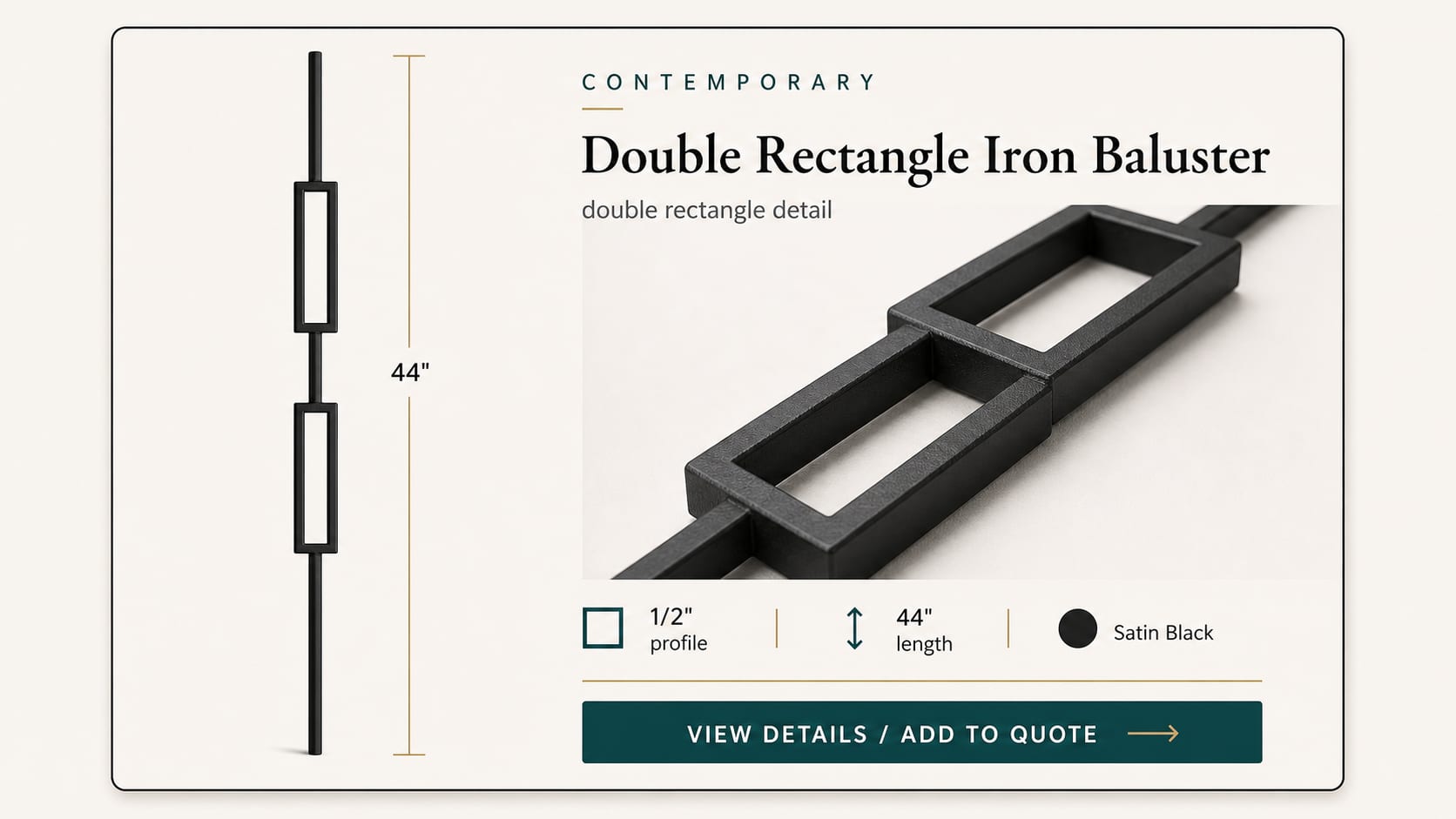
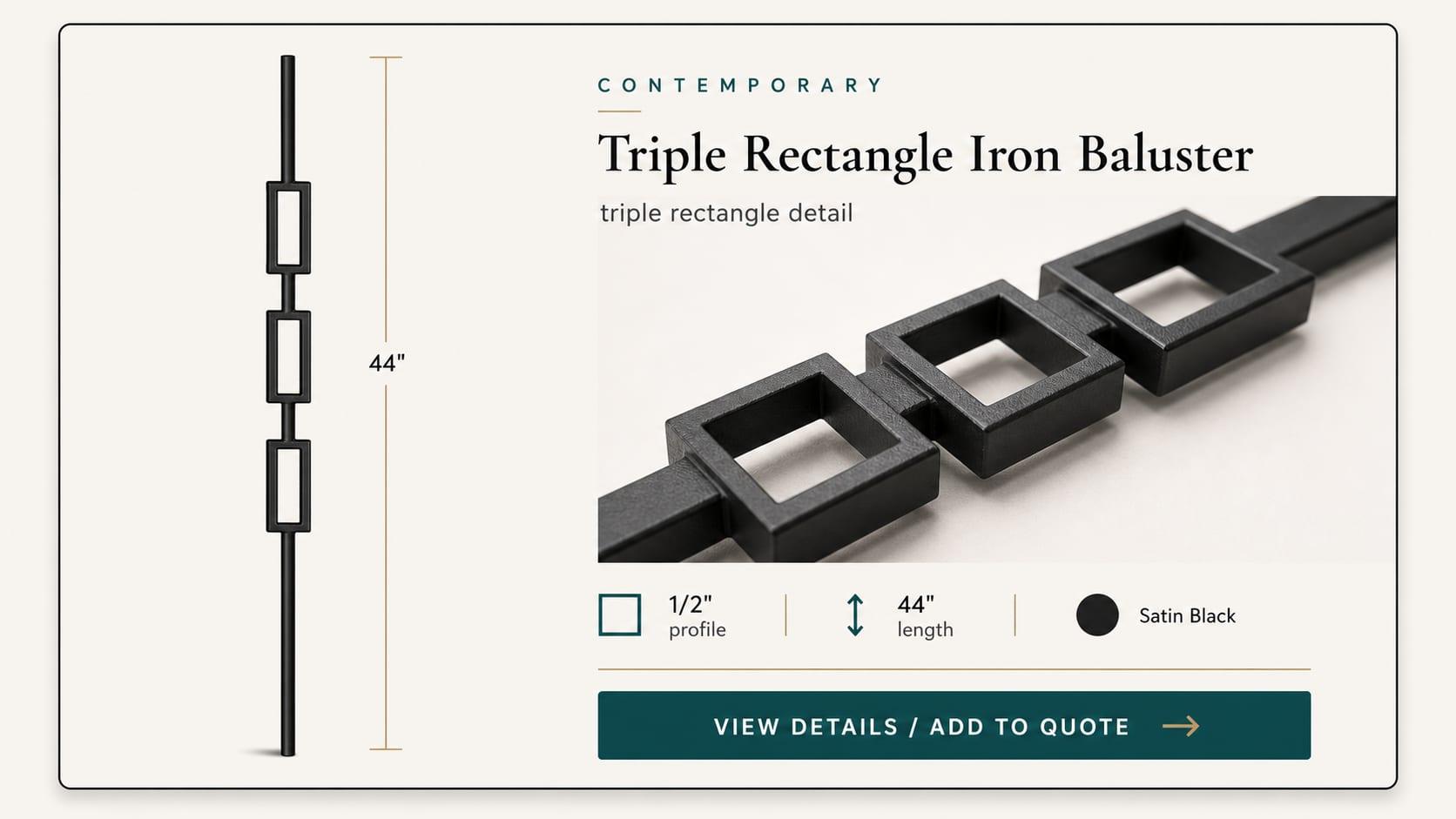
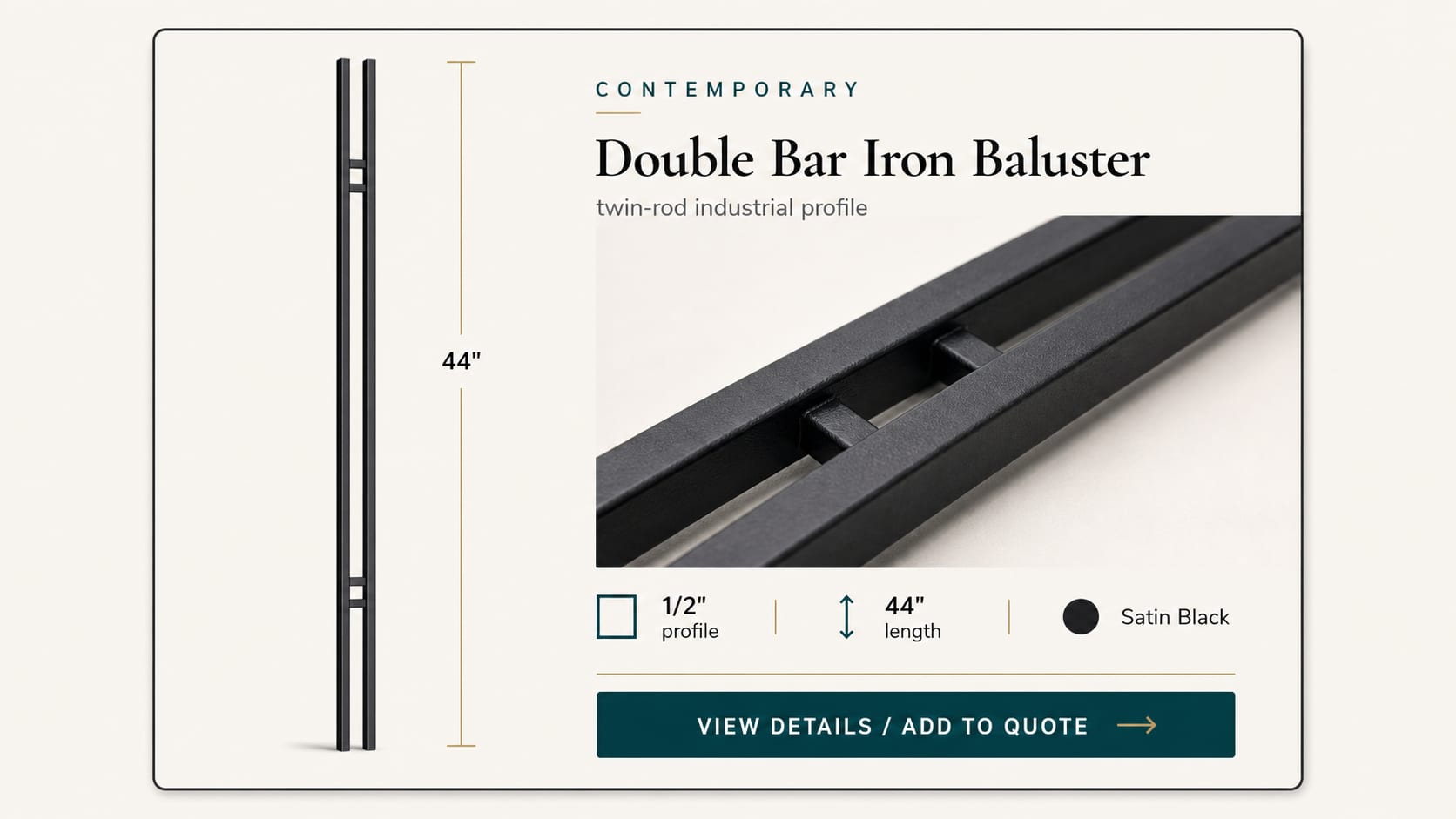
Contemporary(5)
Open loops, stacked rectangles, twin-rod and star circles — the clean, modern-leaning patterns.


9/16" · Solid
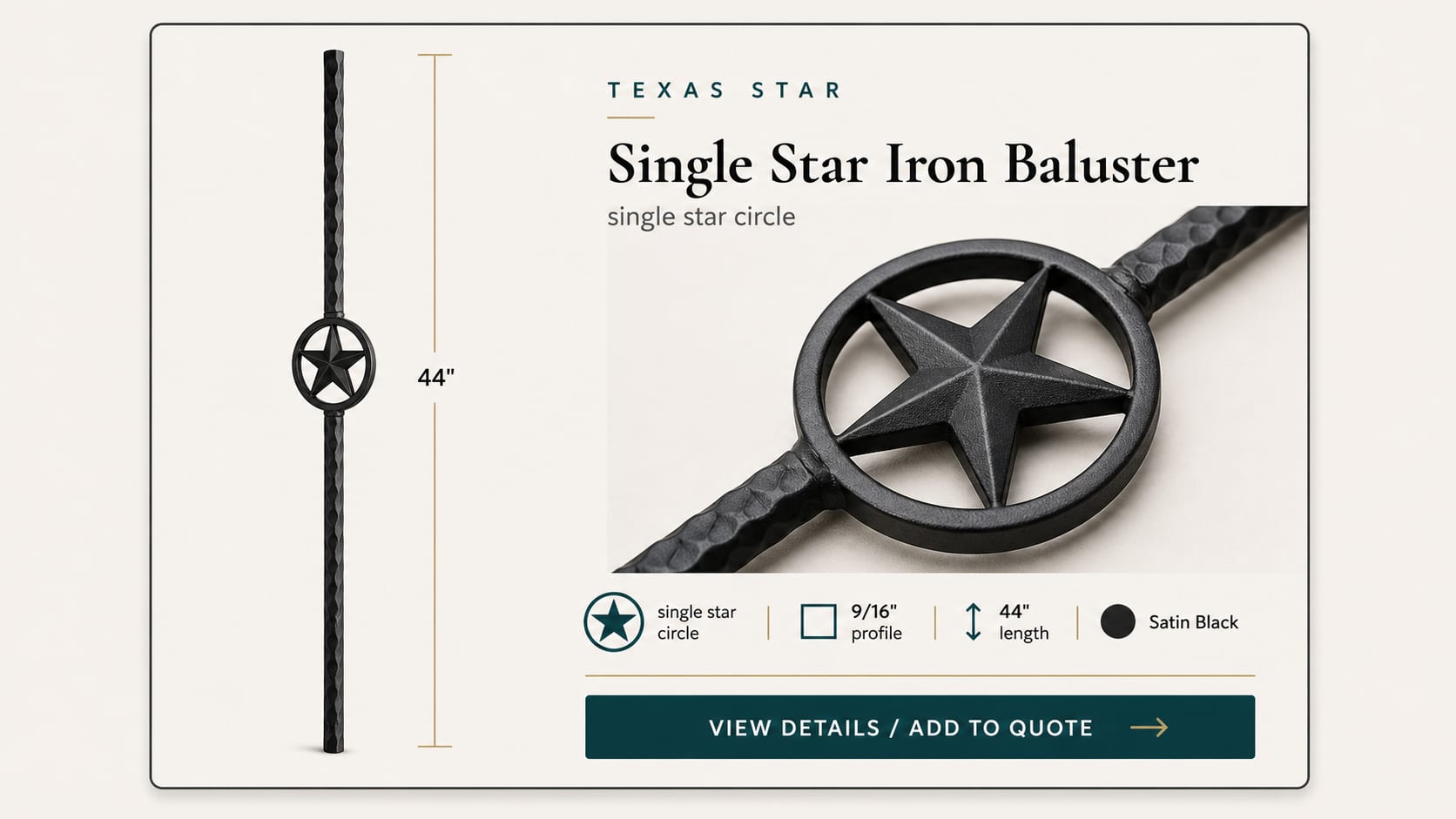
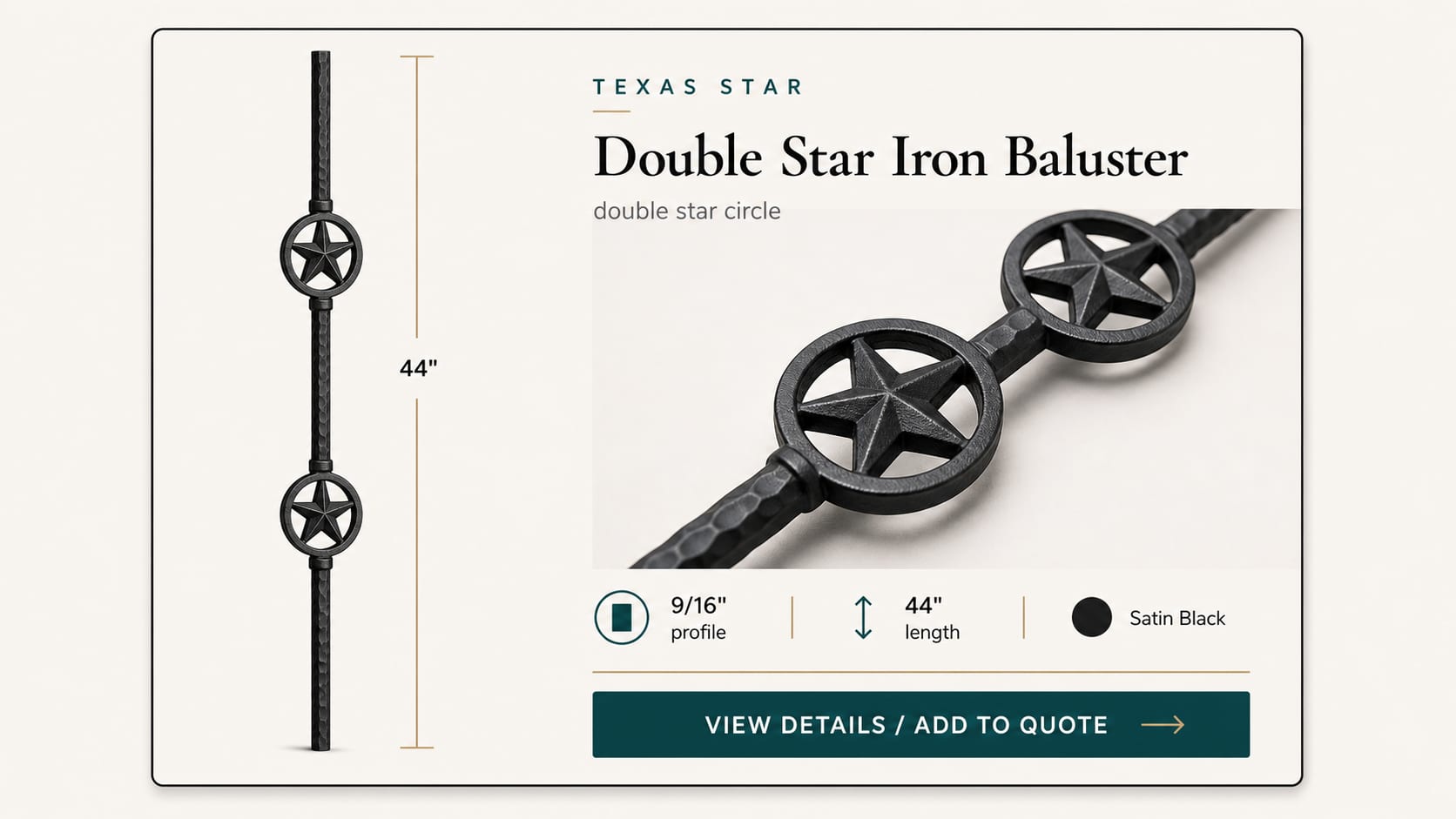
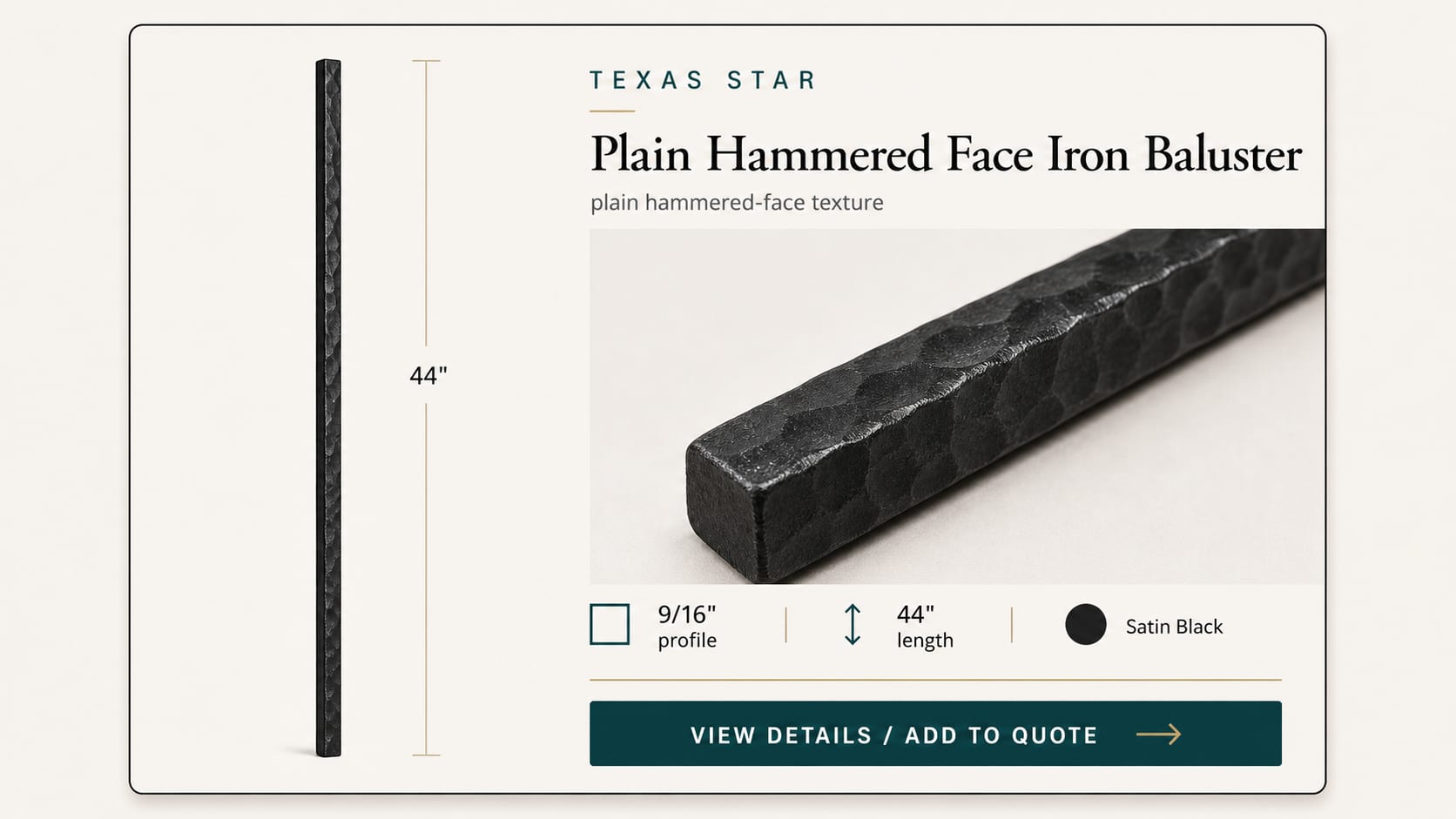
Texas Star(3)
Hammered rods and Lone Star medallions — Texas-inspired accents for ranch, Hill Country and traditional stair runs.
1/2" · Solid
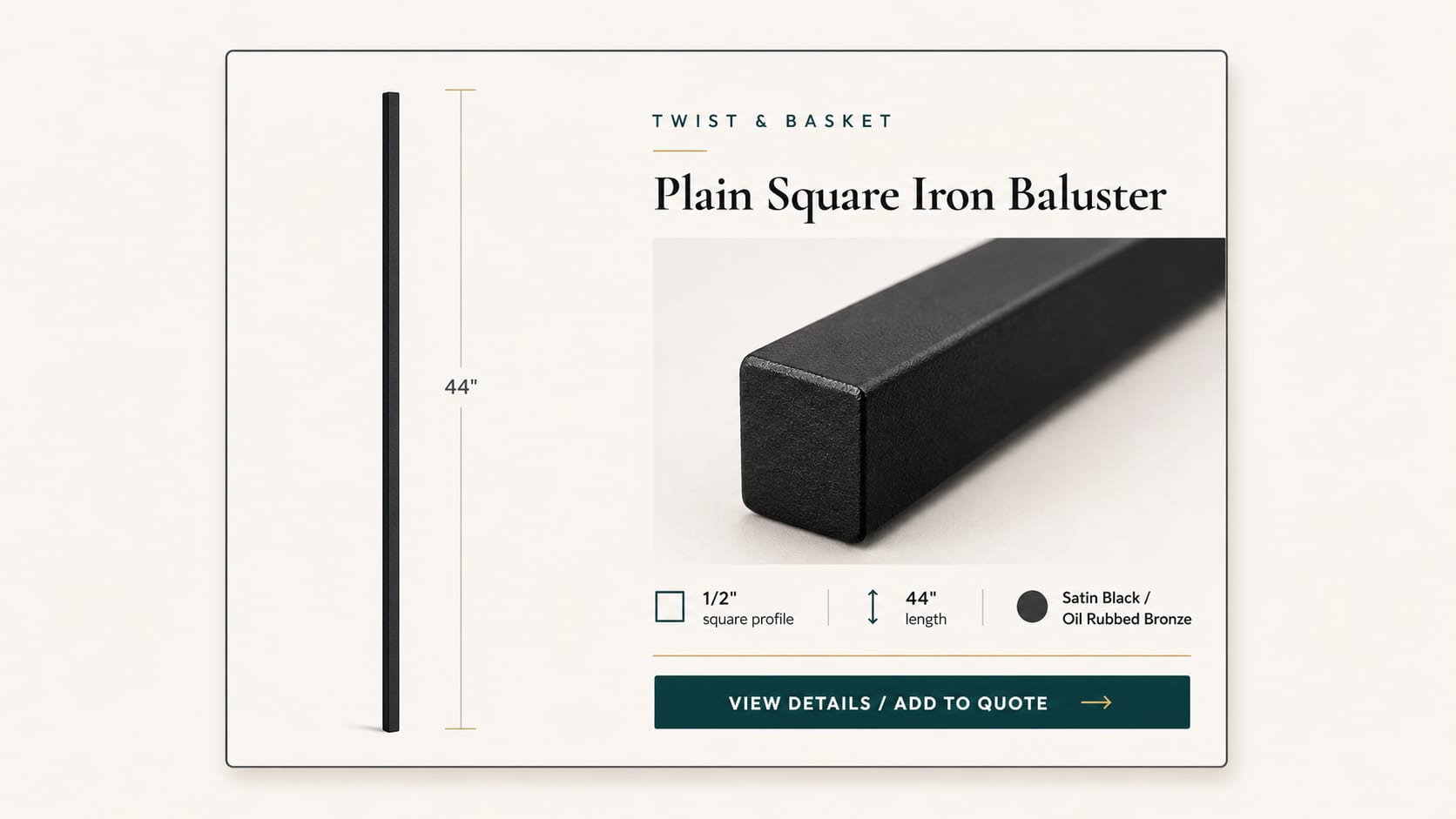
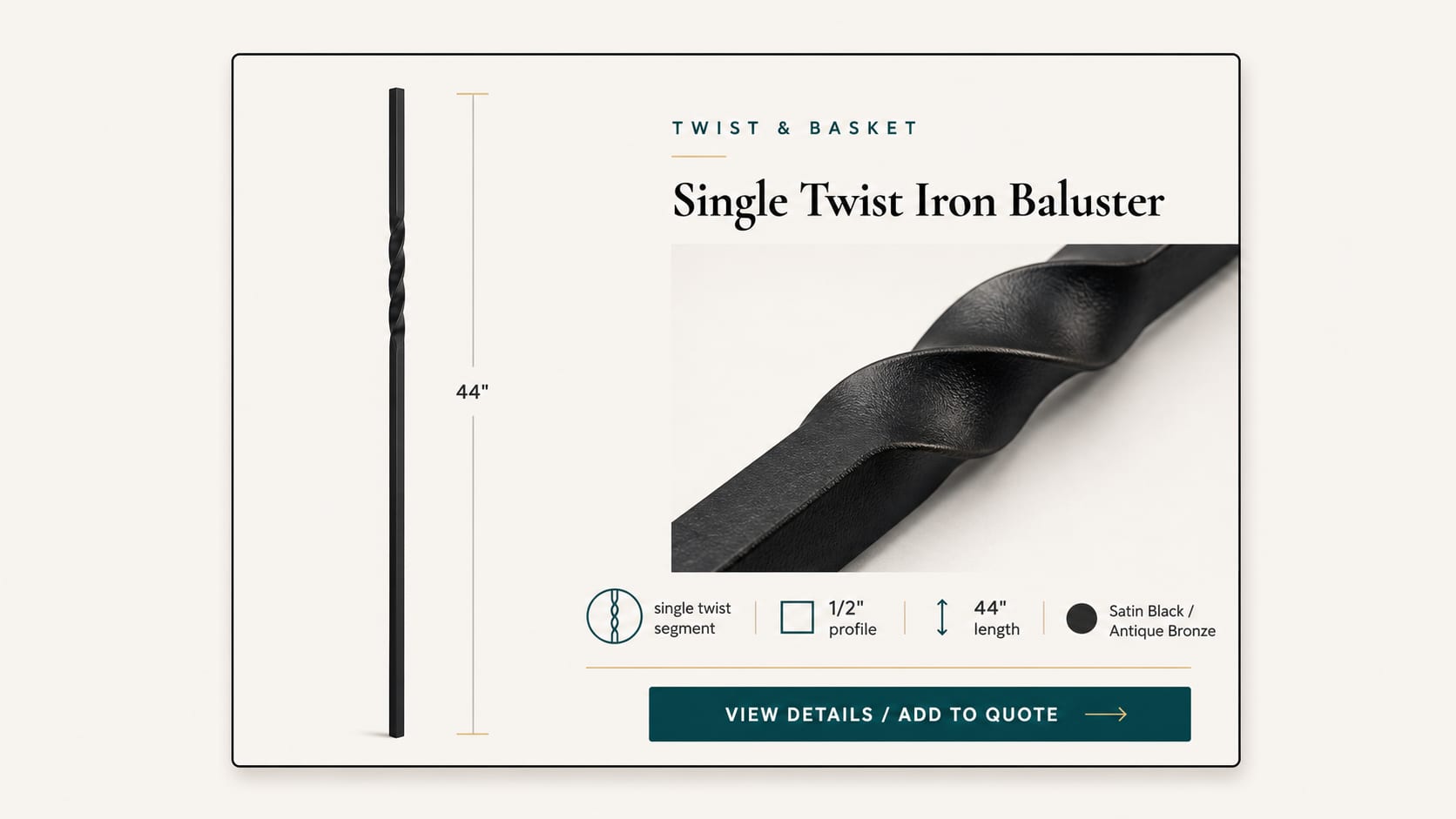
Twist & Basket(6)
Single and double rope twists, open baskets and knuckle accents — the classic transitional-stair workhorse.

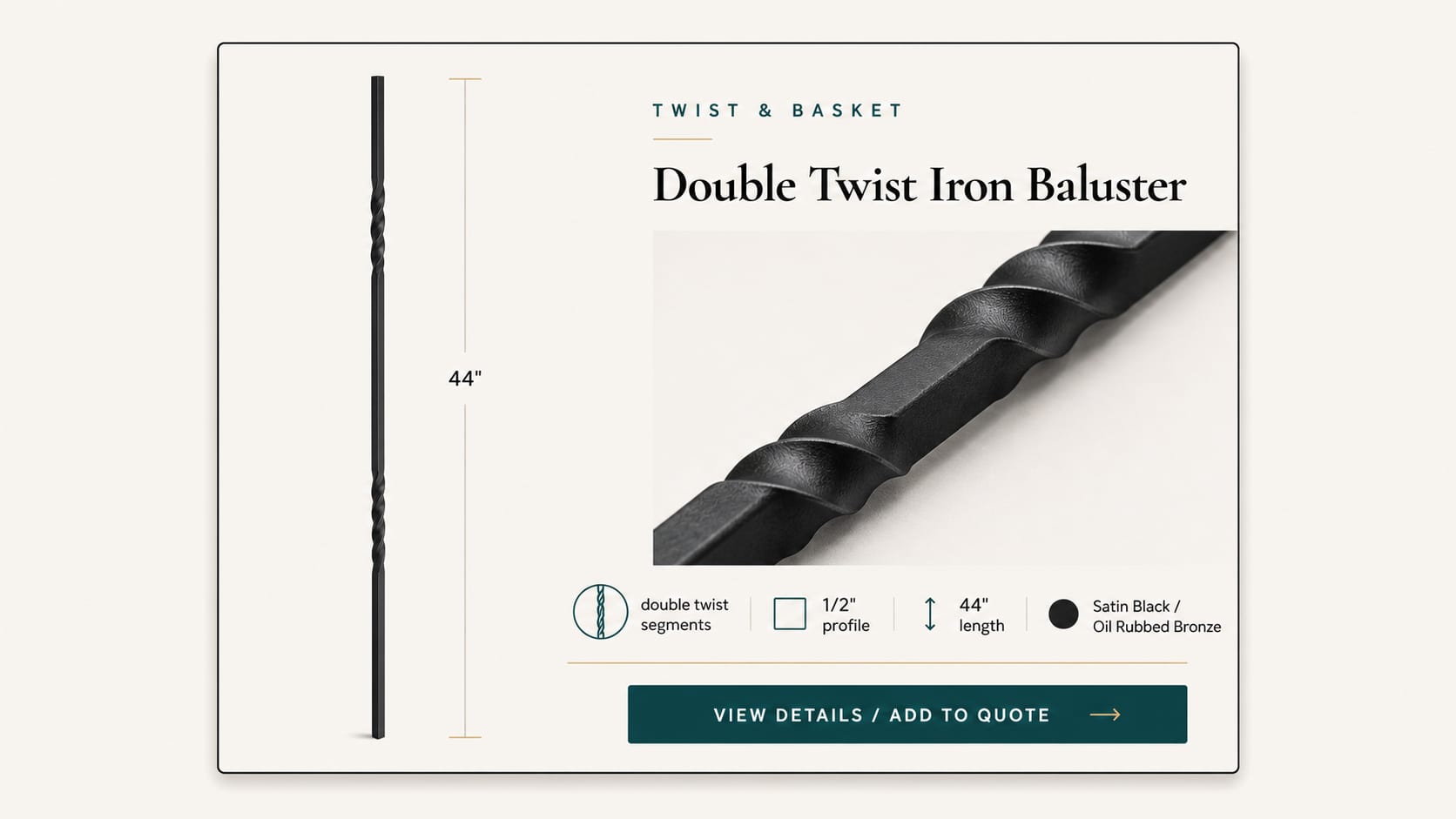
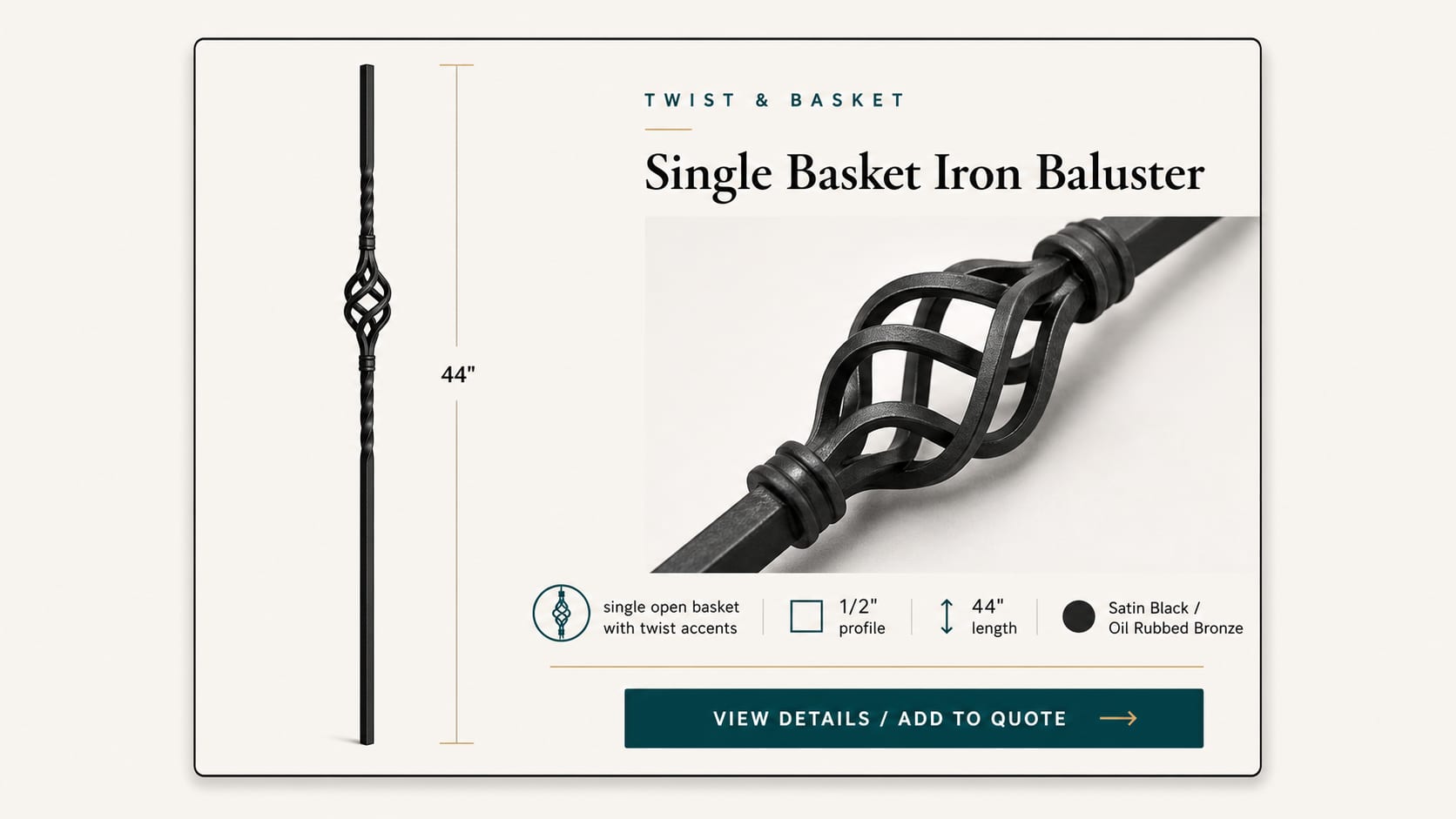
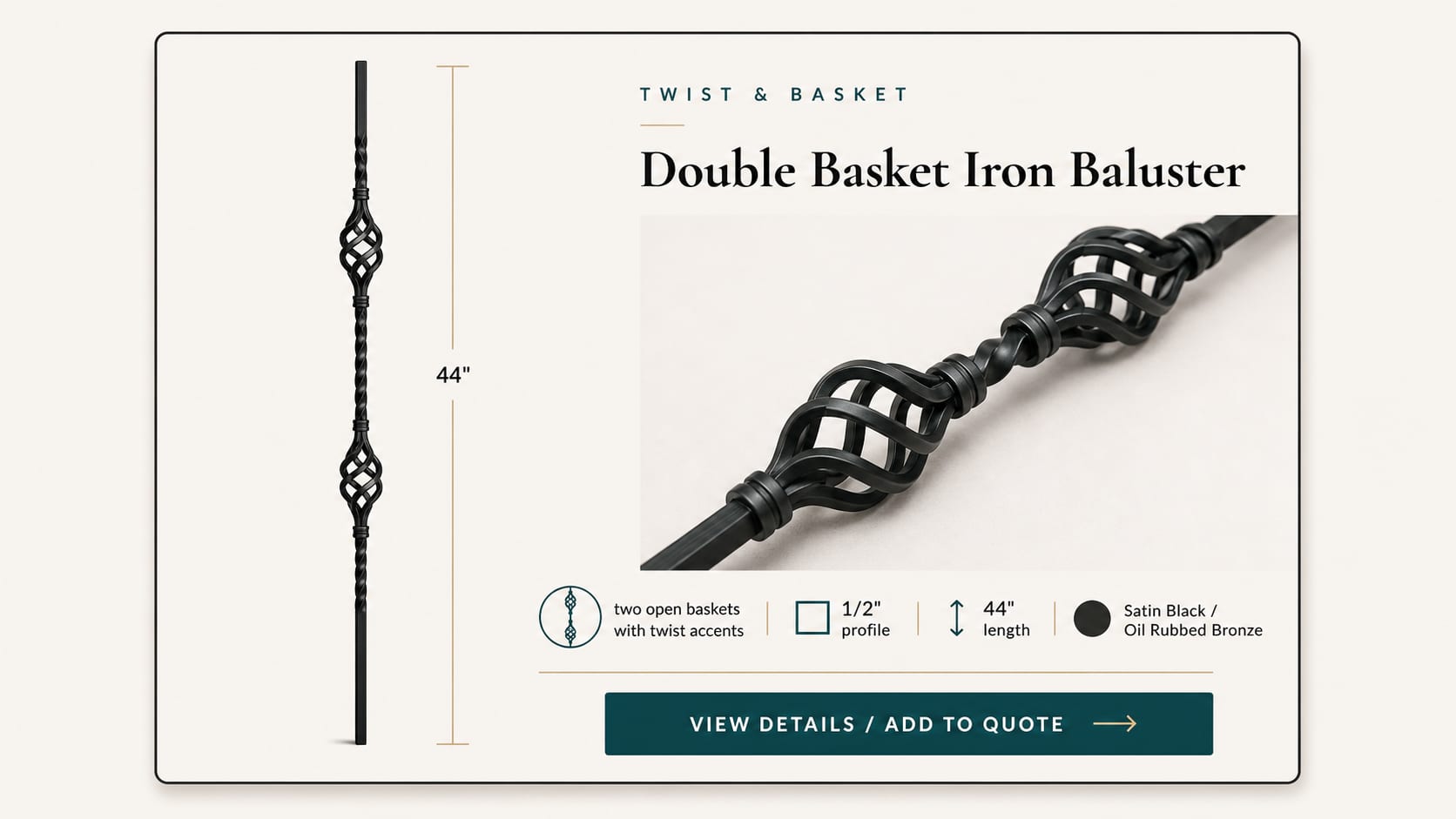
1/2" · Solid
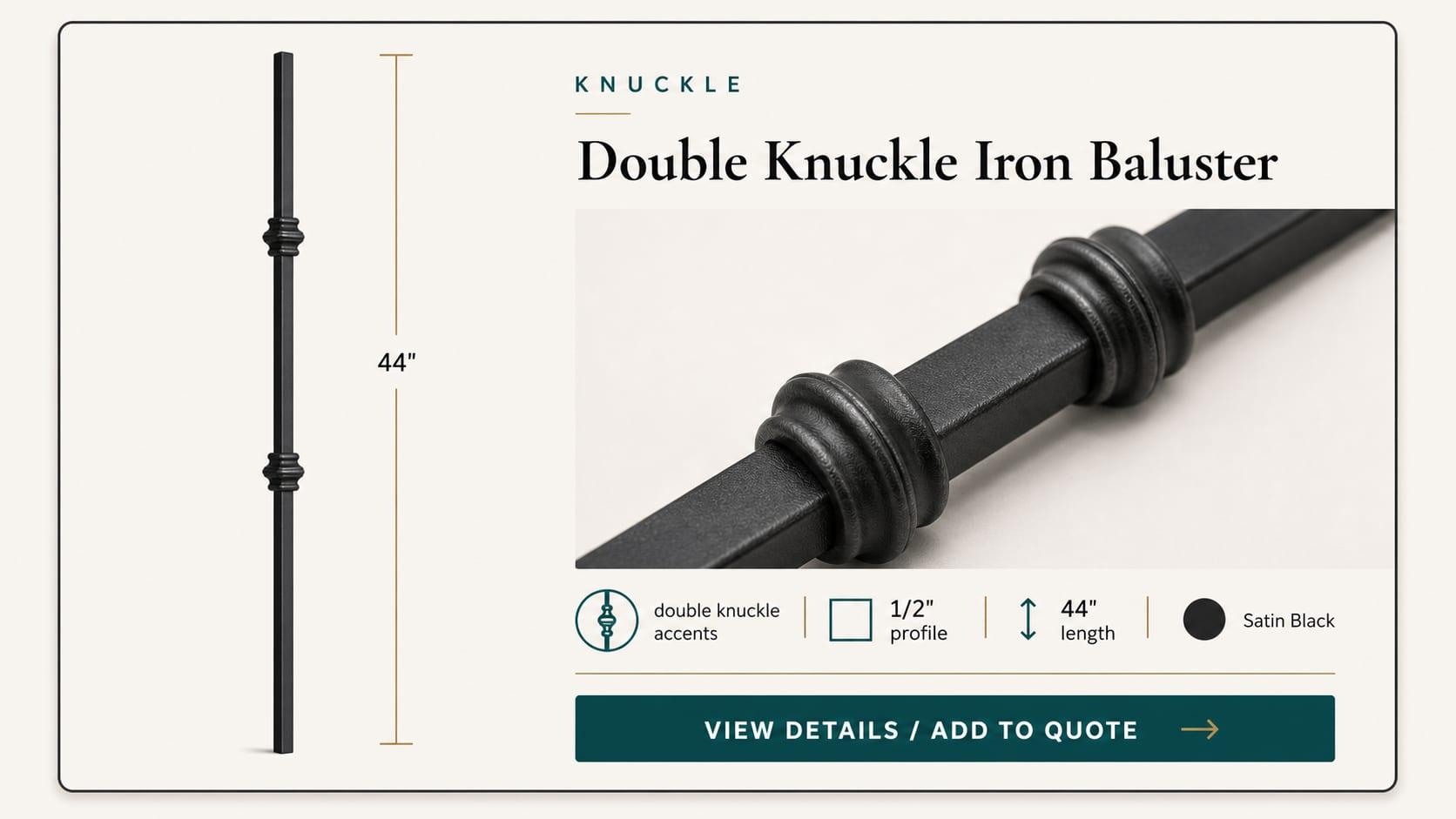
Knuckle(2)
Simple square rods with single and double forged knuckles — subtle traditional detail without scrollwork.
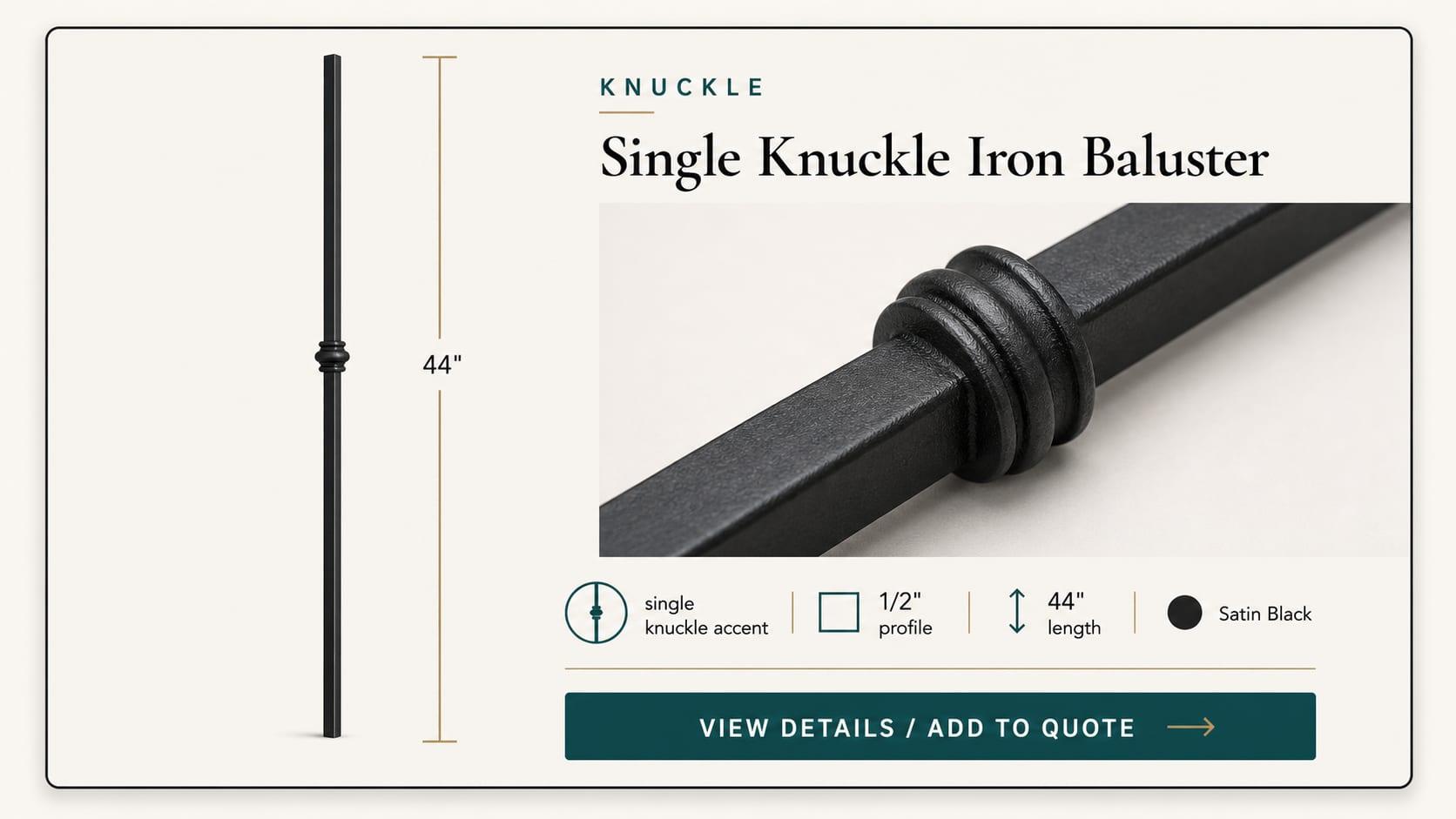
1/2" · Solid
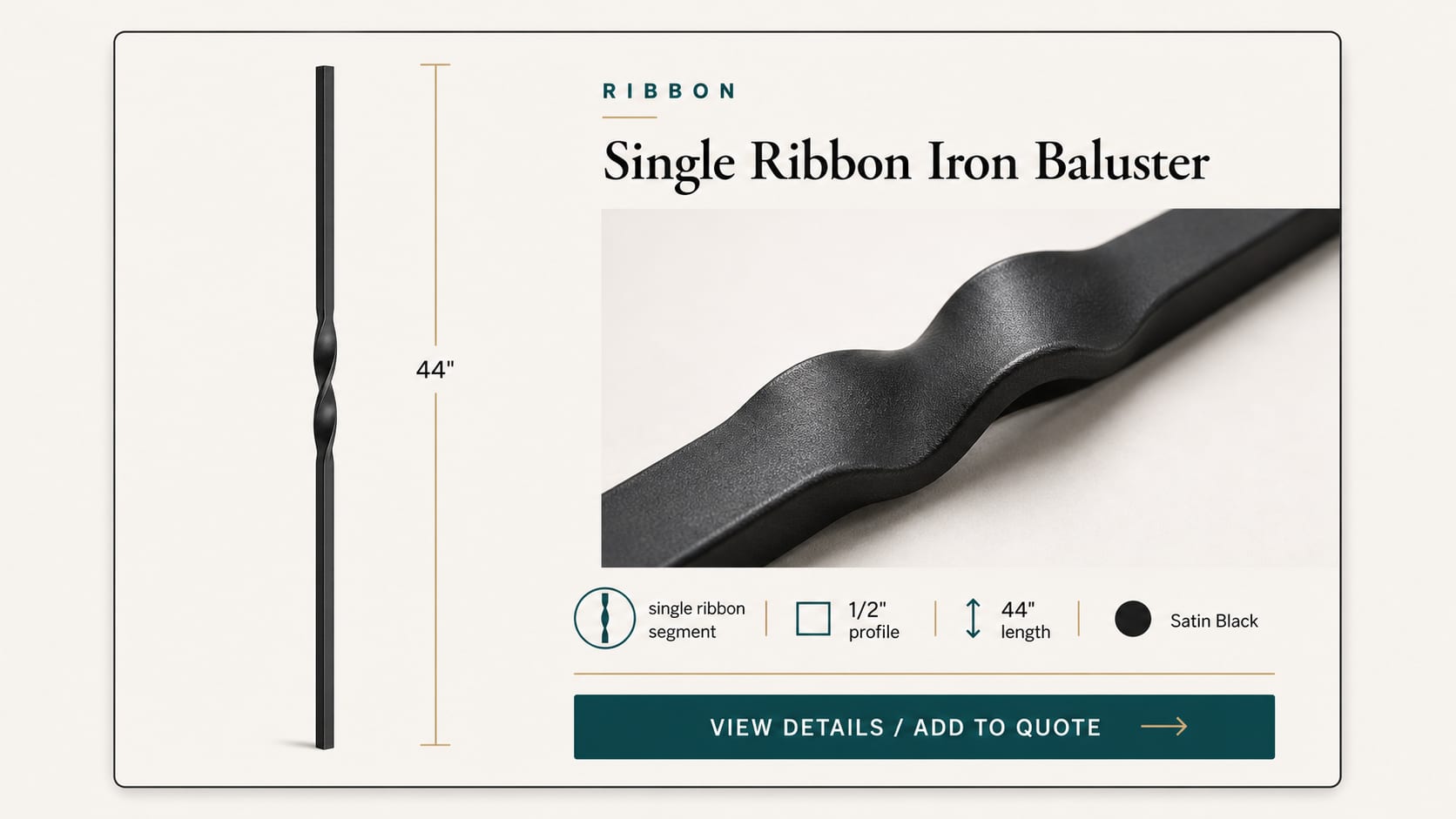
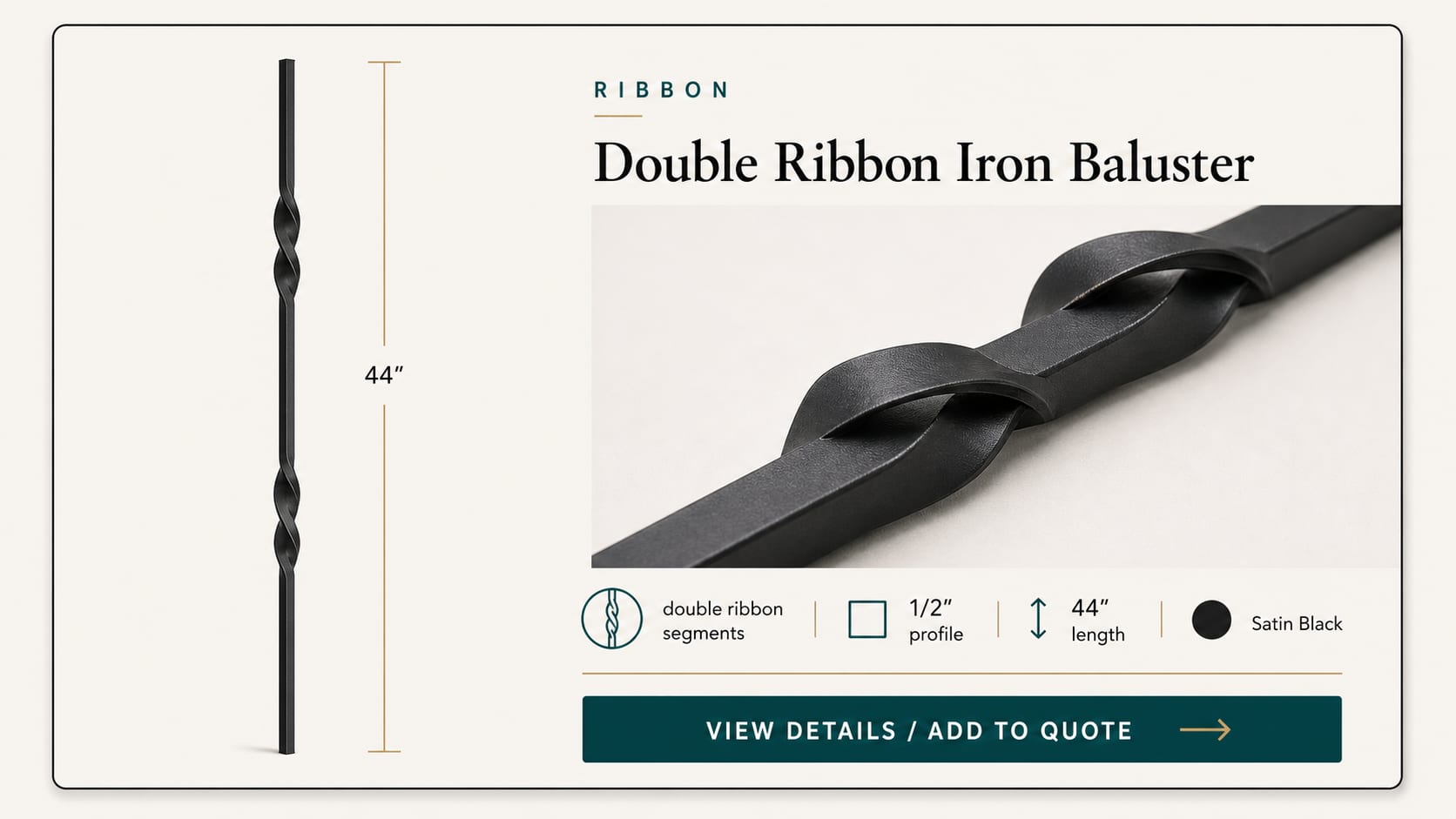
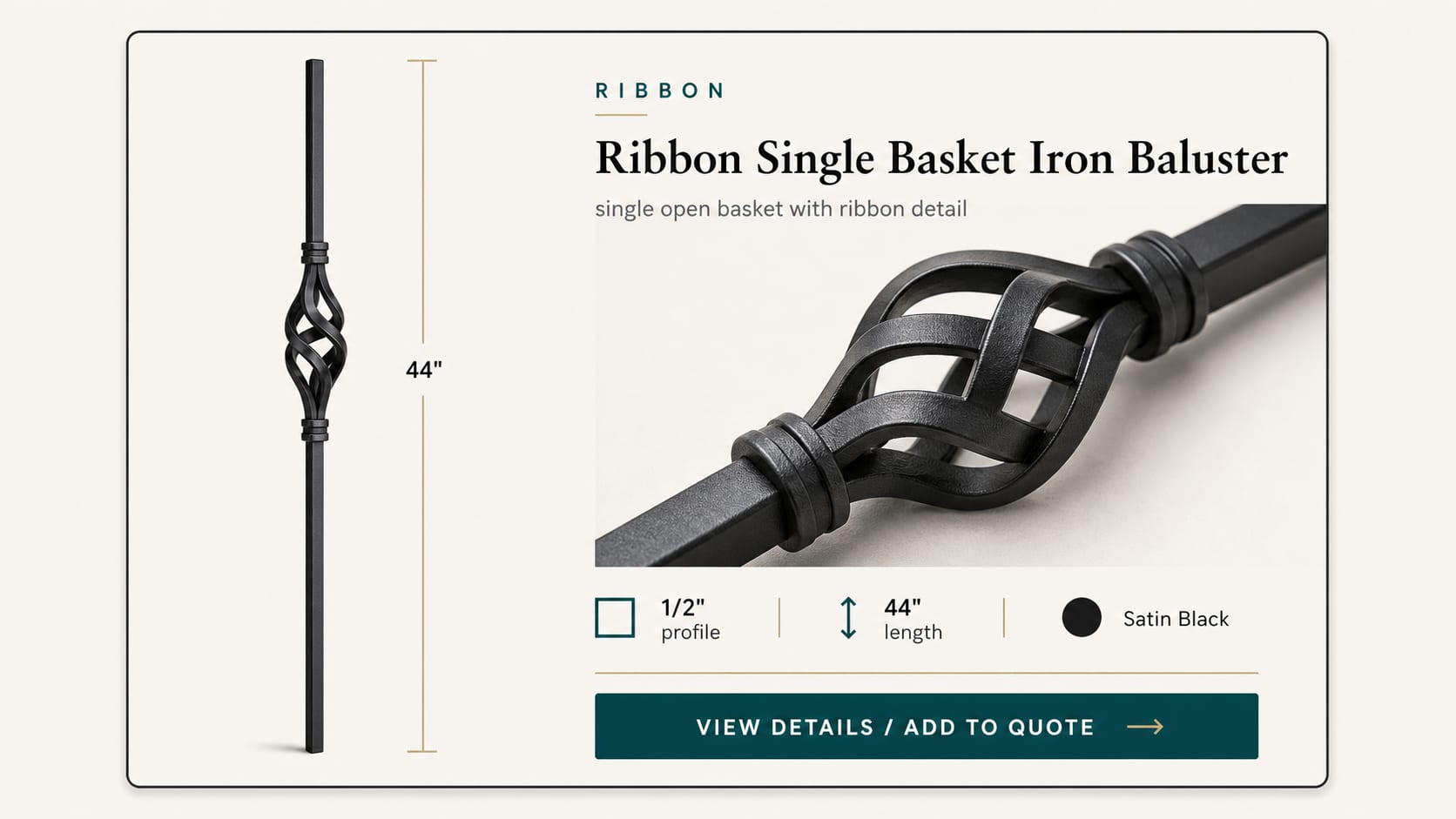
Ribbon(5)
Ribbon segments, baskets and a double butterfly — ornate centers for traditional interiors.
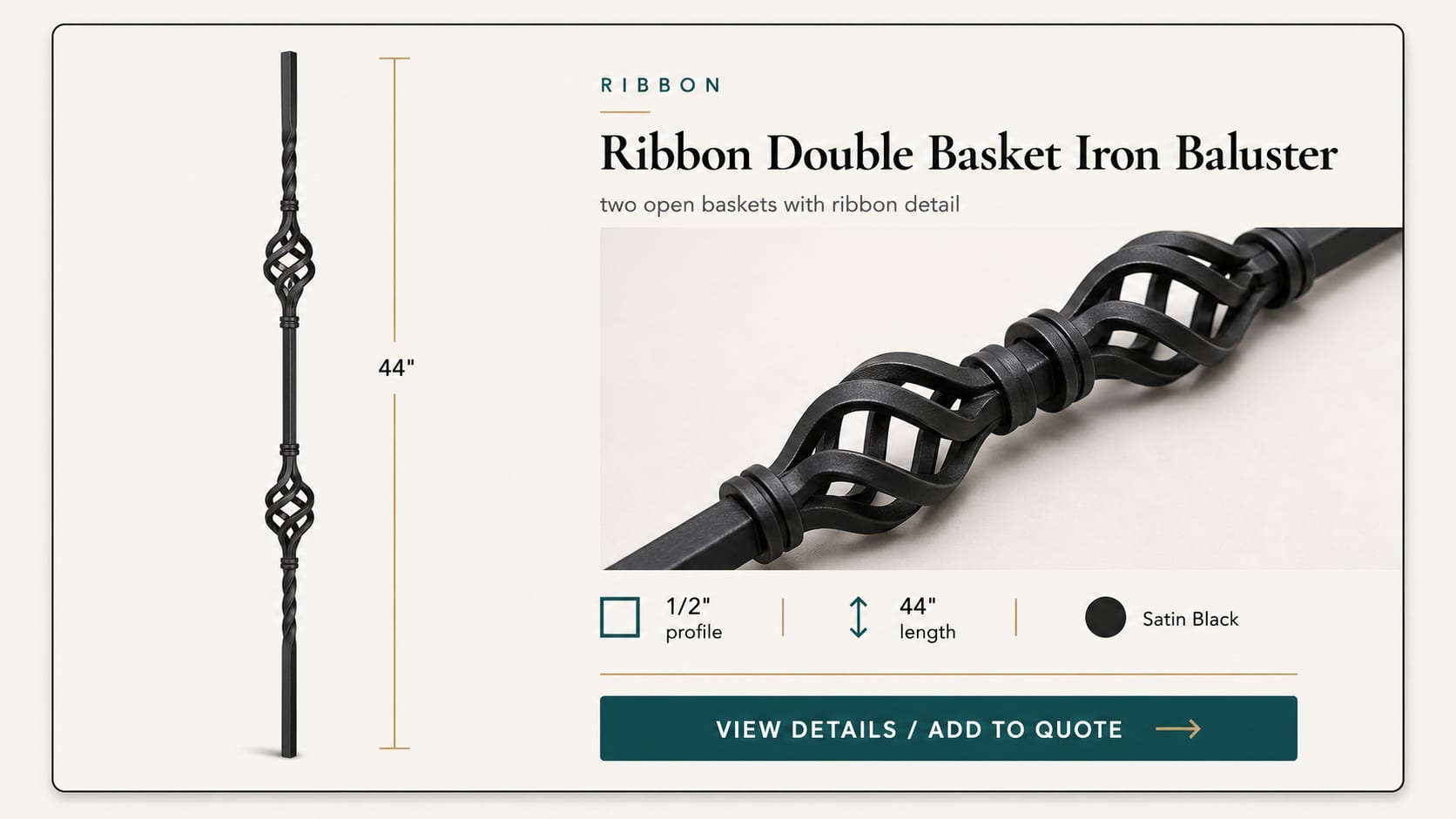
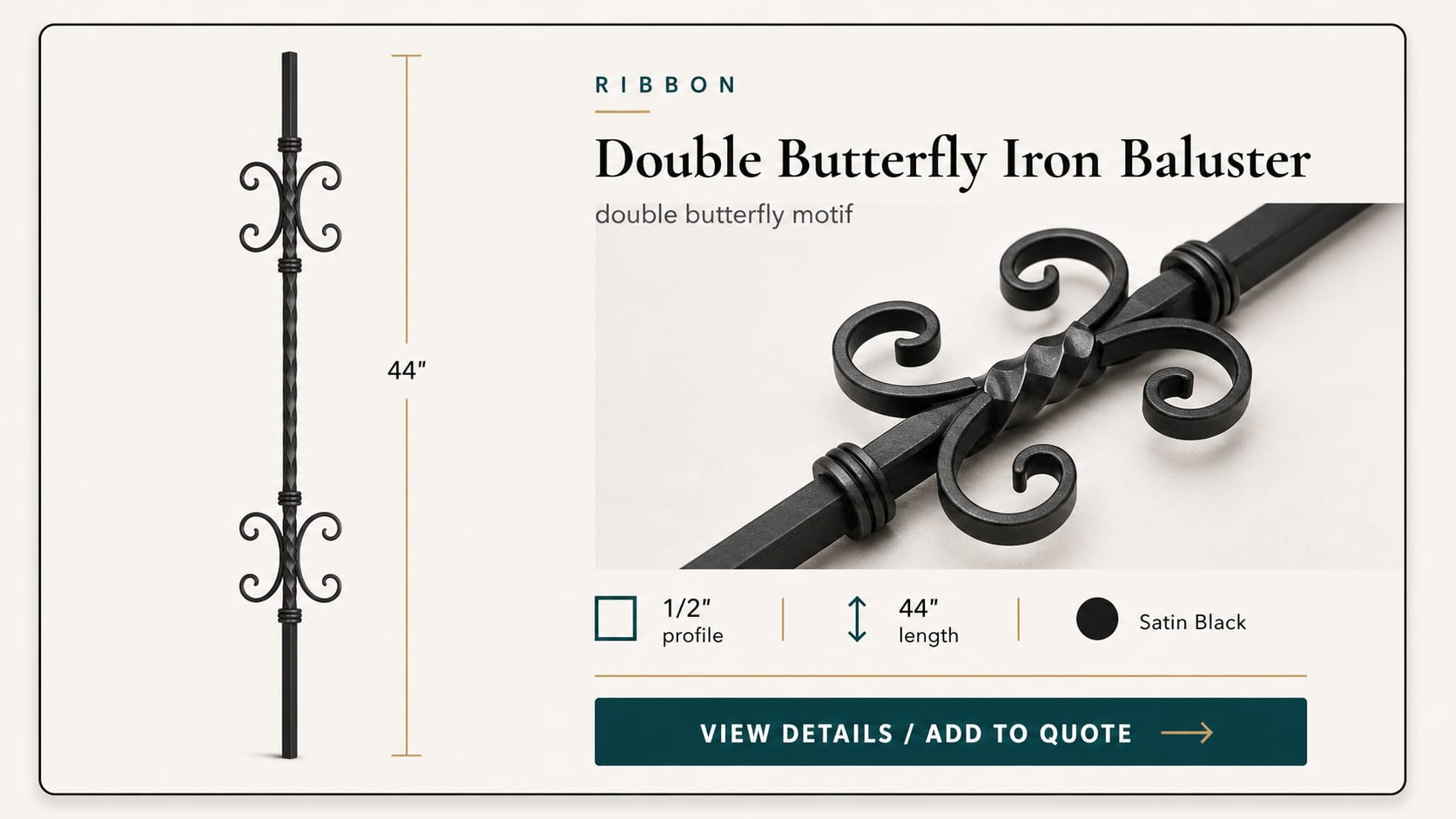
9/16" · Solid
Hammered(2)
Hand-hammered face texture with optional knots — old-world depth on a 9/16" rod.
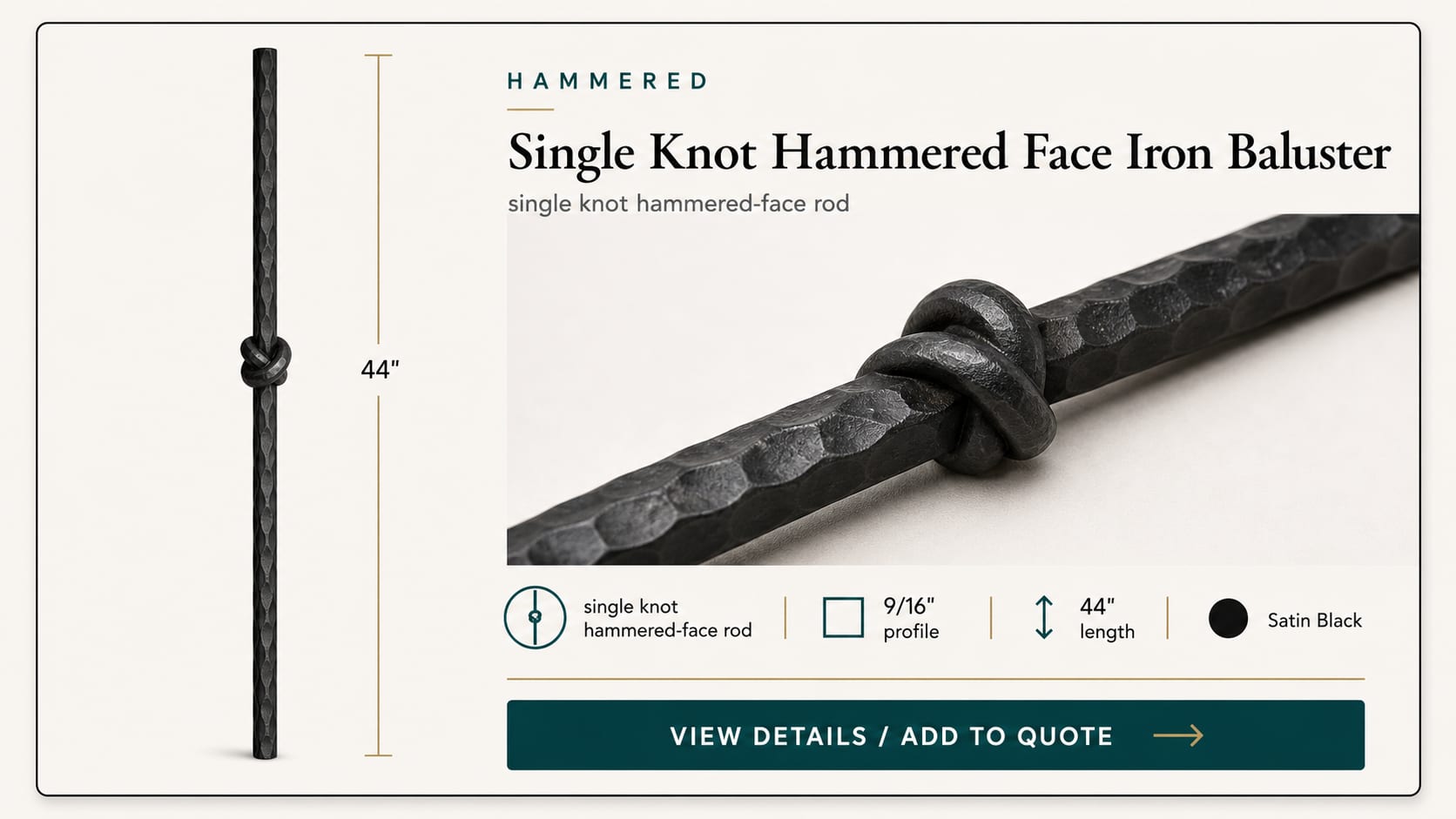
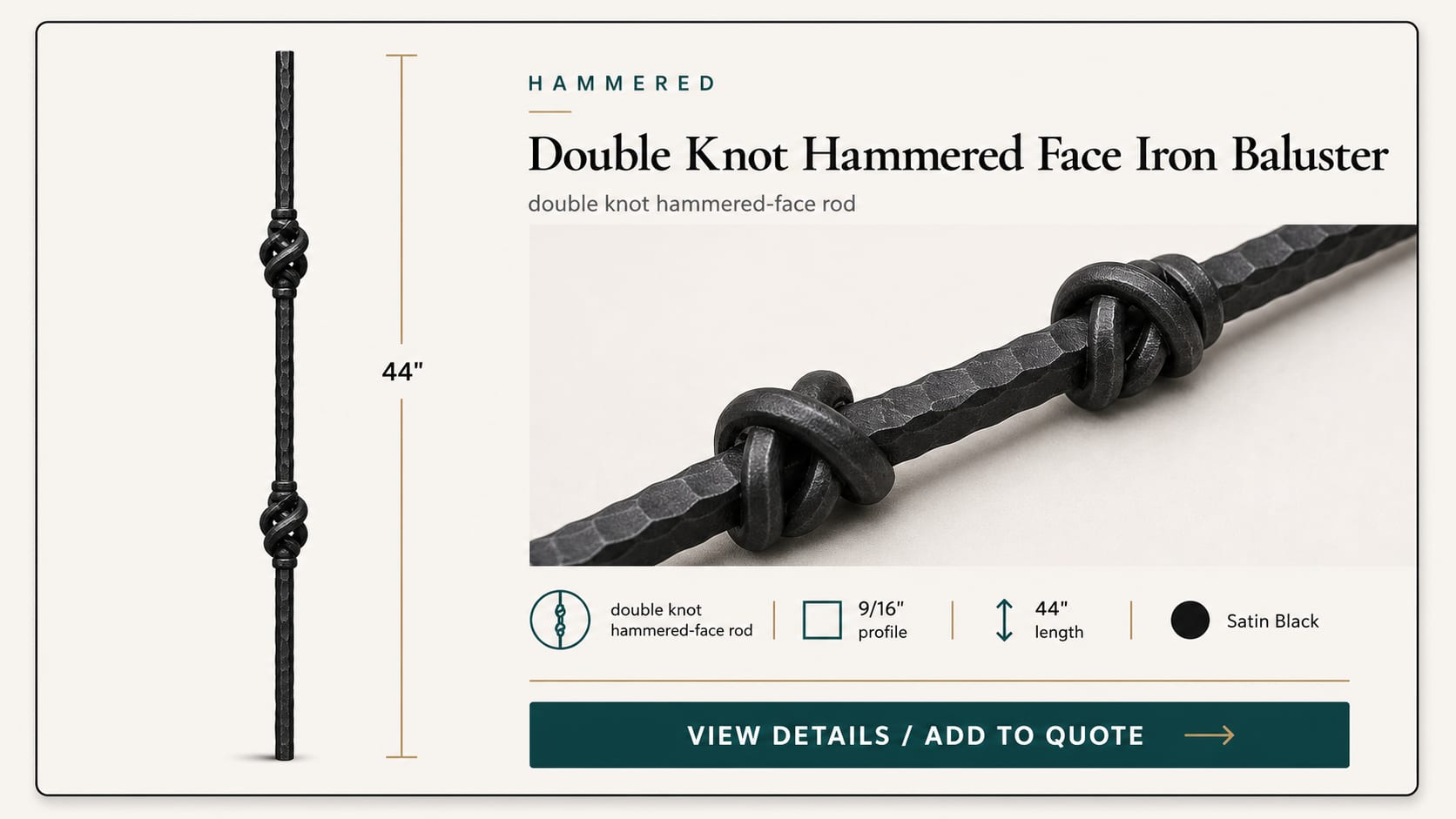
9/16" · Solid
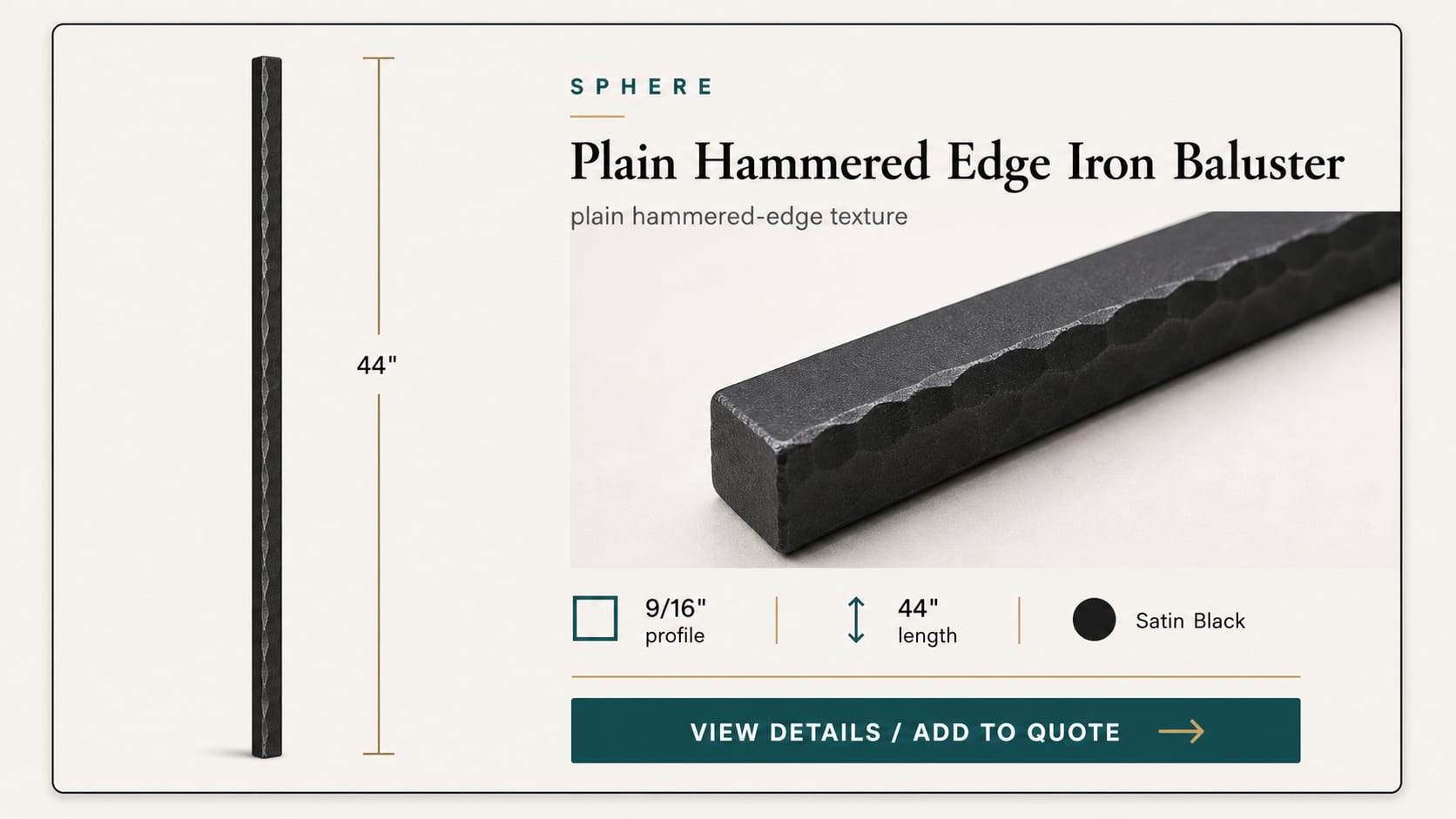
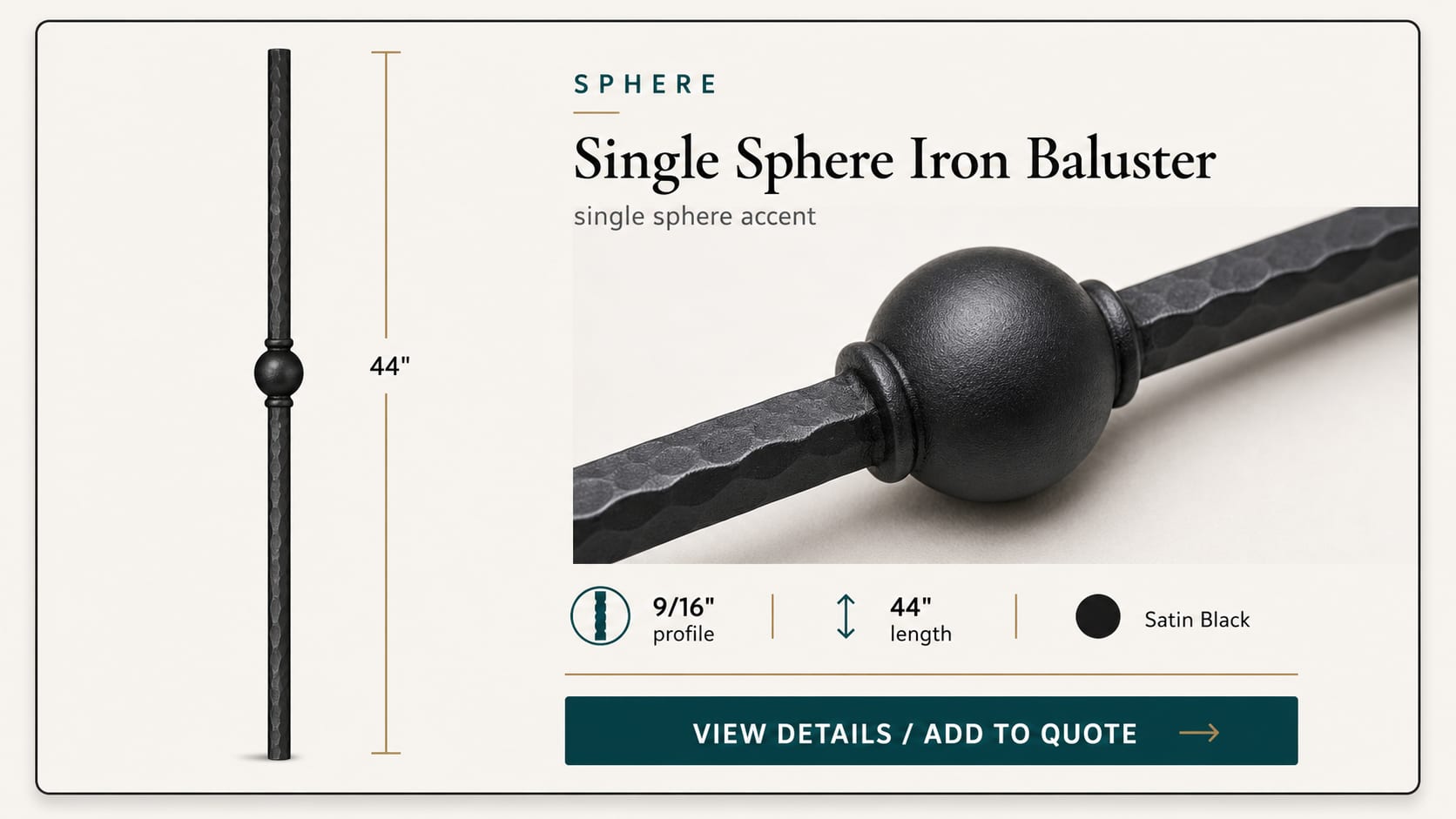
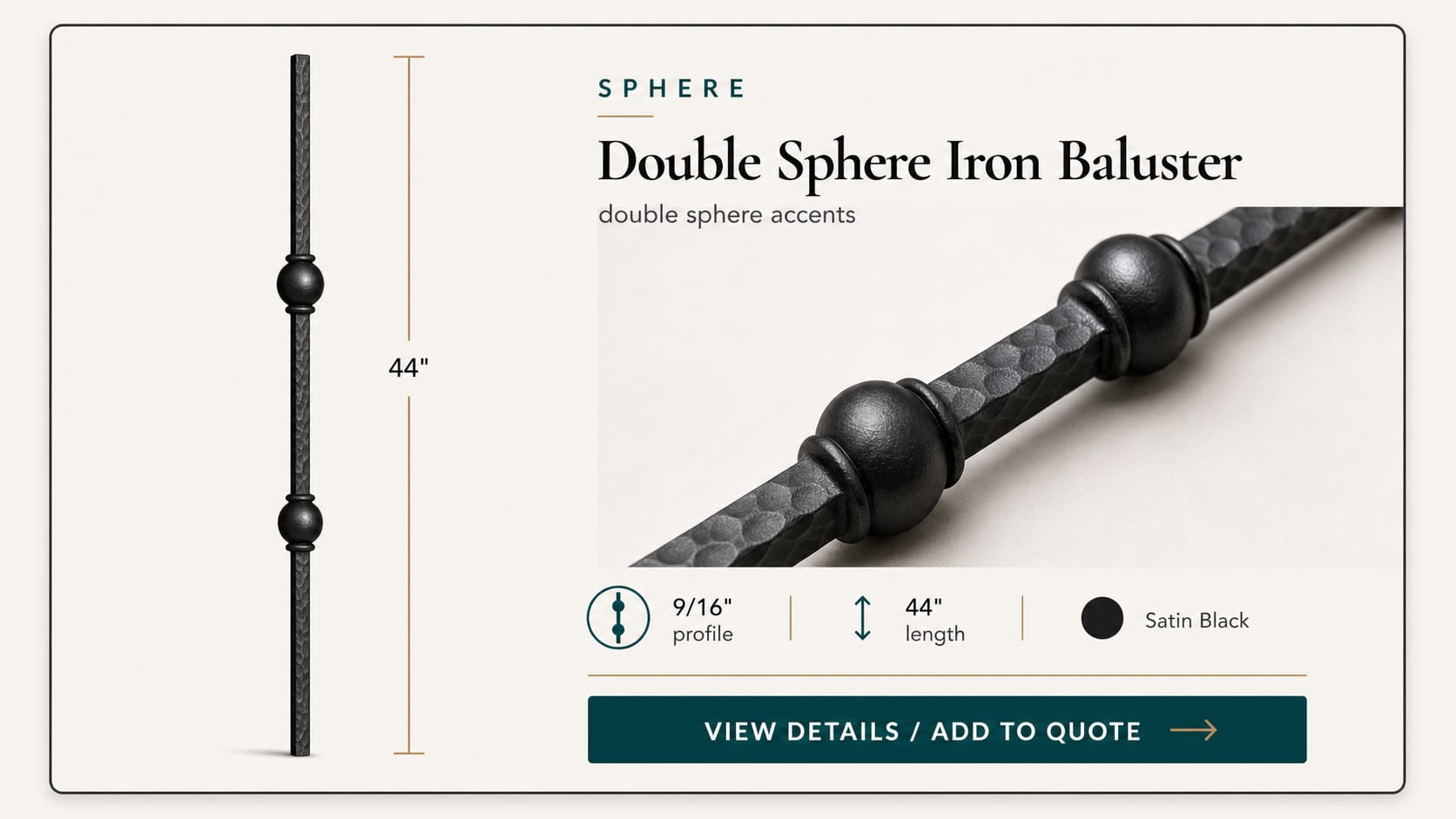
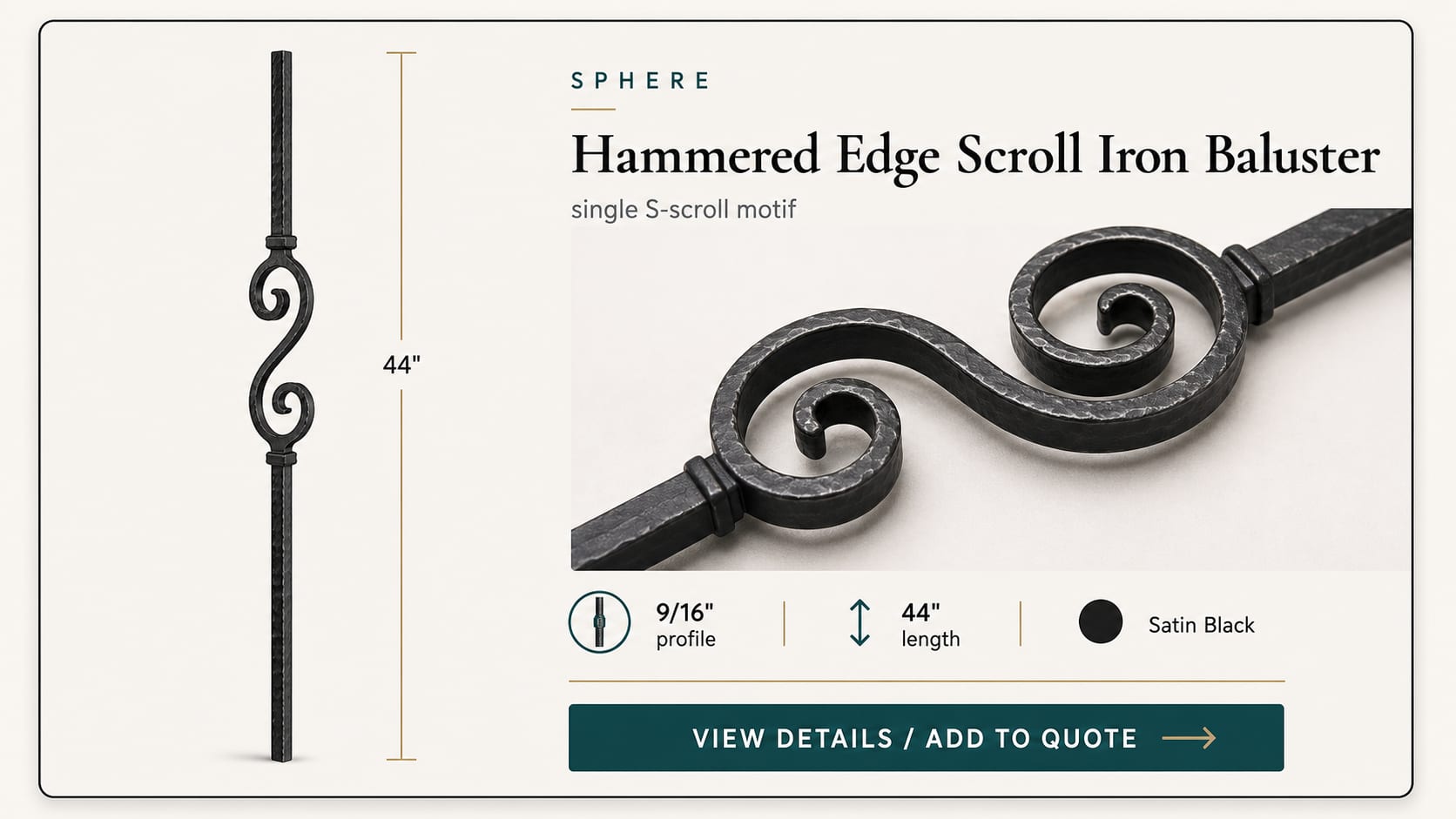
Sphere(4)
Hammered-edge rod with sphere or S-scroll accents — texture without the full hammered face.
1/2" & 9/16" · Solid
Decorative(2)
Open ovals and an ornate scroll — graceful, airy detail for formal stairs.
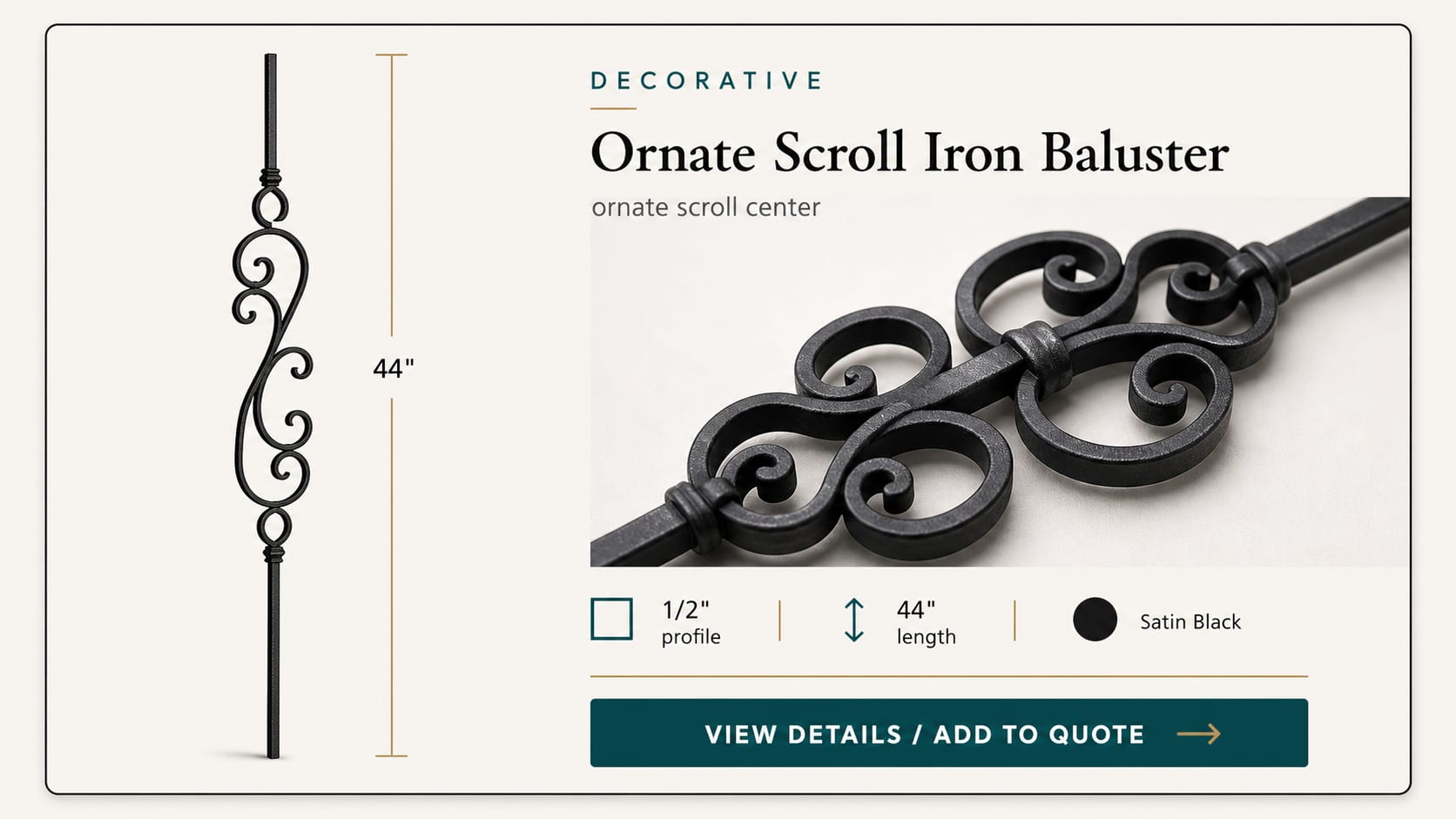
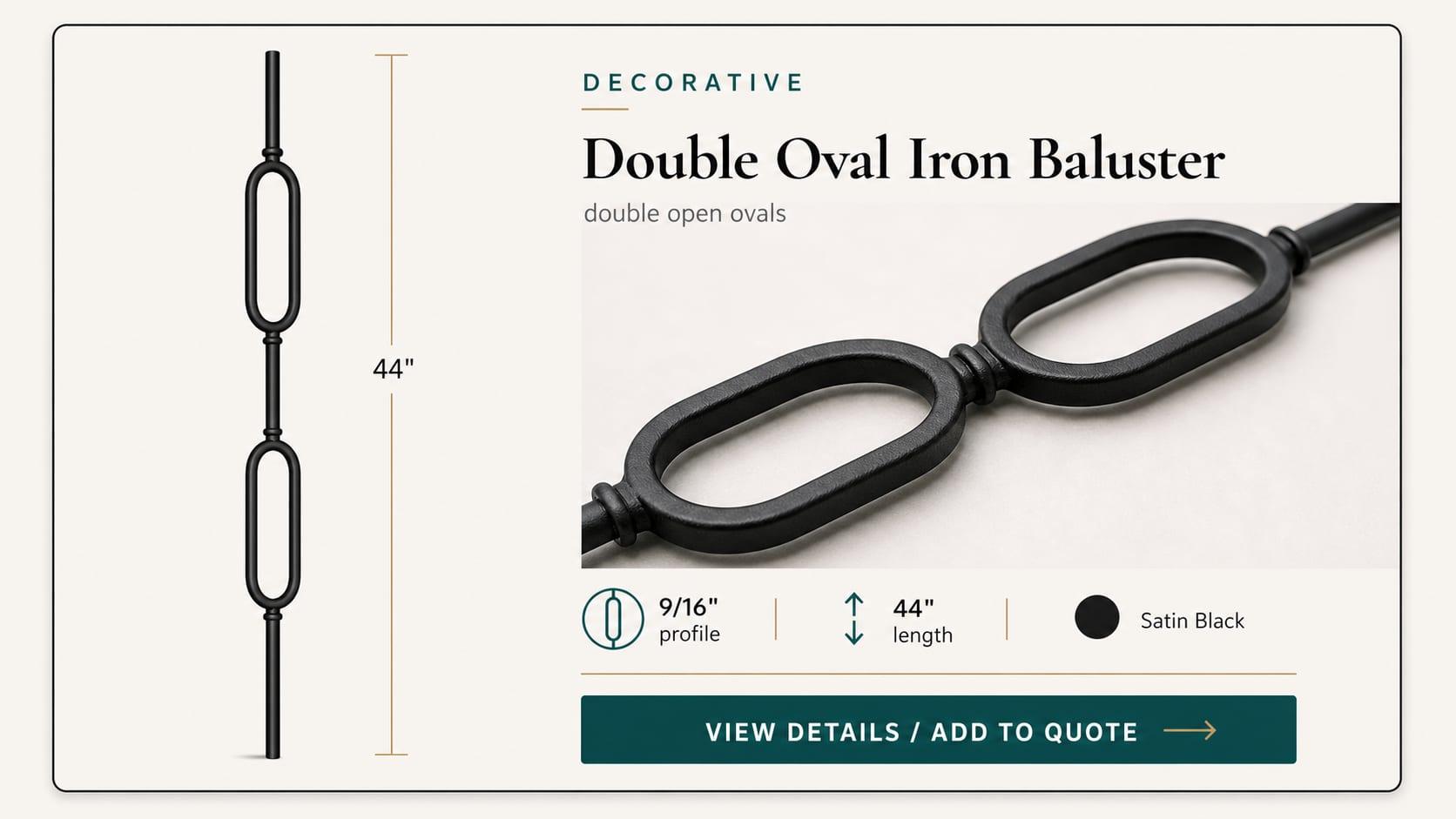
1/2" · Solid
Scroll(3)
Large decorative scroll and heart-scroll panels — the most ornamental patterns in the line.
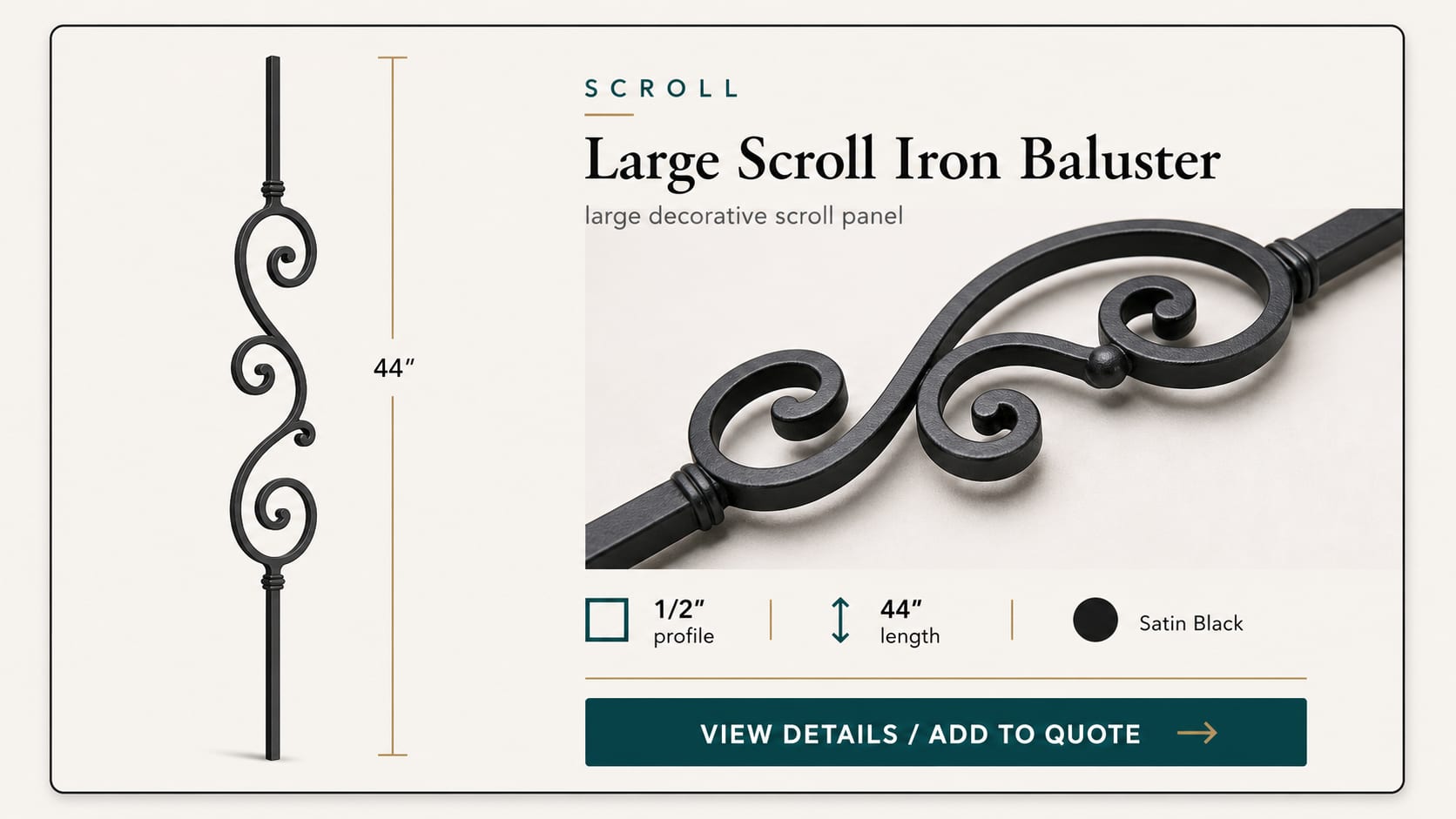
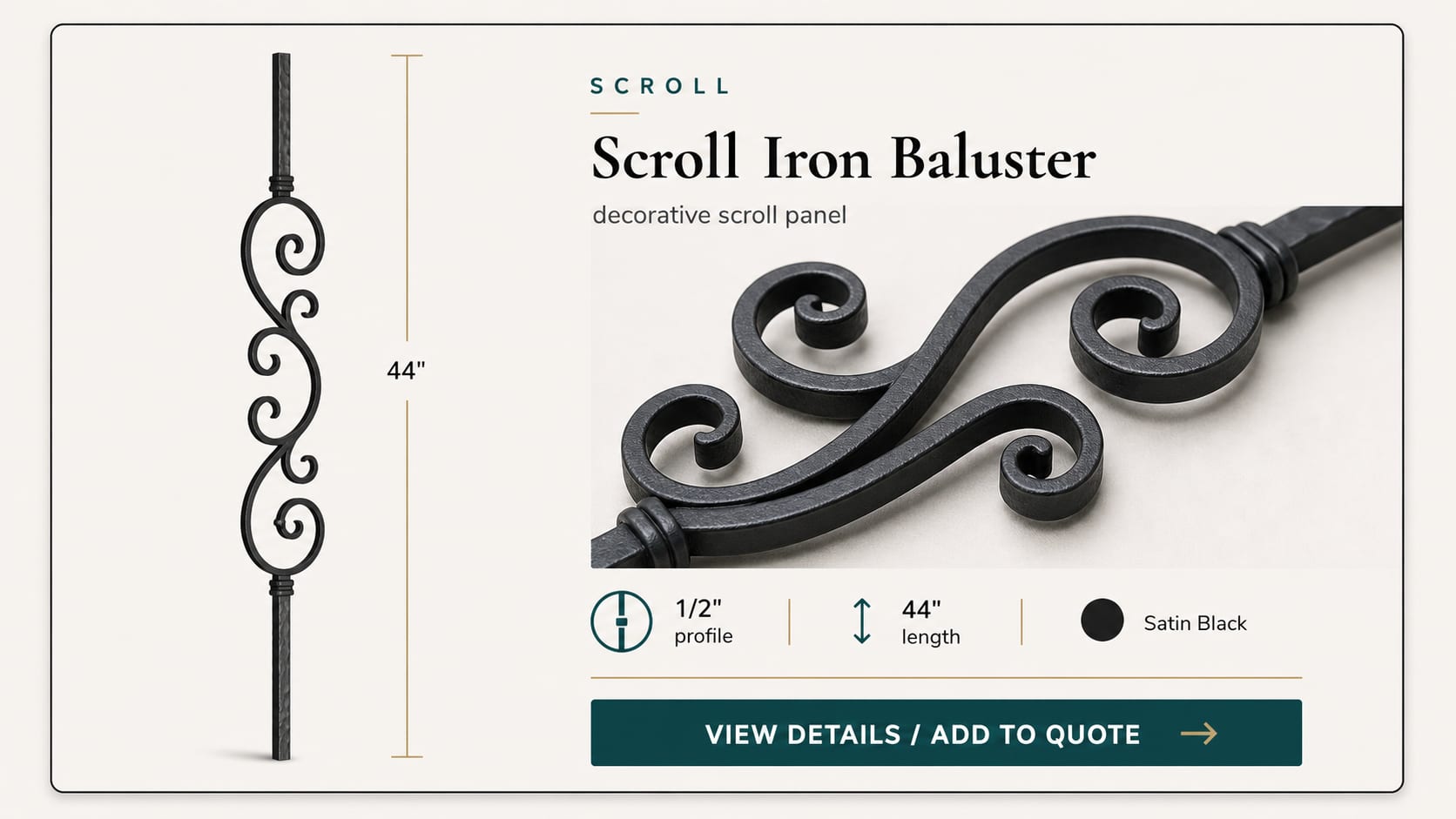
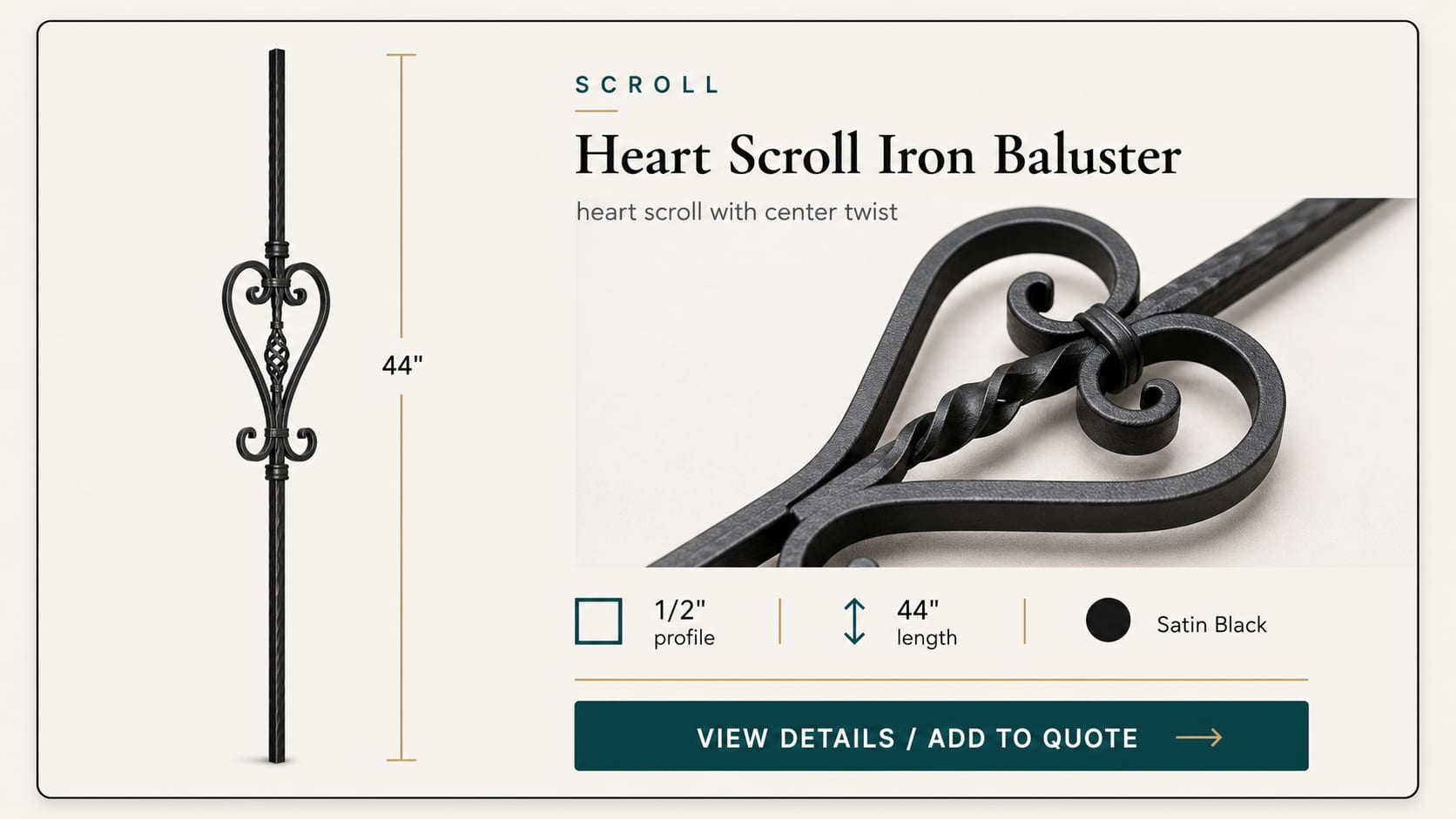
9/16" · Solid
Round(3)
Round (not square) rod, plain or twisted — a softer profile for contemporary railings.
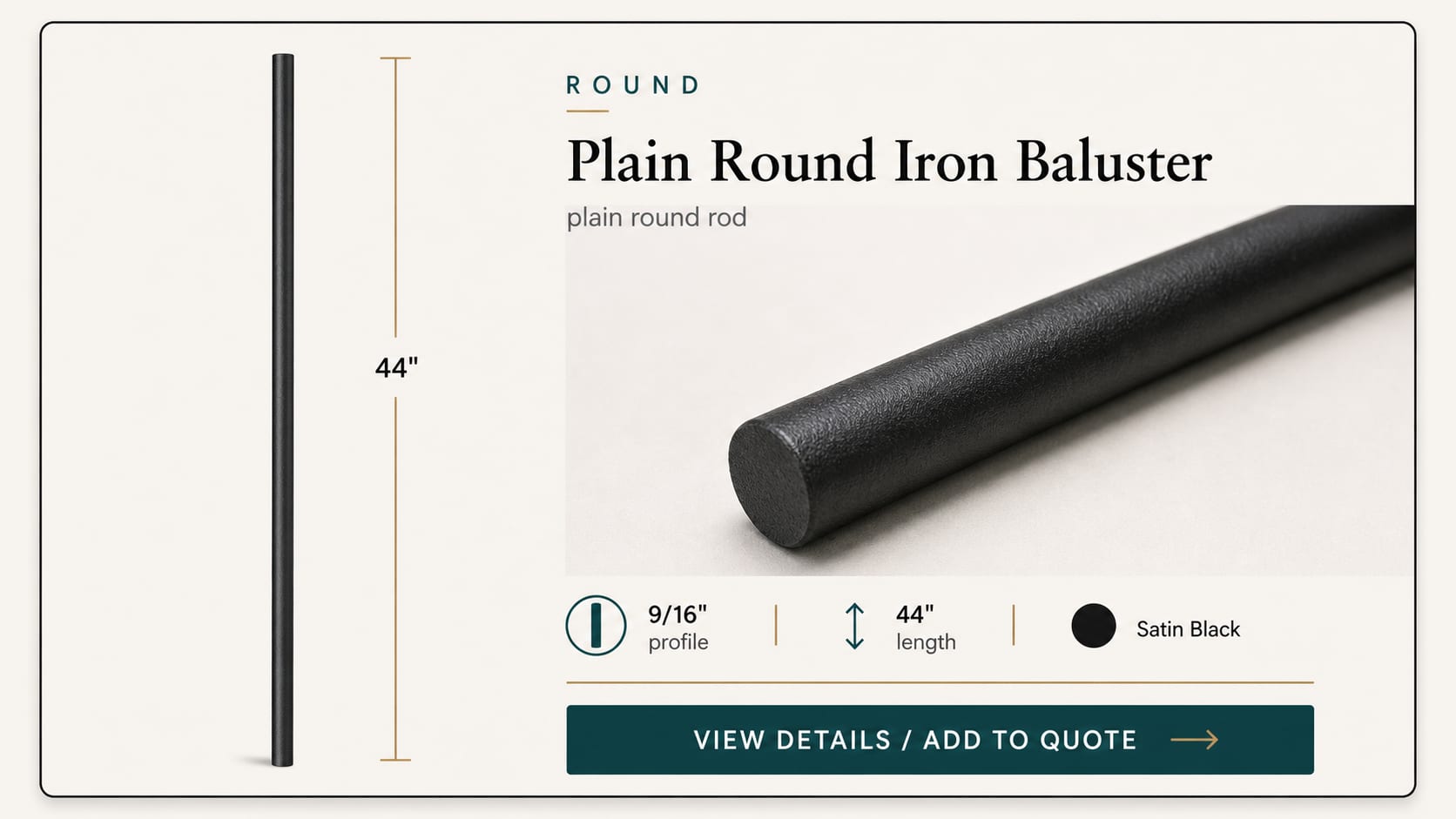
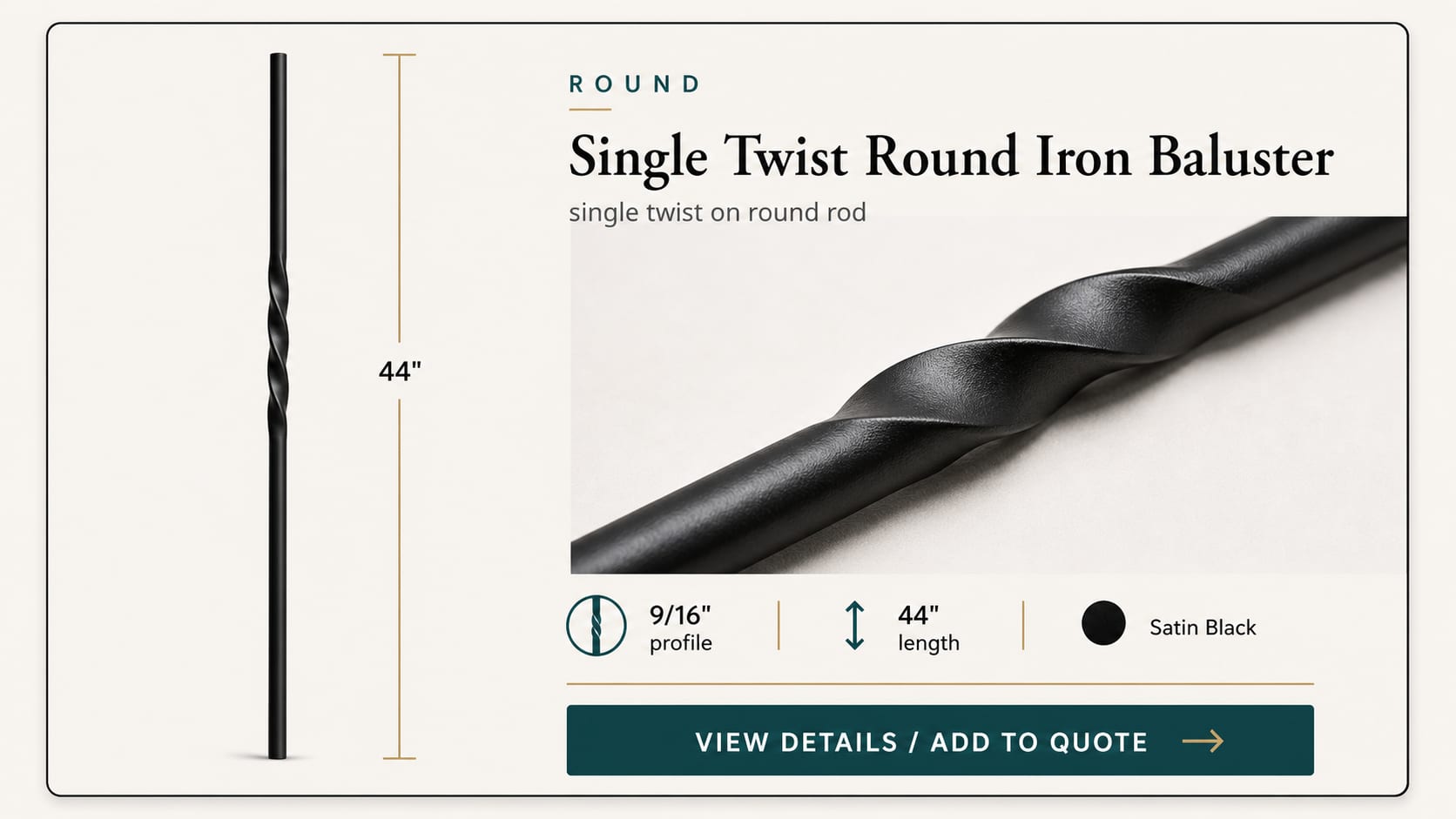
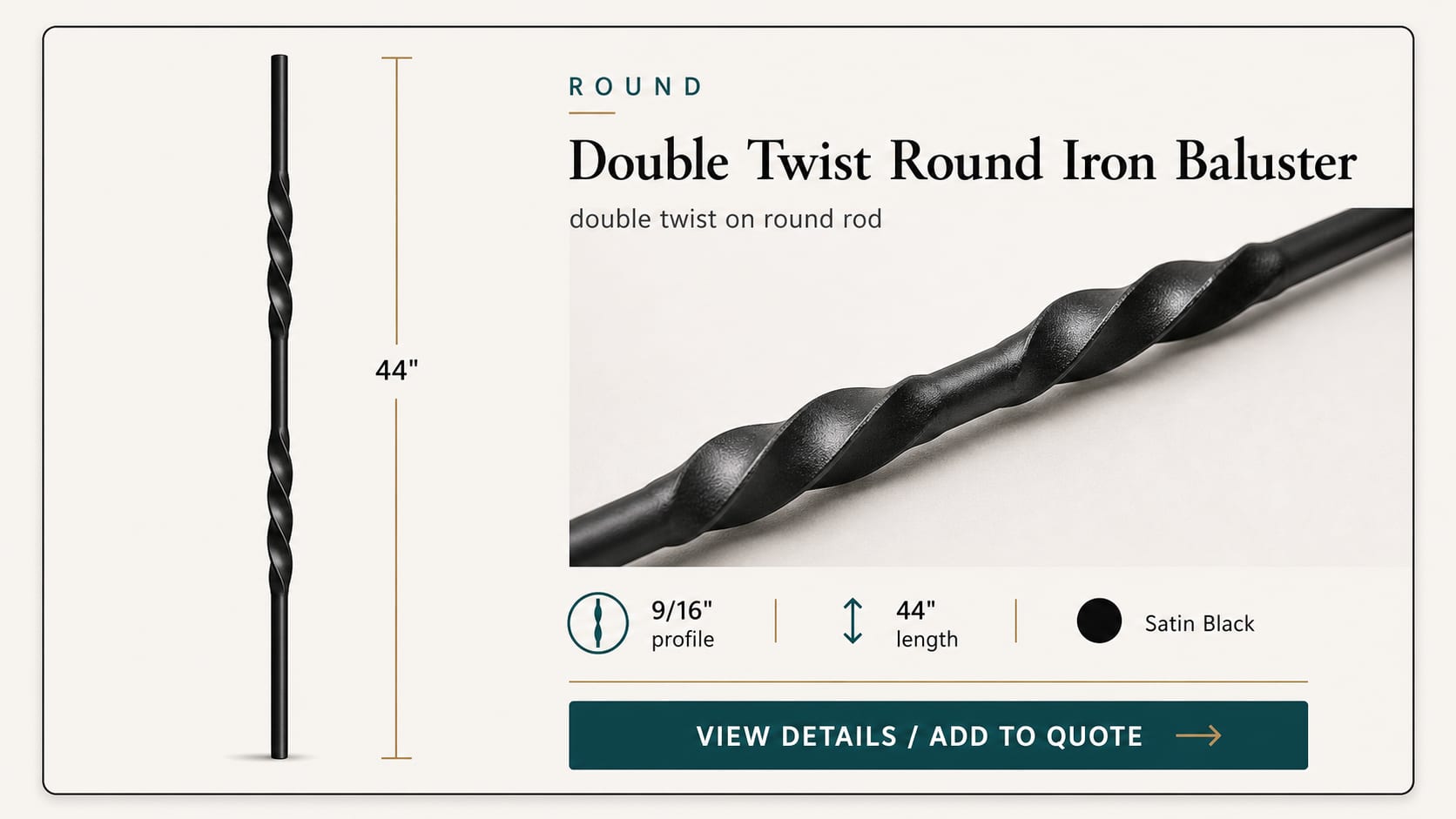
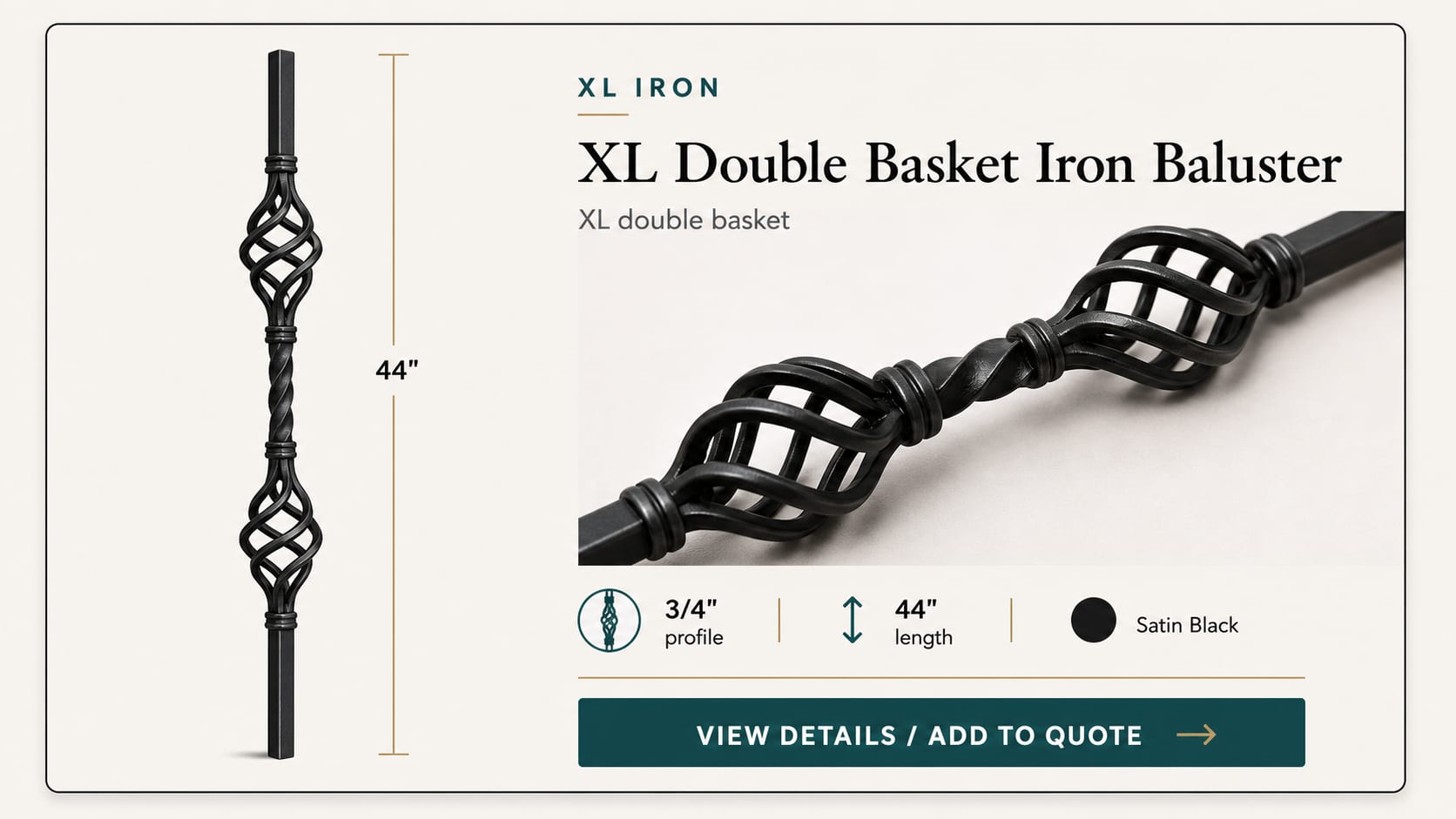
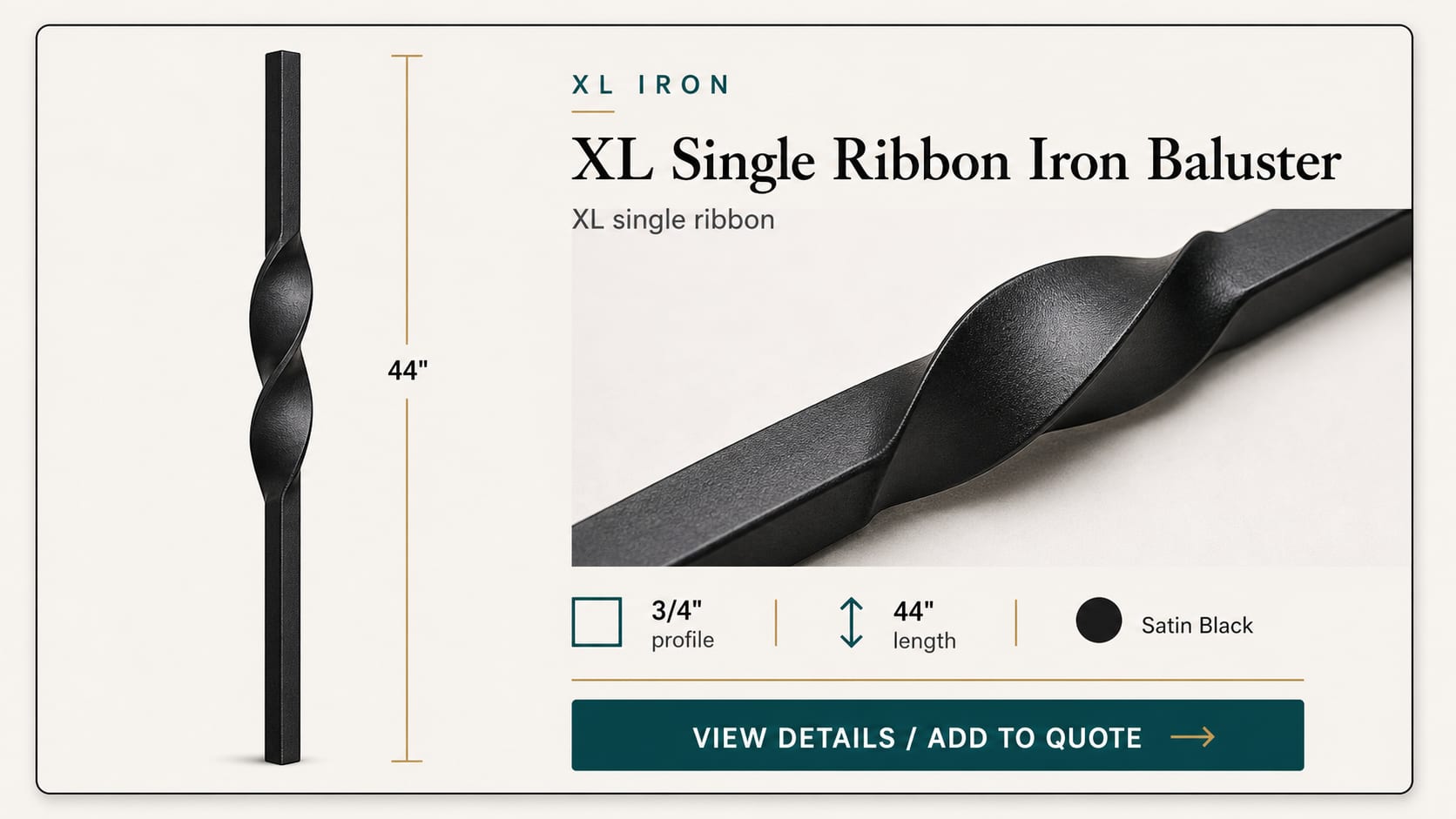
3/4" XL · Solid
XL Iron(6)
The heavy 3/4" solid rod — twist, basket and ribbon patterns with substantial presence for grand stairs and heavy treads.
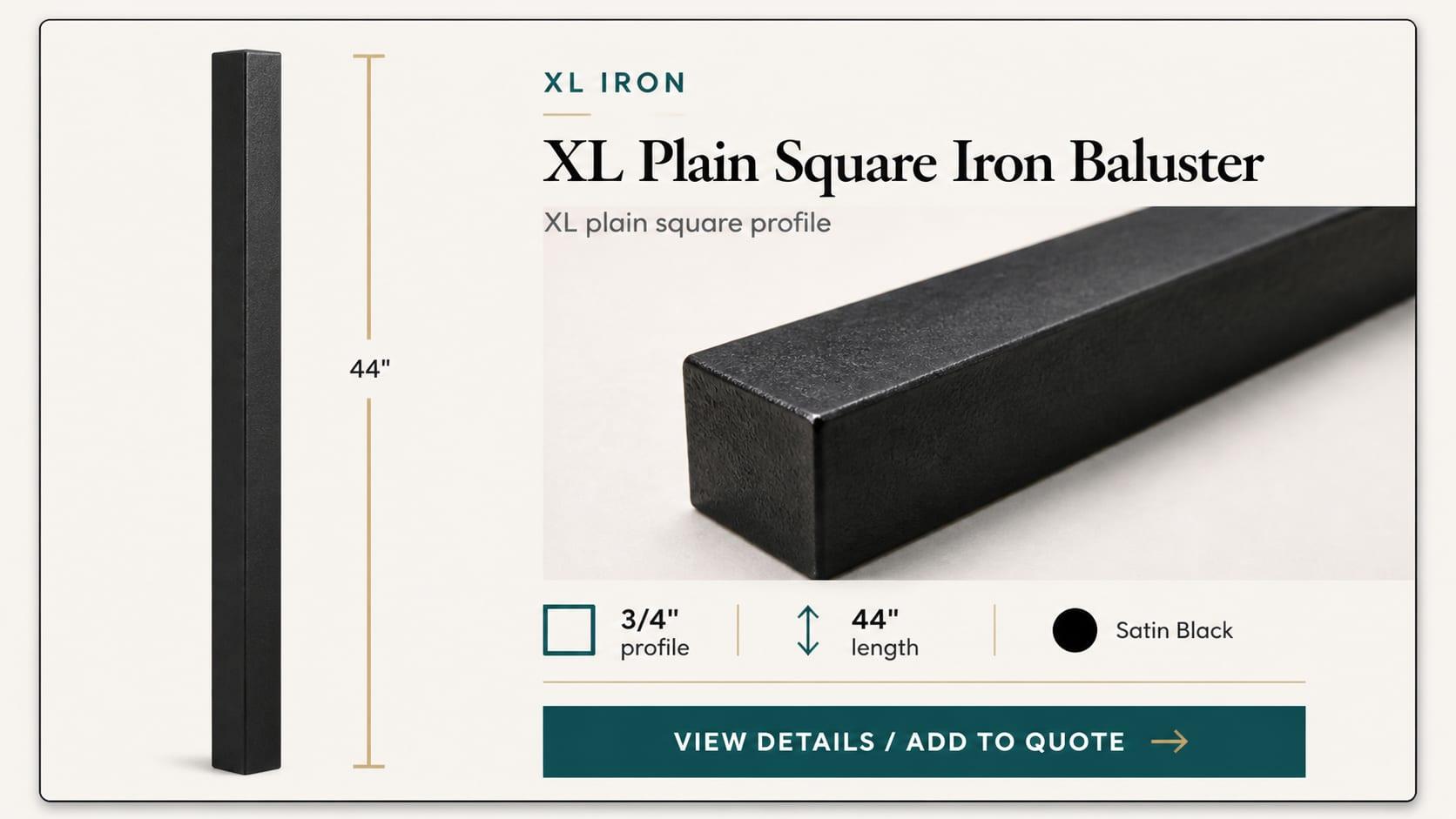
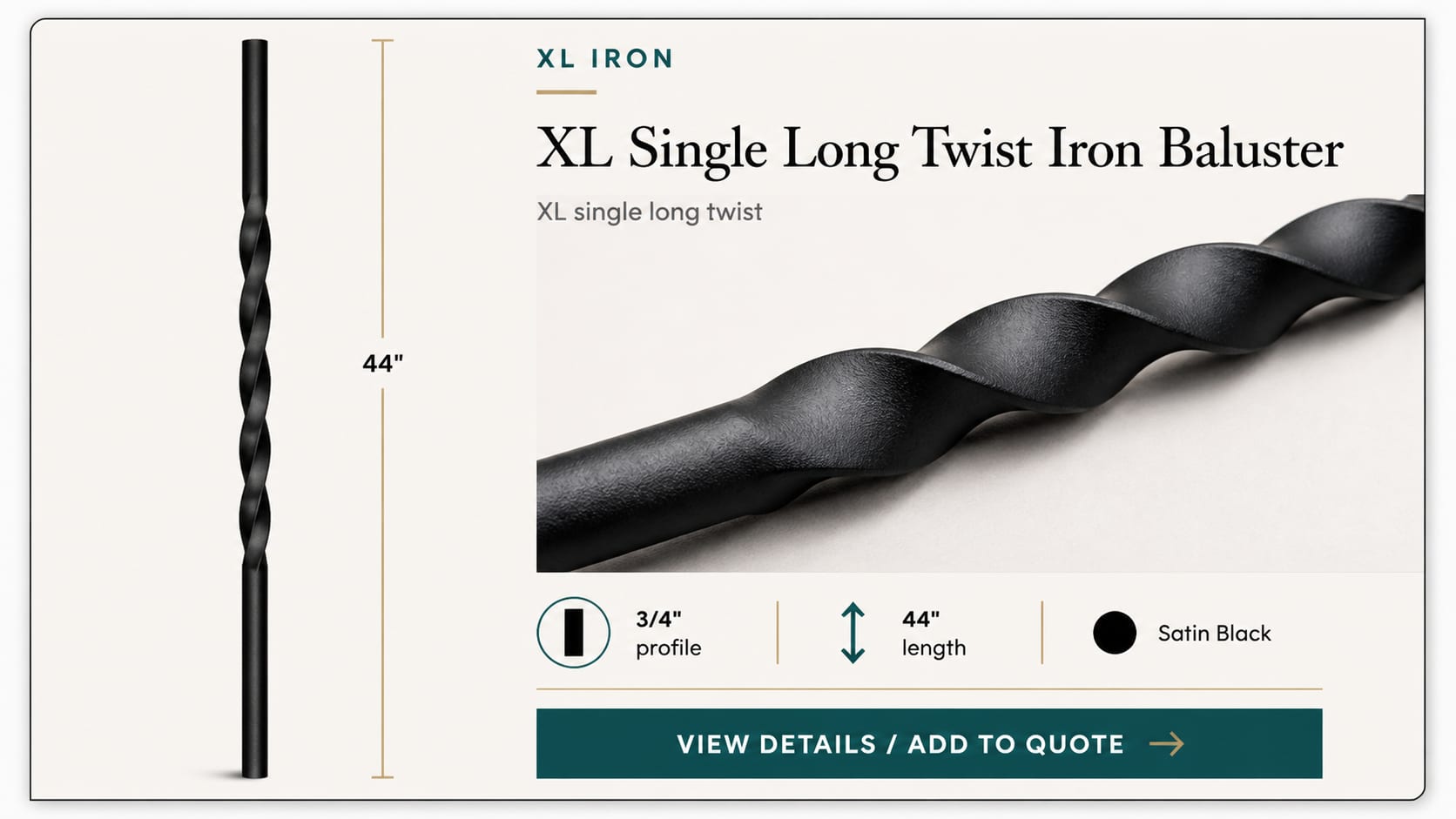
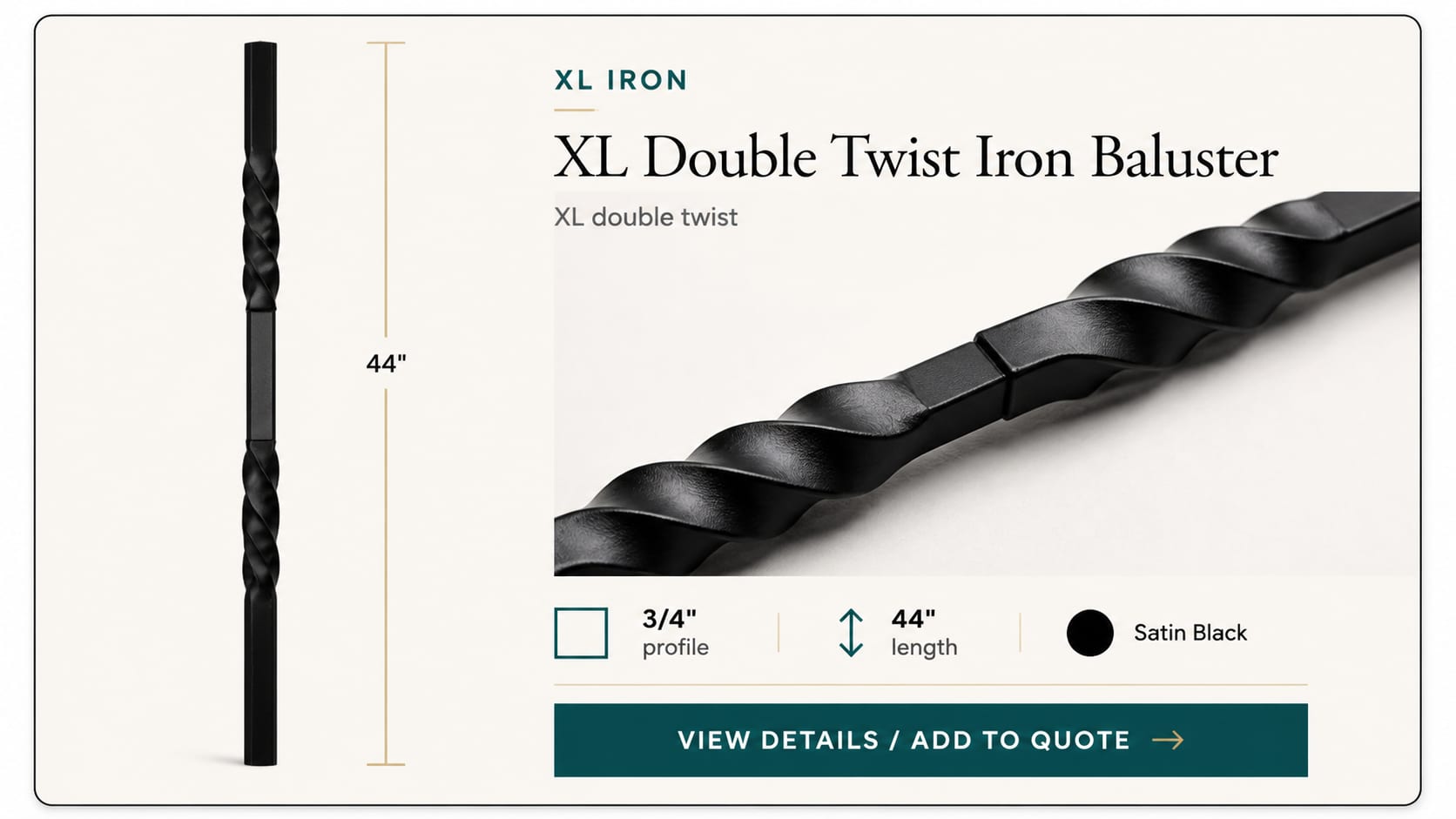
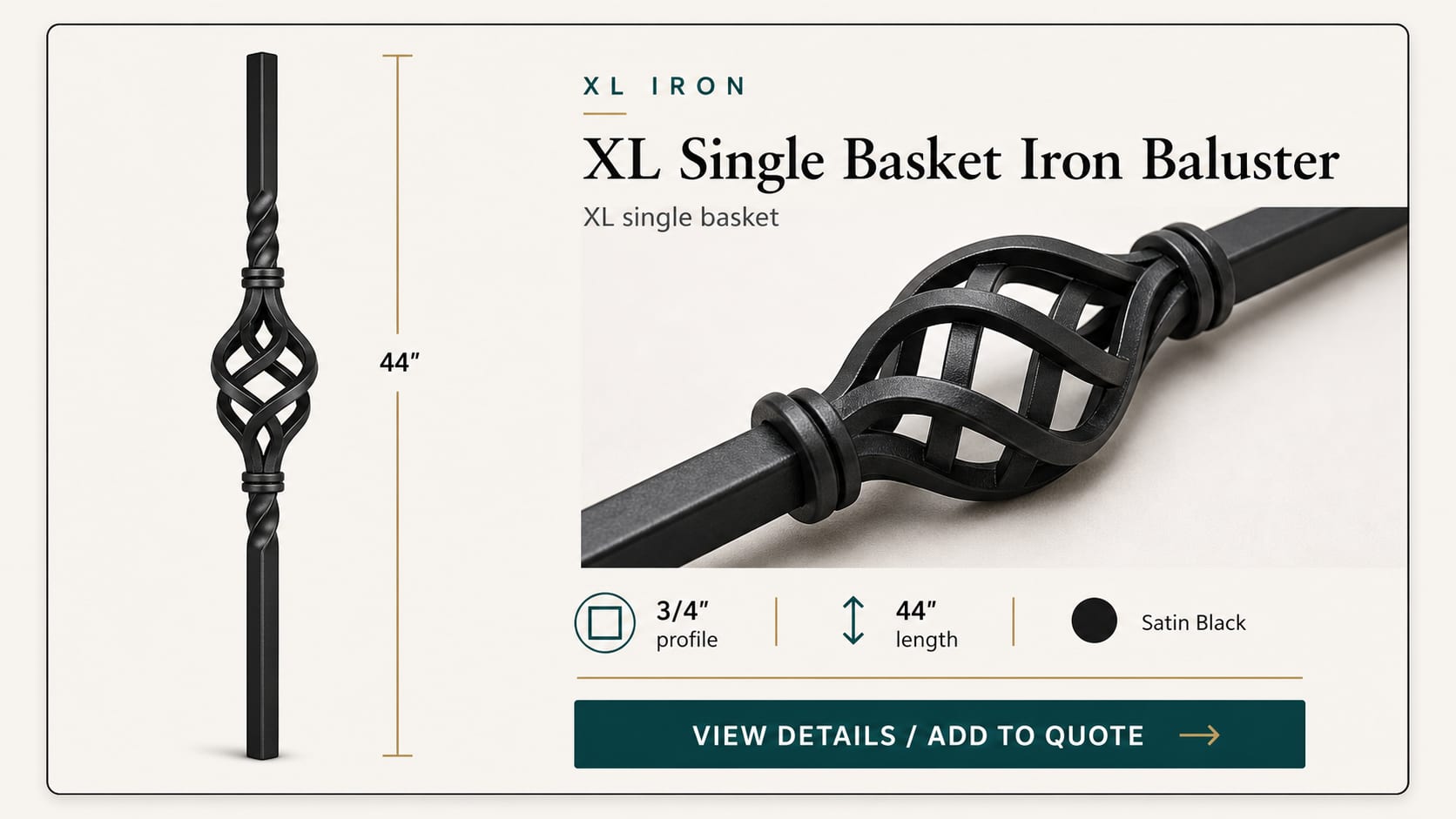
Trade-proven stair parts with clean silhouettes, finish-coded SKUs, and quote-ready product pages for builders, stair shops, and remodel crews. Use size, length, finish, and UWP SKU before calling or sending a quote request.
Before you order
Choosing iron balusters
Eighty-eight SKUs across eleven pattern families and five finishes. The grid shows you what exists; this is how to narrow it, how many you need, and the two decisions that are expensive to get wrong.
Start with the shape family, not the SKU
The catalogue is grouped into eleven pattern families — contemporary, twist and basket, knuckle, ribbon, scroll, sphere, hammered, Texas star, decorative, round and XL. Pick the family first and the SKU list inside it collapses to a handful.
Most staircases use one pattern throughout, or one plain pattern with a decorative one repeated at a set interval. Mixing more than two patterns in a single run reads as indecision from across the room.
The last letters of the SKU are the finish
Every pattern is catalogued once per finish, which is why 88 SKUs cover far fewer shapes. Read the suffix and you have the finish.
- SB — satin black, the most widely stocked of the five
- ORB — oil rubbed bronze
- ORC — oil rubbed copper
- AB — antique bronze
- PC — silver vein
Order the whole stair in one finish and one go
Iron finishes are applied in batches and two orders placed weeks apart can differ enough to see when they are side by side in the same run. Count the balusters for the entire staircase — flight, landing and any balcony guard — and order them together.
Add a few spares. A baluster cut short is scrap, and a single replacement ordered later is the one most likely to be off-tone.
Two per tread usually fails the spacing rule
Residential guards are held to a sphere rule: a 4-inch sphere must not pass through the guard. With 1/2-inch square iron on a common 10.5-inch run, two balusters per tread leaves gaps wider than that. Three per tread is the normal answer on a standard run.
Do the arithmetic for your own rise and run before ordering rather than assuming a count, and check what your jurisdiction has adopted.
Length, rake and cutting
Balusters come as 44-inch blanks in 1/2-inch square stock and are cut to length on site, because every stair has a different rise and every rake baluster is a different length from the one before it.
Cut the rake balusters last, after the rail is set and you can measure each one in place. Cutting them from a drawing is how a set ends up a quarter inch short.
Shoes, mortises and epoxy
Each baluster needs a shoe at the bottom — flat for a level run, rake for a pitched one — and a mortise top and bottom deep enough to seat it with room for adhesive. Dry-fit the whole run before any epoxy is mixed.
Epoxy is not reversible. A baluster set at the wrong angle or in the wrong hole is a repair to the tread, not a baluster you can pull.
Questions people ask before ordering
Iron vs. wood balusters — which one for my staircase?
Wood balusters read as traditional and warm; iron balusters read as transitional, modern, or industrial. Wood is easier to install, refinishable, and matches stained handrails. Iron is more durable, allows thinner profiles for a more open stair, and pairs well with mixed-material designs. Most Houston homes built since 2010 use iron; older traditional homes use wood. Mix them only if the design language supports it.
Read the answer →What are the IRC stair code rules in plain English?
The IRC residential stair code requires a minimum 10″ tread depth, a maximum 7-3/4″ riser height, a 3/4″ nosing overhang, 36″ minimum stair width, 6′8″ minimum headroom, and handrails on at least one side. Variation between any two treads on the same flight cannot exceed 3/8″. Most code violations on retrofit jobs come from changing the tread thickness without re-framing the stair.
Read the answer →How do I choose a stair newel post?
A newel post is the structural anchor at the top, bottom, and turns of a stair railing. The four main families are box newel (large rectangular, traditional), turned newel (classical with profile turning), modern square (clean tapered or straight), and craftsman (substantial square with shaker detail). Size to the stair scale (4 to 8 inches), match the baluster style, and use the same wood species as the handrail.
Read the answer →How much does it cost to refinish a staircase?
Refinishing a residential staircase in Houston typically runs $400 to $1,200 for the treads only, $800 to $2,500 for treads plus risers and skirts, and $1,500 to $4,000 for full refinish including handrails and balusters. DIY runs about 30% of pro pricing in materials only. Severely worn or damaged stairs may cost more to refinish than to re-tread with new hardwood — get both quotes before committing.
Read the answer →