

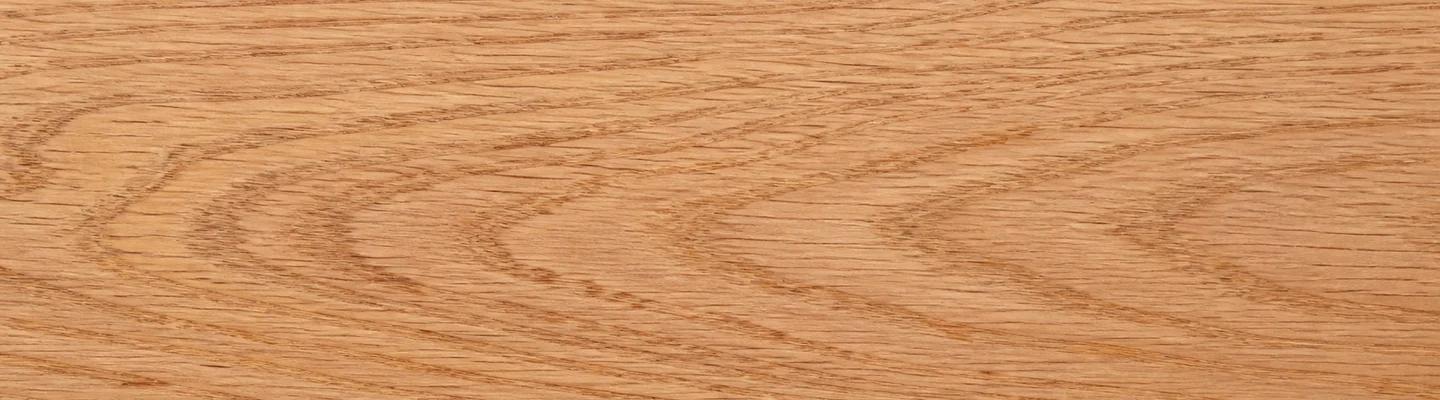
Red Oak
Core catalogJanka Hardness1,290 lbf
Pairs with — Medium-tone floors with a warm, slightly pink-red cast — the default for red oak flooring in most American homes.
Renovation overlay — a full 1" nose over a 5/8" body, so a solid hardwood tread caps an existing stair without raising the rise.
A retro-fit tread is a 5/8" solid hardwood overlay with a built-up nose that caps the existing tread in place — the renovation route when the structure underneath is sound and demolition isn't worth the labor. This configurator quotes the 8071 bullnose retro-fit tread and the 8073 square-edge retro-fit tread cut to your exact width and depth, edge-glued and milled in-house in Houston.
Retro-fit is the right call on most carpet-to-hardwood conversions, but not every staircase qualifies — the retrofit stair tread guide walks the five field checks and the IRC rise rules. Torn between overlay and full replacement? The 8070 vs 8071 comparison prices the labor difference honestly. Turning a landing at the same time, the retro-fit landing platform configurator matches this profile — and curved or pie-shaped stairs can be field-templated on site for a guaranteed fit.
A retro-fit tread is a renovation overlay. The 5/8" body sits on the existing tread and a built-up 1" bullnose wraps its front edge — so a carpeted or worn stair gets solid hardwood without pulling a single tread.
Cut the existing bullnose back to the riser face. The overlay needs a square front to wrap.
Length skirt to skirt. Depth from the riser above to the trimmed face — usually 10-1/4". The overlay adds 1-1/4" of nose, which is why the stocked size is 11-1/2".
The body lands flat on the old tread, the lip drops over its face, and the riser below can be capped to match. No demolition, no re-stringing.
On an open-side stair the overlay runs 1-1/4" past the stringer and a mitered returned end wraps the nose around the corner. The L-shape body is handed, so specify left or right.
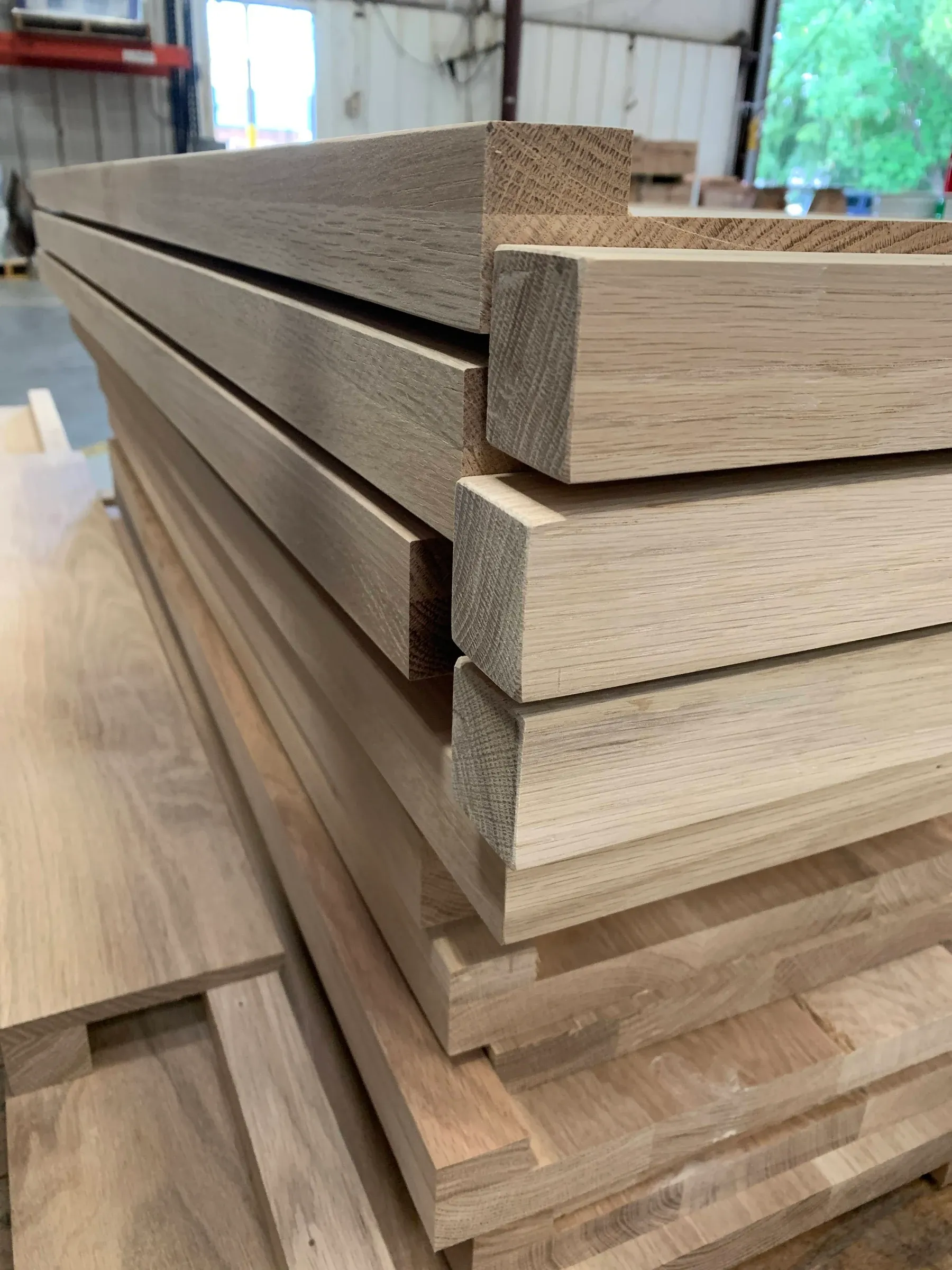
Crafted in-house · NW Houston / Tanner Rd
Explore photographs of UWP treads, curved details, and custom fabrication.
A staircase reads best when the treads match the floor they meet. Species is chosen for tone, not just hardness — pick the one closest to your flooring and the stair disappears into the room instead of fighting it.
Images simulate a water-clear matte coat to show natural species color. UWP material ships unfinished; tone and figure vary by board.
Pairs with — Medium-tone floors with a warm, slightly pink-red cast — the default for red oak flooring in most American homes.
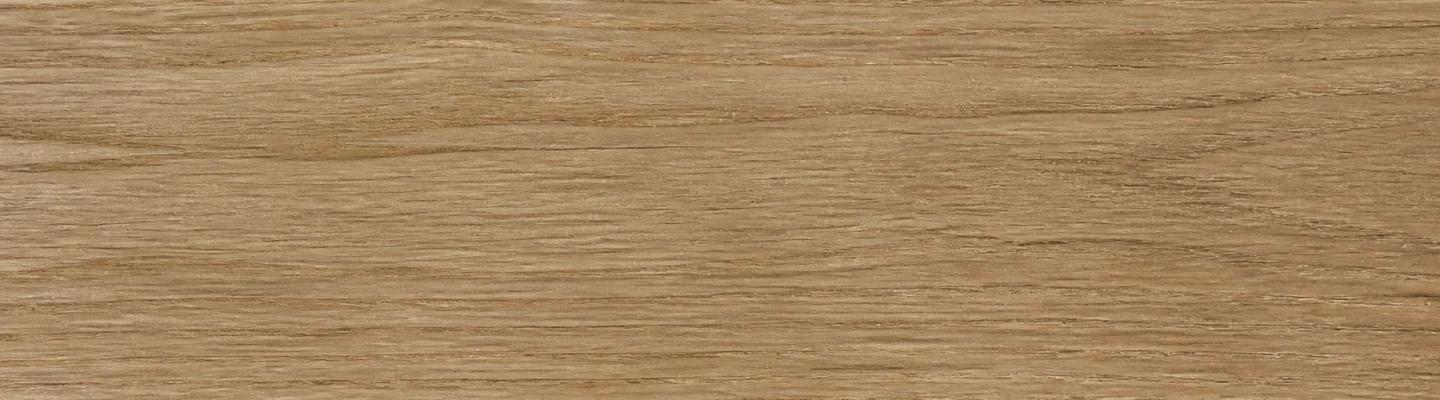
Pairs with — Lighter, cooler floors — white oak, natural, wire-brushed, and modern light finishes. Reads warm-tan, not pink.
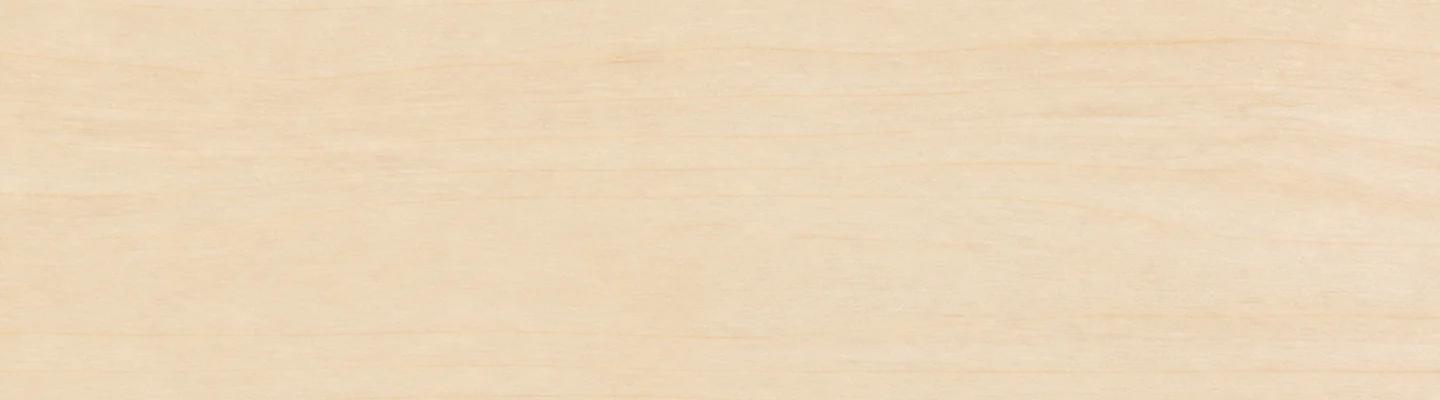
Pairs with — Pale, clean, contemporary floors where an even, near-white tone is wanted.
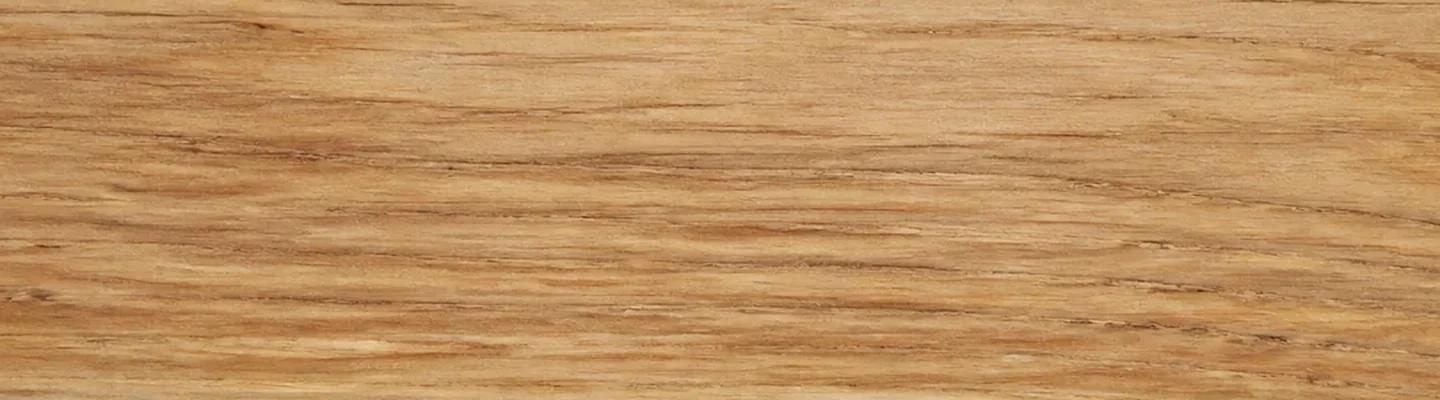
Pairs with — Rustic and character-grade floors with high light-to-dark contrast.
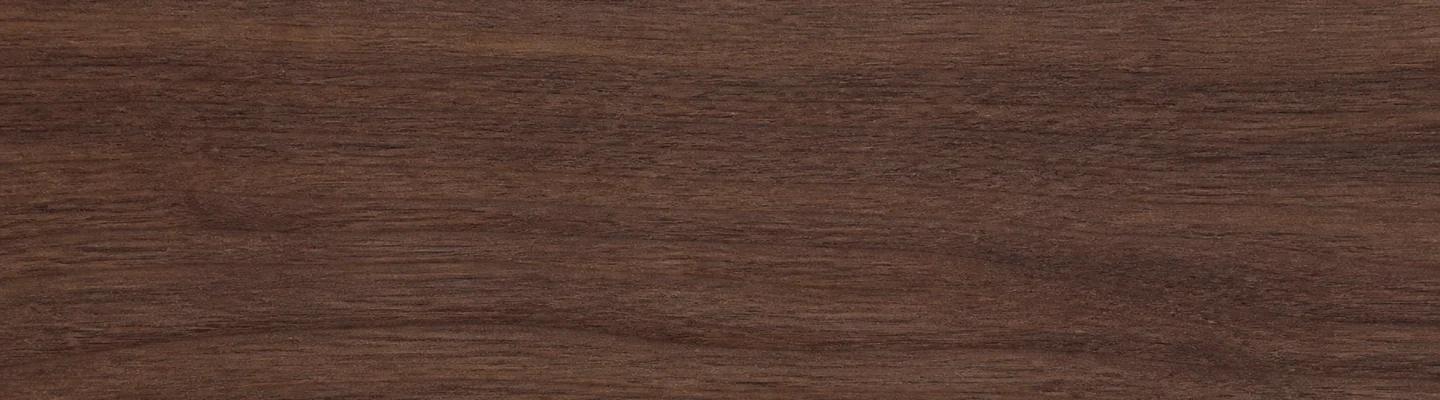
Pairs with — Dark, rich floors and high-end interiors where a deep chocolate tone is the statement.
Send a sample of your floor — we'll species-match the run.
Red Oak and White Oak are core catalog species; the rest are made to order. Current material availability is confirmed on the quote. Janka hardness is listed for reference—every species here is solid, edge-glued, and refinishable.
Red OakWhite OakHard MapleHickoryWalnut| Species | Hardness | Color & appearance | Grain & texture | Availability |
|---|---|---|---|---|
| Red Oak | 1290 lbf | Light-to-medium brown with a reddish cast; stains slightly pink. | Bold, prominent grain lines with occasional swirl. | Core catalog |
| White Oak | 1350 lbf | Light-to-medium brown with an olive, not pink, cast. | Medium-to-coarse, slightly open structure. | Core catalog |
| Hard Maple | 1450 lbf | Creamy white to light reddish-brown; clean and modern. | Mostly straight, sometimes wavy; fine, even texture. | Made to order |
| Hickory | 1820 lbf | Creamy lights against rich browns; rustic and striking. | Coarse, pronounced, high-contrast figure. | Made to order |
| Walnut | 1010 lbf | Deep, luxurious chocolate tones; warm and refined. | Fine-to-medium grain, smooth and elegant. | Made to order |
These are the species that match or complement common hardwood flooring. Running the stair in the same species as the floor keeps grain and tone consistent, so the staircase reads as a deliberate extension of the room rather than a separate part.
Want the full picture — Janka hardness, tone, grain, and the species we source to order? Read the complete wood species guide →
No engineered cores, no veneer, no compromises — the reasons a solid UWP tread is still there decades after the trends move on.
Full-thickness hardwood the whole way through — not a veneer skin over a cheap core. What you sand into is more of the same wood.
Sand and recoat it many times over its life. A solid tread outlasts the carpet, the paint, and usually the renovation that put it in.
North American hardwood, milled in-house for a short supply chain and a solid-wood result without imported-veneer surprises.
Solid wood absorbs footfall and holds room temperature — none of the cold, hollow click of tile, stone, or hollow-core treads.
Straight answers to the questions we field at the will-call counter — not a marketing FAQ.
The 8070 is a full 1″ tread for new builds or full demos. The 8071 is a 5/8″ retro-fit overlay built to drop over carpeted stairs without demolition. The key reason: when you pull the carpet, the wood skirt board next to the staircase is roughly 11/16″ thick. The 8071 lands flush against it. The 8070 sits about 1/4″ proud and looks unfinished.
Read the answer →A standard hardwood stair tread is 1 inch thick, 10-1/2″ to 11-1/2″ deep (front to back), and stocked in 42″, 48″, and 60″ widths at UWP — with red oak running to 96″. The IRC building code requires a minimum 10″ tread depth with a 3/4″ nosing overhang. Custom widths, depths, and thicknesses are available built to order.
Read the answer →Bullnose treads have a rounded front edge that overhangs the riser — the traditional look in American homes. Square-edge (and eased) treads have a straight or slightly softened front edge — the modern look. Both meet code with a 3/4″ nosing. Pick bullnose for traditional and transitional designs; square or eased for modern, contemporary, and minimalist projects.
Read the answer →Match new stair treads to existing floors in three steps: confirm the floor species (red oak and white oak look similar but stain very differently), order unfinished treads in the same species, and have the same finisher stain and topcoat both the floor and the treads with the same can. Pre-finished stair treads almost never match a site-finished floor exactly.
Read the answer →