

Wall Paneling Boards · by style
Art Deco Wall Paneling Boards
8 profiles · 8 milled to order
Stepped and fluted: the profile is a series of parallel setbacks or reeds rather than curves. Reads well in a stained hardwood and in a stair, where the steps catch the light.
8 of the 12 wall paneling board profiles in the catalogue are art deco. Each carries a dimensioned section, a spec sheet and a DXF, and any of them can be milled in solid hardwood or paint-grade. Every profile in the library exists in several families, so the matching casing, base and crown in this style are one click apart.
Other wall paneling board profiles
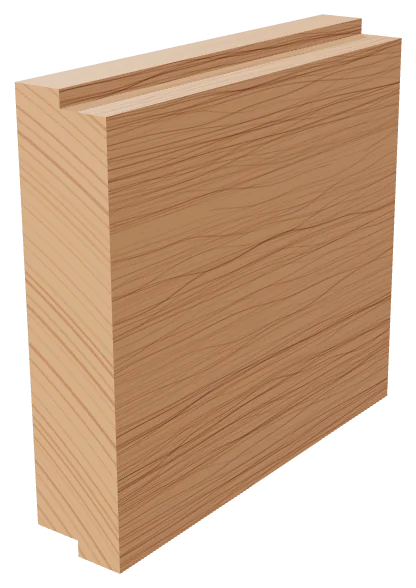
Wall Paneling Lap & Gap
3-1/4" × 3/4"
Milled to orderView profile →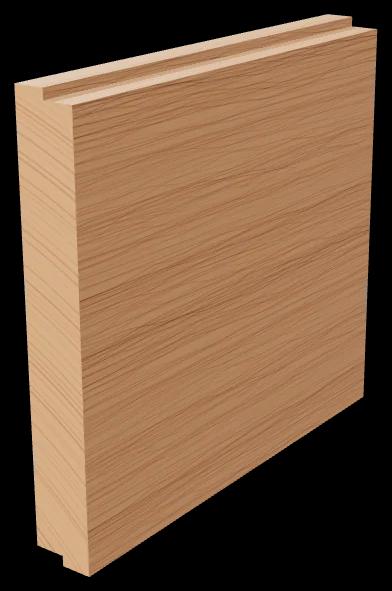
Wall Paneling Lap & Gap
5-1/4" × 3/4"
Milled to orderView profile →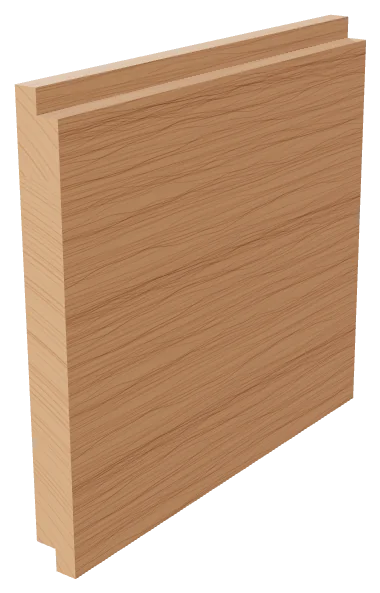
Wall Paneling Lap & Gap
7-1/4" × 3/4"
Milled to orderView profile →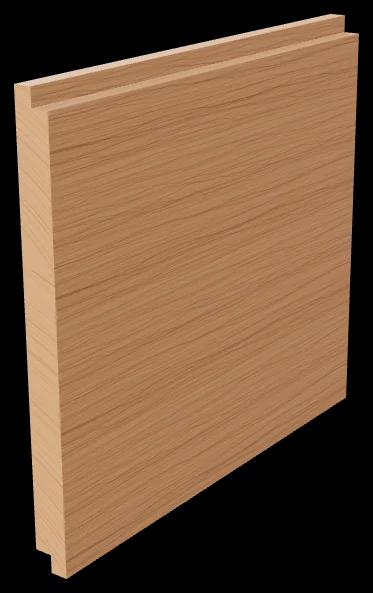
Wall Paneling Lap & Gap
9-1/4" × 3/4"
Milled to orderView profile →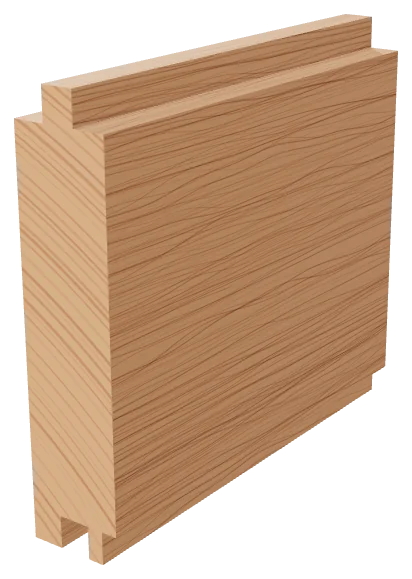
Wall Paneling Penny Gap
3-1/4" × 3/4"
Milled to orderView profile →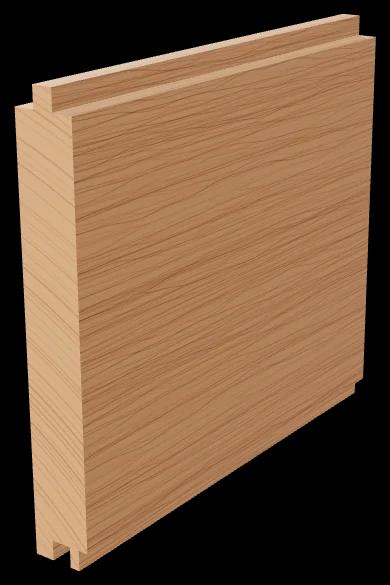
Wall Paneling Penny Gap
5-1/4" × 3/4"
Milled to orderView profile →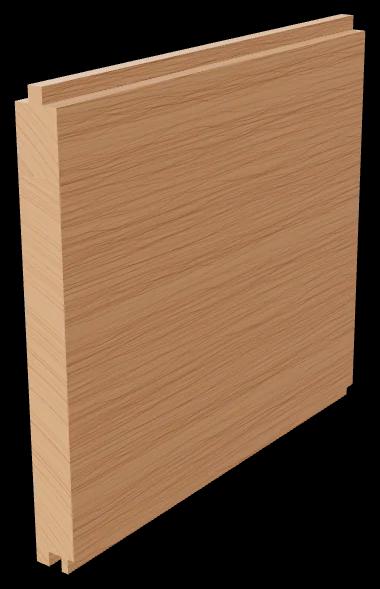
Wall Paneling Penny Gap
7-1/4" × 3/4"
Milled to orderView profile →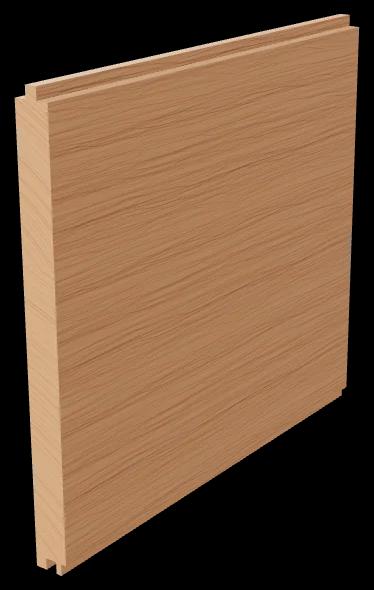
Wall Paneling Penny Gap
9-1/4" × 3/4"
Milled to orderView profile →Terms used on this page
Questions people ask before ordering
Wainscoting styles — beadboard, shiplap, board-and-batten, raised panel. Which one for my room?
Wainscoting is wall paneling that covers the lower 30 to 48 inches of a wall. Five main styles: beadboard (narrow vertical strips with bead detail), shiplap (horizontal overlapping boards), board-and-batten (flat panels with vertical battens), flat-panel (simple recessed squares), and raised-panel (formal beveled panels). Pick on home style — beadboard for farmhouse, shiplap for coastal, raised panel for traditional formal.
Read the answer →Does Houston humidity damage hardwood floors and stair treads?
Houston outdoor humidity is high year-round, but conditioned indoor humidity stays in a normal range (30%–55% RH) — the same as most US homes. Hardwood floors, stair treads, and mouldings installed in conditioned Houston interiors perform as well as anywhere else in the country. The risk isn’t the climate; it’s installing wood in an unconditioned space or skipping acclimation.
Read the answer →How do I acclimate hardwood before installing it?
Acclimate hardwood by stacking the material in the install space — not the garage, not the porch — for 5 to 7 days before installation. The room must be HVAC-conditioned at typical living temperature and humidity. The wood reaches equilibrium moisture content with the room and will not move significantly after install. Skipping this step is the #1 cause of post-install gaps, cupping, and squeaks.
Read the answer →Polyurethane vs. oil finish on hardwood — which one should I use?
Polyurethane is a film-forming finish — it sits on top of the wood, harder and more abrasion-resistant, but harder to repair locally. Oil finishes (Rubio Monocoat, Osmo, tung oil) penetrate into the wood, look more natural, and are easier to spot-repair — but provide less surface protection. Pick polyurethane for stairs and high-traffic floors; oil for countertops, lower-traffic floors, and natural-look projects.
Read the answer →