

African Mahogany — hardwood for stair treads and millwork
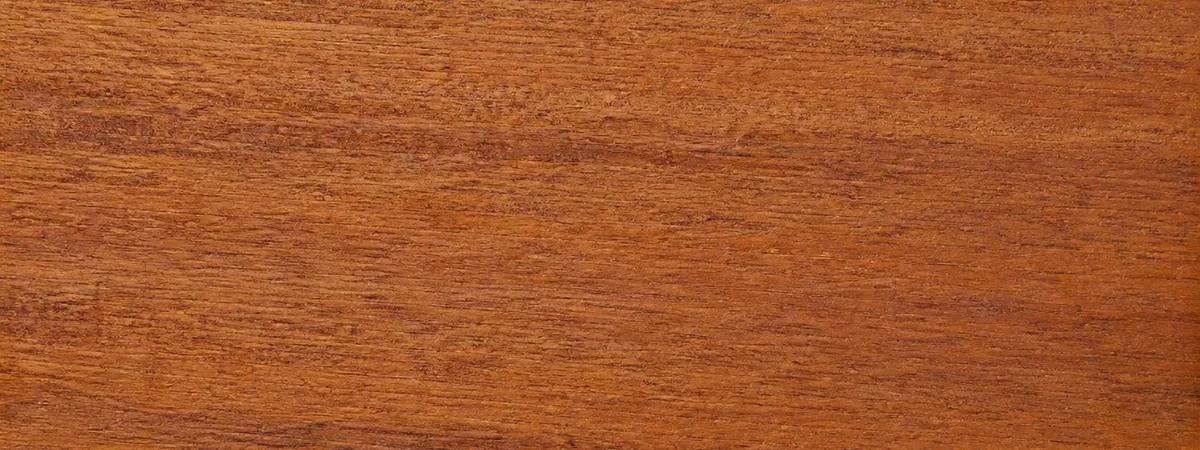
Medium brown to deep bronze. A strong special-order choice for formal interiors.
1,070 lbf
A little over walnut. Same reasoning as its cousin — the ribbon figure is the purchase, hardness is incidental.
186 · red oak = 100
Indicative of lumber market position — not a UWP quote.
Milled to order · lead time confirmed at quote
Milled and finished at the Tanner Rd mill, NW Houston. Every wood stair part is special order.
What we mill it into
Character
Ribbon movement with refined depth.
A little over walnut. Same reasoning as its cousin — the ribbon figure is the purchase, hardness is incidental.
Best for
Premium millwork, trim, and feature details.
How African Mahogany behaves in service
Every board moves with the seasons, and in Houston the swing from a humid summer to a heated winter is the widest a floor or a tread will see. The figures below are the published shrinkage constants; the movement calculator turns them into inches for a given width.
4.5%
Across a flatsawn face, green to oven-dry. The larger of the two and the one a wide plank follows.
2.5%
Across a quartersawn face. Rift and quartered stock moves this much, which is why it is the stable cut.
USDA Wood Handbook
Published laboratory constants for the species, not a UWP measurement.
Finishing
Finishes like genuine mahogany with more ribbon figure and a touch more pink; a dye evens the interlocked grain before a film finish.
Machining and fastening
Interlocked grain tears out on the moulder unless the knives are sharp and the feed is slow. Stable in service and light for its size; holds fasteners moderately.
Closest in hardness
The three species nearest African Mahogany on the Janka scale — the usual alternatives when a budget, a tone or a lead time rules it out.