

Baseboard · by style
Art Deco Baseboard
9 profiles · 9 milled to order
Stepped and fluted: the profile is a series of parallel setbacks or reeds rather than curves. Reads well in a stained hardwood and in a stair, where the steps catch the light.
9 of the 301 baseboard profiles in the catalogue are art deco. Each carries a dimensioned section, a spec sheet and a DXF, and any of them can be milled in solid hardwood or paint-grade. Every profile in the library exists in several families, so the matching casing, base and crown in this style are one click apart.
Other baseboard profiles
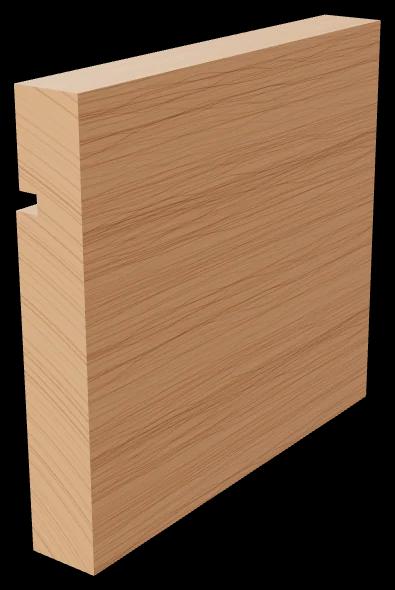
Base
5-1/2" / 6-1/4" / 7-1/4" × 15/16"
Milled to orderView profile →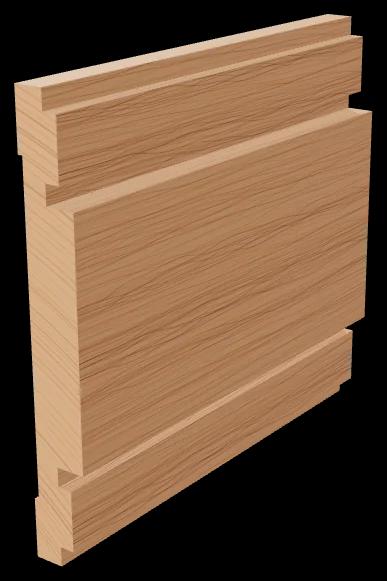
Base
5-1/2" / 6-1/4" / 7-1/4" × 3/4"
Milled to orderView profile →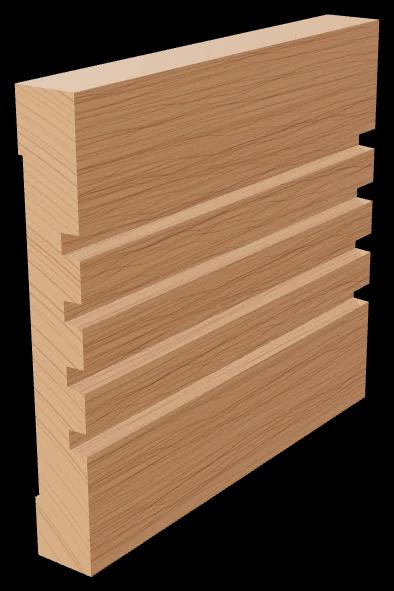
Base
5-1/2" / 6-1/4" / 7-1/4" × 13/16"
Milled to orderView profile →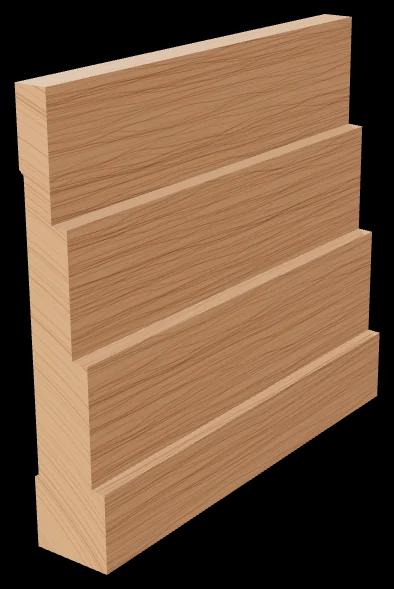
Base
5-1/2" / 6-1/4" / 7-1/4" × 1-1/16"
Milled to orderView profile →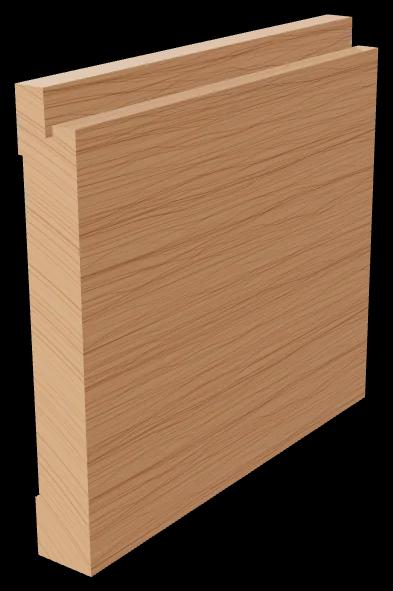
Base
5-1/2" / 6-1/4" / 7-1/4" × 13/16"
Milled to orderView profile →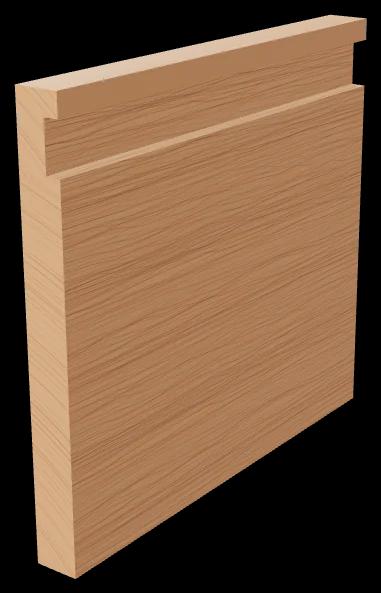
Base
7-1/4" × 3/4"
Milled to orderView profile →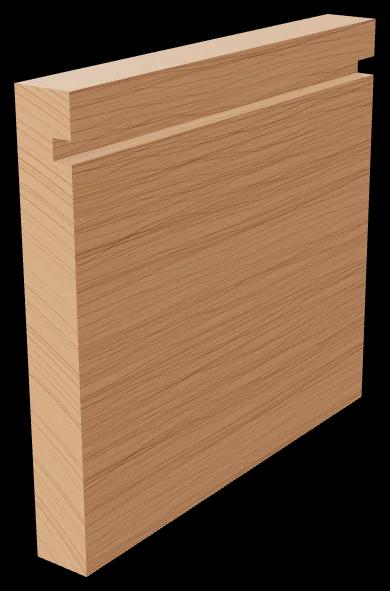
Base
5-1/2" × 3/4"
Milled to orderView profile →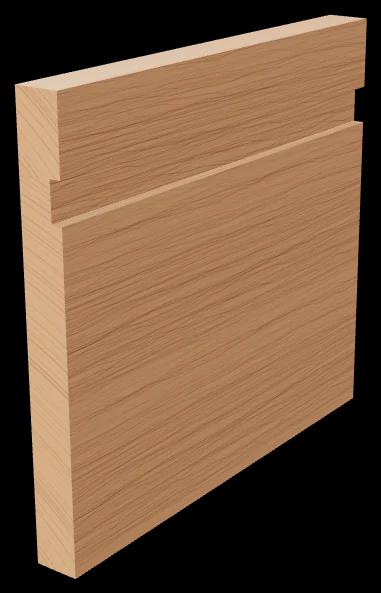
Base
7-1/4" × 3/4"
Milled to orderView profile →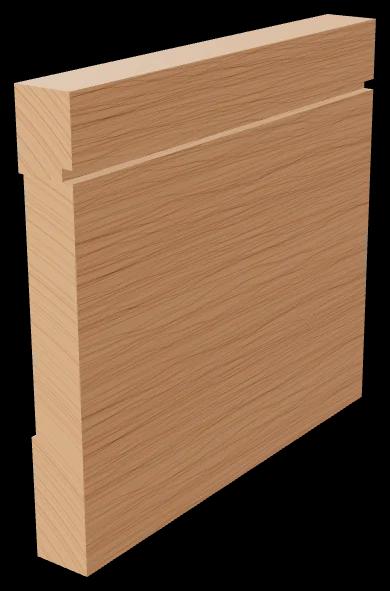
Base
7-1/4" × 1"
Milled to orderView profile →Terms used on this page
Questions people ask before ordering
What size baseboard works with 9-foot ceilings?
For 9-foot ceilings, the standard recommendation is a 5-1/4″ to 7-1/4″ baseboard — roughly 5% to 8% of ceiling height. 5-1/4″ keeps the room feeling modern and uncluttered; 7-1/4″ reads as traditional and substantial. Don’t go below 4-1/4″ on a 9-foot ceiling; the proportions look pinched. Match the casing scale — bigger base wants 3-1/2″ or wider casing.
Read the answer →MDF vs. solid wood baseboards — what should I use?
MDF baseboards are cheaper, take paint smoothly, and arrive with a perfect surface — but they swell with water, dent easily, and can’t be sanded or stained. Solid wood baseboards cost more and have visible grain, but they hold up to mopping, kicks, and Houston humidity, and they can be stained, sanded, and refinished. For a forever home, solid wood is the better long-term call.
Read the answer →Shoe moulding vs. quarter round — what’s the difference and which one do I need?
Quarter round is a true quarter-circle profile — equal on both faces, typically 3/4″ × 3/4″. Shoe moulding is taller than it is wide — typically 1/2″ × 3/4″, with a softer rounded face — sitting more discretely against the baseboard. Both finish the seam between baseboard and floor. Pick shoe moulding when you want a quieter look; quarter round when you have a wider gap to cover.
Read the answer →Can you match my existing moulding profile?
Yes. UWP runs custom knives to match existing baseboards, crown, casing, and any other milled profile. Bring us a 6-inch sample piece, a clean sketch with dimensions, or even a photo with a scale reference. We grind a new knife to match, run your order, and keep the knife on file for re-orders. One-time knife fee covers the setup; per-foot pricing matches our stock catalog.
Read the answer →