PoplarPaint-Grade · Most Popular
Janka hardness540 lbf
Best for — Our highest-volume species. The value choice for painted trim, casing and built-ins — a lower-cost paint-grade hardwood for any profile finished in colour, not stain.
2" × 1" — milled to order at NW Houston / Tanner Rd in Red Oak, White Oak, or ground to match an existing profile.
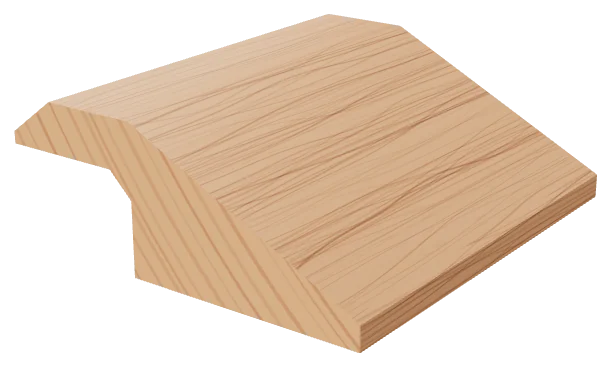
The top of the lip stands 1″ above the lower floor and the ramp is 1:1.43 — over the 1/2″ limit of 2010 ADA §303 and steeper than the 1:2 a bevel may be. How transitions are measured
Red Oak · 2" × 1"
Low-Slope Overlap Reducer · Random Length
PROFILE
UW9890
priced by the foot on your quote
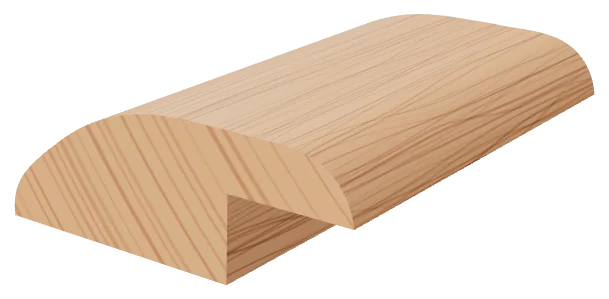
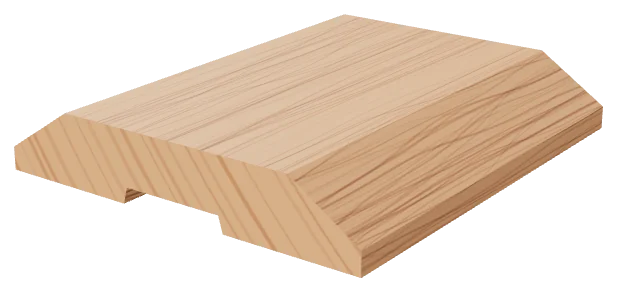
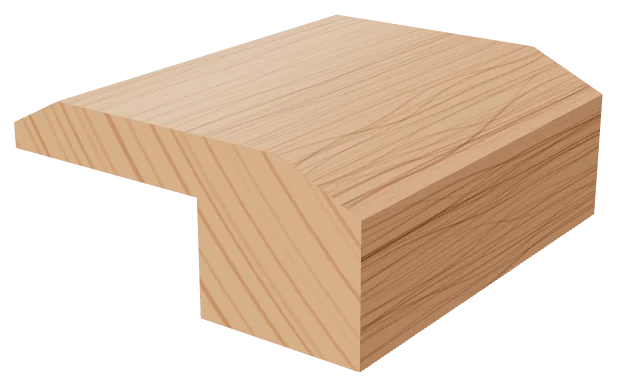
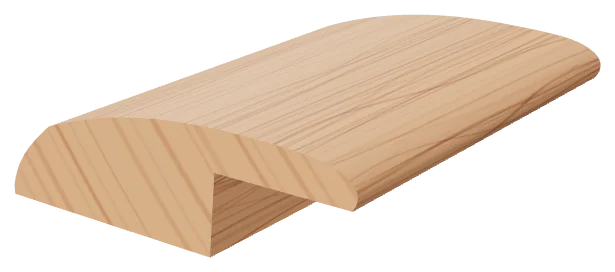
A 2″ × 1″ overlap reducer with a straight 1-1/4″ ramp and a 3/4″ drop under the lip. The beveled 3/4″ lip rides on a 3/4″ nominal solid hardwood floor and hides its cut edge; the ramp bears on the subfloor and eases the change in level down to a 1/8″ toe. Not for an accessible route.
Colour is indicative — grain and colour vary board to board.
A stocked profile runs one size off one knife. Length is a quantity, not a dimension — order by the foot.
Need this section at another width, in another species, or ground to match an existing profile? That is a custom run — send us a sample or an offcut.
Order by the code above at the Tanner Rd counter. Pricing, availability and lead time are confirmed on the quote.
PROFILE
UW9890priced by the foot on your quote
Specification · UW9890
Red Oak · 2" × 1" · Low-Slope Overlap Reducer
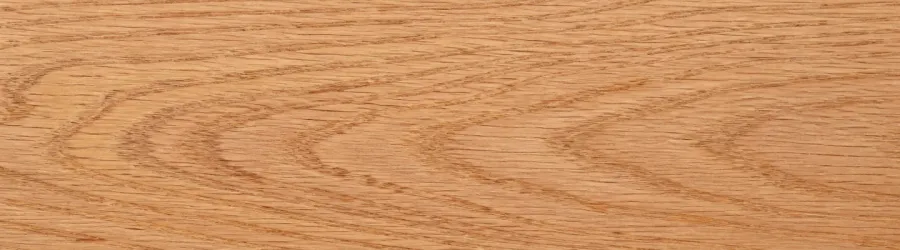
Stocked profiles run primed for paint; in solid wood this one is milled to order, so the species is your choice rather than whatever is on the shelf. These are the five we run most for flooring transitions — pick one in the swatches above to see this profile in it.
Best for — Our highest-volume species. The value choice for painted trim, casing and built-ins — a lower-cost paint-grade hardwood for any profile finished in colour, not stain.
Best for — The workhorse match for red oak floors — the most-stocked species across treads and moulding.

Best for — Cooler, modern, wire-brushed and natural finishes; the premium choice for light contemporary work.

Best for — Pale contemporary work, maple cabinetry, and anywhere an even near-white tone is wanted.

Best for — Dark, high-end interiors and feature work where a rich chocolate tone is the statement.
Reduces a 3/4″ nominal hardwood, laminate, or engineered floor down to a lower surface — the drop under the lip equals the floor thickness, so the floor edge tucks under flush.
A 1-1/4″ straight ramp to a 1/8″ toe instead of a domed profile — a longer, even slope underfoot and no lip to catch.
The 3/4″ lip rides on the finished floor and hides its cut edge; fasten the ramp body to the subfloor only so the floor can still move.
Where flooring type or height changes between spaces and a clean milled hardwood edge is wanted — off an accessible route. For one, see the Flush Bevel Reducers (UW9901–UW9903).
Two floors at the same height that both float take a T-moulding. A thicker floor stepping down to a thinner one takes an overlap reducer. A floor ending at a doorway or a different material takes a threshold. Two fixed floors at the same height take a saddle. On an accessible route the drop, not the name, decides.
Read the answer →Threshold and transition strips finish the seam where two floors of different heights or materials meet. The four main types are T-mould (same-height transition between same-thickness floors), reducer (taller floor to shorter floor), end-cap or carpet-edge (hardwood to carpet), and threshold (door opening, where two rooms meet). Pick by the floor heights you’re transitioning and what kind of doorway it is.
Read the answer →A stair tread is the full walking surface — a solid wood plank that covers the entire step from front to back. A stairnosing is a thin profile that finishes only the front edge of a stair, used when the rest of the step is carpet, tile, vinyl, or engineered floor. Match the rest of the step: solid wood throughout → tread. Different surface on the step → stairnosing.
Read the answer →Houston outdoor humidity is high year-round, but conditioned indoor humidity stays in a normal range (30%–55% RH) — the same as most US homes. Hardwood floors, stair treads, and mouldings installed in conditioned Houston interiors perform as well as anywhere else in the country. The risk isn’t the climate; it’s installing wood in an unconditioned space or skipping acclimation.
Read the answer →