

Moulding family
Mantle Mould
3 profiles
Mantle mould is the heavy profile that finishes the front of a mantle shelf or a bar top: deeper than a lip mould, with the cove or ogee sized to read from across the room. It is usually built up — mantle mould over a bed mould over a flat — and the three are cut from the same species so the stain takes evenly.
Stocked in solid hardwood in the profiles the yard turns over. Each profile page lists the species and the lengths on the rack; a deeper cornice is drawn from these sections and quoted as an assembly.
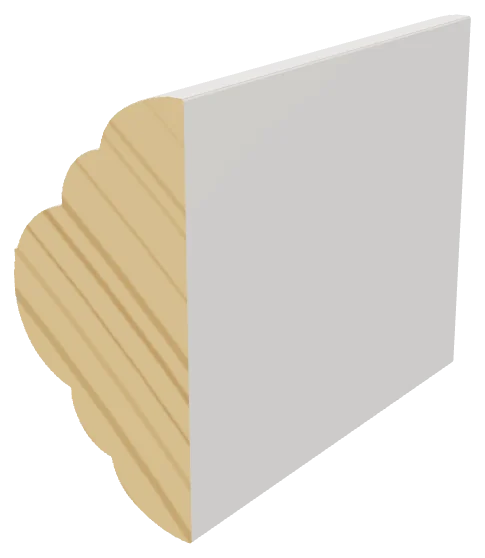
Mantle Mould
1/2" × 1"
Special orderView profile →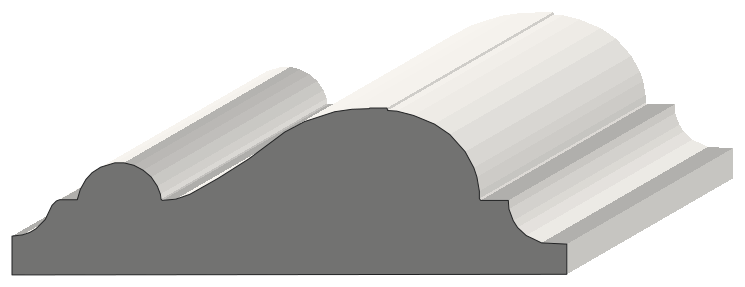
Mantle Mould
1-1/8" × 4-5/8"
Special orderView profile →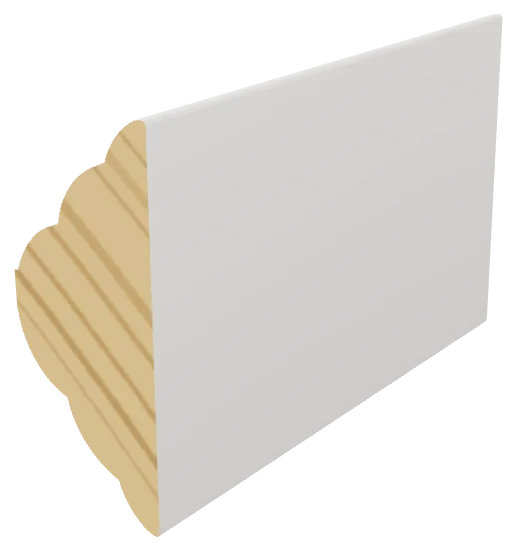
Mantle Mould
5/16" × 3/4"
Special orderView profile →Terms used on this page
Questions people ask before ordering
Crown vs. cove moulding — what’s the difference and which one do I need?
Crown moulding is sprung — it sits at an angle bridging the wall and ceiling, with an ornate profile that can include curves, beads, and steps. Cove moulding is a single concave curve, sitting flat into the wall-ceiling corner. Crown reads as traditional and substantial; cove reads as clean and quieter. For 8-foot ceilings, cove or small crown. For 9-foot+, scale up.
Read the answer →Wide plank vs. edge-grain vs. end-grain wood countertops — which one for my kitchen?
Wide plank countertops show the broadest grain pattern and read most like a piece of furniture — best for islands and bars where the surface is the focal point. Edge-grain (butcher block) is the most cost-effective and stable construction. End-grain shows a dramatic checkerboard pattern, is the most knife-friendly, and runs the highest price. Pick on look first, function second.
Read the answer →Can you match my existing moulding profile?
Yes. UWP runs custom knives to match existing baseboards, crown, casing, and any other milled profile. Bring us a 6-inch sample piece, a clean sketch with dimensions, or even a photo with a scale reference. We grind a new knife to match, run your order, and keep the knife on file for re-orders. One-time knife fee covers the setup; per-foot pricing matches our stock catalog.
Read the answer →Polyurethane vs. oil finish on hardwood — which one should I use?
Polyurethane is a film-forming finish — it sits on top of the wood, harder and more abrasion-resistant, but harder to repair locally. Oil finishes (Rubio Monocoat, Osmo, tung oil) penetrate into the wood, look more natural, and are easier to spot-repair — but provide less surface protection. Pick polyurethane for stairs and high-traffic floors; oil for countertops, lower-traffic floors, and natural-look projects.
Read the answer →