

V-Groove
Sharper shadowA 3/16" chamfer on each face arris meets its neighbour in a crisp V at every joint — the most architectural and linear of the four, and the usual choice for wide boards and long ceilings.
Milled to Order · Solid Hardwood · NW Houston / Tanner Rd
Interlocking, blind-nailed boards milled on our own floor for ceilings, porch soffits, wall runs and built-ins. Four cuts — V-groove, nickel gap, edge bead and edge & centre bead — drawn below in section so you can read the joint before you order it. Choose the profile, confirm the board, then pick the species that fits the room and the finish schedule.
Stock
1x6 · 3/4" × 5-1/2"
Cuts
V · nickel gap · bead · beadboard
Species
Six core · Cypress by quote
Pickup
NW Houston / Tanner Rd
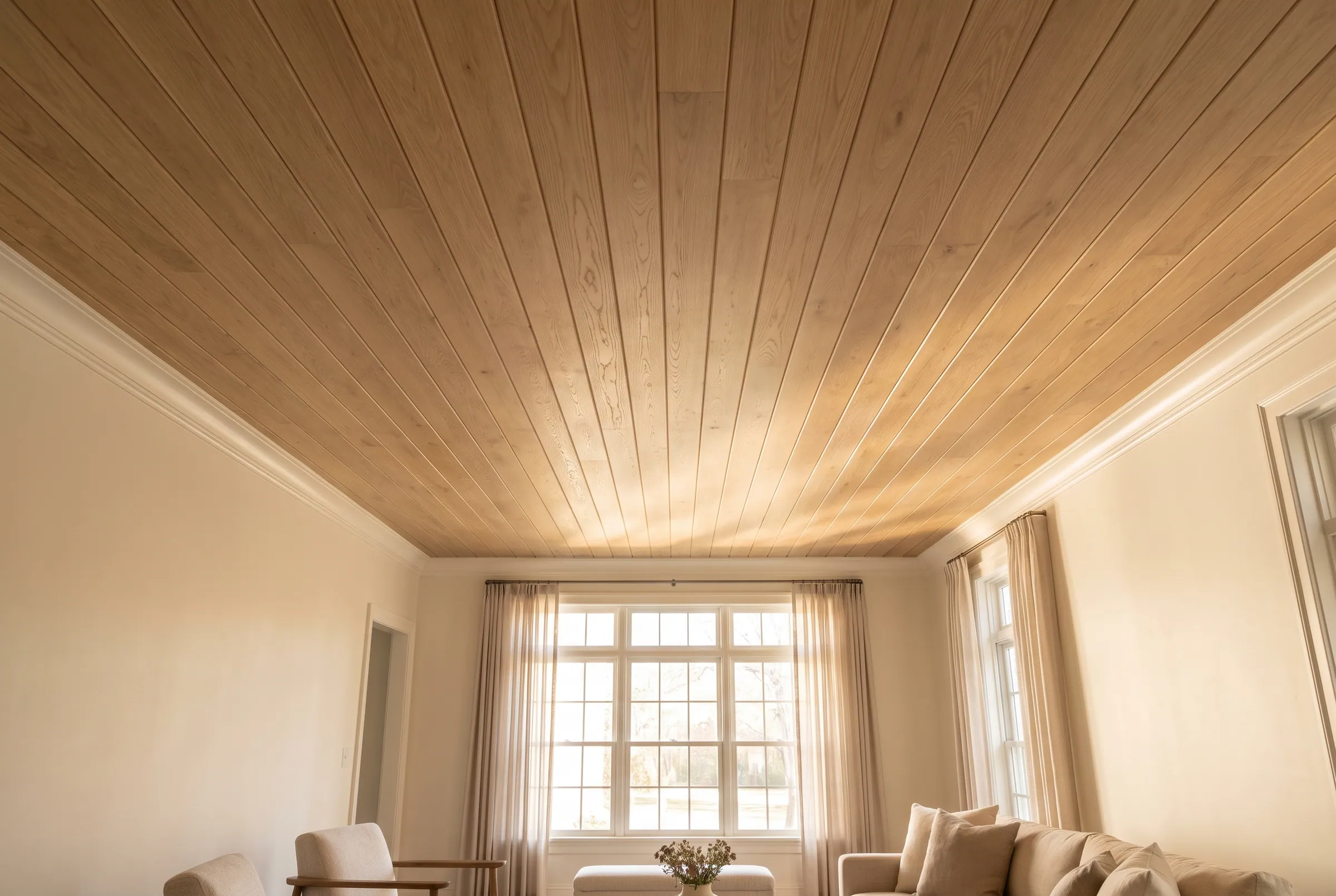
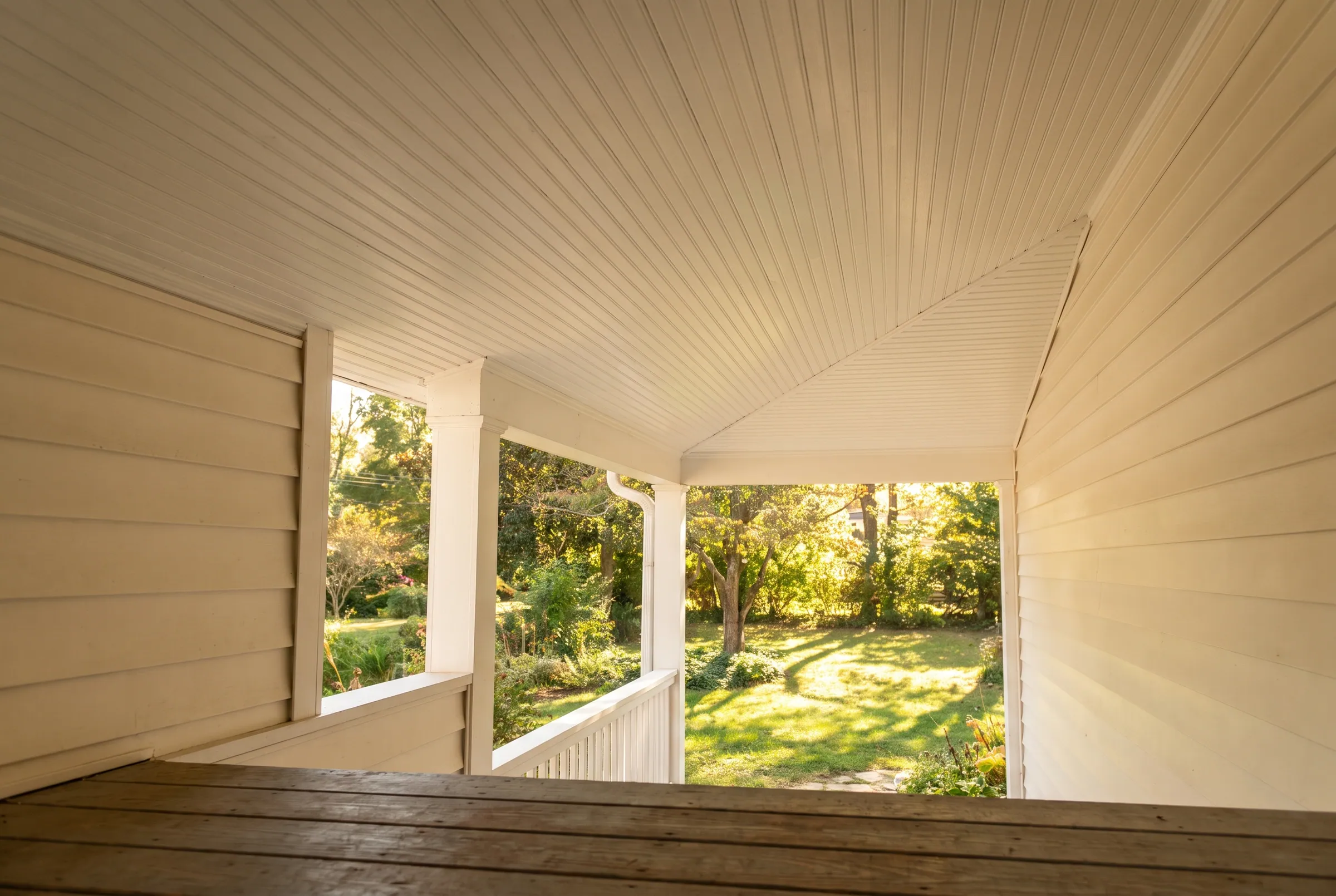
Real hardwood boards with a tongue and groove milled on the edges — sand, stain and finish them like any solid wood. Not a printed film over MDF.
Boards blind-nail through the tongue, so the finished ceiling or wall shows an unbroken face with no filled nail holes down the run.
Your species, profile, face width and lengths — milled to order and laid out to minimise seams across the span. Quoted to order.
The profile decides how the run reads from across the room. Every cut below is the same 3/4" × 5-1/2" board with the same 1/4" tongue, drawn two boards at the joint with the tongue seated; only the face changes. Under each section, the same joint face-on across a run.
A 3/16" chamfer on each face arris meets its neighbour in a crisp V at every joint — the most architectural and linear of the four, and the usual choice for wide boards and long ceilings.
The tongue-side face is relieved so a fully seated joint still shows a measured 3/16" reveal. Contemporary spacing with the tongue still carrying the joint and hiding the nail.
A single half-round bead with a quirk beside it at the joint. Quieter than full beadboard, but it still catches a fine shadow line down every seam.
A bead at the joint and a second at the centre of the face — the historic porch-ceiling and beadboard rhythm, at half the apparent board width.
Sections are drawn to proportion, not to scale on screen. Knives are ground in-house, so a matched or custom bead can be run against a sample or a section drawing.
Both are solid boards milled to order from the same stock. The joint is the difference, and it decides where each one belongs.
| Tongue & groove | Shiplap | |
|---|---|---|
| Joint | Interlocks — tongue seated in the groove | Overlaps — rabbeted laps |
| Fastening | Blind-nailed through the tongue, hidden | Through the lap, or face-nailed and filled |
| Best overhead | Yes — holds flat across a long span | Works; the reveal is the feature |
| Reveal | V, bead or a milled 3/16" nickel gap | Flush, 1/8", 1/4" or 1/2" |
| Fitting | Boards must slide together in sequence | Easier around openings; boards drop in |
Species and finish
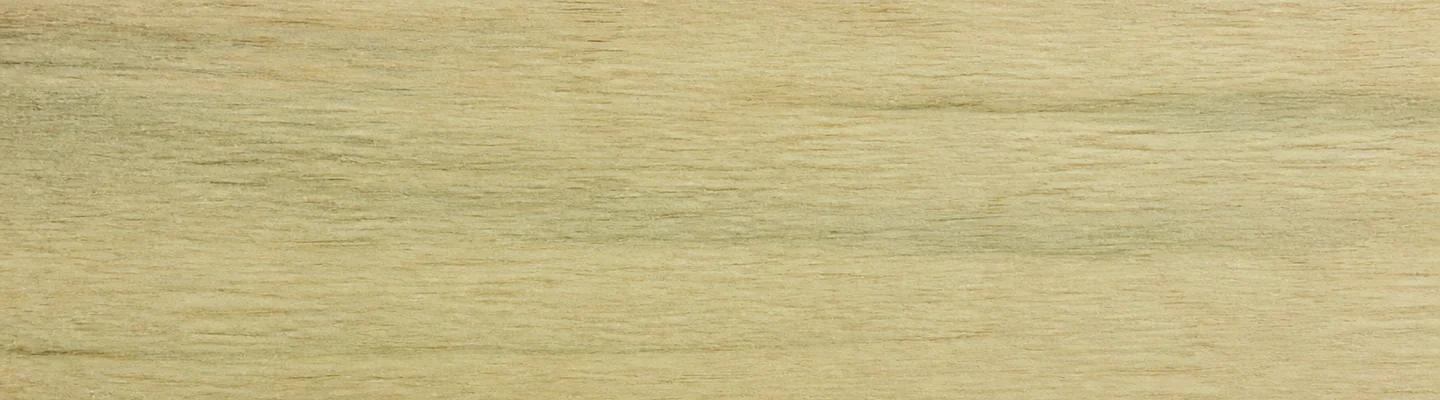
Paint-grade Poplar keeps the surface quiet and lets the profile do the work; stain-grade hardwoods turn the same profile into a feature. Cypress and other species are milled to order with timing on the quote.
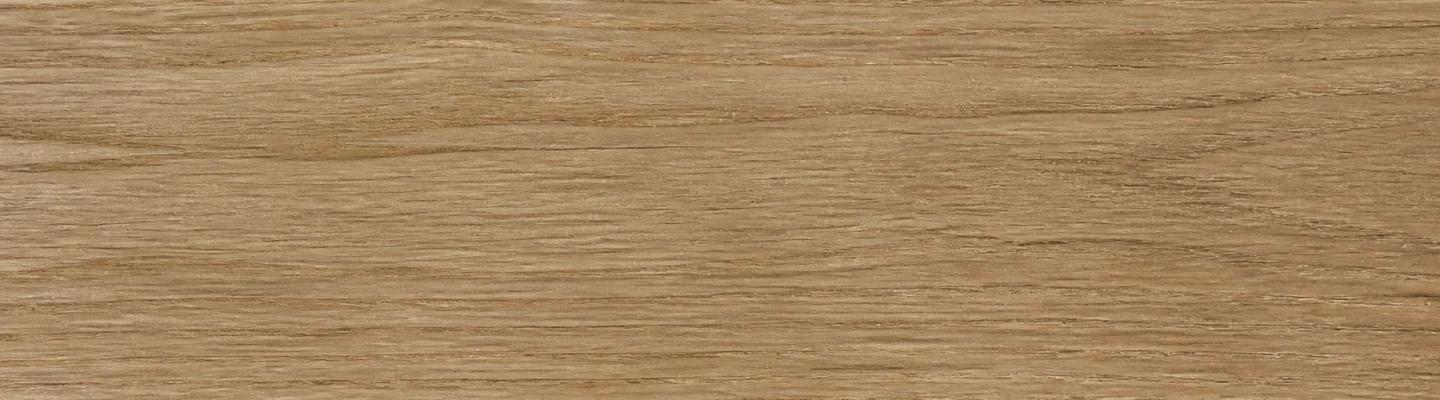
Images simulate a water-clear matte coat to show natural species colour. Material ships unfinished; tone and figure vary by board.
Paint-grade
Pale and tight; the standard for painted ceilings, soffits and beadboard.
Premium
Warm-tan with an olive cast — the modern feature-ceiling favourite.
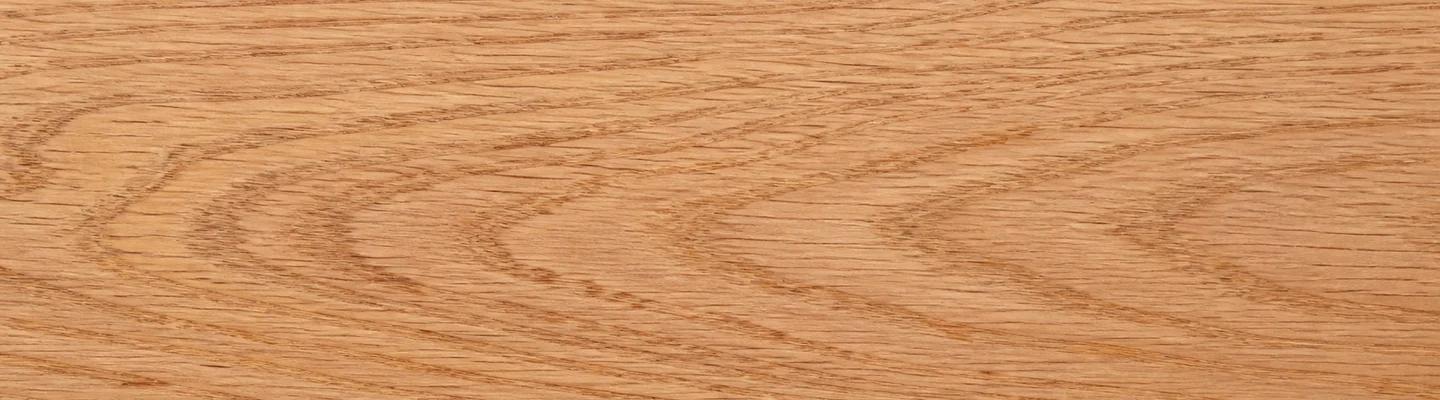
Standard
Warm reddish cast and bold, open grain for traditional rooms.
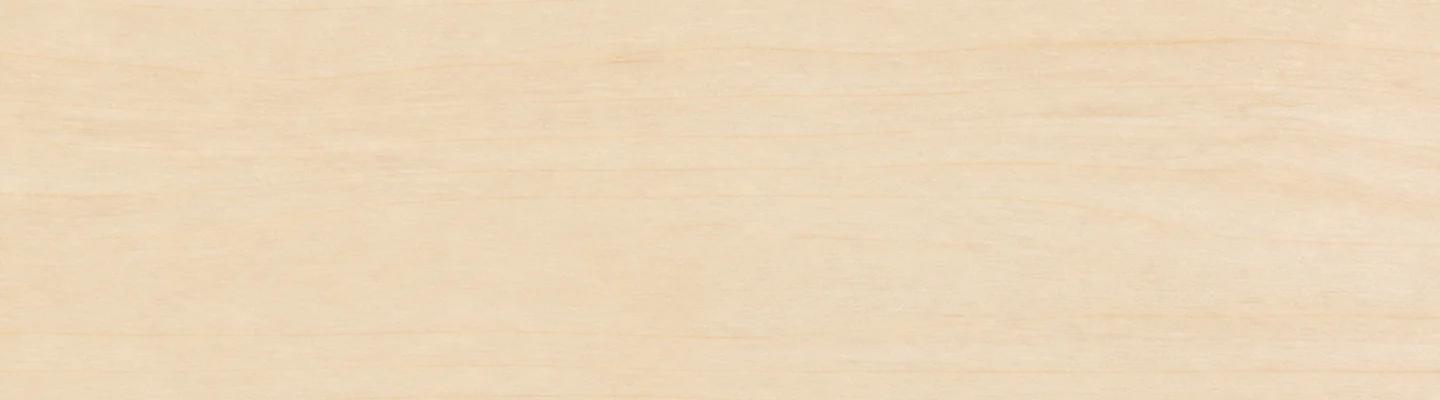
Clean & pale
Even, fine grain that reads crisp and contemporary under a clear coat.
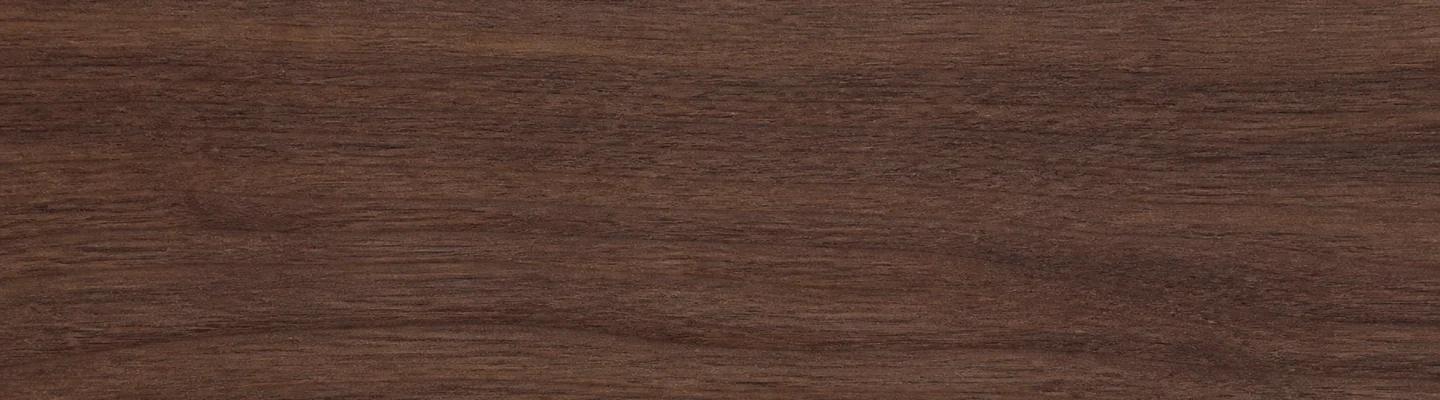
Dark & refined
Rich chocolate-brown; a warm, high-end statement ceiling.
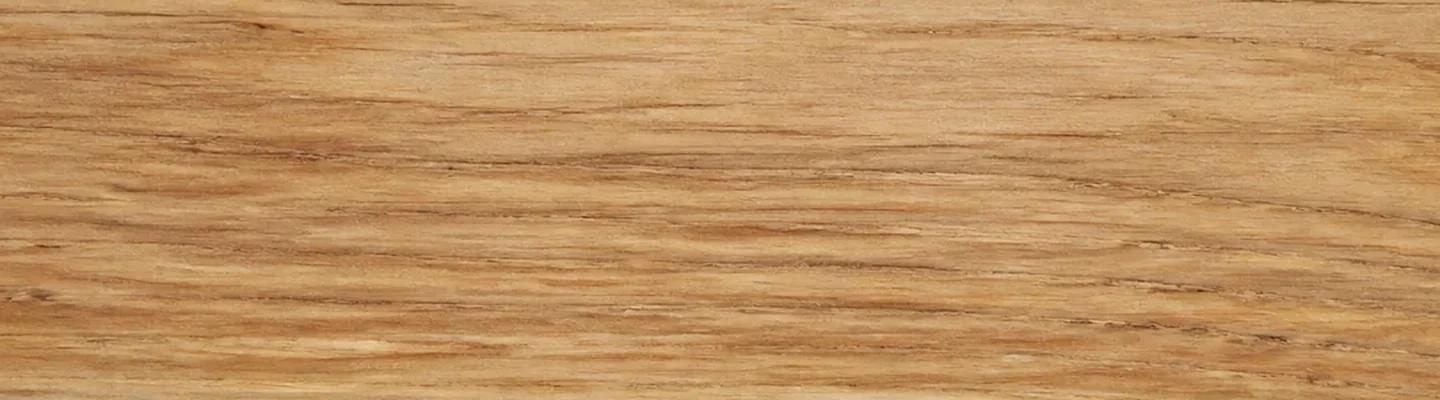
High character
Strong grain and colour variation — rustic warmth, hard-wearing.
1x6 is the standard board; wider runs read calmer on a long span, narrower ones read finer. Coverage is the face width — the tongue is lost in the joint.
| Nominal | Board | Coverage |
|---|---|---|
| 1 × 4 | 3/4" × 3-1/2" | 3-1/4" |
| 1 × 6 | 3/4" × 5-1/2" | 5-1/4" |
| 1 × 8 | 3/4" × 7-1/4" | 7" |
| 1 × 10 | 3/4" × 9-1/2" | 9-1/4" |
| 1 × 12 | 3/4" × 11-1/4" | 11" |
All stock is 3/4" nominal thickness with a 1/4" tongue. Coverage is confirmed on the written quote for the profile you choose and carries a 10–15% cut allowance. Custom thicknesses and widths milled on request.
The application changes the recommendation as much as the profile does.
Bead or V-groove gives a long span visible rhythm and hides seasonal movement in the joint. Narrower boards read finer; 1x6 is the usual starting point.
Covered exterior work. Cypress can be quoted alongside the hardwoods — confirm exposure, ventilation and the finish schedule before the run is milled.
Match profile, species and trim so the wall reads as built-in millwork rather than applied board. UWP mills the cap, base and casing to suit.
Beadboard backs in bookcases and cabinet ends, milled from the same board as the room so the detail carries through.
Restaurant ceilings, lobby walls and corridor wainscot — trade runs milled to commercial footage with a known lead time and a section drawing for the submittal.
Beadboard or V-groove that ties into matching UWP treads, handrail and trim so the entry reads as one hardwood program.
UWP mills the boards; your carpenter fits them. These are the notes we send with every run. The full sequence — acclimation, fastening schedule and finishing — is on the quote.
Stack the boards flat in the conditioned room for at least three days before fastening. Overhead runs move most; let the wood settle first.
Drive a 15- or 16-gauge finish nail at 45° through the tongue shoulder into joists or furring at 16" centres. The next groove covers it — no filled holes down the run.
The first course and the last board cannot be blind-nailed; face-nail them where trim or the wall will cover it, or fill and finish.
Hold 1/8"–1/4" at walls and trim for movement; the crown, cove or perimeter moulding closes it. Long runs move most along their width.
Boards ship unfinished and sanded. Paint-grade: prime the back, the tongue and the groove edges so movement never shows bare wood. Stain-grade: seal all faces.
The things the counter gets asked before every run, answered here so the quote holds no surprises.
Solid hardwood varies board to board: colour, figure, mineral streak and the occasional tight knot are the material, not defects. Paint-grade Poplar is selected for a clean face under paint; stain-grade species are selected for colour and figure across the run, and a rift or quartered cut can be quoted for a quieter grain.
Boards run in the lengths the lumber yields — random lengths across the run unless you specify fixed lengths, which are cut from longer stock and confirmed on the quote. Tell us the longest wall or ceiling span; we lay the run out to minimise seams.
Kiln-dried to 6–9% moisture content, the range a conditioned Houston interior settles into. Solid wood still moves across its width with the seasons; the joint is designed to hide it, and the 72-hour acclimation before install is what keeps it hidden.
Thickness ±1/32", face width ±1/16", the same tolerances UWP prints on its shop drawings. Profiles are milled from knives ground in-house; a matched sample or section drawing is run to the same standard.
Every board is supplied unfinished and sanded. Priming, staining and clear-coating happen on site after fitting, by your finisher — which also means the reveal, the tongue and the back get sealed, not just the face.
Order 10–15% over the net wall or ceiling area for cuts, end matching and grain selection. The written quote carries that allowance as a line you can see, not buried in the footage.
Milled-to-order material is a custom order: a 50% non-refundable deposit releases the run, and custom and cut-to-length items are non-returnable. Shortage or damage claims within 3 business days of receipt. Store policies →
Production timing depends on the lumber on hand, the knives to set and the shop schedule that week, so it is confirmed on the written quote rather than promised on the page. Will-call at NW Houston / Tanner Rd, or Houston-metro delivery scheduled on the quote.
UWP-milled boards carry the one-year material-and-workmanship coverage of the UWP warranties. Movement, checking and colour change from site conditions or finishing are not defects. All warranties →
Four details make the quote clean. If the room needs matched casing, beams or perimeter moulding, send that too — UWP mills the related pieces so the finished space carries one profile language.
NW Houston · Tanner Rd Yard · Will-call & metro delivery
Room dimensions, direction of run and total square footage. We add a 10–15% cut allowance on the quote.
V-groove, nickel gap, edge bead or edge & centre bead, and the nominal width — 1x6 is standard.
Paint-grade Poplar or a stain-grade hardwood, and whether it is painted, stained or clear-coated on site.
Interior ceiling, covered porch soffit or wall run — an exterior run is quoted differently. Add matched casing, beams or perimeter moulding if the room needs them.
Straight answers to the questions we field at the will-call counter — not a marketing FAQ.
Part of our hardwood millwork program. Also milled to order: shiplap and wall paneling.
Run the boards perpendicular to the joists, or add furring at 16 inches on centre if you need to run them the other way. Acclimate first. Start with the groove edge to the wall, blind-nail through the tongue shoulder at 45 degrees into every joist, and leave a 1/2 inch expansion gap at the perimeter for the trim to cover.
Read the answer →Shiplap is a rabbeted lap joint: each board overlaps its neighbour, so the seam can hold a deliberate gap — the reveal. Tongue and groove is a mechanical joint: a tongue on one edge seats in a groove on the other, locking boards flat and hiding the fastener. Shiplap is for a visible line. Tongue and groove is for a flat, continuous surface, especially overhead.
Read the answer →Paint-grade stock is chosen for a flat, even surface that disappears under primer — grain, colour and small defects do not matter because nothing will show. Stain-grade stock is chosen for its face: colour, figure and grain continuity across a run. Poplar is the paint-grade default because it machines cleanly, holds a crisp profile edge and takes primer well.
Read the answer →Houston outdoor humidity is high year-round, but conditioned indoor humidity stays in a normal range (30%–55% RH) — the same as most US homes. Hardwood floors, stair treads, and mouldings installed in conditioned Houston interiors perform as well as anywhere else in the country. The risk isn’t the climate; it’s installing wood in an unconditioned space or skipping acclimation.
Read the answer →