Reversible Starting Step
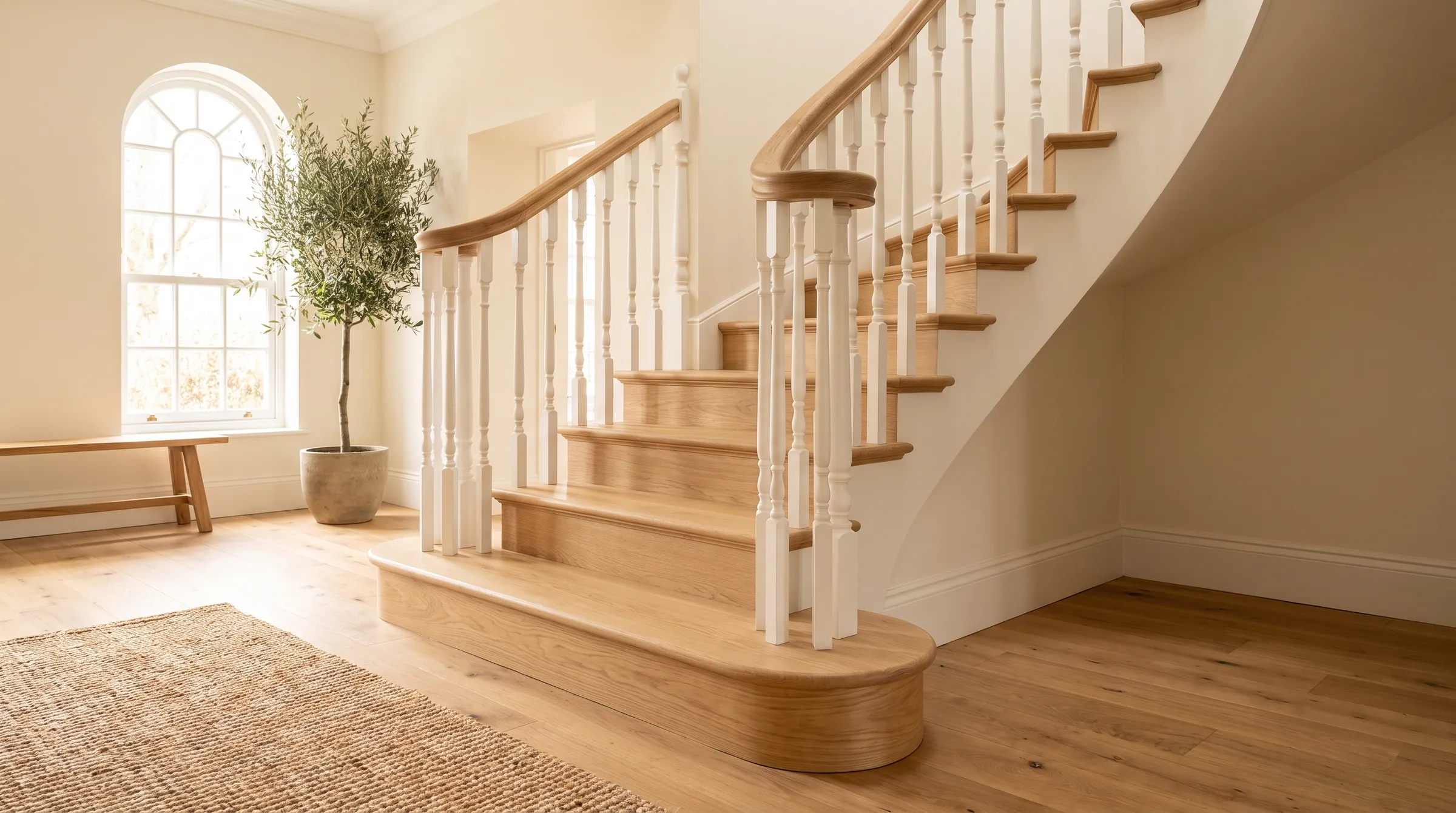
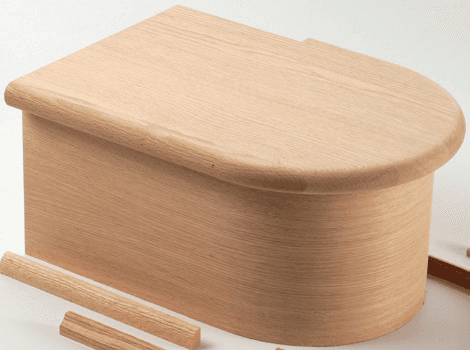
The dominant starting step in UWP's wood stair program — a reversible step that can be installed open-left or open-right by simply flipping it.

5 shapes · 4 families · Red Oak and White Oak, special order
The starting step is the visual anchor at the stair entry — it carries the species, profile, and proportion of the rest of the stair run. Pair the species with your starting newel and tread program. Reversible variants flip to open left or right; adjustable variants trim within a 6" range; fixed-length variants ship at a single stocked size.
All 5 stocked shapes. Filter to narrow the set.
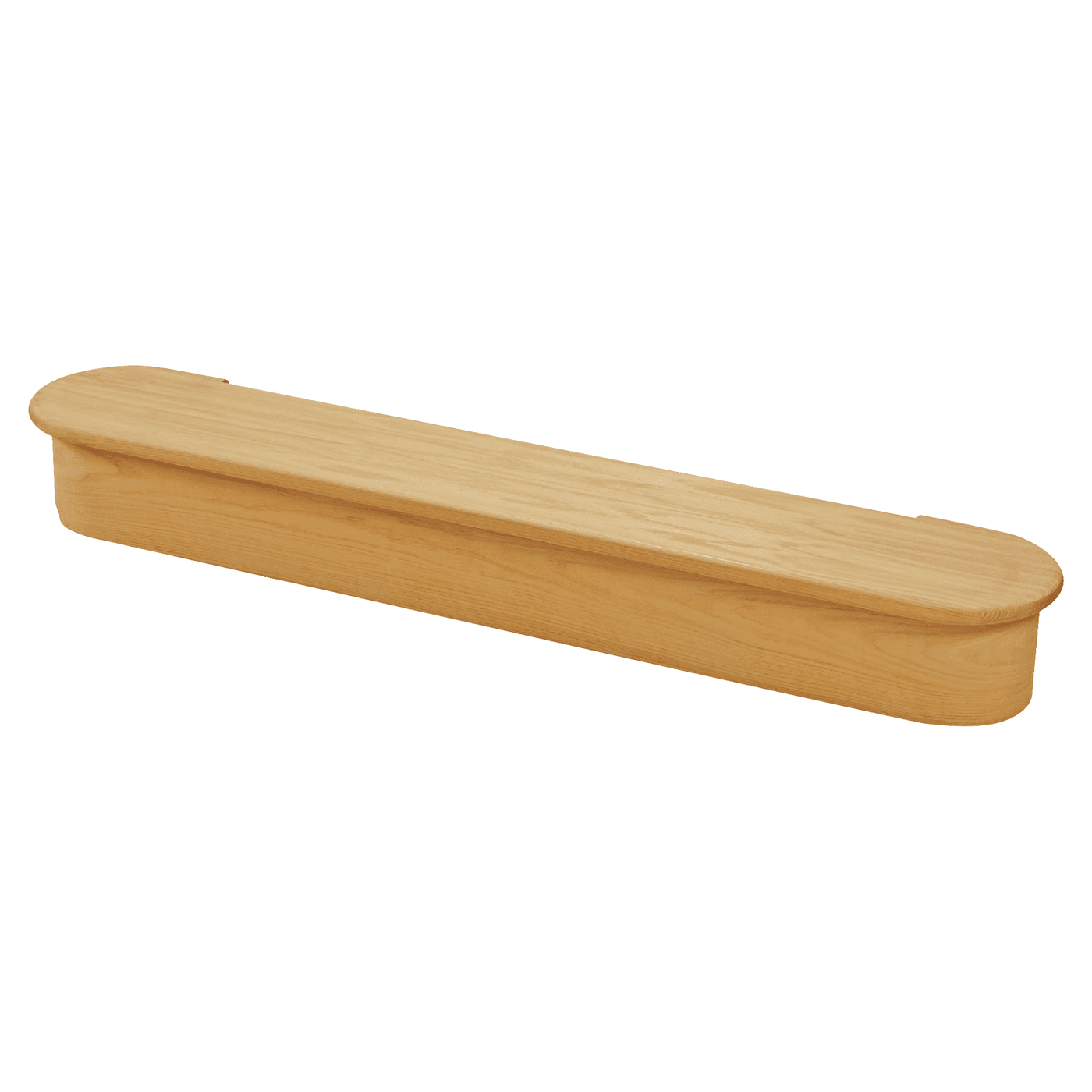
Reversible starting steps install open-left or open-right by simply flipping the piece. The 8010 family is the dominant choice for most residential stairs.


The dominant starting step in UWP's wood stair program — a reversible step that can be installed open-left or open-right by simply flipping it.
Adjustable steps trim within a 6" range to fit stair openings whose exact width isn't known until the rough framing is set.

Adjustable starting step — trimmable within a 6" range for stairs where the exact opening width isn't known until the rough framing is set.
Wedge steps fit wedge-shaped stair openings — also trimmable within a 6" range.

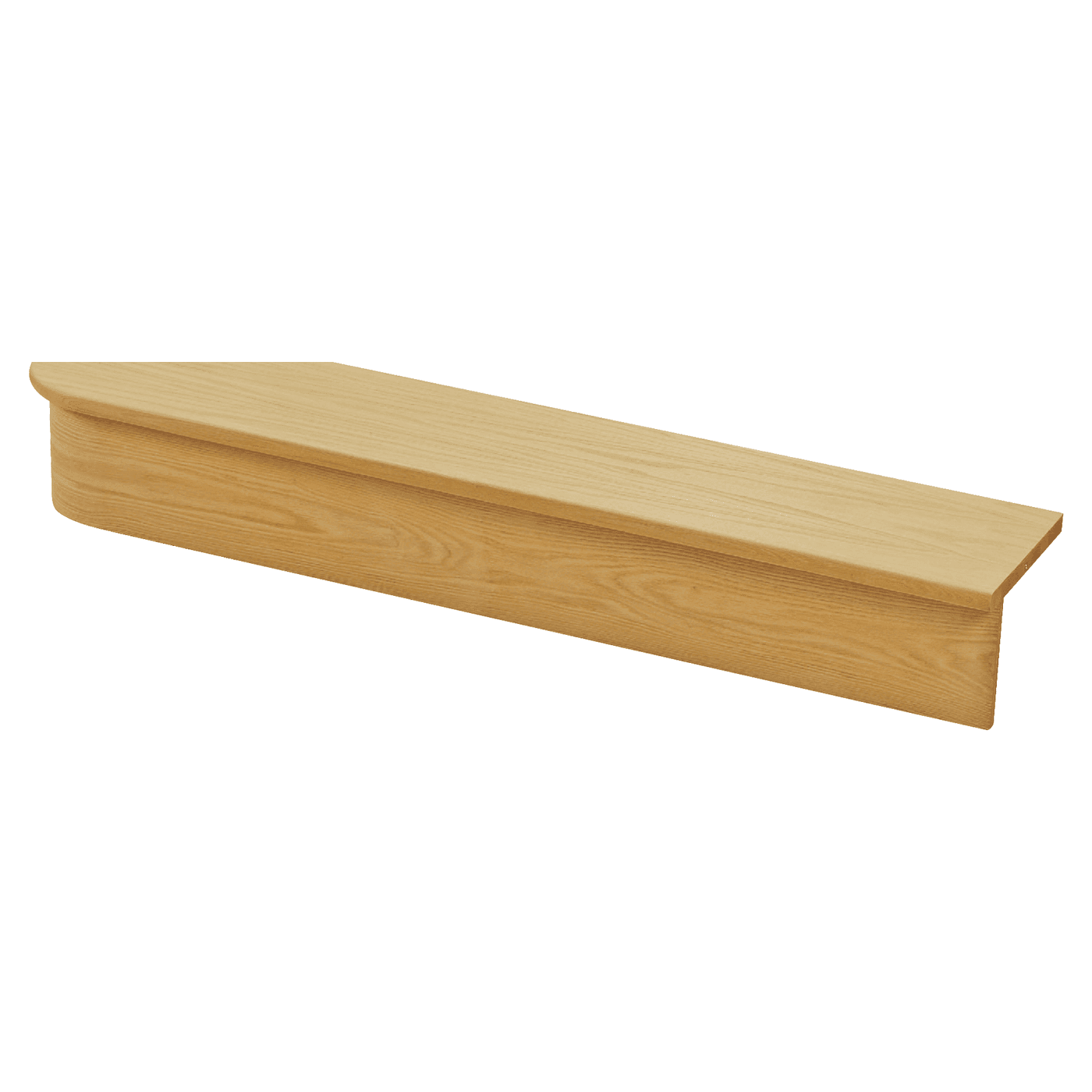
Wedge starting step — the 8315Z is an adjustable wedge step trimmable within a 6" range.
The false-end starting step for carpeted stairs, and the replacement cove and shoe set for the 8010.

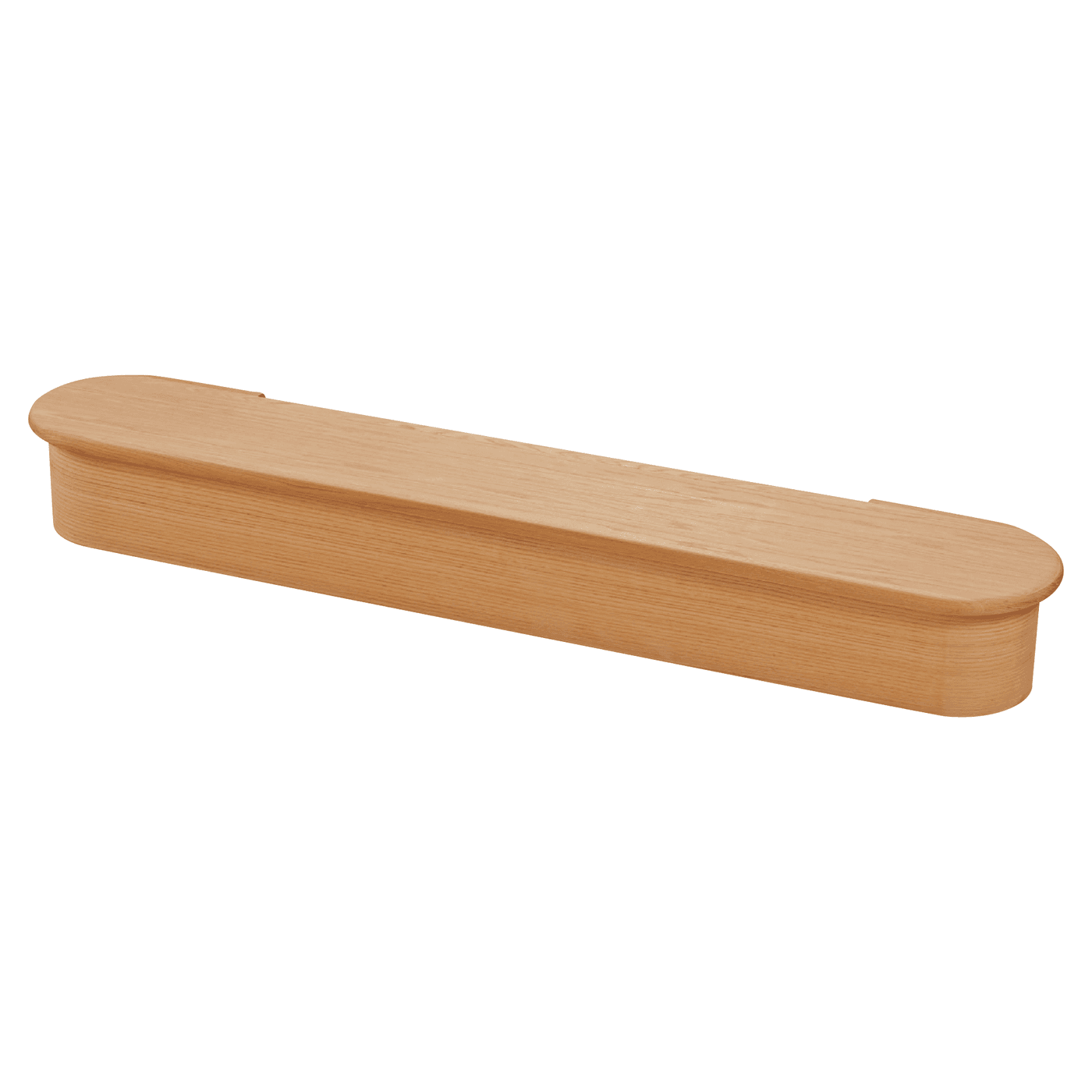
An oak false end starting step, 10-5/8" × 16-7/8" with a 6-1/4" radius, cove and shoe included.

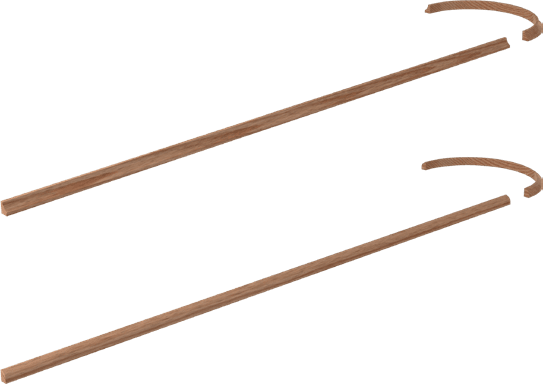
A replacement oak cove and shoe set for the 8010 reversible starting step — the curved trim that finishes the step where it meets the riser and floor.
A newel post is the structural anchor at the top, bottom, and turns of a stair railing. The four main families are box newel (large rectangular, traditional), turned newel (classical with profile turning), modern square (clean tapered or straight), and craftsman (substantial square with shaker detail). Size to the stair scale (4 to 8 inches), match the baluster style, and use the same wood species as the handrail.
Read the answer →A stair tread is the full walking surface — a solid wood plank that covers the entire step from front to back. A stairnosing is a thin profile that finishes only the front edge of a stair, used when the rest of the step is carpet, tile, vinyl, or engineered floor. Match the rest of the step: solid wood throughout → tread. Different surface on the step → stairnosing.
Read the answer →A confident DIYer can install a hardwood stair tread retrofit in a weekend. The sequence: pull carpet and staples, prep the substrate flat and quiet, acclimate the treads for 5 to 7 days, dry-fit each tread, glue with a urethane construction adhesive, fasten with stainless trim screws (countersunk), plug, sand, and finish. Risers go in before treads on a full build; after, on a retrofit.
Read the answer →A standard hardwood stair tread is 1 inch thick, 10-1/2″ to 11-1/2″ deep (front to back), and stocked in 42″, 48″, and 60″ widths at UWP — with red oak running to 96″. The IRC building code requires a minimum 10″ tread depth with a 3/4″ nosing overhang. Custom widths, depths, and thicknesses are available built to order.
Read the answer →