

Stair Mouldings, Specified by Joint.
Two lineal profiles finish the open end of a tread and the inside-corner joints around it. Choose the 8080 bullnose to return a tread nose back to the skirt, or the ½″ cove for inside corners; both are sold by the linear foot.
Match the profile to the joint and the wood species to the adjoining stair component. Confirm footage and availability at quote.
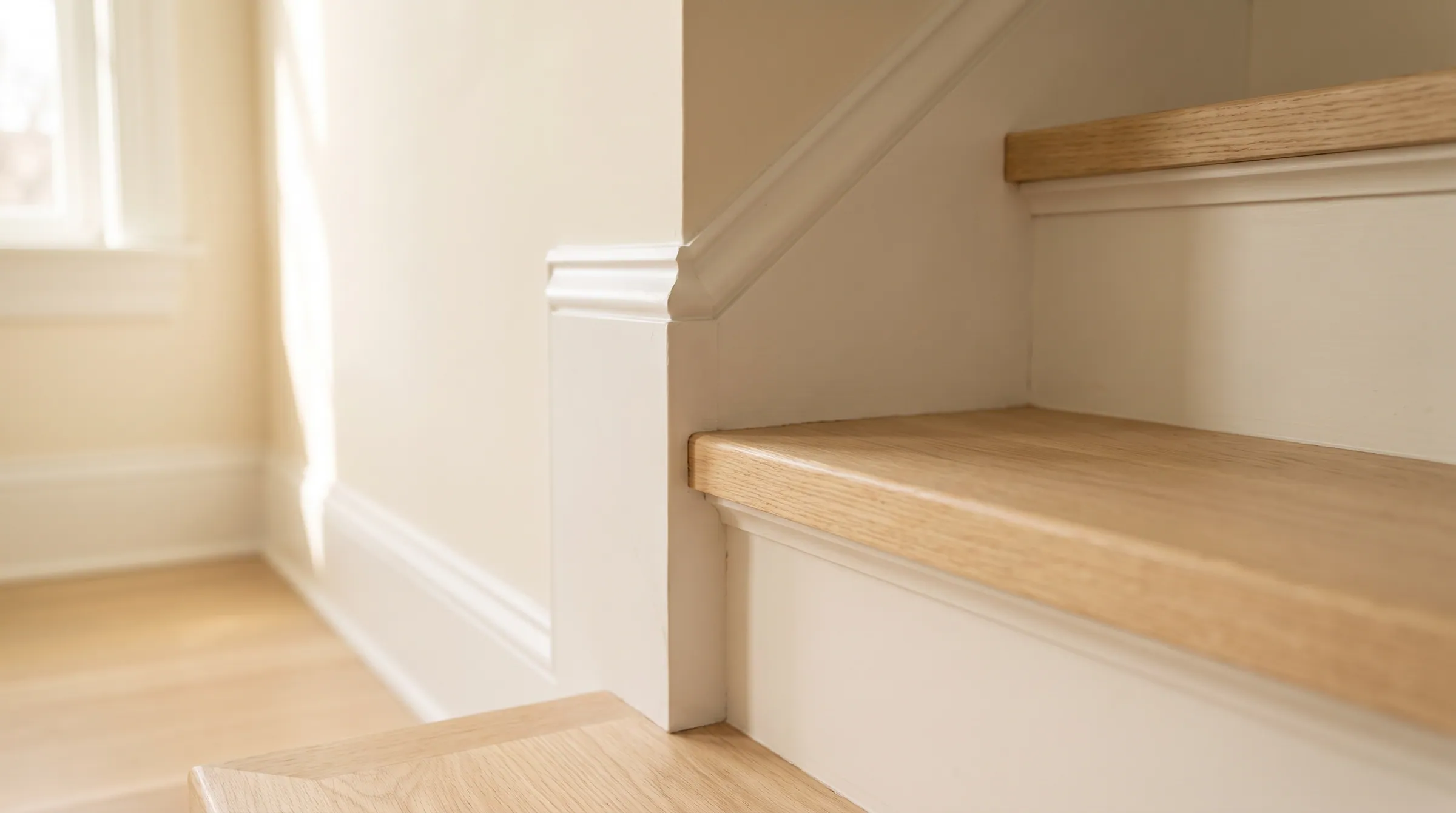
- Profiles
- 2
- Bullnose and cove lineal mouldings
- Bullnose
- 1″ × 1-1/4″
- Tread-nose return profile
- Cove
- ½″ × ¾″
- Inside-corner joint-cover profile
- Sold by
- Linear foot
- Specify the total installed footage
Select the joint-cover profile.
Match the profile to the joint, then match the species to the adjoining stair component.
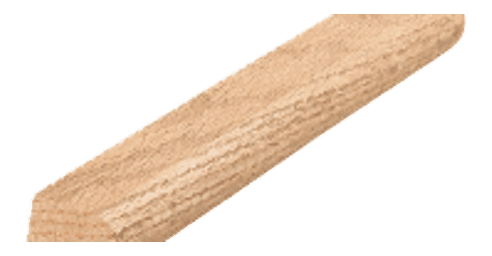
Bull Nosing
Bullnose lineal profile that forms the finished return at the open end of a stair tread, wrapping the rounded nose back to the skirt.
Special order- Profile
- 1″ × 1-1/4″ bullnose
- Species
- Red Oak · White Oak
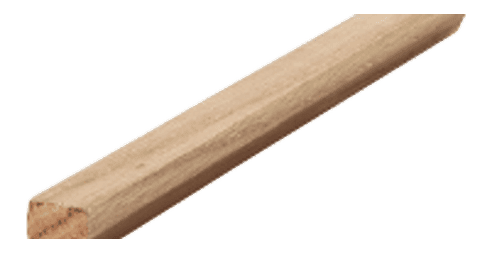
Lineal Cove Moulding
Concave lineal profile for finishing inside-corner joints within a coordinated stair assembly.
Special order- Profile
- ½″ × ¾″ cove
- Species
- Red Oak · Maple · White Oak
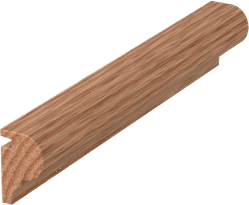
Special Lineal Nosing
Bullnose nosing with a cove underneath, for landings and balcony edges.
Special order- Profile
- 1-1/8″ × 1-3/4″ bullnose with cove
- Species
- Red Oak
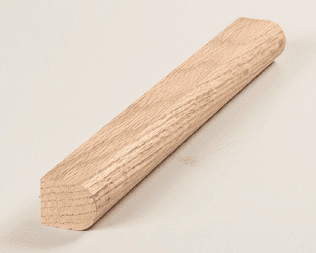
Lineal Square Moulding
Eased-edge square moulding — cove, shoe and trim around stair parts.
Special order- Profile
- 3/4″ × 3/4″ eased square
- Species
- Red Oak · White Oak
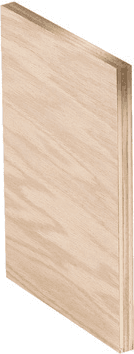
Riser Cap
The false end that finishes the exposed end of a riser.
Special order- Profile
- 1/2″ × 5-1/2″ × 8″
- Species
- Red Oak
Coordinate the profile, species, and footage.
Send the stair-joint condition and adjoining wood species. Our team will confirm the appropriate lineal profile and current availability.
Before you order
The two profiles a stair needs
Bull nosing and cove do different jobs at different joints, and a stair that is missing one of them looks almost right without anyone being able to say why.
Two profiles, two different jobs
Stair mouldings are the lineal profiles that finish a stair assembly where two surfaces meet. UWP catalogues the two that a stair actually needs, and they are not interchangeable.
- UW-8080 bull nosing, 1″ × 1-1/4″ — carries the rounded nose profile back to the skirt at the open end of a tread
- UW-8095 cove, 1/2″ × 3/4″ — closes the inside corner where the tread underside meets the riser
What the bull nosing is really for
On an open stair the tread has to end somewhere, and a cut end shows end grain. The bull nosing continues the tread nose around that end so the profile reads as one continuous line and no raw edge is visible.
Match it to the tread profile it is finishing. Bull nosing against a square-edge tread puts two different nose shapes on the same step.
The cove is a shadow line, not a filler
Run under the nosing where the tread overhangs the riser, the cove turns a gap that has to exist into a deliberate line, and hides the seasonal movement between two pieces that shrink in different directions.
It is also the piece most often left off, which is why a stair can look almost right and not read as finished.
Species and ordering
Bull nosing runs in red oak and white oak; cove adds maple. Order in the species of the treads, not the risers — the nosing is part of the tread line and any mismatch shows there first.
These are sold by the foot. Measure every run, add the returns and the waste from mitres, and add a cut allowance. Running one piece short on a lineal profile means a joint in a place you did not choose.
Questions people ask before ordering
Stair treads vs. stairnosing — which one do I actually need?
A stair tread is the full walking surface — a solid wood plank that covers the entire step from front to back. A stairnosing is a thin profile that finishes only the front edge of a stair, used when the rest of the step is carpet, tile, vinyl, or engineered floor. Match the rest of the step: solid wood throughout → tread. Different surface on the step → stairnosing.
Read the answer →What is a stair skirt board, and do I need to replace mine?
A stair skirt board is the flat trim piece running along the wall beside a staircase. It covers the rough edges of the stringers and treads where they meet the wall. On most carpeted stairs built since the 1960s, the skirt is a nominal 1×8 (about 11/16″ thick) — the critical reference dimension for retro-fit tread installs. Keep the skirt if it’s clean; replace if you’re changing tread thickness.
Read the answer →How do I match new stair treads to my existing hardwood floors?
Match new stair treads to existing floors in three steps: confirm the floor species (red oak and white oak look similar but stain very differently), order unfinished treads in the same species, and have the same finisher stain and topcoat both the floor and the treads with the same can. Pre-finished stair treads almost never match a site-finished floor exactly.
Read the answer →Shoe moulding vs. quarter round — what’s the difference and which one do I need?
Quarter round is a true quarter-circle profile — equal on both faces, typically 3/4″ × 3/4″. Shoe moulding is taller than it is wide — typically 1/2″ × 3/4″, with a softer rounded face — sitting more discretely against the baseboard. Both finish the seam between baseboard and floor. Pick shoe moulding when you want a quieter look; quarter round when you have a wider gap to cover.
Read the answer →