

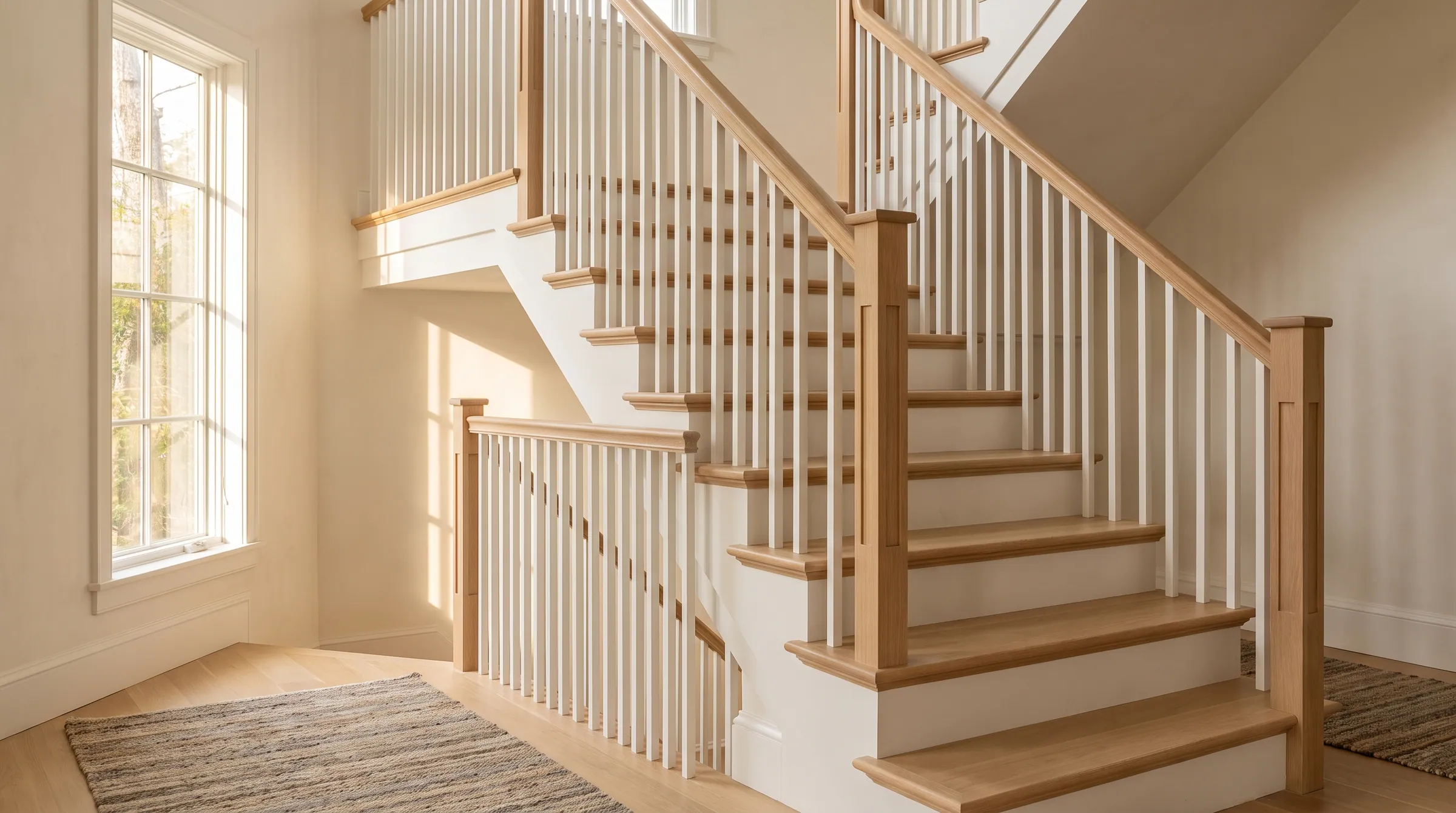
Stair Balusters
Wrought Iron · Turned Wood · Houston Yard
UWP stocks both sides of the railing: hand-forged wrought iron balusters in five finishes across nine styles, and turned wood balusters in pin-top, square-top and colonial profiles. Iron ships from the Tanner Rd yard on will-call; wood profiles are stocked and quoted. Browse by the look you're after below — then we'll pull the finish and rod size to match your handrail and newels.
Iron and wood, stocked and quoted — out of the Houston yard.
Wrought iron balusters + turned hardwood profiles
Satin Black · Antique / Oil-Rubbed Bronze · Copper · Silver Vein
Standard, 9/16″ and XL options available
Stocked finishes available from Tanner Rd will-call
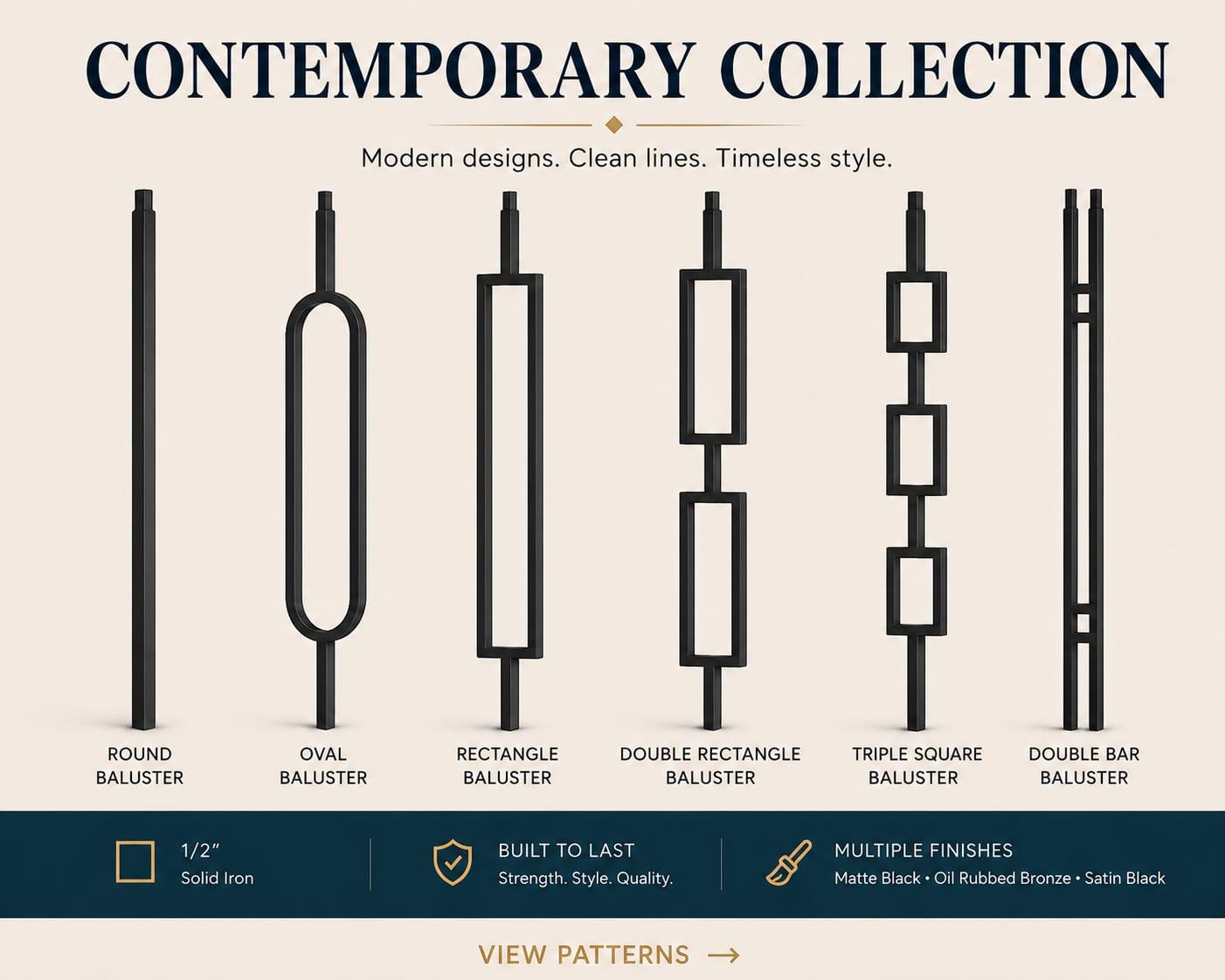
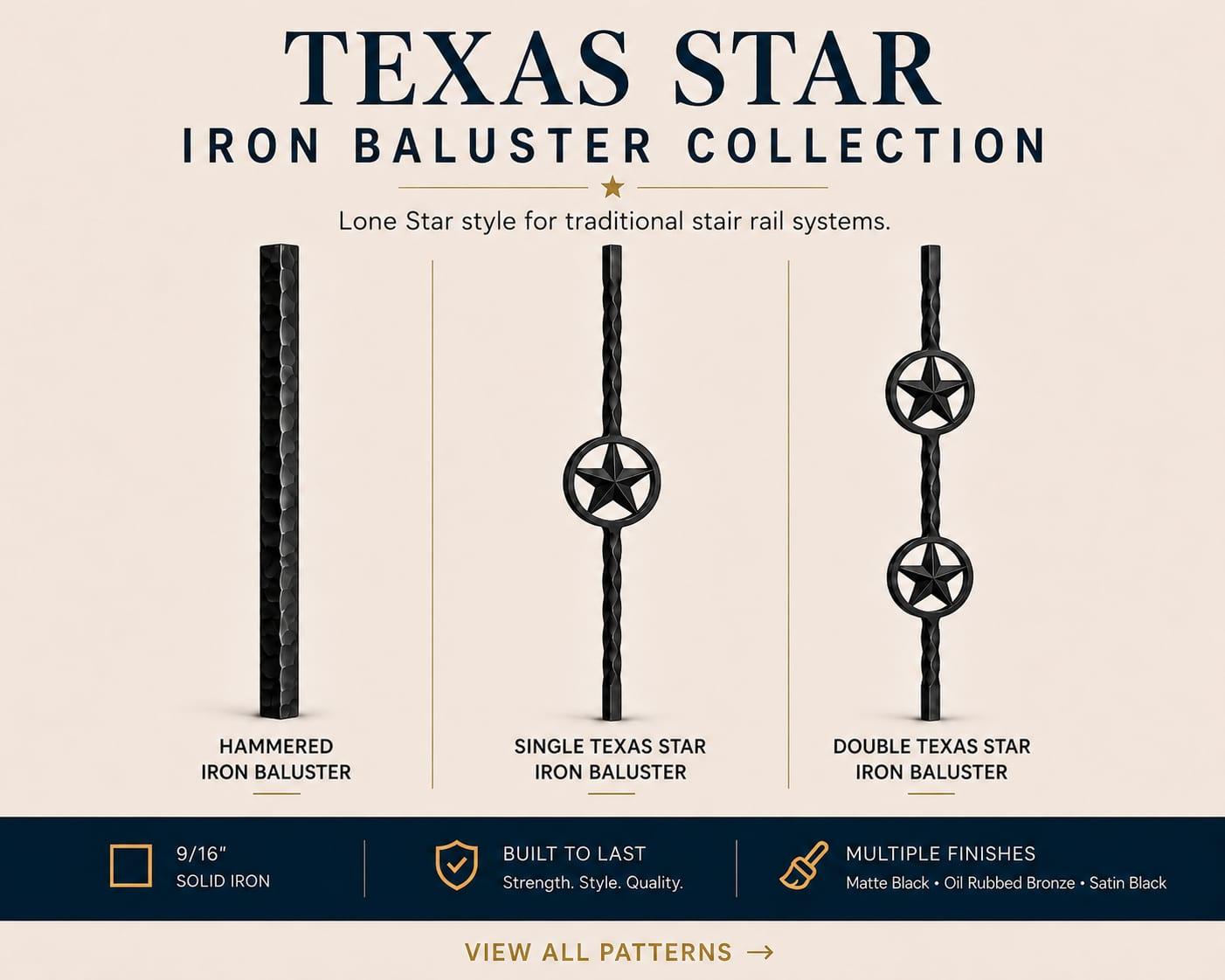
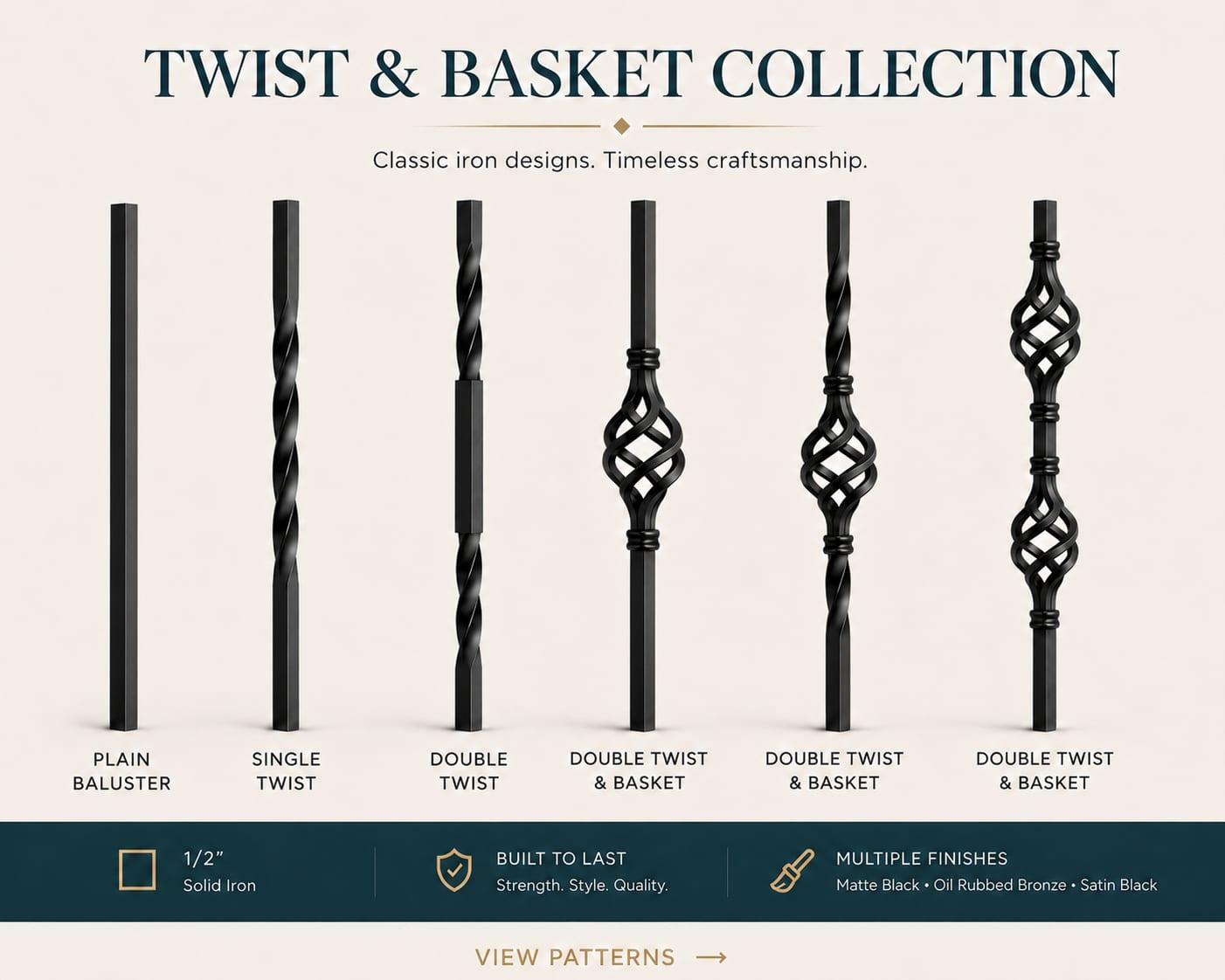
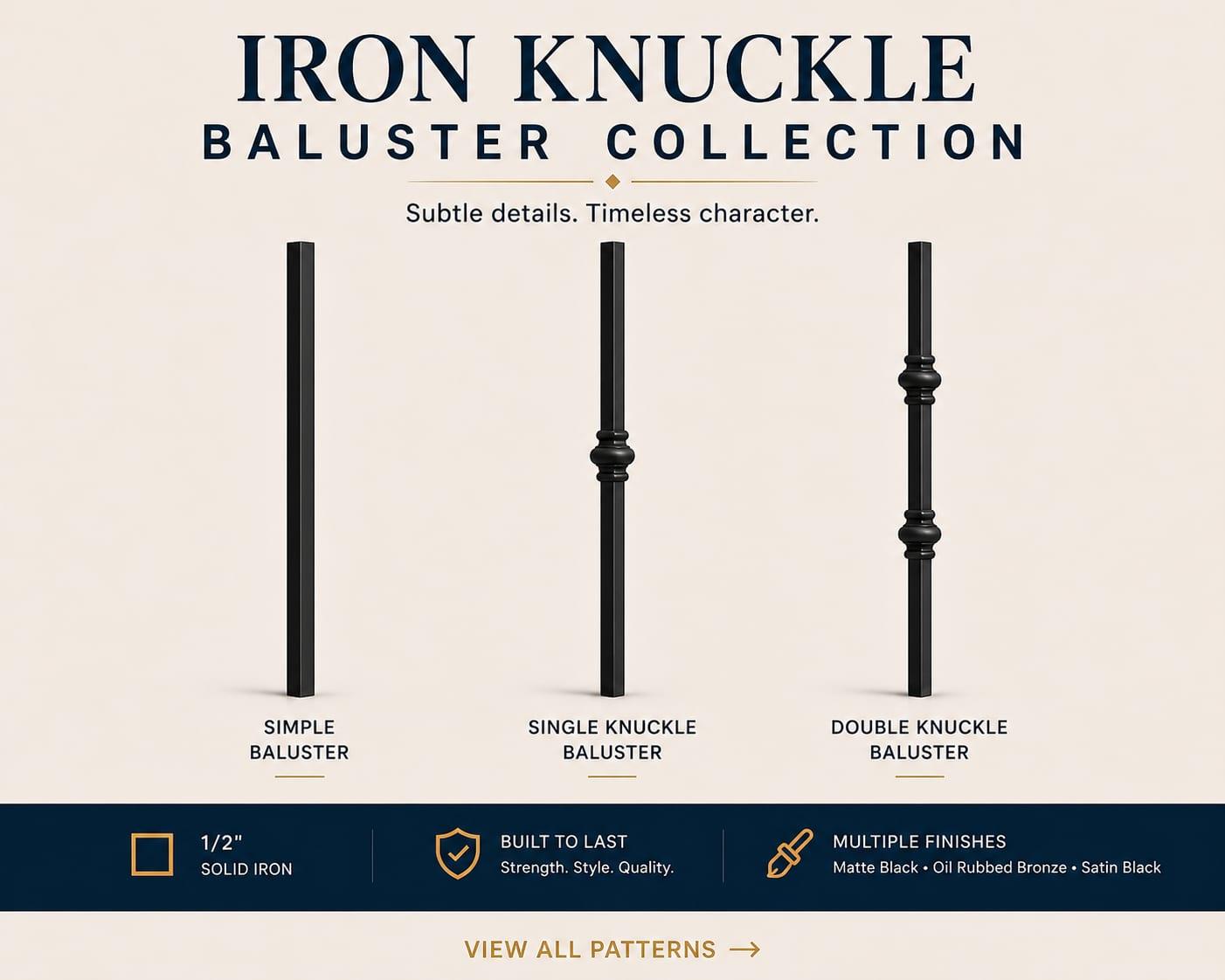
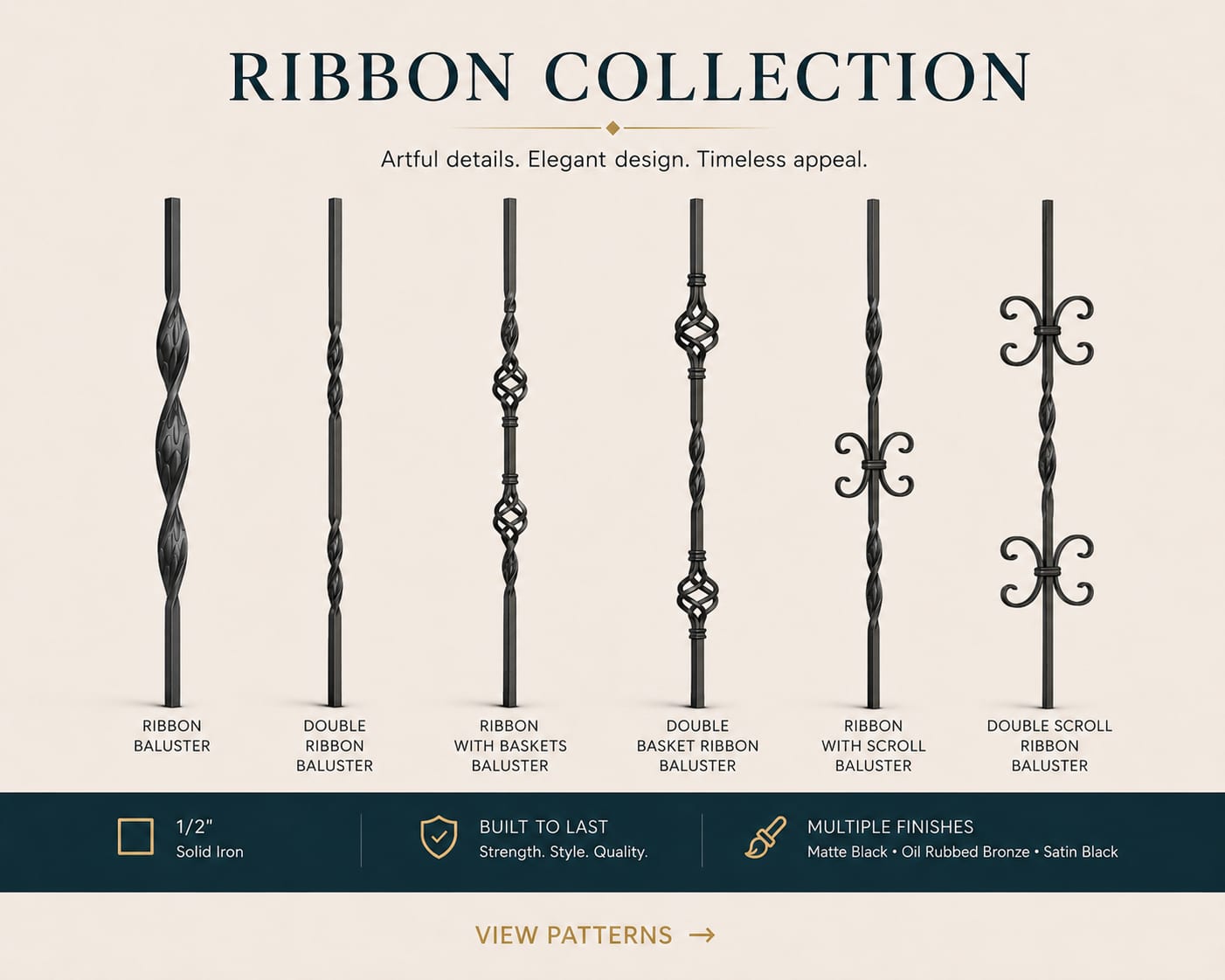
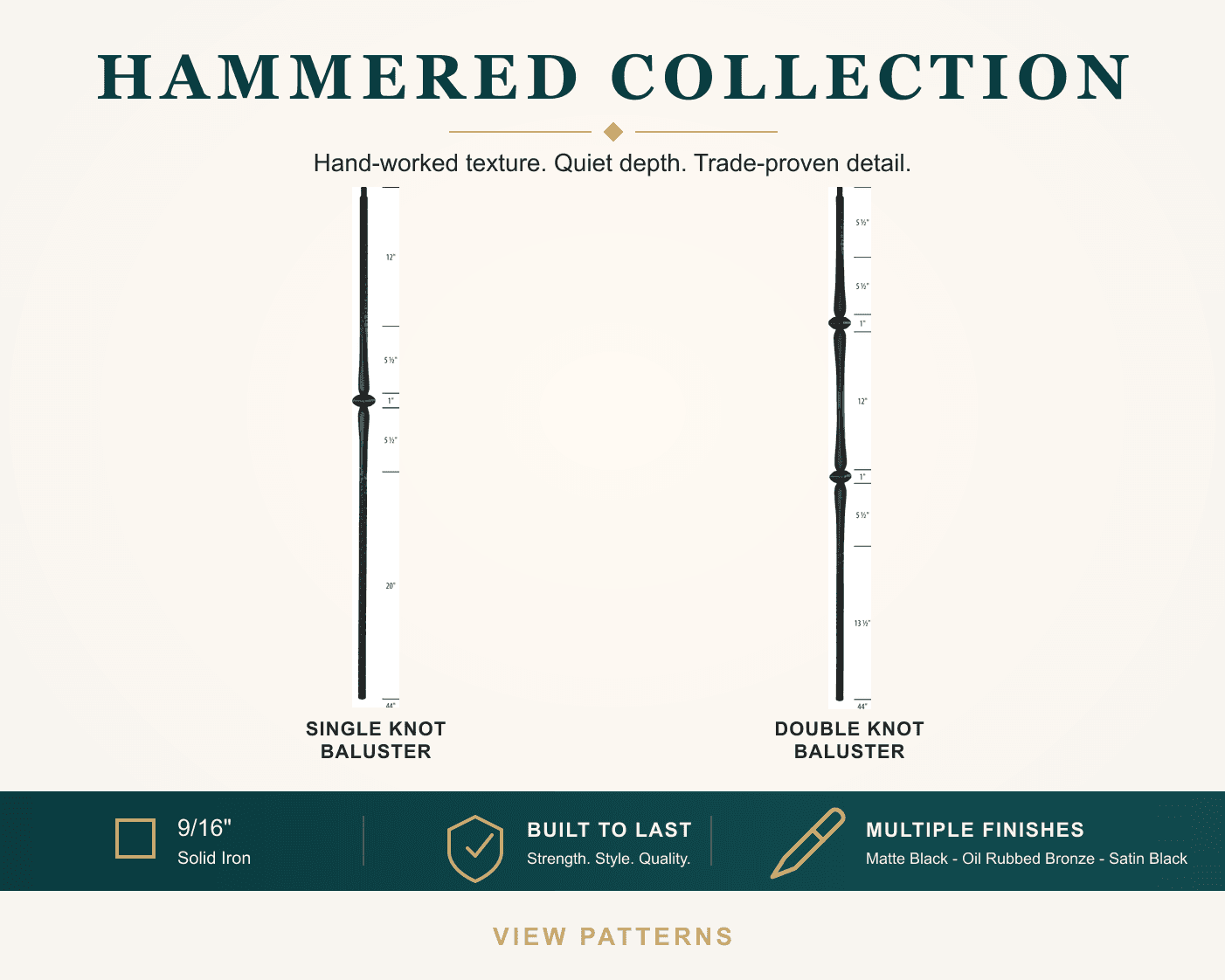
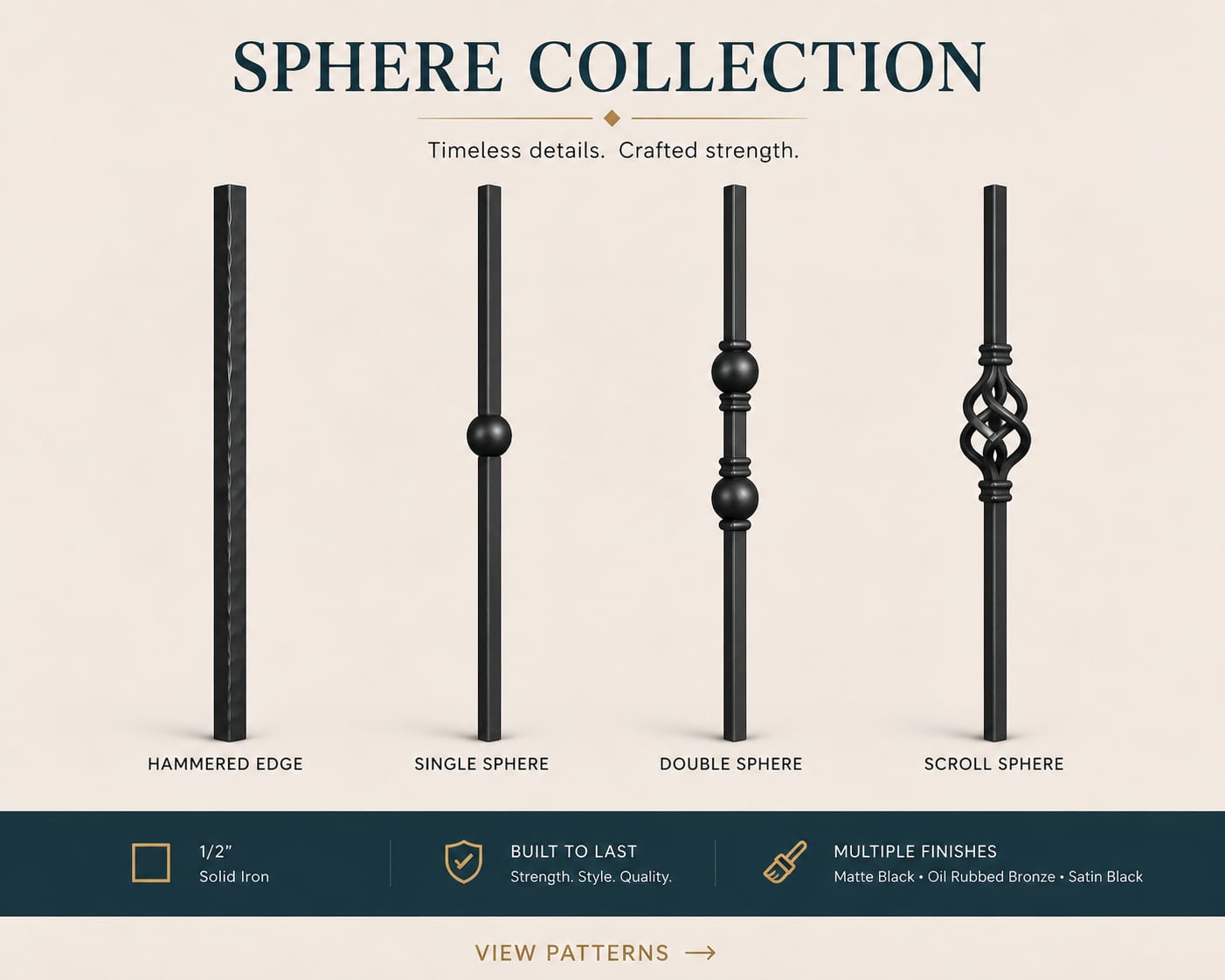
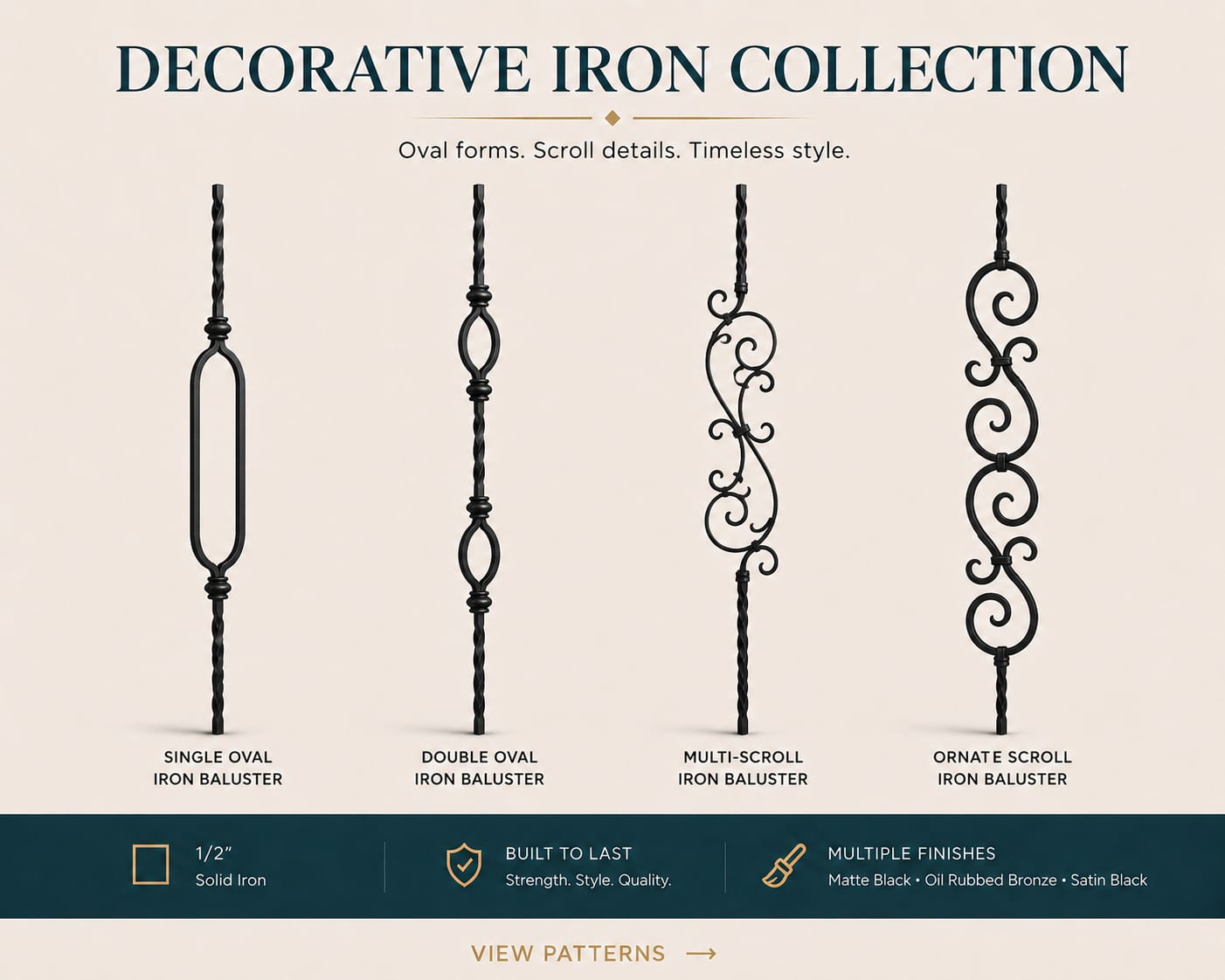
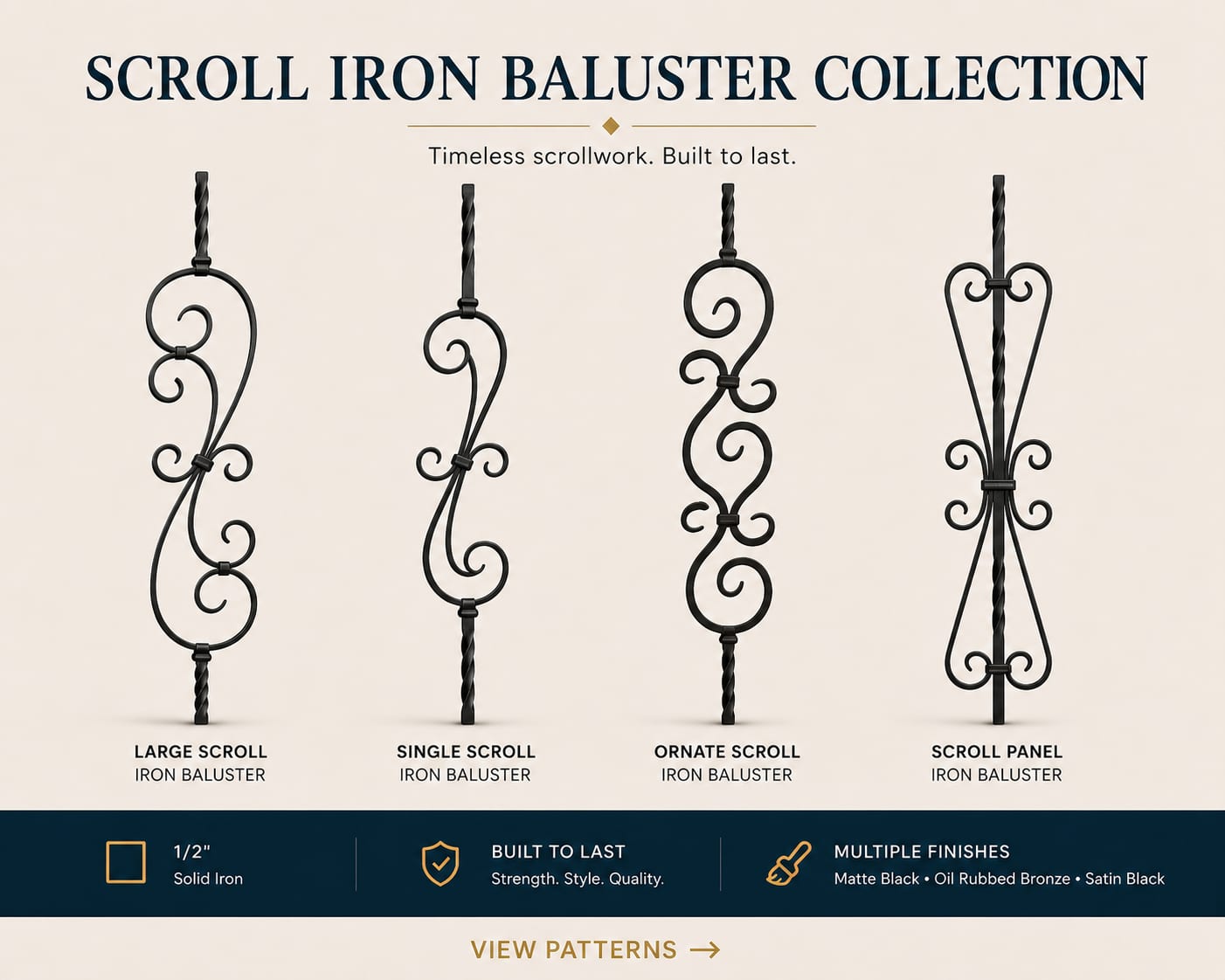
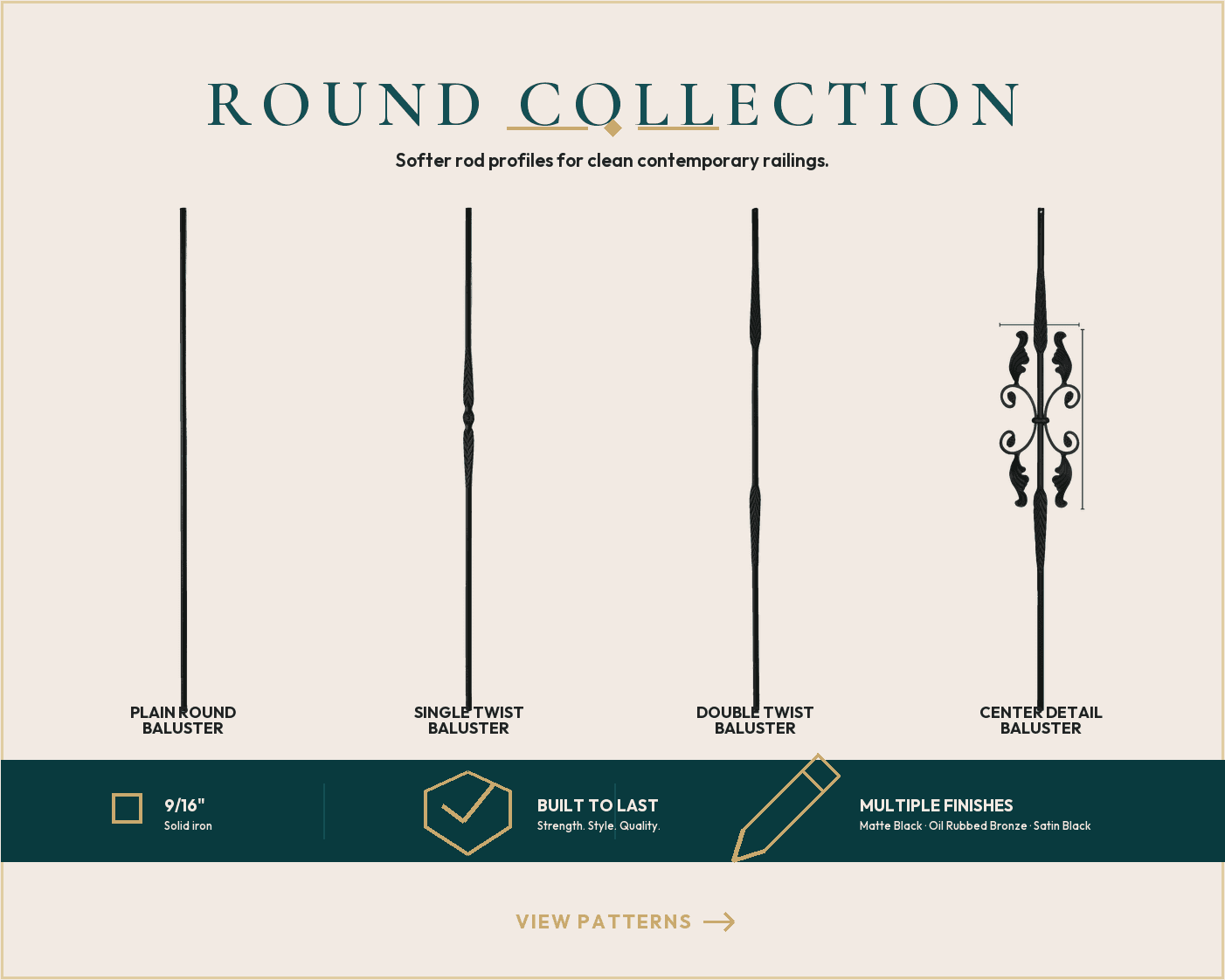
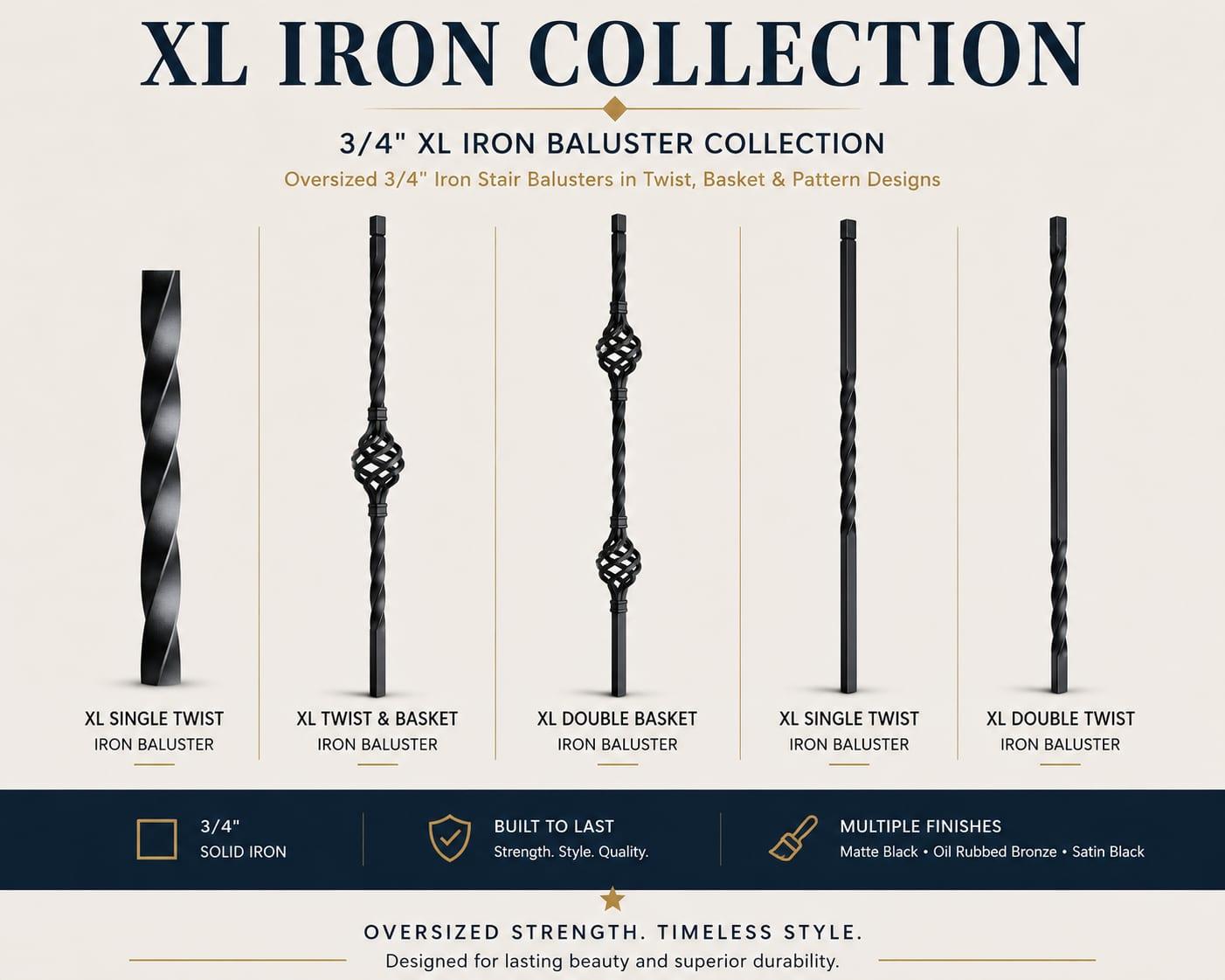
Pick an iron style.
Core Satin Black patterns are stocked; every other pattern and finish is special order. Pick the look — the full catalog opens to that style, where you choose finish, rod size, and the exact SKU.
Wood balusters — pin-top, square-top, colonial.
Turned hardwood balusters in poplar (paint-grade), red oak, and maple — pin-top, square-top, and ornate colonial profiles to match an existing wood rail. A sample of the line below; call the Tanner Rd yard for the full profile sheet and a quote.
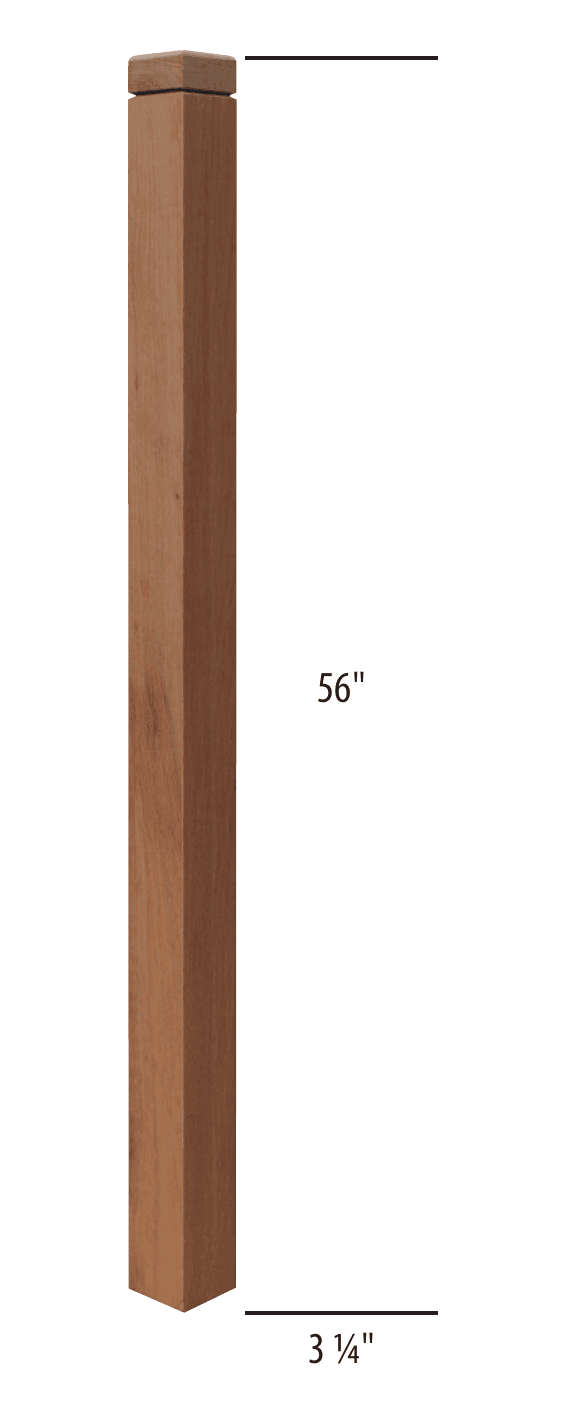
Pin-top turned
UW-4000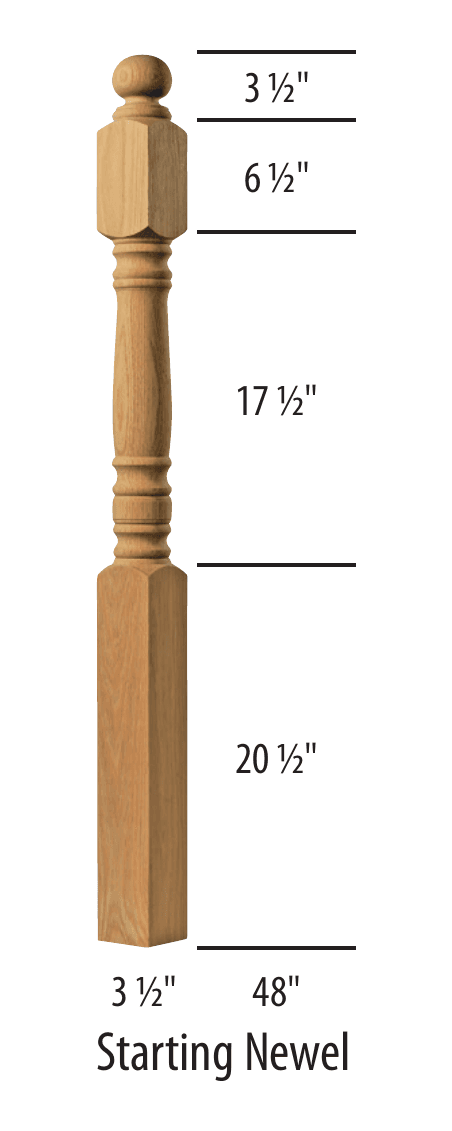
Square-top turned
UW-4500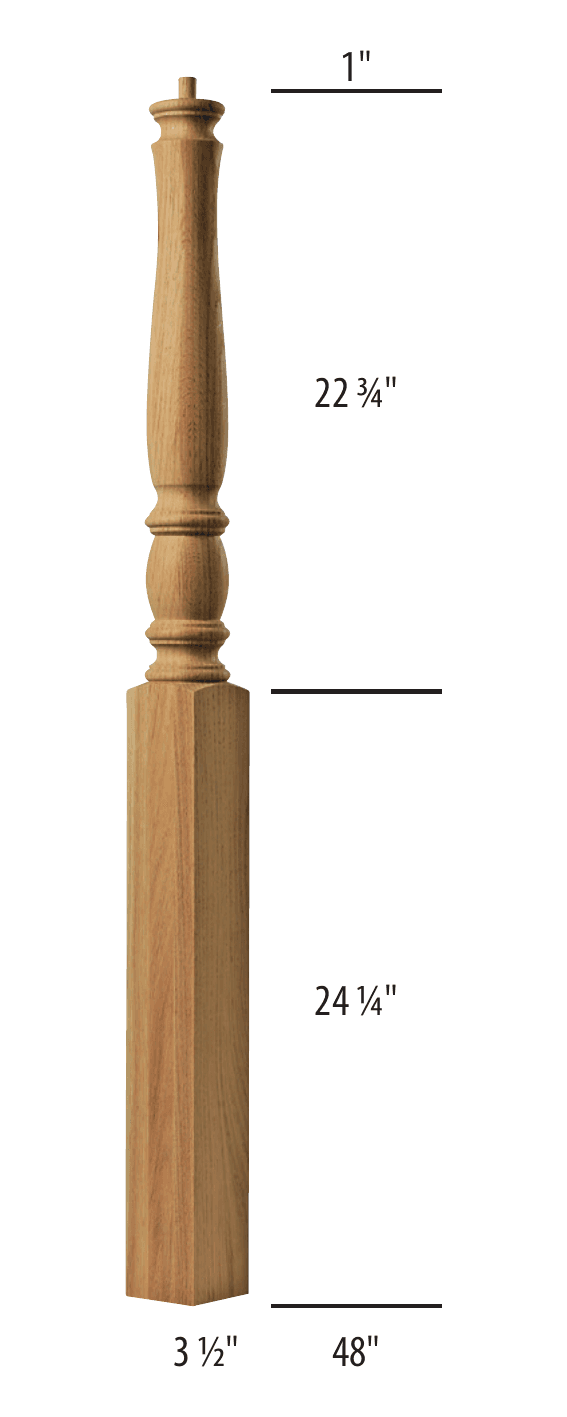
Colonial turned
UW-4800
Heavy colonial
UW-5060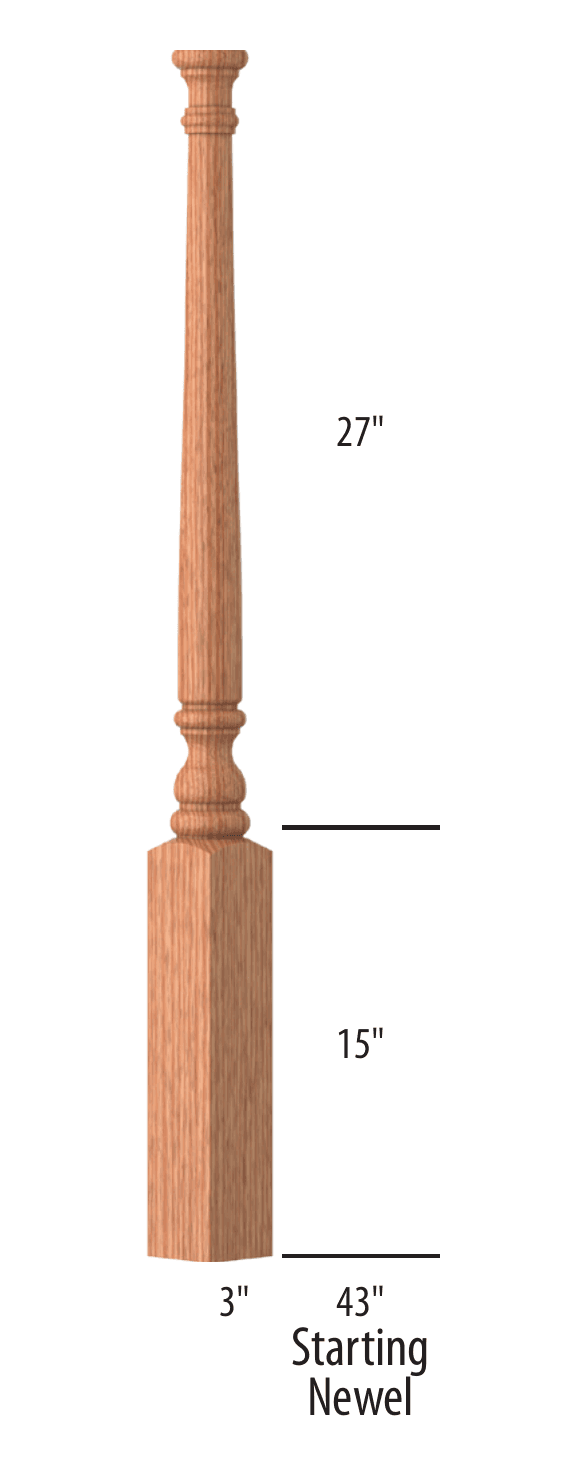
Slender turned
UW-4010
Ornate turned
UW-5360Three calls to make.
Iron or wood
Iron reads modern-to-transitional and mixes plain rods with a few accent patterns. Turned wood matches a traditional wood rail and stains to your treads. Most Houston remodels run iron; new-traditional builds run wood.
Finish & rod size
Five iron finishes — Satin Black is the default. 1/2″ rod is standard residential; 9/16″ for the hammered and round-rod lines; 3/4″ XL when the treads and scale call for a heavier baluster.
Pattern density
A common layout is plain rods with a single accent baluster (twist, basket, or scroll) repeated every third or fourth position. Pick one accent family and stay with it down the run.
We mill the treads, handrail & landings to match — in Houston.
Pair these balusters with solid hardwood treads, custom handrail, and landings cut to your exact rise and run — milled in-house and templated on site. One order, one Houston shop.
Put the baluster decision in context.
Iron and wood read differently once they sit beside handrail, newels, treads, and trim. Use these as the broad direction, then choose the exact SKU and finish from the catalog.
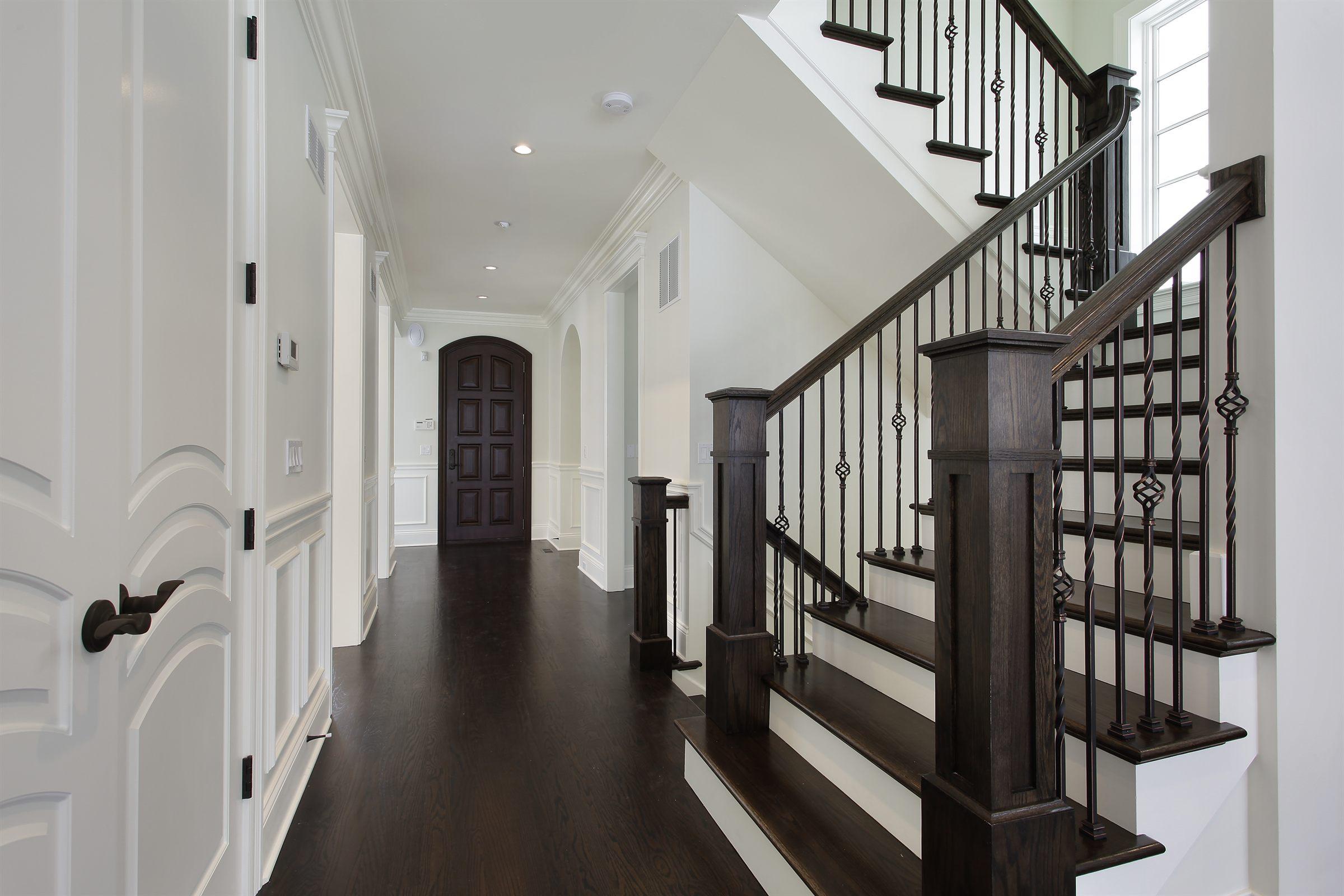
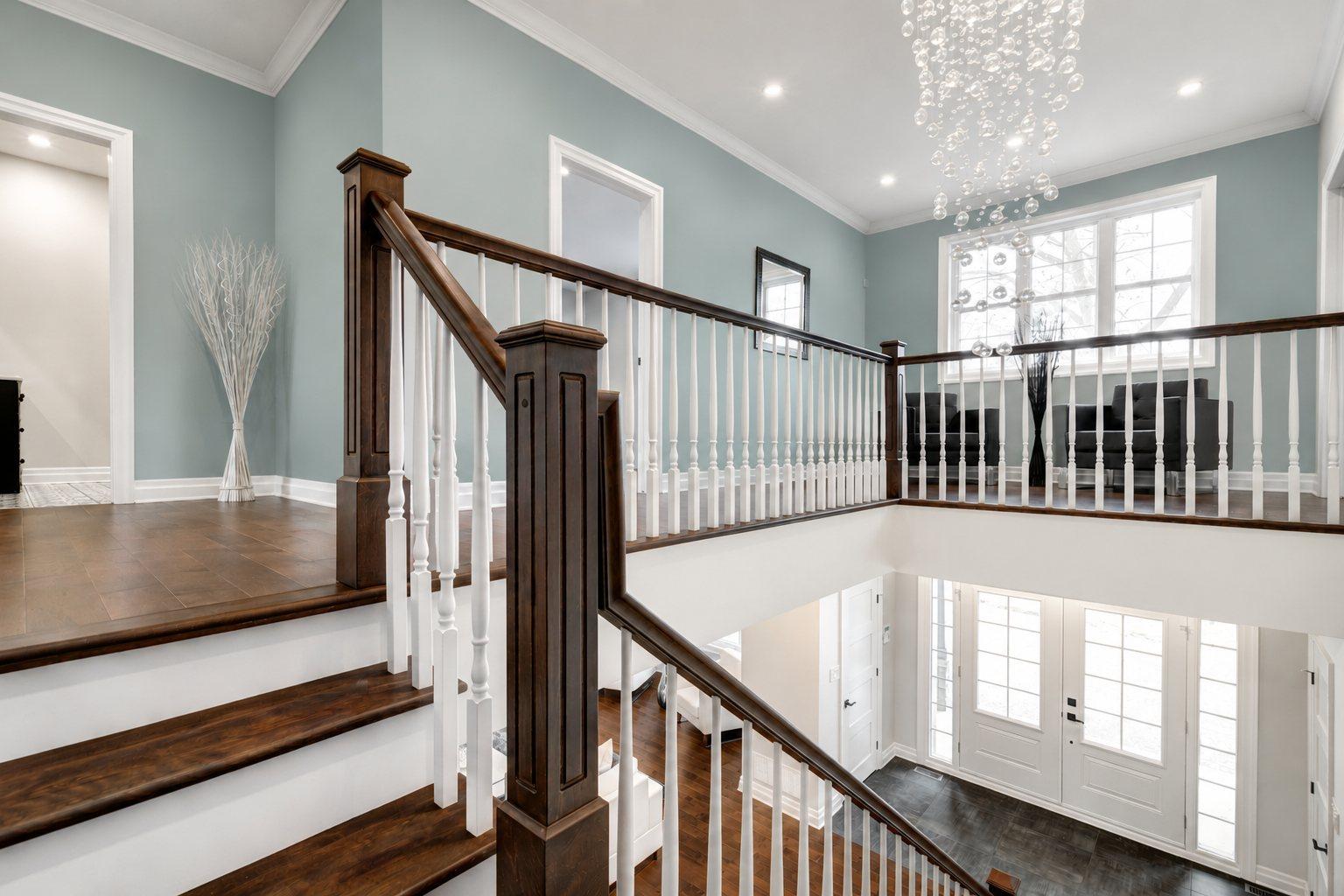
Dark rail, box newels, and patterned iron balusters for a transitional Houston stair.
Painted turned balusters paired with stained handrail and newels for a traditional wood rail.
Questions people ask before ordering
Iron vs. wood balusters — which one for my staircase?
Wood balusters read as traditional and warm; iron balusters read as transitional, modern, or industrial. Wood is easier to install, refinishable, and matches stained handrails. Iron is more durable, allows thinner profiles for a more open stair, and pairs well with mixed-material designs. Most Houston homes built since 2010 use iron; older traditional homes use wood. Mix them only if the design language supports it.
Read the answer →What are the IRC stair code rules in plain English?
The IRC residential stair code requires a minimum 10″ tread depth, a maximum 7-3/4″ riser height, a 3/4″ nosing overhang, 36″ minimum stair width, 6′8″ minimum headroom, and handrails on at least one side. Variation between any two treads on the same flight cannot exceed 3/8″. Most code violations on retrofit jobs come from changing the tread thickness without re-framing the stair.
Read the answer →How do I choose a stair newel post?
A newel post is the structural anchor at the top, bottom, and turns of a stair railing. The four main families are box newel (large rectangular, traditional), turned newel (classical with profile turning), modern square (clean tapered or straight), and craftsman (substantial square with shaker detail). Size to the stair scale (4 to 8 inches), match the baluster style, and use the same wood species as the handrail.
Read the answer →How do I find a stair installer in Houston?
Find a Houston stair installer by asking your hardwood supplier for referrals, checking specific experience with the product family you’re installing (retro-fit, full-build, curved), and confirming licensing, insurance, and finished references. Avoid installers who don’t mention acclimation, can’t explain the skirt-board math, or quote without seeing the stair in person. Ask for 3 finished-stair references in the species and product you’re installing.
Read the answer →