

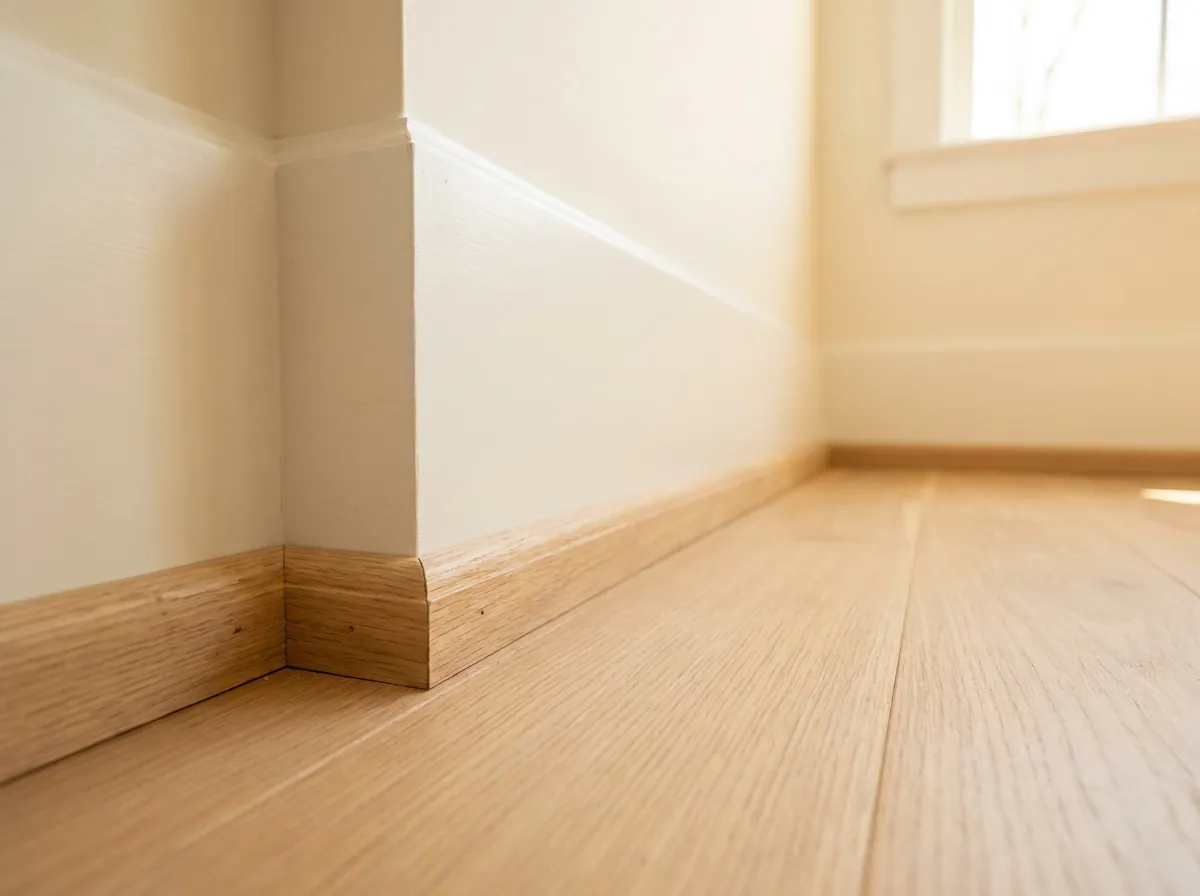
Base shoe is taller than it is wide — a slim 1/2″ × 3/4″ profile that hugs the baseboard. Quarter round is a true quarter-circle, 11/16″ each way. Both close the inevitable gap between baseboard and floor. The choice is about how visible you want the trim to be — base shoe disappears, quarter round announces itself.
Base shoe for modern. Quarter round for traditional.
Base shoe is the more modern look. It is a tall, slim profile (3/4″ tall, 1/2″ projection) that reads as a continuation of the baseboard — most people never notice it. Pair with tall baseboards (5″ and taller) and contemporary trim packages.
Quarter round is the traditional look. It is a true quarter-circle (11/16″ × 11/16″ at UWP) that rolls out from the baseboard and reads as a separate trim piece. Pair with shorter, profiled baseboards (the 3″ and 4″ colonial profiles) and traditional millwork.
Profile dimensions, side by side.
| Attribute | Base Shoe (UW126) | Quarter Round (UW106) |
|---|---|---|
| Profile shape | Asymmetric — taller than wide, convex face | Symmetric — true quarter-circle |
| Height | 3/4″ | 11/16″ |
| Projection from baseboard | 1/2″ | 11/16″ |
| Visual presence | Discreet — reads as part of the baseboard | Pronounced — reads as a separate trim piece |
| Best with | Tall baseboards (5″–8″ — UW618, B218, B514, UW810) | Short profiled baseboards (3″–4″ — B314, B322, UW623) |
| Floor-gap coverage | Up to ~3/8″ | Up to ~1/2″ |
| Patterns at UWP | Red Oak, White Oak, Hickory, Maple, Poplar, stain-grade Pine, primed FJ pine, Flex | Red Oak, White Oak, Hickory, Maple, Poplar, stain-grade Pine, primed FJ pine, Flex |
UWP also catalogs Square Shoe (UW128) — the same 1/2″ × 3/4″ footprint as the base shoe, but with a square face and a lightly eased arris instead of the convex roll. Square shoe pairs with flat, slab-style baseboards such as the 4REV and UW512.
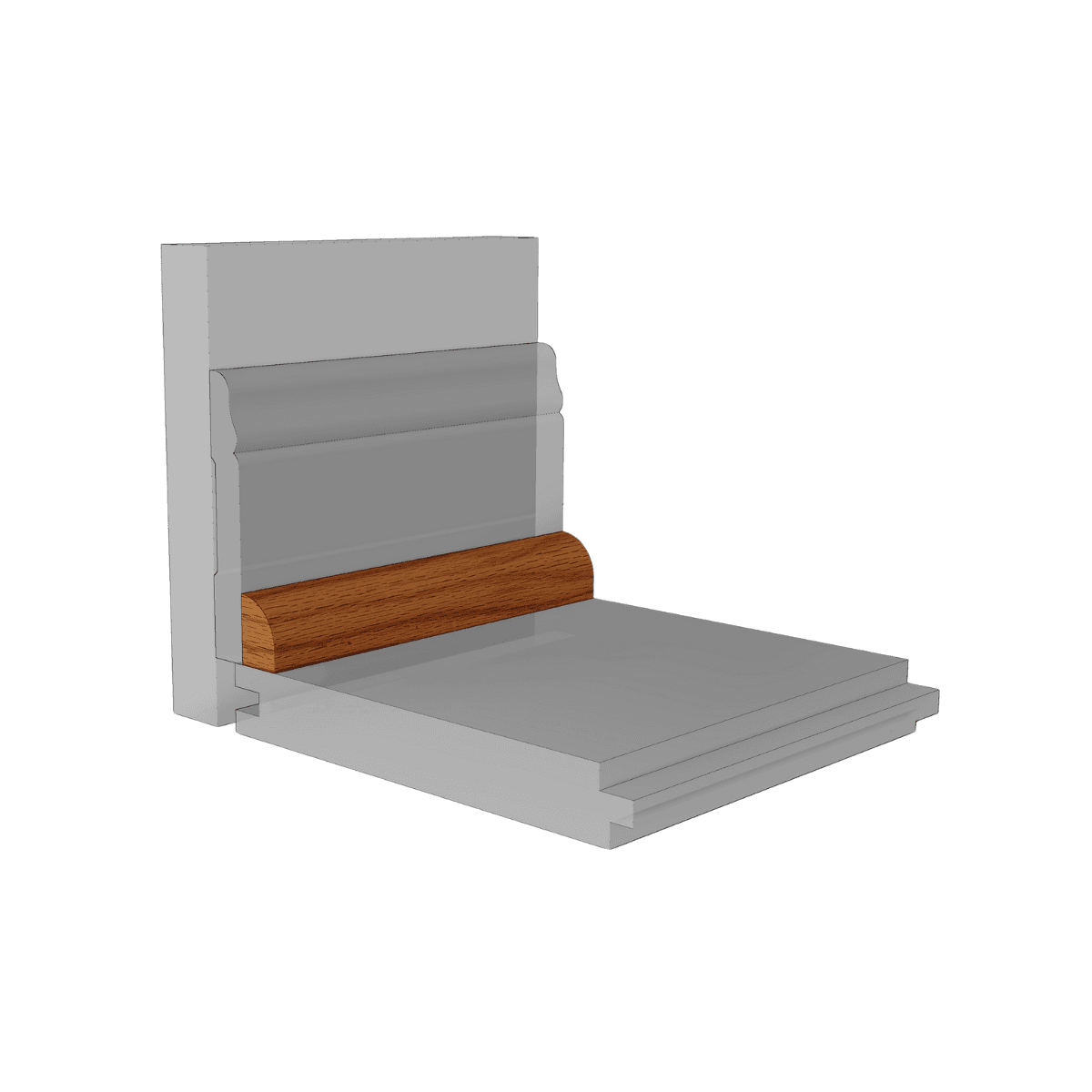
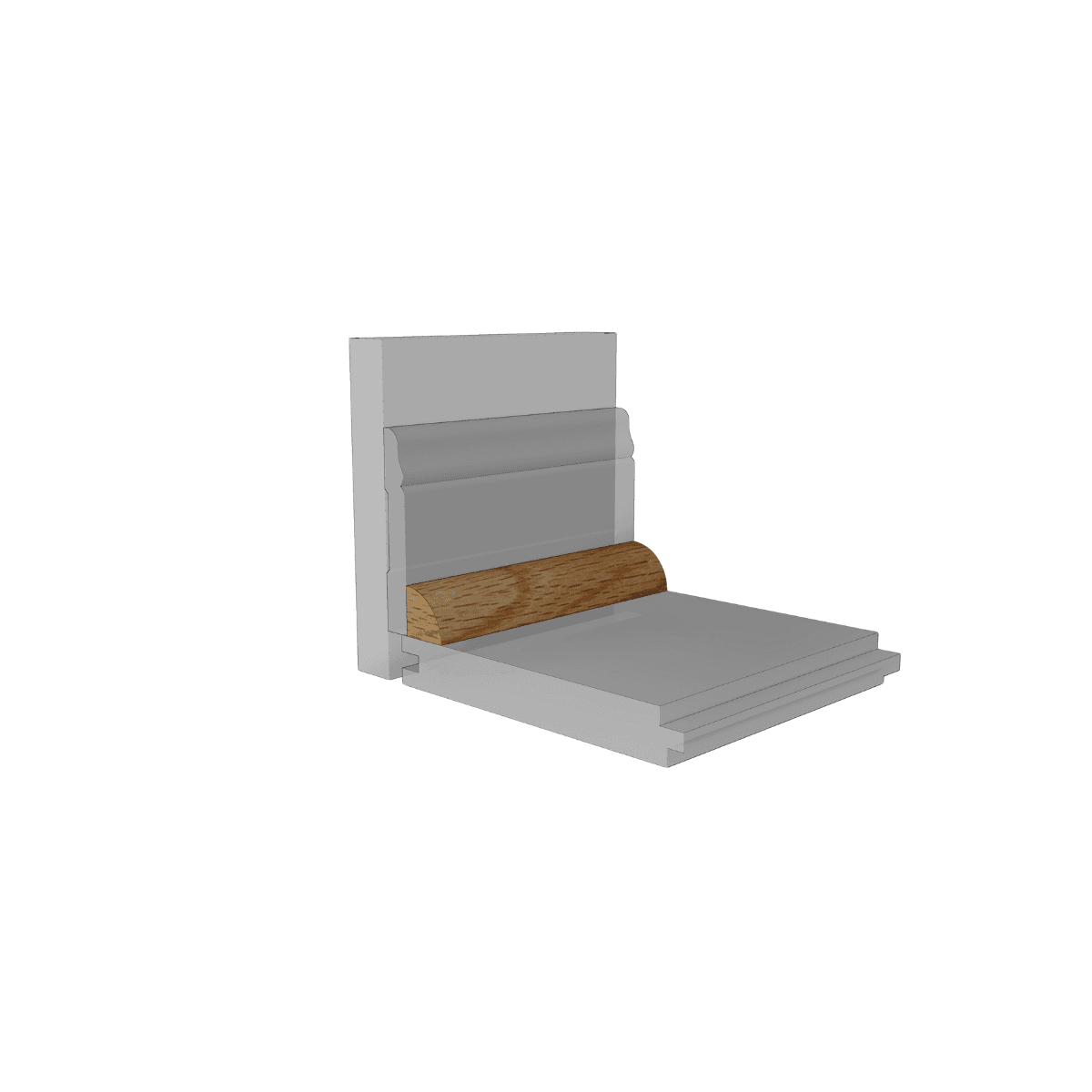
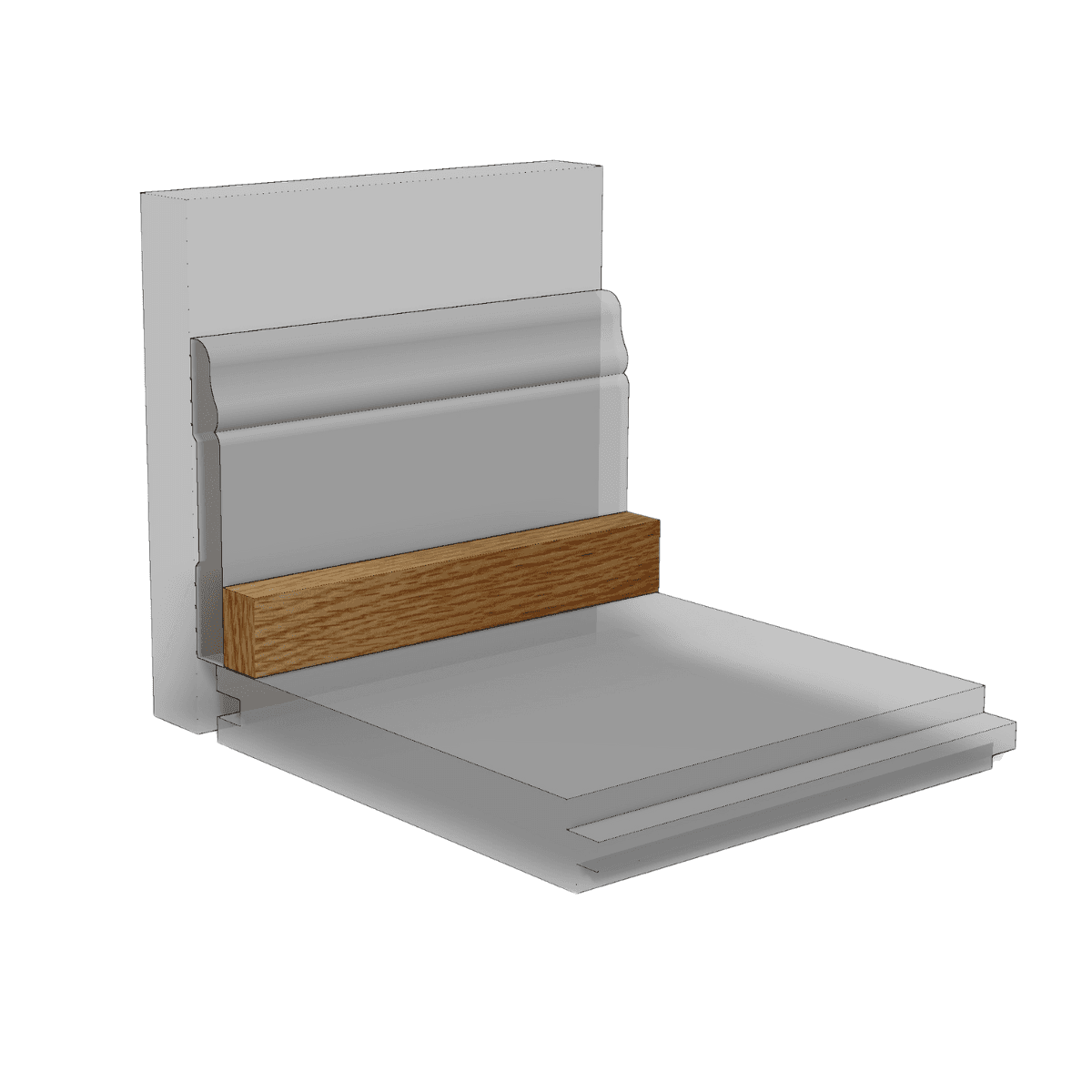
The modern, disappear-into-the-baseboard choice.
Base shoe is the right call when you want the floor-to-baseboard joint to read as a single clean line — when the trim package is contemporary, the baseboards are tall, and the floor itself (oak, walnut, white oak) is the visual feature. Three patterns:
- Hardwood floor under contemporary trim. Tall baseboard (5″ or taller), natural or low-sheen finish, base shoe matched to the floor species. The shoe reads as part of the baseboard, the floor flows uninterrupted to the wall.
- Engineered or LVT floor where the manufacturer calls for a 3/8″ expansion gap. Base shoe covers that gap without the visual bulge of quarter round.
- Houston new-build or modern remodel where the design language is "less trim, taller baseboards." Slab or one-step baseboard plus base shoe (or square shoe) matches the aesthetic.
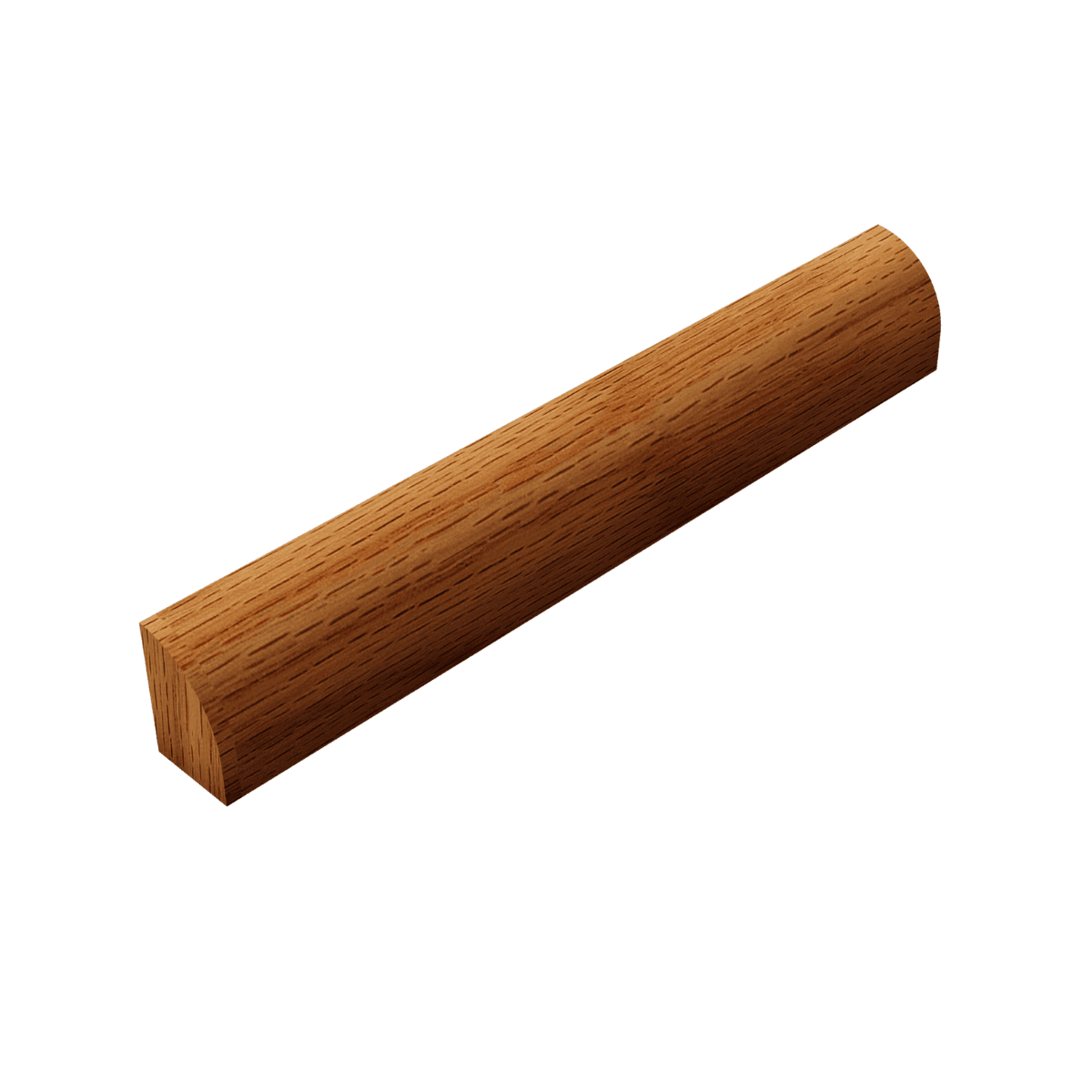 Red OakUW126 base shoe
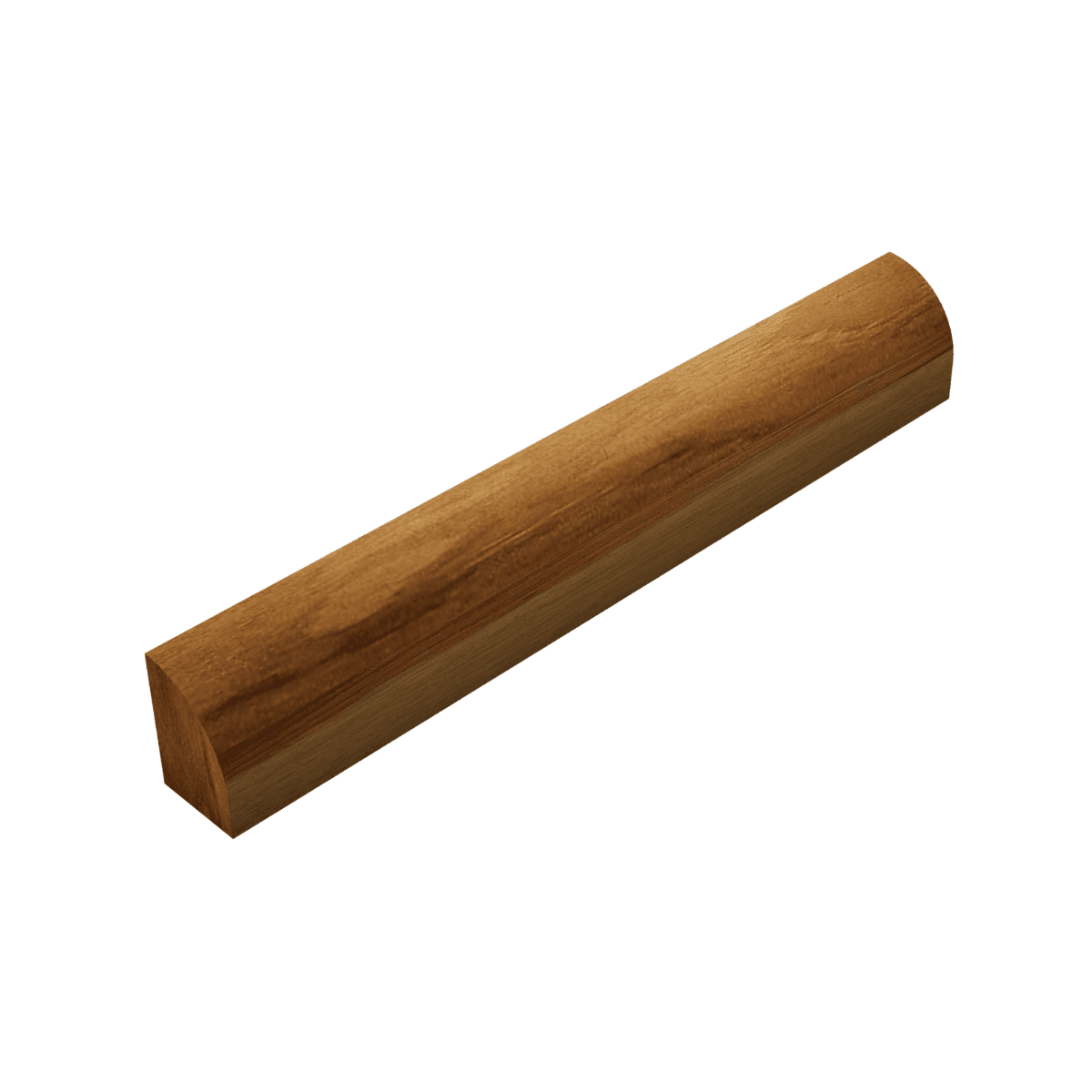 HickoryUW126 base shoe
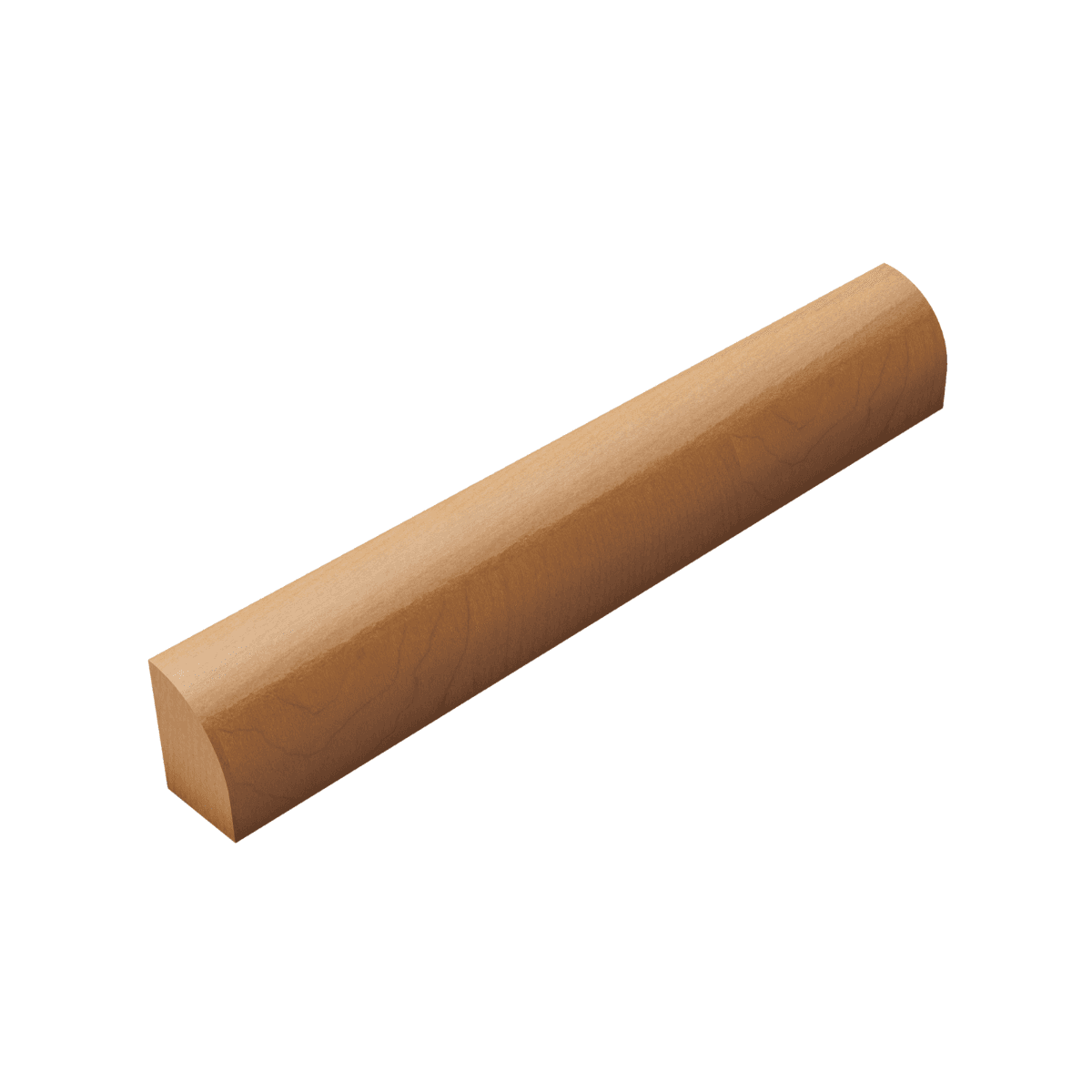 MapleUW126 base shoe
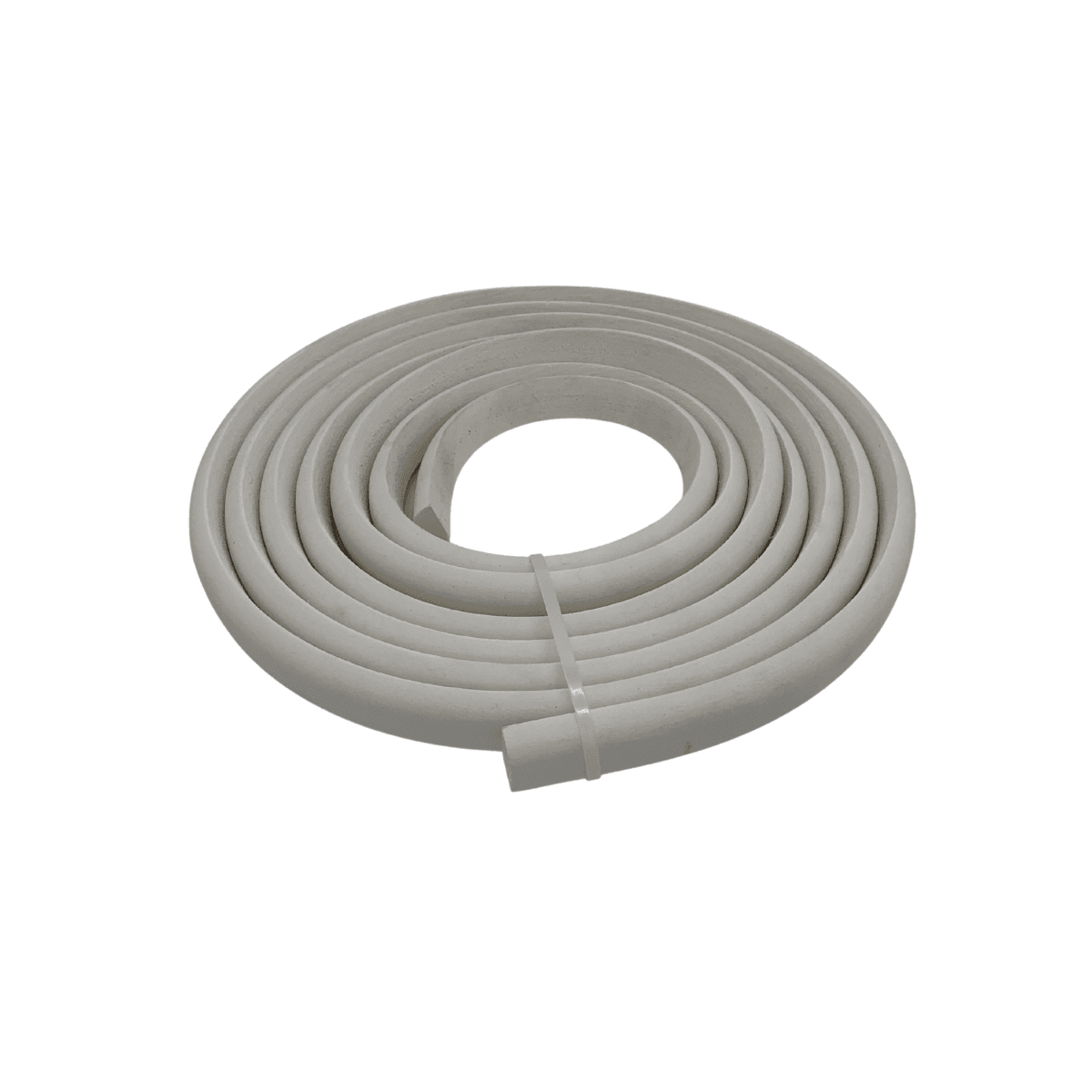 FlexBends to curved walls
The traditional, intentionally visible choice.
Quarter round is the right call when the trim package is traditional, when the baseboards are shorter and profiled, or when you need to cover a slightly bigger expansion gap. Three patterns:
- Traditional or colonial trim package — 3″ or 4″ baseboard with a cap, ogee, or stepped profile. Quarter round reads as the bottom step of a multi-piece trim assembly.
- Older Houston home where the existing baseboard is short (3″–4″) and replacing it is not in scope. Quarter round matches the era without forcing a baseboard upgrade.
- Tile or LVT install where the manufacturer-spec expansion gap is closer to 1/2″ than 3/8″. Quarter round's 11/16″ projection covers the gap cleanly.
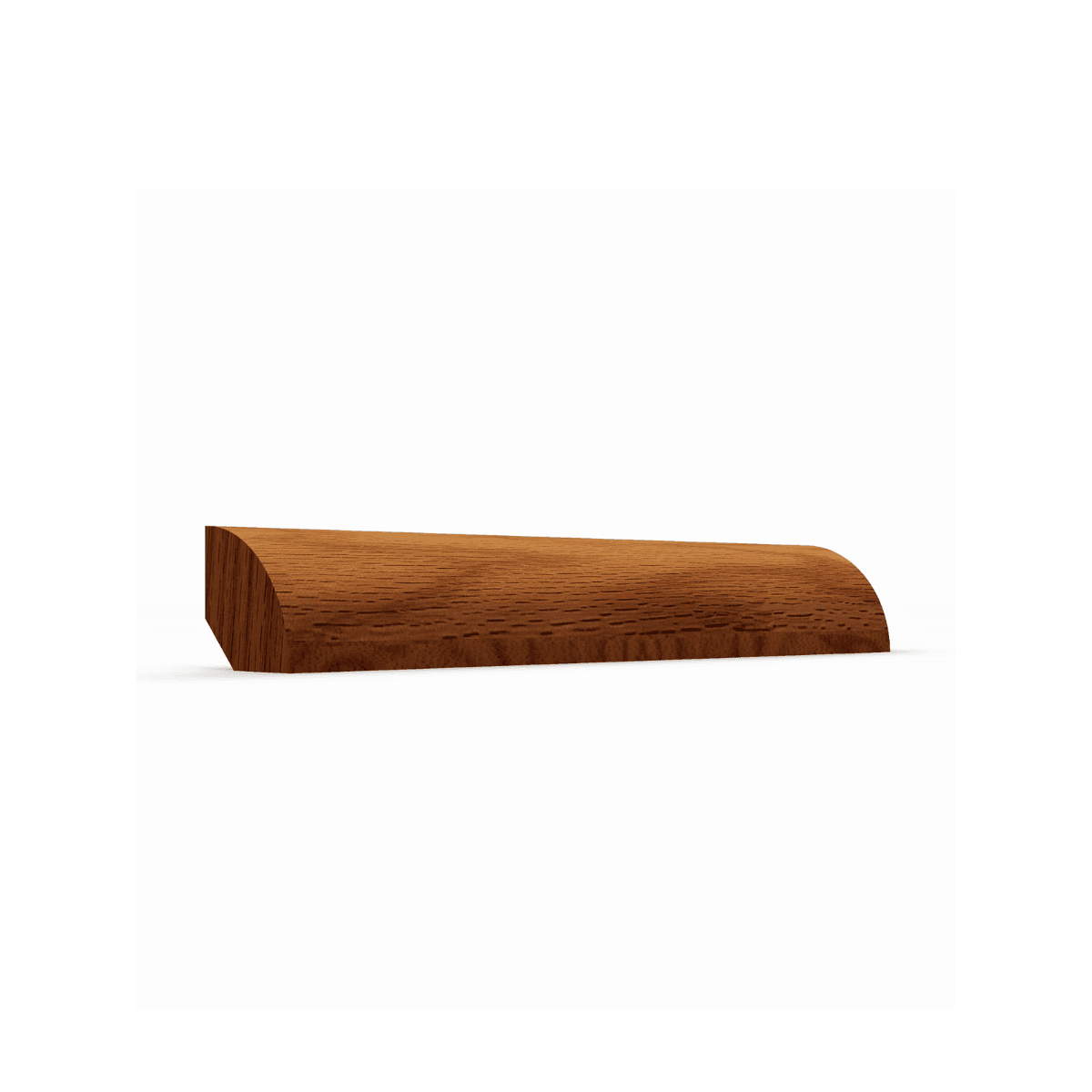 Red OakUW106 quarter round
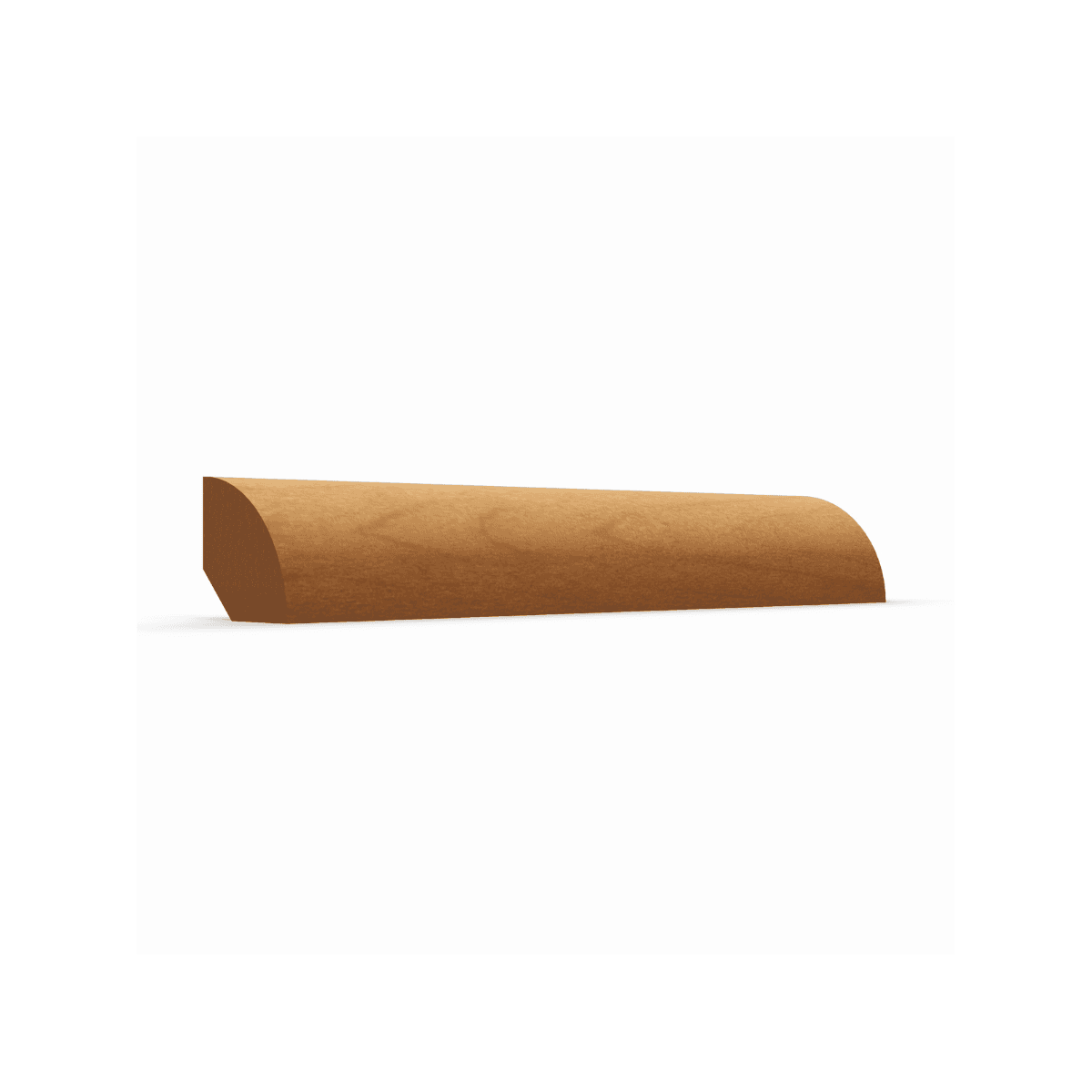 MapleUW106 quarter round
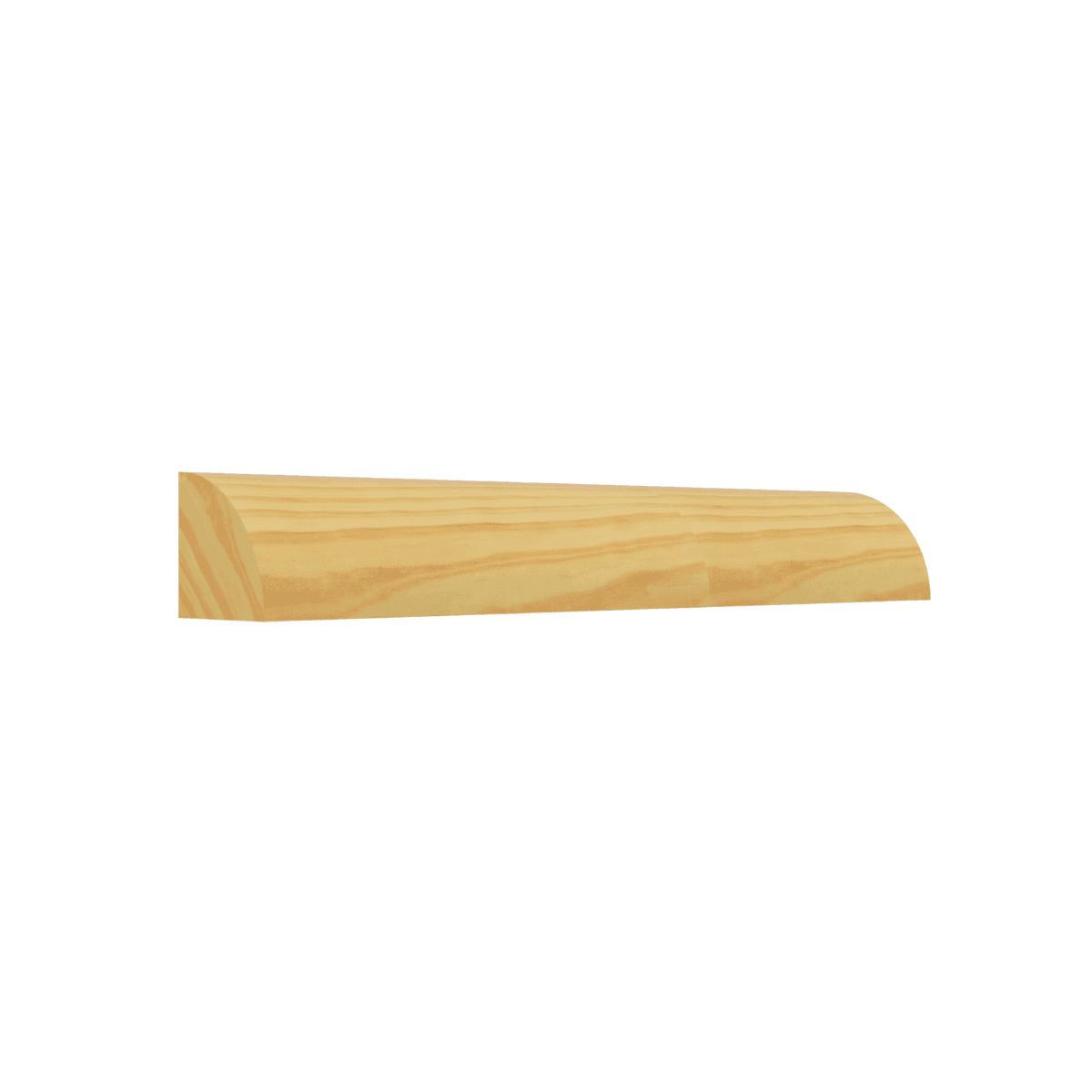 PineStain-grade
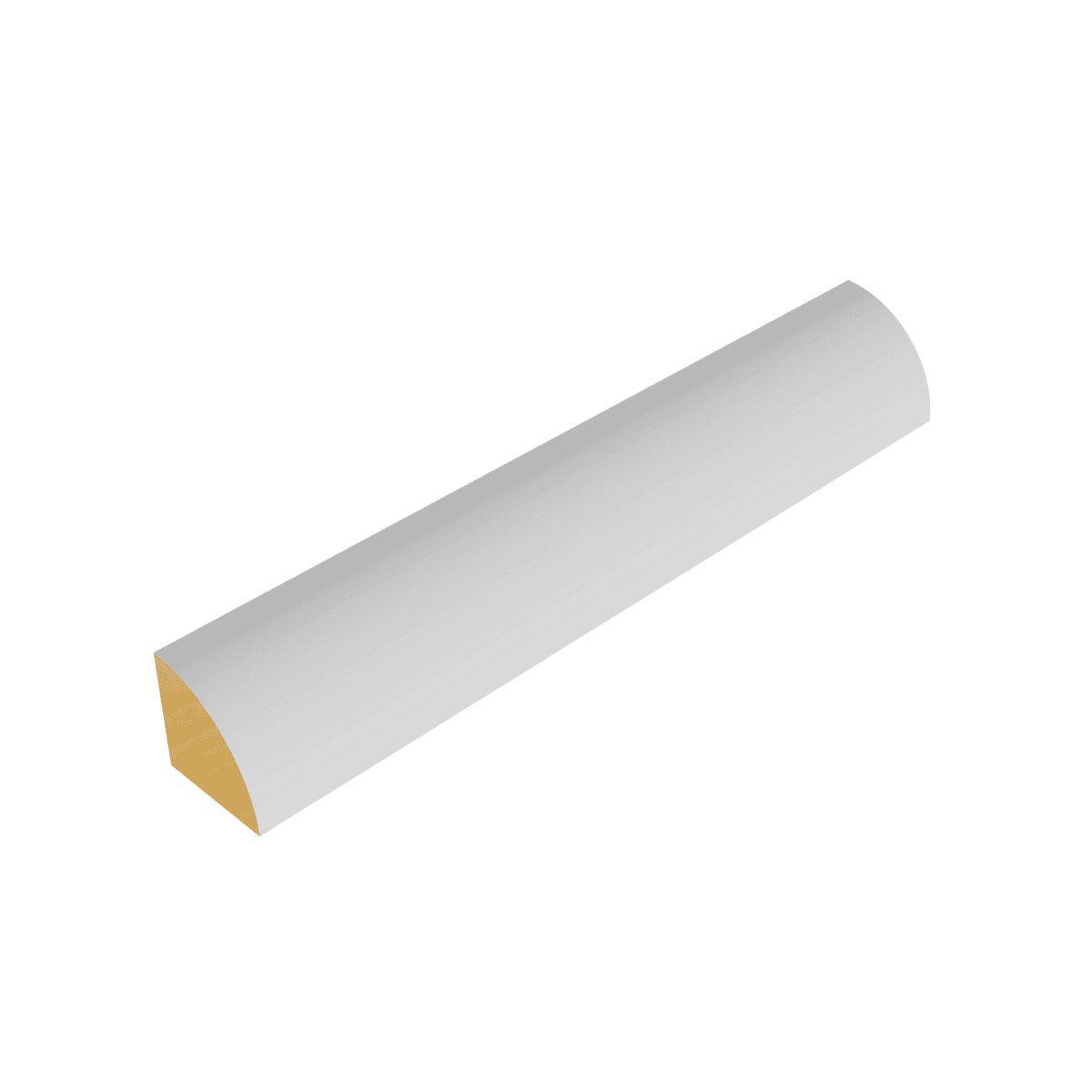 Primed FJ PinePaint-grade
How to nail it down without telegraphing the joint.
- Nail to the baseboard, not the floor. Shoot 18-gauge brads (1-1/4″) at a slight downward angle into the baseboard. Nailing into the floor pins the floor and stops seasonal movement — a cracked finish or a popped board within a year.
- Pre-finish if the species is stain-grade. Stain and seal each stick on a horse before install. Finishing on the wall leaves smear on the baseboard above and the floor below.
- Coped inside corners, mitered outside corners. Standard trim practice. On long runs, a scarf joint cut at 30° is invisible if it lands away from a doorway.
- Caulk the joint between baseboard and shoe only on paint-grade installs. Stain-grade left clean reads as intentional millwork; caulked stain-grade looks like a poor install.
Quick answers.
- Do I need either base shoe or quarter round, or can I skip both?
- Practically, no — every baseboard install needs one or the other. Wood floors move seasonally, and the gap between the bottom of the baseboard and the floor is rarely tight enough to look intentional without trim covering it. The exception is tile or hard-set LVT where the baseboard sits directly on the finished floor with a caulk bead — in that case, no shoe.
- Can I use quarter round with a tall baseboard?
- You can, but it tends to look mismatched — the proportions read off. Quarter round's pronounced curve sits awkwardly against a 5″–8″ profile. If the baseboard is tall, the design intent is usually contemporary, which means base shoe is the right partner.
- Should base shoe and quarter round match the baseboard species, or the floor species?
- Stain-grade installs: match the floor. Base shoe and quarter round are at floor-eye level — the visual continuity is with the hardwood floor, not the painted baseboard above. Paint-grade installs: prime everything and paint to match the baseboard.
- What's the difference between base shoe and shoe mould?
- "Base shoe" and "shoe mould" are used interchangeably in the trade. UWP's UW126 is a 1/2″ × 3/4″ profile with a convex face — the standard "base shoe" most carpenters mean. UW128 (Square Shoe) is the same footprint with a square face and a lightly eased arris for modern installs.
- How much shoe or quarter round do I need to order for a typical room?
- Measure the perimeter of the room (add up every wall), subtract the door openings, add 10–15% for waste and miters. A 12′ × 14′ room with two 3′ door openings needs roughly 46 LF + 10% ≈ 51 LF — round up to the next full length.
Browse the floor-to-base trim catalog.
UW126 Base Shoe
1/2″ × 3/4″ shoe mould — five hardwoods, pine, primed and Flex.
View →ProductUW106 Quarter Round
11/16″ × 11/16″ traditional quarter-round — five hardwoods, pine, primed and Flex.
View →ProductUW128 Square Shoe
1/2″ × 3/4″ square-face shoe — the modern alternative.
View →Decision GuideBaseboard Height Guide
Match your shoe or round to the right baseboard height — 3-1/4″ to 8-1/4″ in the catalog.
View →Questions next to this one
Shoe moulding vs. quarter round — what’s the difference and which one do I need?
Quarter round is a true quarter-circle profile — equal on both faces, typically 3/4″ × 3/4″. Shoe moulding is taller than it is wide — typically 1/2″ × 3/4″, with a softer rounded face — sitting more discretely against the baseboard. Both finish the seam between baseboard and floor. Pick shoe moulding when you want a quieter look; quarter round when you have a wider gap to cover.
Read the answer →What size baseboard works with 9-foot ceilings?
For 9-foot ceilings, the standard recommendation is a 5-1/4″ to 7-1/4″ baseboard — roughly 5% to 8% of ceiling height. 5-1/4″ keeps the room feeling modern and uncluttered; 7-1/4″ reads as traditional and substantial. Don’t go below 4-1/4″ on a 9-foot ceiling; the proportions look pinched. Match the casing scale — bigger base wants 3-1/2″ or wider casing.
Read the answer →How much trim do I need? A room-by-room calculation guide.
Calculate baseboard by measuring the perimeter of every room, subtracting door openings, then adding 10% for waste. Casing needs 17 to 20 linear feet per standard door, 14 to 17 per window. Crown takes the same perimeter as base. Shoe and quarter round match the base. The trim and casing calculator on our site does the math by room — feed in dimensions, get a total order list.
Read the answer →Why is a 1×6 not actually six inches wide?
Nominal size is the rough dimension before surfacing; actual size is what you get after the planer. A 1×6 leaves the mill rough at roughly one inch by six and arrives S4S at 3/4 inch by 5-1/2 inch. Hardwood adds a second system: quarters, where 4/4 is one inch rough and 8/4 is two inches rough.
Read the answer →
Terms used in this guide
Bring our floor-trim profiles into your showroom.
The UWP Baseboard Handboard presents core baseboard, base shoe, and quarter-round profiles on a branded sample board for your sales floor. Confirm current trim availability and pickup timing with the orders desk.