

Species
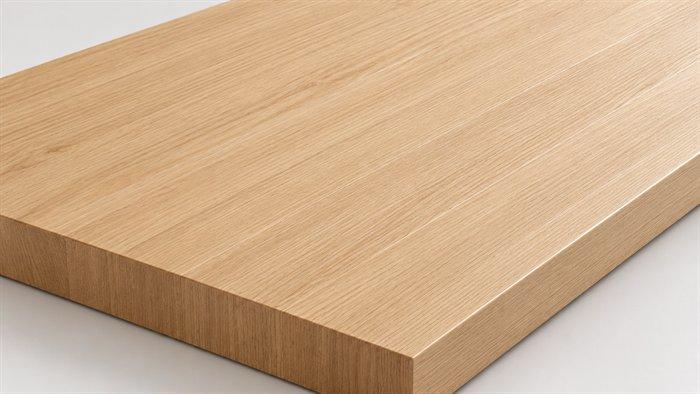
Relative material cost, red oak as the baseline: White Oak · premium, Walnut · feature, Red Oak · everyday, Maple · mid, Hickory · mid. Rift & quartered cuts and named species outside the tiles are quoted on the lumber available that week.
Solid hardwood tops fabricated in-house at NW Houston / Tanner Rd — wide plank, edge-grain or end-grain butcher block, to 72" wide and 192" long. Square or eased edge, supplied unfinished for your finisher.
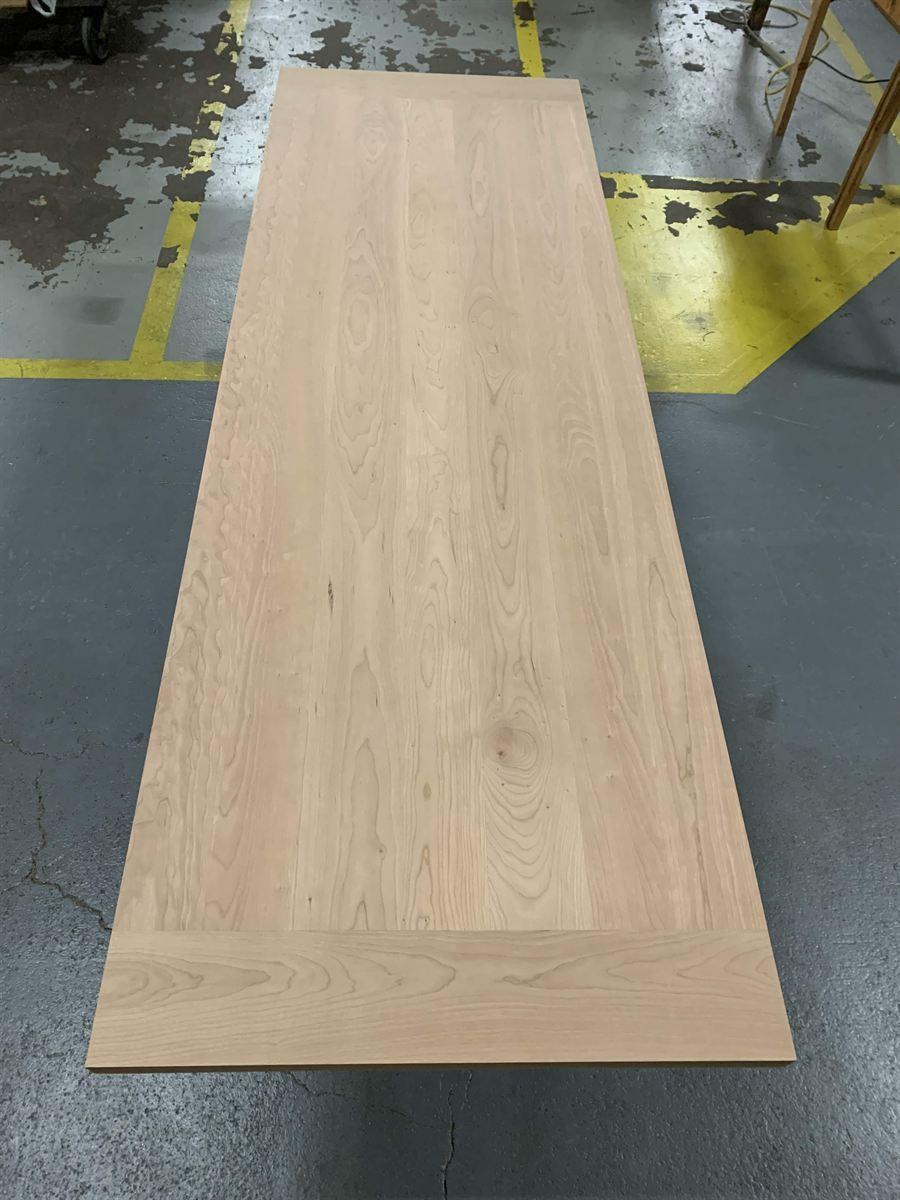
Crafted in-house · NW Houston / Tanner Rd
Explore actual UWP hardwood tops, grain details, and custom fabrication.
This configurator specifies a solid-wood countertop in one of three constructions from one shop — wide-plank face grain, edge-grain or end-grain butcher block — in your species and to your width, length and thickness, with a square or 1/8" eased edge. Every top is solid wood, cut from boards we select by hand, glued up and sanded flat on our own floor at NW Houston / Tanner Rd, and supplied unfinished for your finisher to seal and fit on site. We supply the top, not the install.
Homeowners, designers, builders and the trade all order the same way: configure the top, add it to your quote list, and the office prices it with a lead time of 14–21 days. The shop drawing and DXF that come with the configuration let a cabinet shop or installer check the top against the run before it is glued up. Building stairs too? The same mill fabricates thick face-grain and edge-grain butcher-block treads.
All three are solid hardwood, glued up and finish-sanded as one piece — they differ in how the wood is oriented, which changes both the look and the work surface.
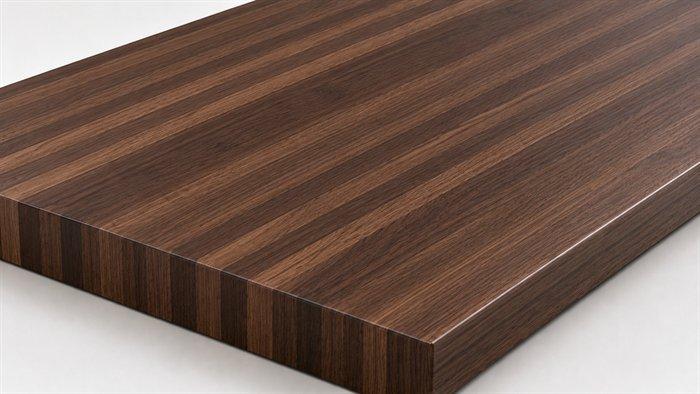
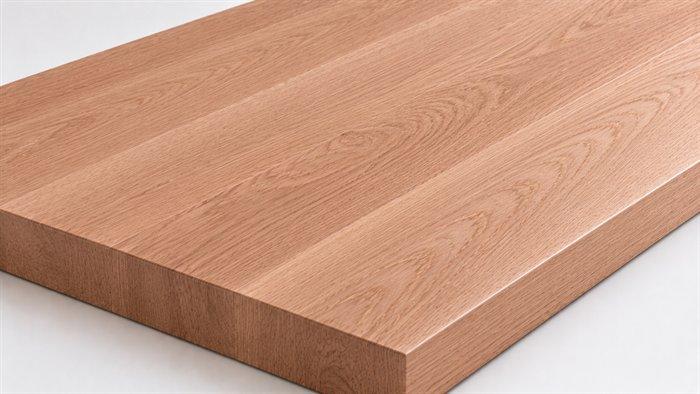
Wide solid boards glued edge-to-edge, face up, so the broad grain runs the length of the top. The warmest, most furniture-like of the three — sweeping cathedral grain and natural board-to-board variation.
Best for: Islands, statement tops, bar tops, perimeter runs where the grain is the feature.
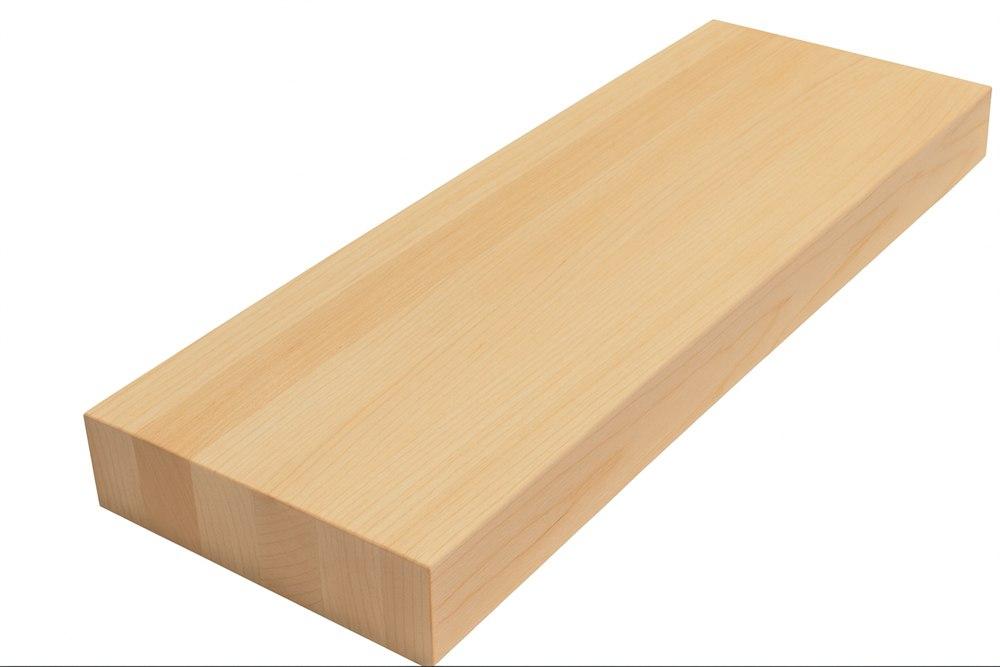
Narrow staves turned on edge and laminated, showing tight, linear grain lines. The classic butcher-block look — a harder, more uniform work surface that resists wear and reads clean.
Best for: Working kitchens, prep counters, and the trade’s default butcher block.
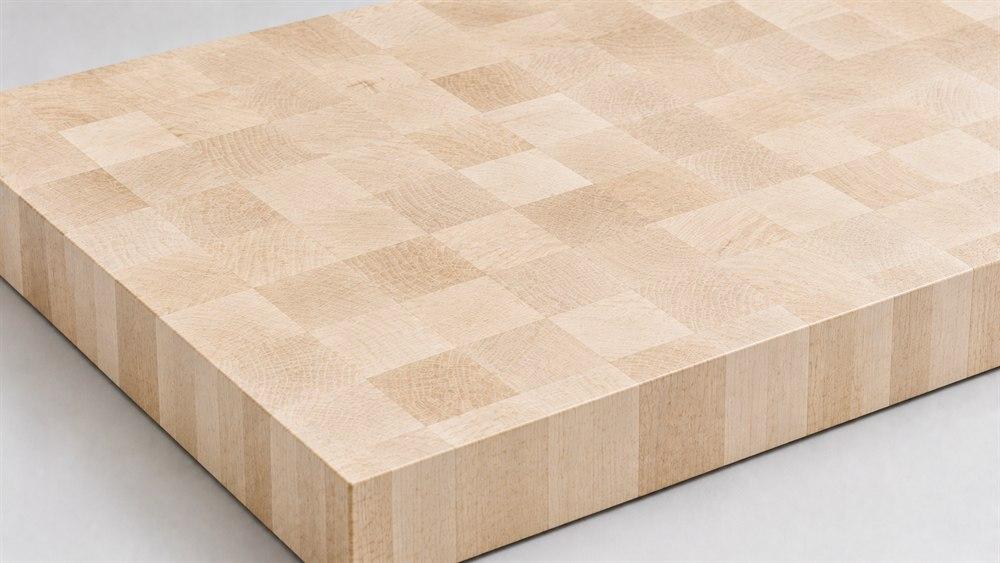
Short blocks stood on end in a brick pattern, so the cut fibre ends face up. The surface absorbs impact and is the gentlest on knife edges — the traditional chopping block, and the most labour-intensive to build.
Best for: Chopping stations and gourmet kitchens where the block is used hard.
Measure the cabinet run, then add the overhangs. The configurator takes finished width and length; these are the conventions a kitchen designer works from, and the seam and cut-out rules that apply to solid wood.
Base cabinets are 24" deep; a 1" to 1-1/2" front overhang puts most perimeter tops at 25" to 25-1/2" wide. Measure to the face of the doors, not the box.
A seating overhang runs 10" to 12". Solid wood carries about 10" unsupported at 1-1/2" thick; past that, plan brackets or corbels into the cabinet — the installation guide below covers them.
One solid top runs to about 144" without a seam. A longer run carries one glue seam, placed where it reads best in the run and confirmed on the quote; a run over 192" is two tops.
1-1/2" is the default for islands, bars and anything with an overhang; 1-1/4" suits perimeter runs on full support. End grain is built at 1-1/2". Thicker is quoted on request.
Sink, cooktop and radius corners: draw them on the request with dimensions from two edges. UWP confirms on the quote whether they are cut at the shop or left for the installer with the template.
Boards run the length of the top on every construction. On an L-shaped run the two legs are two tops, mitred or butted at the corner by the installer.
Six things decide the number the office sends back. None of them is a secret, so they are listed. The relative cost tiers come from the same species catalogue as /wood-species.
Relative material cost, red oak as the baseline: White Oak · premium, Walnut · feature, Red Oak · everyday, Maple · mid, Hickory · mid. Rift & quartered cuts and named species outside the tiles are quoted on the lumber available that week.
Length × width × thickness. Thickness is the lever most people underestimate: a 4" top is twice the wood of a 2" one, and thick stock is scarcer per board foot than 4/4.
End grain is the most labour of the three — every block is cut, turned and glued twice. Edge grain is next; wide plank is the least. The shop prices the hours, not just the wood.
A stair of twelve matched treads and one replacement tread are different jobs: setup, grain selection and glue-up are spread across the run. Put the whole count on the quote list.
Past 144" a top carries a glue seam; past 72" wide or 192" long it is a special glue-up. Both are quoted, not refused.
The 1" tread has a stable schedule behind it. A thick glue-up depends on which boards are on the rack that week, so a number on the page would be either padded or wrong. The office quotes what it will actually build.
| Species on the tiles | Relative material cost | Approx. density | Availability |
|---|---|---|---|
| White Oak | Premium | 47 lb/ft³ | Special order · confirmed at quote |
| Walnut | Feature | 38 lb/ft³ | Special order · confirmed at quote |
| Red Oak | Everyday | 44 lb/ft³ | Special order · confirmed at quote |
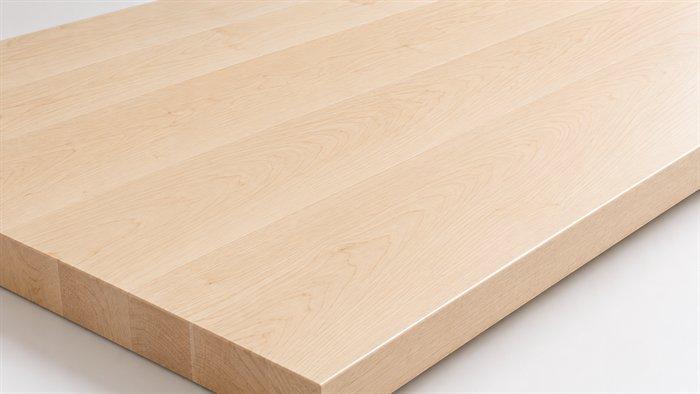
| Maple | Mid | 44 lb/ft³ | Special order · confirmed at quote |
| Hickory | Mid | 51 lb/ft³ | Special order · confirmed at quote |
Cost tiers are relative positions, not prices. Densities are published air-dry averages (USDA Wood Handbook) and drive the approximate weight the configurator shows — plan brackets and handling from that figure, not from the species name.
Coverage per the UWP countertop warranty (PDF). Movement, checking and colour change from site conditions or finishing are not defects.
The line carries every choice you made, the same reference the documents print, and no price.
One form for the whole list. Attach a drawing if the stair or the kitchen has one; a photo of the space helps.
Species against the rack, construction against the size, anything that will not glue up as drawn. Questions come back to you before a number does.
Price per piece, the lead time the shop can actually hold that week, and the seam or stock notes that apply. Valid as stated on the quote.
Custom and special orders take a 50% non-refundable deposit and are non-returnable; the balance is due at pickup. Changes after release are re-quoted.
Terms as published in the store policies: payment on receipt unless a credit account is established, shortage or damage claims within 3 business days, Texas sales-tax exemption by certificate before invoicing.
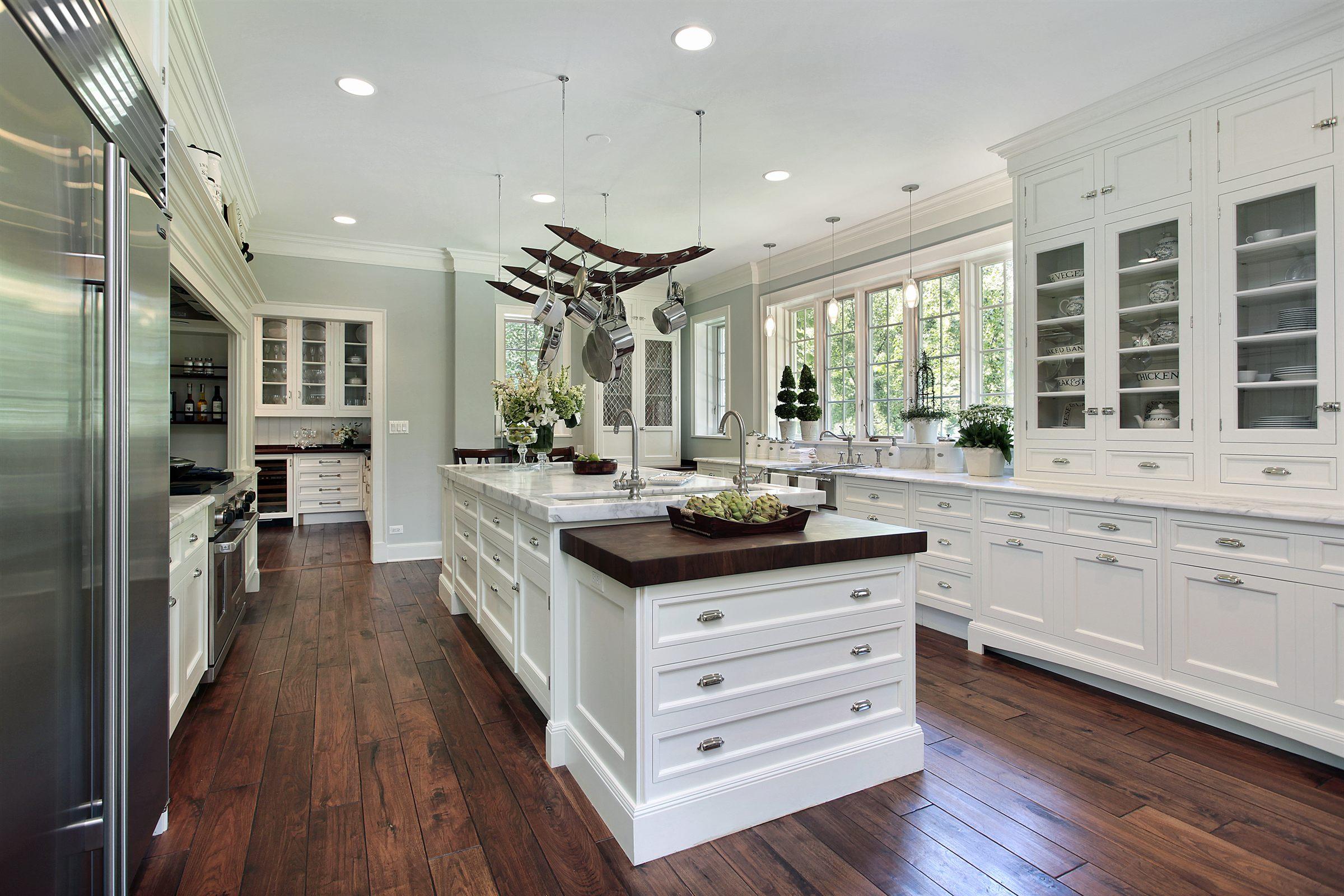
Cut, glued and sanded flat on our own floor.
We don't drop-ship or resell. Each countertop is cut from solid hardwood we select by hand, edge-glued to your size, and sanded flat on our own floor — then handed off unfinished for your installer to seal and fit on site. We supply the top, not the install.
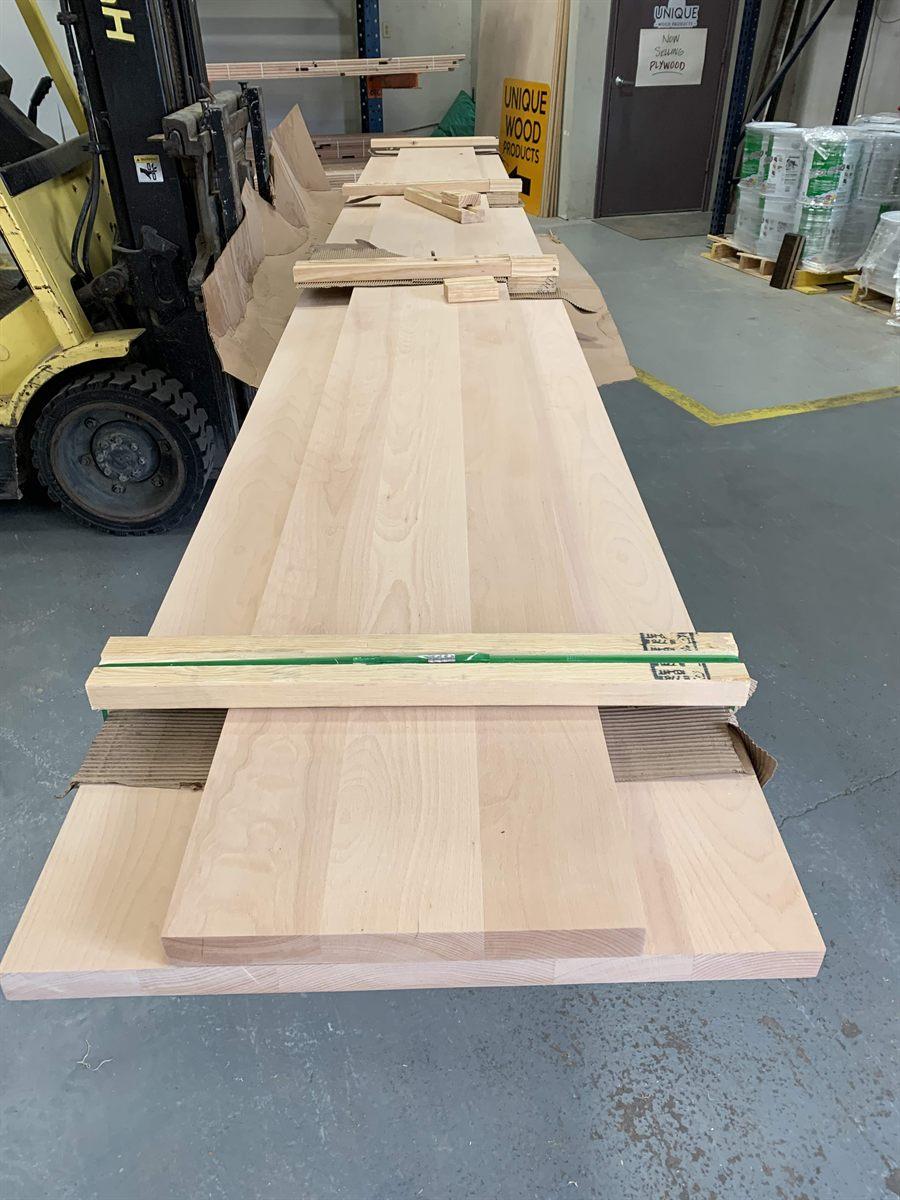
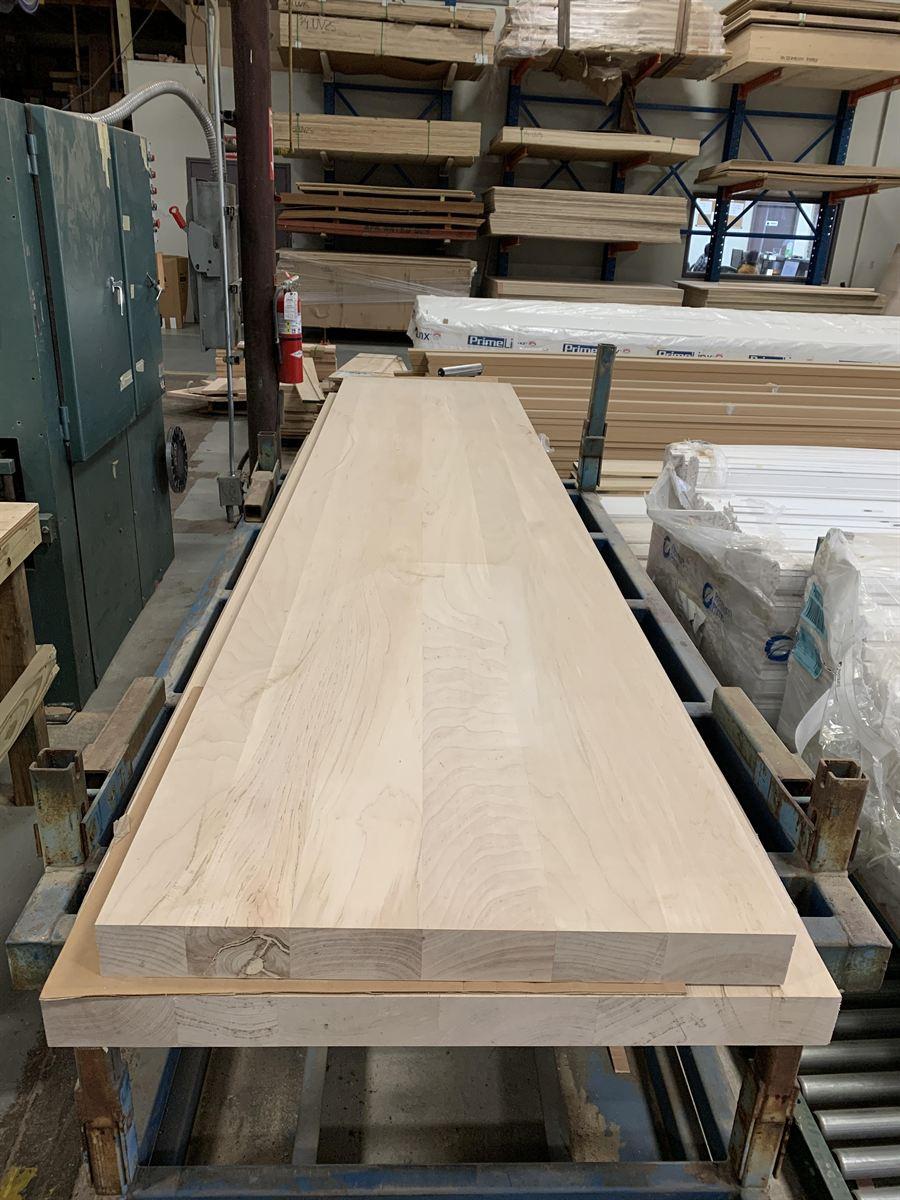
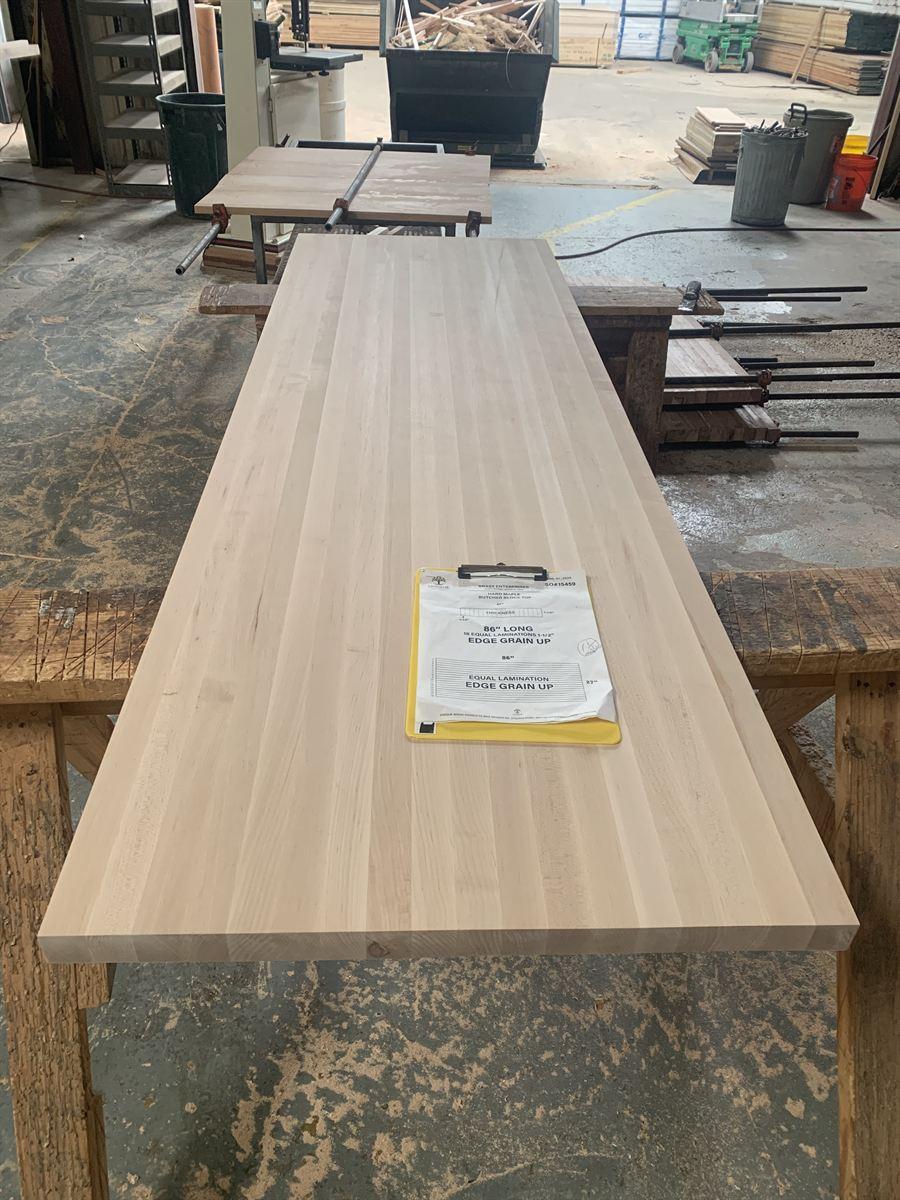
White Oak, Walnut, Red Oak, Maple and Hickory are our core countertop species. Cherry, Ash, and Sapele / African Mahogany run to order — name any species in the configurator and we’ll confirm availability. New to the options? Compare wood species →
No engineered cores, no veneer skin, no laminate — the reasons a solid UWP top outlives the kitchen it was built for.
Full-thickness hardwood the whole way through — not a veneer skin over a core. Sand into it and you find more of the same wood.
Sand and re-oil it over its life. A solid top outlasts the cabinets, the appliances, and usually the kitchen that put it in.
We supply the top unfinished — your finisher seals it on site with the food-safe oil or hardwax that suits the job. You control the finish, and there’s nothing to scuff in transit.
Cut and glued up in-house at NW Houston / Tanner Rd — a short supply chain, consistent stock, and will-call pickup.
Straight answers to the questions we field at the will-call counter — not a marketing FAQ.
Spec it, install it, and know what’s covered — the same references our trade customers use.
PDFThe three constructions, the core species plus special order, sizing and edges, finishing, and how we supply the top — custom, unfinished, top only.
Download PDF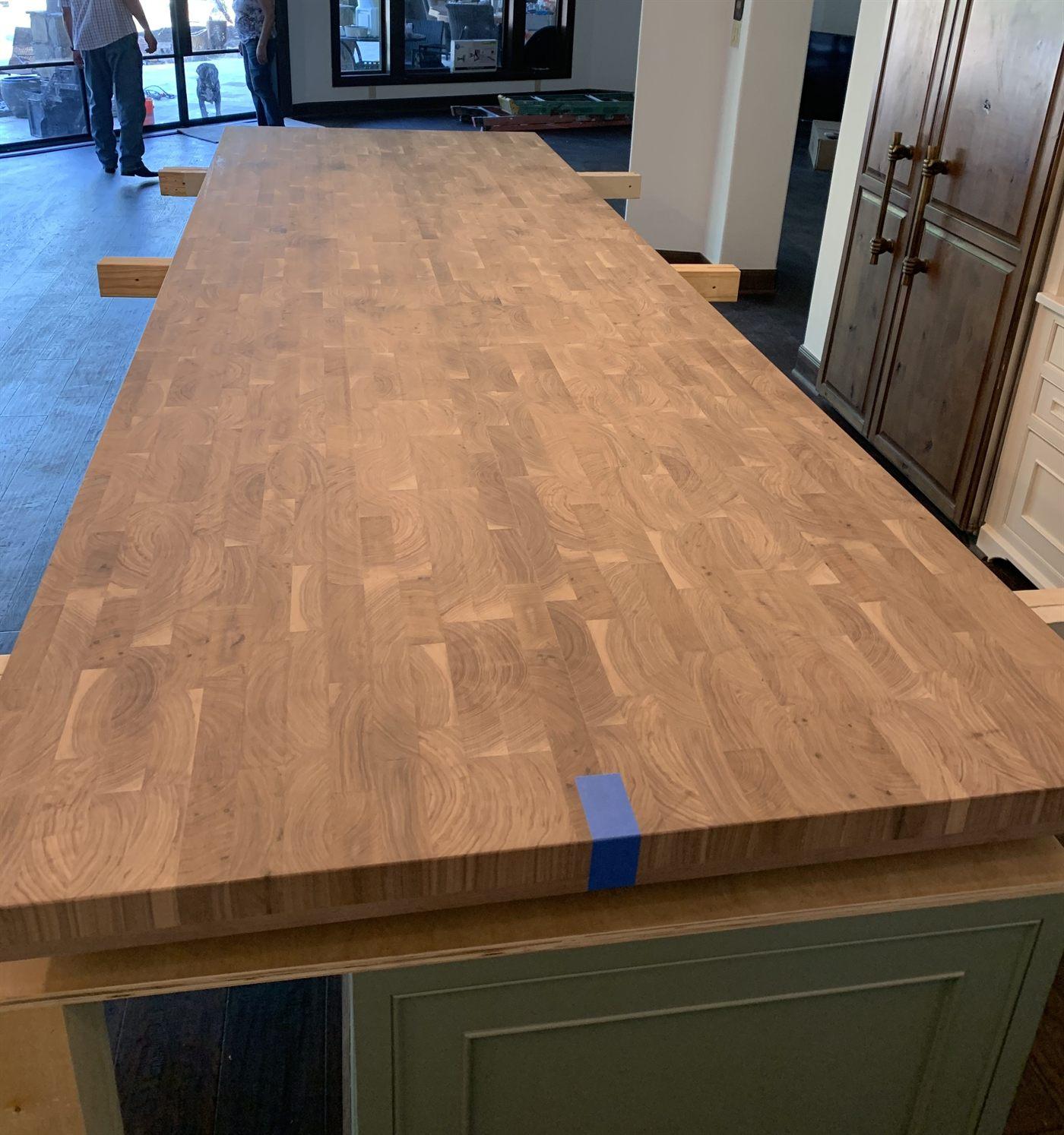 PDF
Acclimation, fastening with expansion clearance, sink and appliance clearances, backsplash attachment, and overhang support for your installer.
Download PDFPDFOne-year, material-only coverage for solid hardwood and butcher block tops — glue-joint integrity and workmanship, with care and exclusions.
Download PDFOne and a half inches is the default because standard base cabinets are 34-1/2 inches tall and a 36-inch finished counter needs exactly that. Go thicker for islands, bars and anything meant to read as a slab. Overhang up to about 12 inches unsupported; past that, add brackets, corbels or a steel plate before anyone leans on it.
Read the answer →Yes, but the cutout is the weak point and how you detail it decides whether the top lasts. A drop-in sink with a rim covering the cut edge is far safer than an undermount, which leaves raw end grain exposed to standing water. Radius the cutout corners, seal every cut face including the underside, and keep cutouts away from the ends.
Read the answer →Wide plank countertops show the broadest grain pattern and read most like a piece of furniture — best for islands and bars where the surface is the focal point. Edge-grain (butcher block) is the most cost-effective and stable construction. End-grain shows a dramatic checkerboard pattern, is the most knife-friendly, and runs the highest price. Pick on look first, function second.
Read the answer →A wood countertop needs food-safe oil once a month for the first six months, then every few months. Wipe spills promptly, never leave standing water, use cutting boards on edge-grain and wide-plank tops, and re-oil if the surface looks dry. Light sand and re-oil every few years brings any countertop back to new. Done correctly, a wood top lasts decades.
Read the answer →