

Molded-panel doors · Supplied by UWP
Interior doors.
Every detail, considered.
Choose the panel profile. Set your size and preparation. Build a prehung door specification and send it to UWP for your account quote.
and trim contractors.
01 / Choose a profile
Four molded-panel styles to configure.
02 / Build your unit
Core, size, handing and bore.
03 / Coordinate pickup
Not stocked · Special order: 7–14 days.
Molded panel · Primed
6-Panel
2'8" × 6'8"
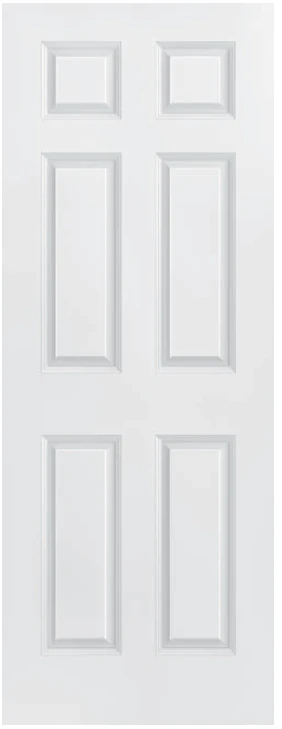
Catalog image · Style reference only. Use Drawing to view proportions and handing.
PRICED FOR YOUR ACCOUNT
Build the exact door you need and send it over — we price it against your account and follow up with availability and lead time.
Every door ships as a complete prehung unit: slab, standard jamb, and bore if you want it. No lockset, no casing. Doors are not stocked. Special order: 7–14 days.
1 · PANEL STYLE
Molded-panel interior doors — the everyday builder door.
2 · CORE
Hollow core for everyday rooms; solid core for sound and a heavier feel.
3 · SIZE
Standard interior sizes.
4 · CONFIGURATION
5 · PREP
We supply the prehung unit with a standard jamb. No lockset or casing.
Bored = pre-drilled for a standard 2-3/8" backset. You supply the knob/lever.
6 · YOUR CONFIGURATION
- Style:
- Molded 6-Panel
- Core:
- Hollow core
- Size:
- 2'8" × 6'8"
- Config:
- Single · Left-hand · bored
7 · REQUEST A QUOTE / ORDER
Confirm your spec and UWP will follow up after reviewing the exact configuration.
A complete prehung door.
The molded-panel door hung in a standard jamb — ready to set in the rough opening.
Pre-drilled for a standard 2-3/8" backset if you choose; you set your own knob or lever.
We leave the hardware and trim to your crew — you buy only the door.
Need stair parts or treads for the same job? Browse the stair tread catalog.
What builders actually ask.
Straight answers to the questions we field at the will-call counter — not a marketing FAQ.
How do I get a price?
Can you price a whole door schedule?
What comes with the door?
Hollow core vs. solid core?
Do you deliver or install?
Are doors in stock?
Questions people ask before ordering
Prehung or slab — which interior door should I order?
A prehung door arrives hinged in its own jamb with the lock bore already cut, and it installs into a rough opening. A slab is the door alone, for reusing a jamb that is staying. Prehung is faster and more reliable on new work or where the casing is being replaced. Slab is right when the existing jamb and casing are sound.
Read the answer →How do I work out door handing — left hand or right hand?
Stand on the side where the door swings away from you. If the hinges are on your left, it is left hand. If they are on your right, it is right hand. If you can only stand on the side the door swings toward you, add "reverse" — left hand reverse or right hand reverse. That single rule covers every interior door.
Read the answer →Hollow core vs. solid core interior doors — what’s the real difference?
A hollow-core door is two face skins over a perimeter frame with a honeycomb or lattice inside. A solid-core door has the same skins over a solid engineered core. The core changes three things: weight, sound, and how the door feels when you close it. It does not change how the door looks.
Read the answer →Casing styles — colonial vs. craftsman vs. modern square. Which one for my home?
Three casing styles cover most American homes: colonial (stepped profile, traditional, the default since the 1950s), craftsman (flat board with a simple cap, square-edged, bungalow and arts-and-crafts homes), and modern square (a flat rectangle, no profile, contemporary and minimalist). Pick by the era and architecture of your home — don’t mix styles between the casing and the baseboard.
Read the answer →