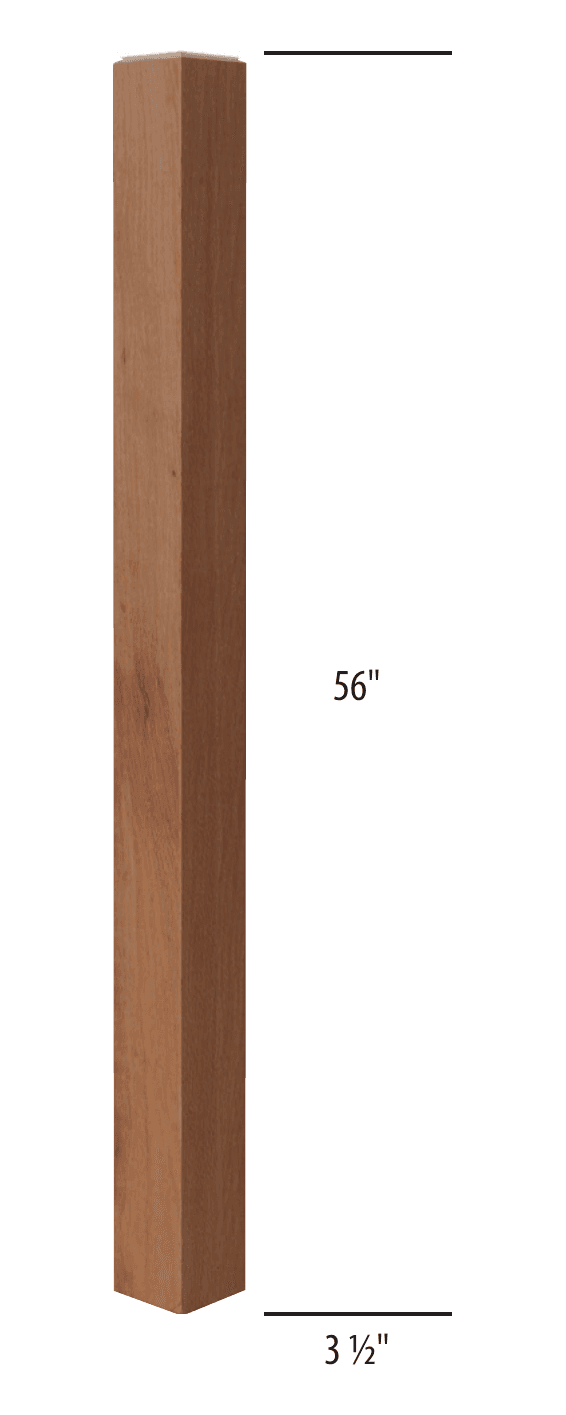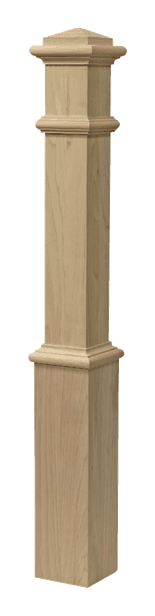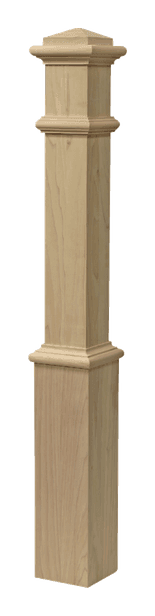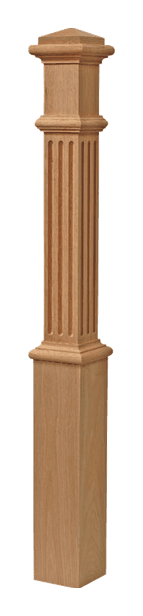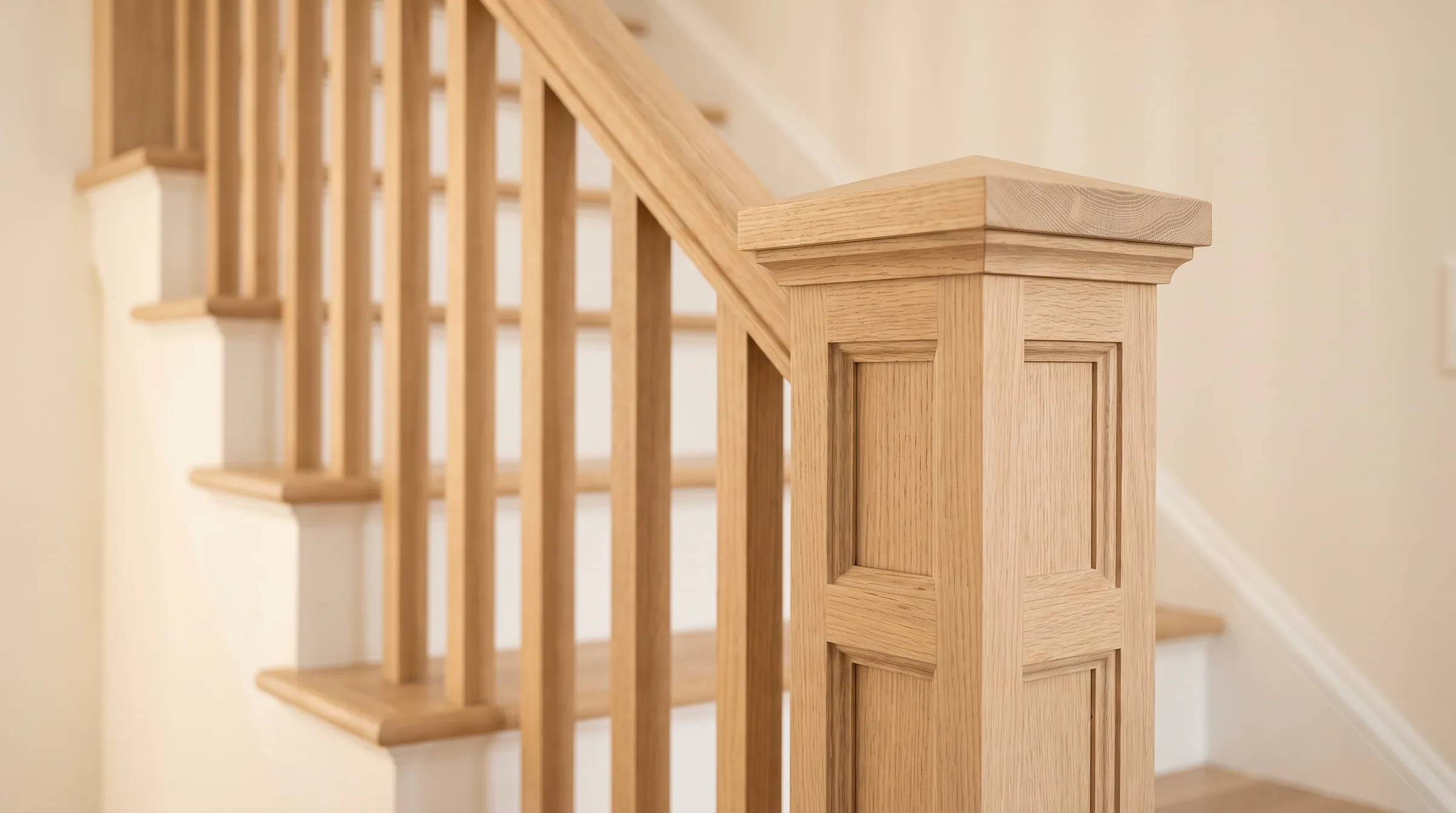
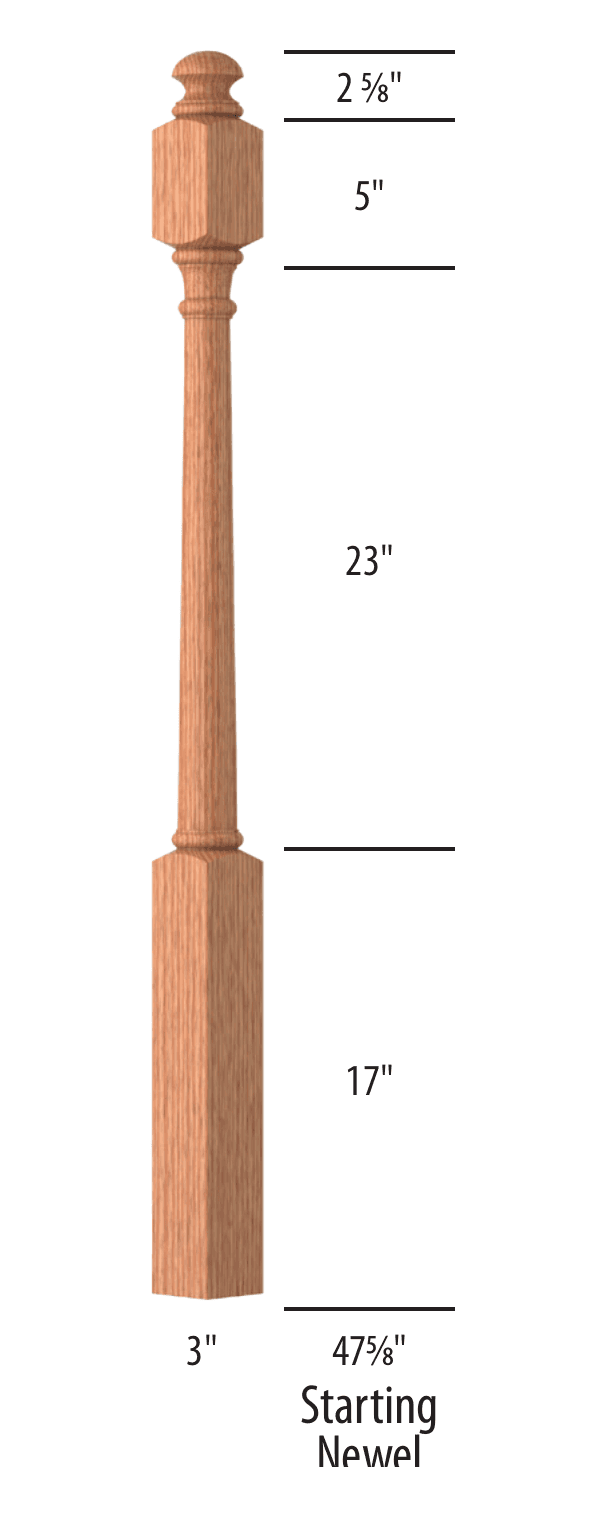
4040 Starting Newel
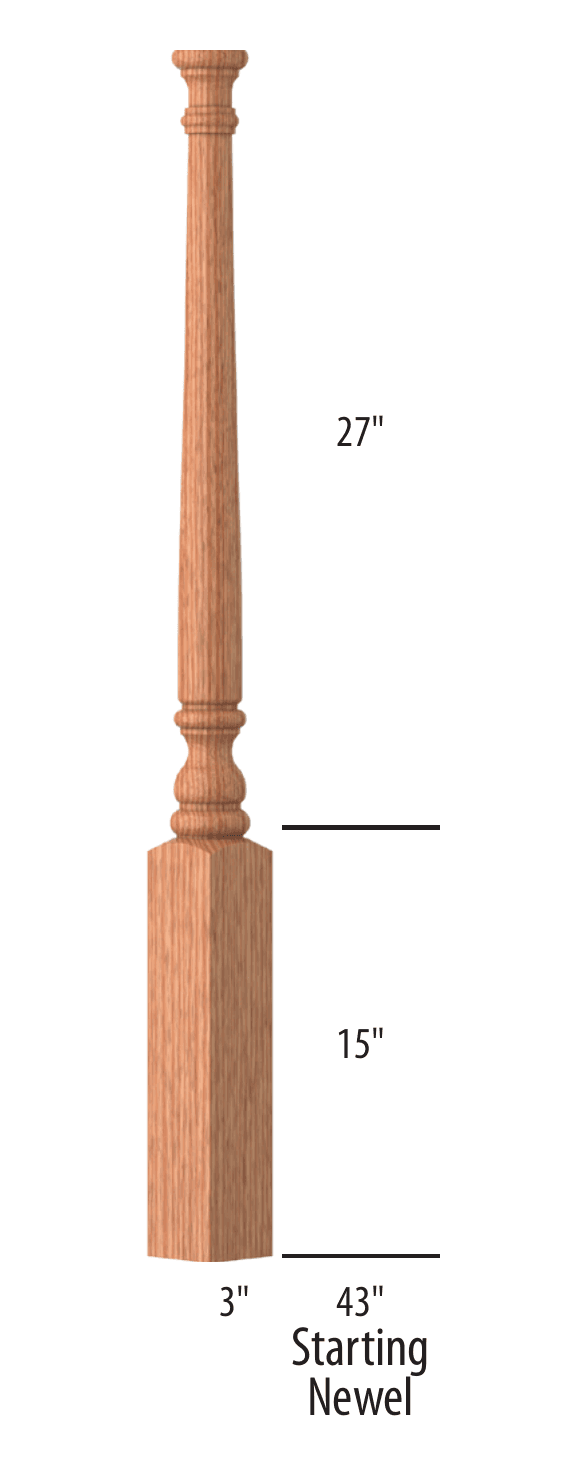
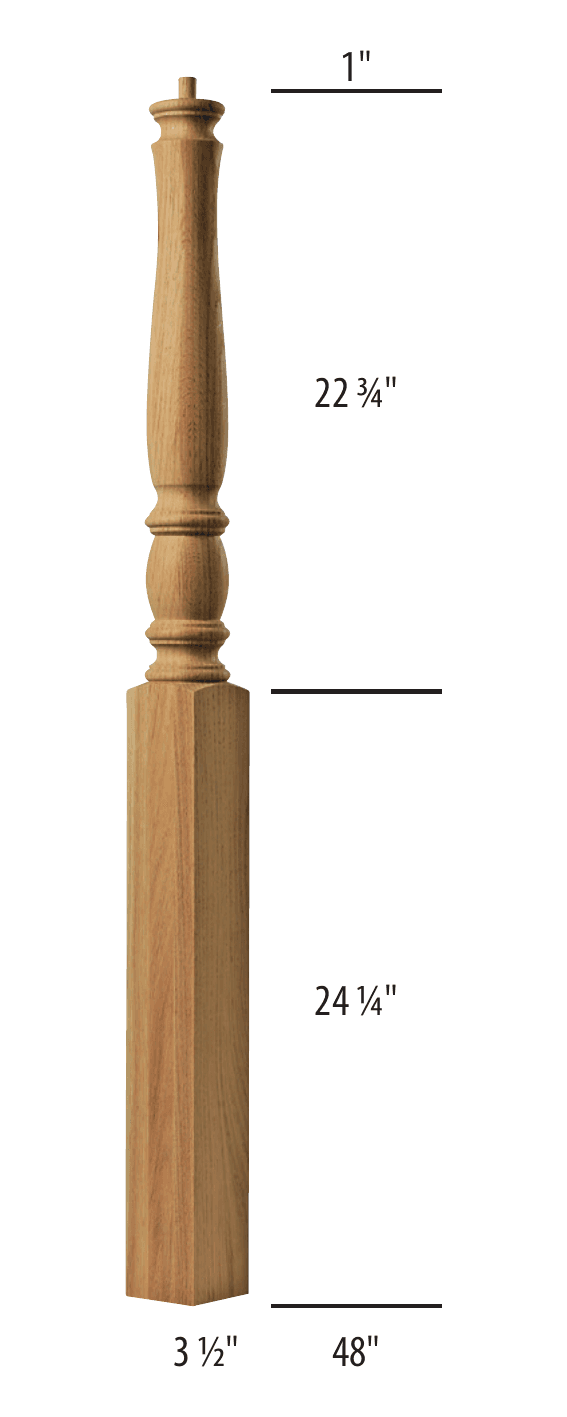
Detail: The dominant 3" square oak starting newel — most-specified for typical residential stairs
View 4040 Starting Newel →
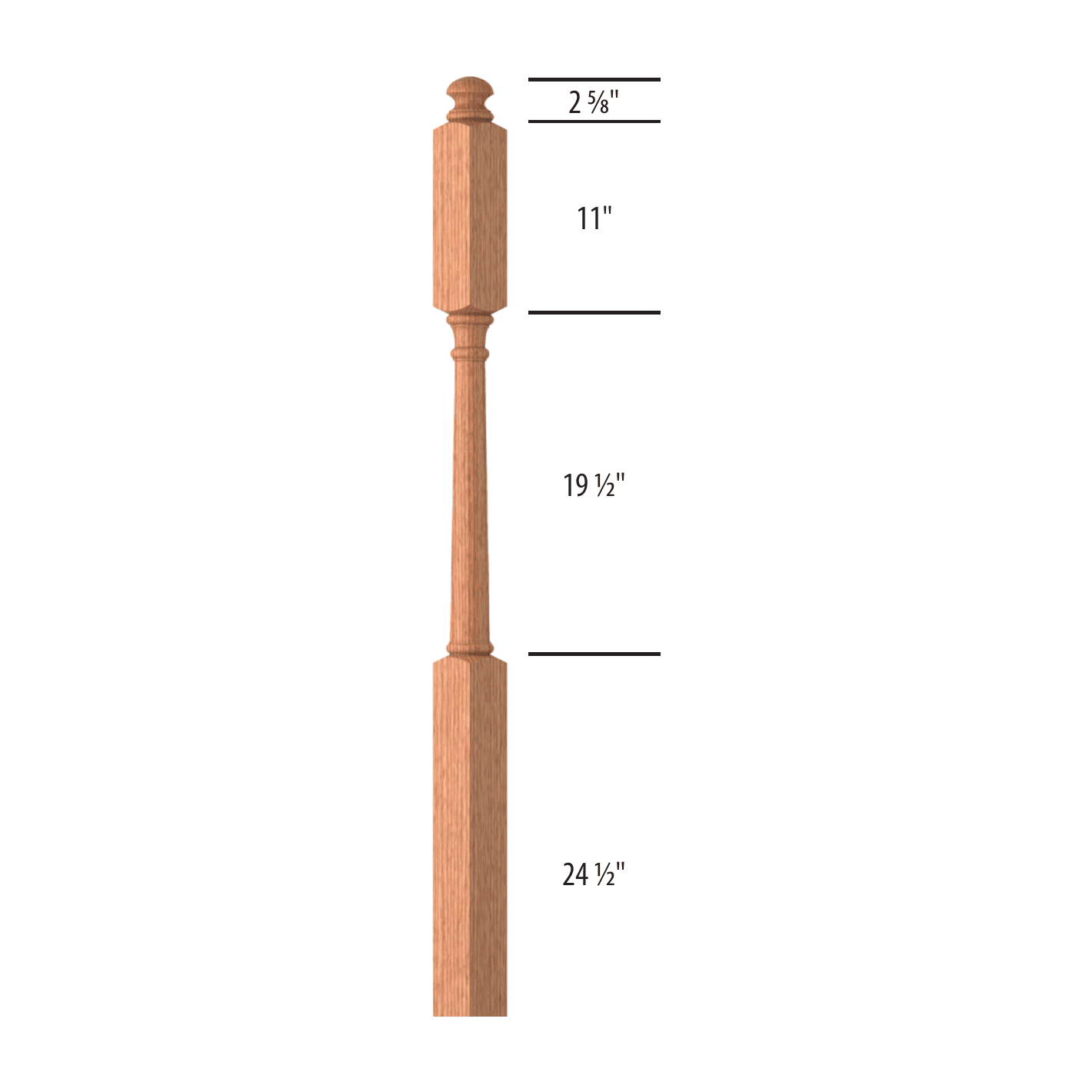
37 catalog shapes · 10 families · Pin-top turned, sloped, plowed, chamfered + Box 4075 / 4091
Newel posts anchor the railing at stair starts, intermediate landings, and balcony returns. Turned newels for hardwood handrail systems; box newels for paint-grade traditional work. The 4000-series pin-top turned newels pair with 5015 turned balusters and 6010 standard handrail.
All 37 catalog newels, special order. Filter by type or species to narrow the set — turned posts for hardwood-rail systems, box newels for paint-grade work.
The dominant 3″ square turned newels for typical residential stairs — paired with 5015 turned balusters and 6010 handrail. The 4040/4042/4045/4046 family is the most-specified set.

Detail: The dominant 3" square oak starting newel — most-specified for typical residential stairs
View 4040 Starting Newel →
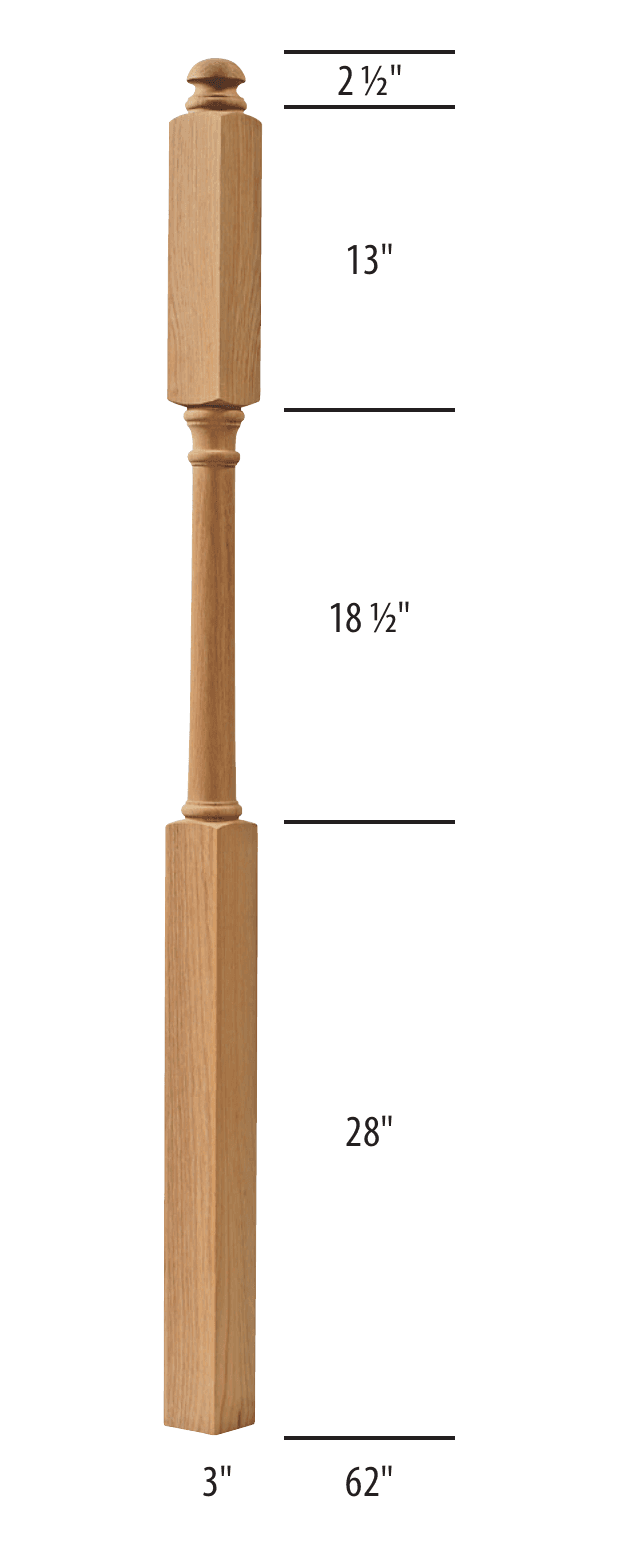
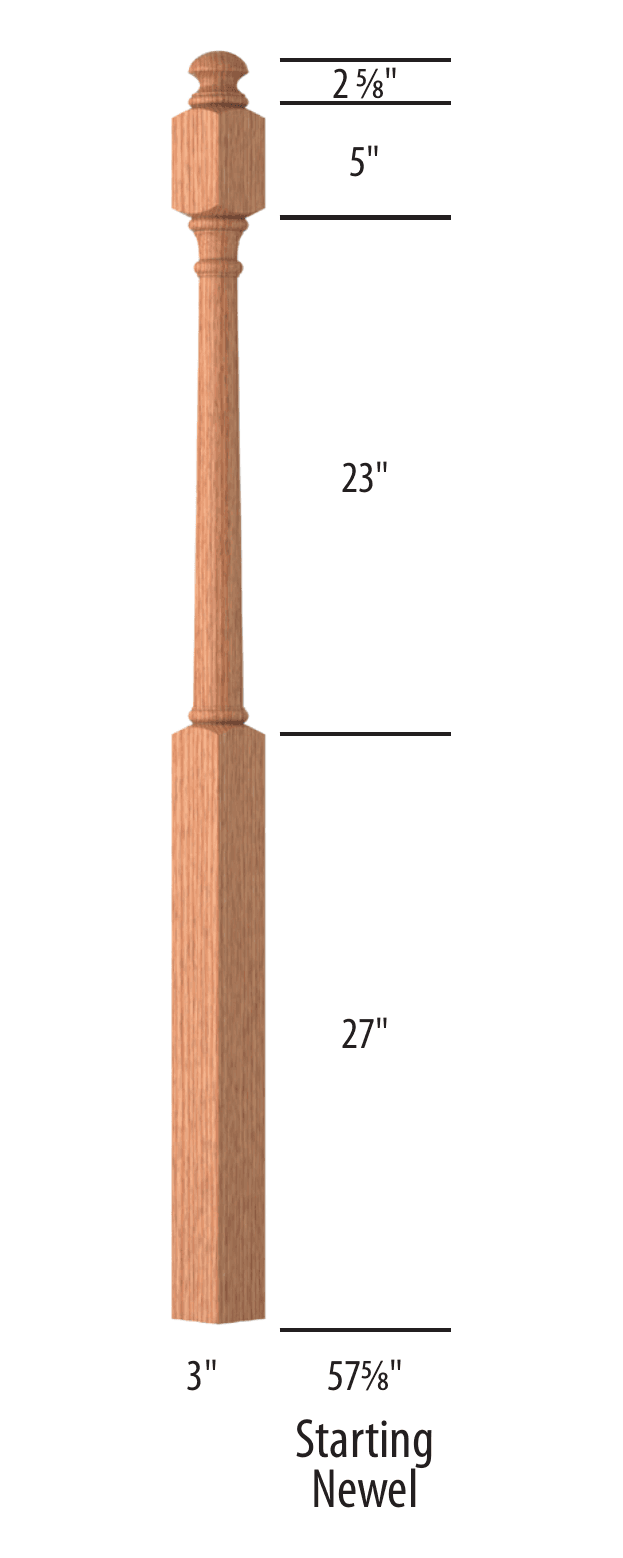
Detail: Taller starting newel — 57-5/8" oak, plus white oak (WO4042) in 54"
View 4042 Starting Newel →
Detail: Matched landing-side counterpart to the 4040 starting newel — 3" turned profile
View 4045 Landing Newel →
Detail: Taller landing newel — 62" oak in the 4040 family
View 4046 Landing Newel →
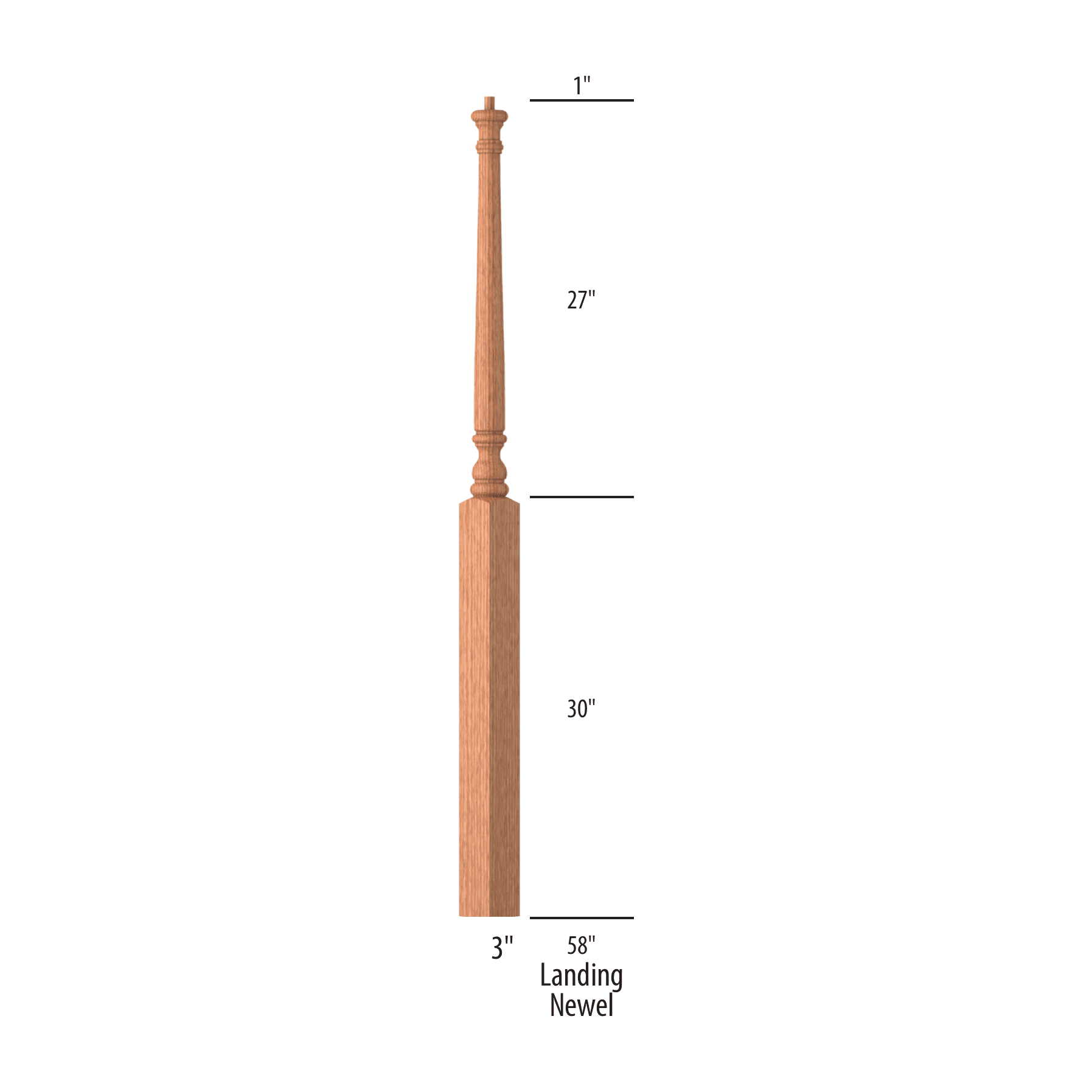
Detail: Large 58" oak landing newel — visual weight for balcony returns and stair tops
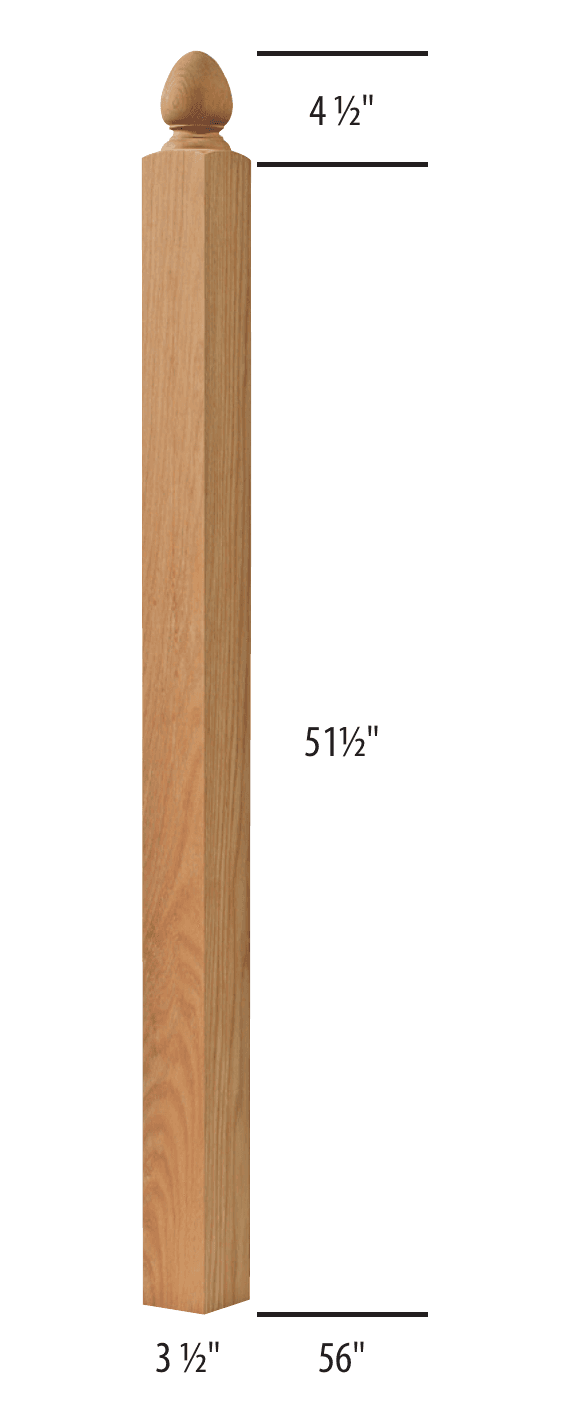
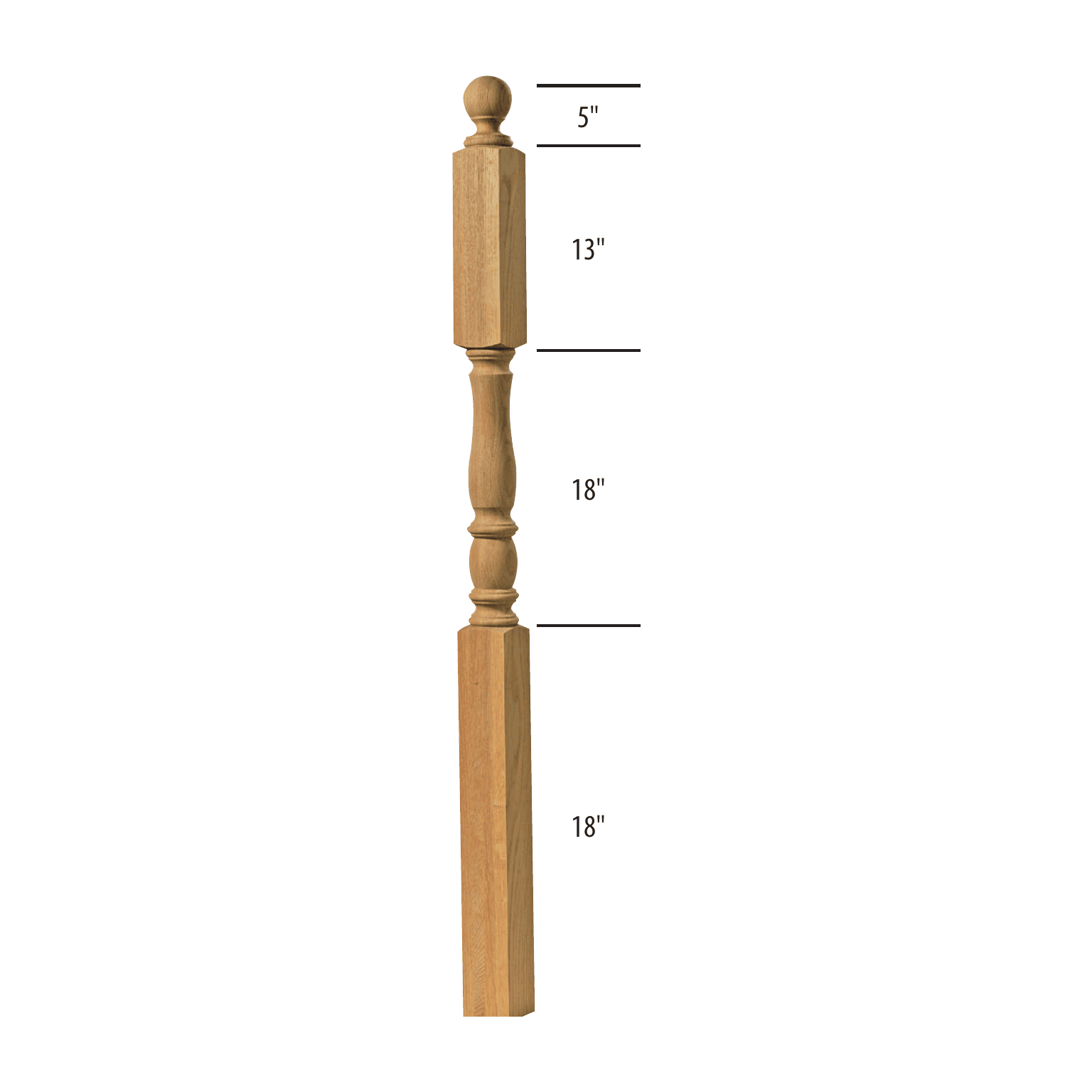
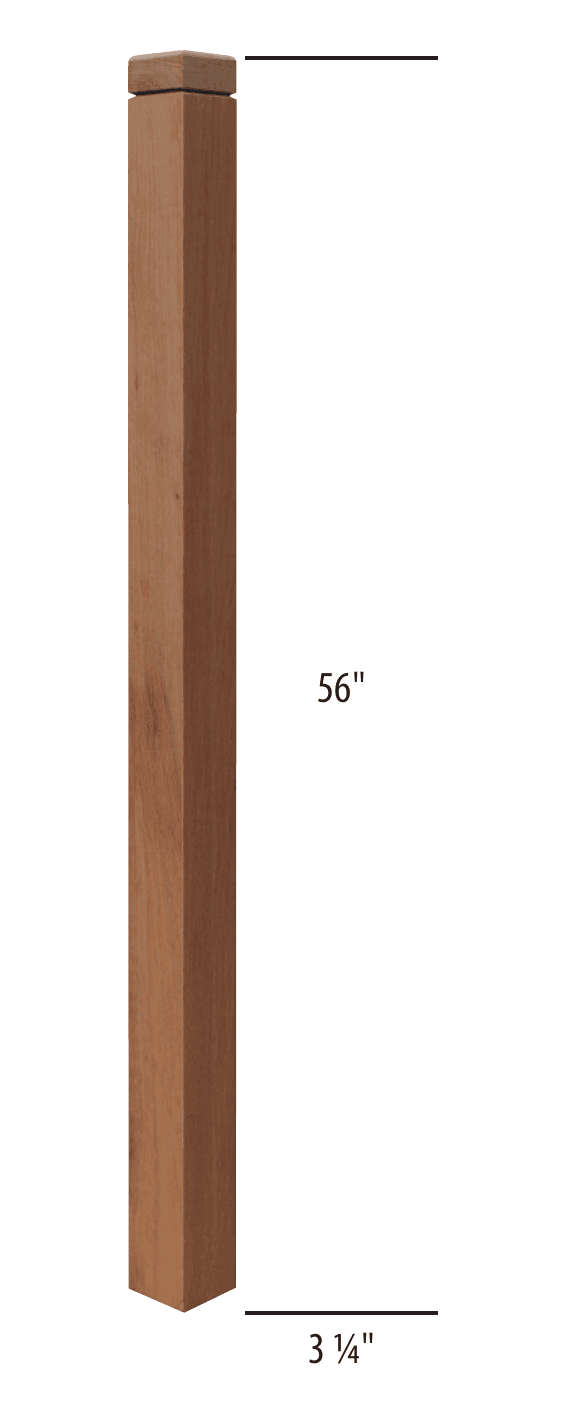
View 4015 Landing Newel →A 3-1/2″ × 56″ pin-top newel with a turned ball cap, for compact stair openings or a lighter visual weight.

Detail: Small 3-1/2" sq × 56" oak pin-top newel with ball cap
View 4005 Small Pin-Top Newel →Heavier 3-1/2″ square starting and landing newels — bigger visual weight than the 4040 family for grand entries and stair-top balcony returns.

Detail: Heavier 3-1/2" square oak starting newel — bigger profile than the 4040 family
View 4500 Starting Newel →
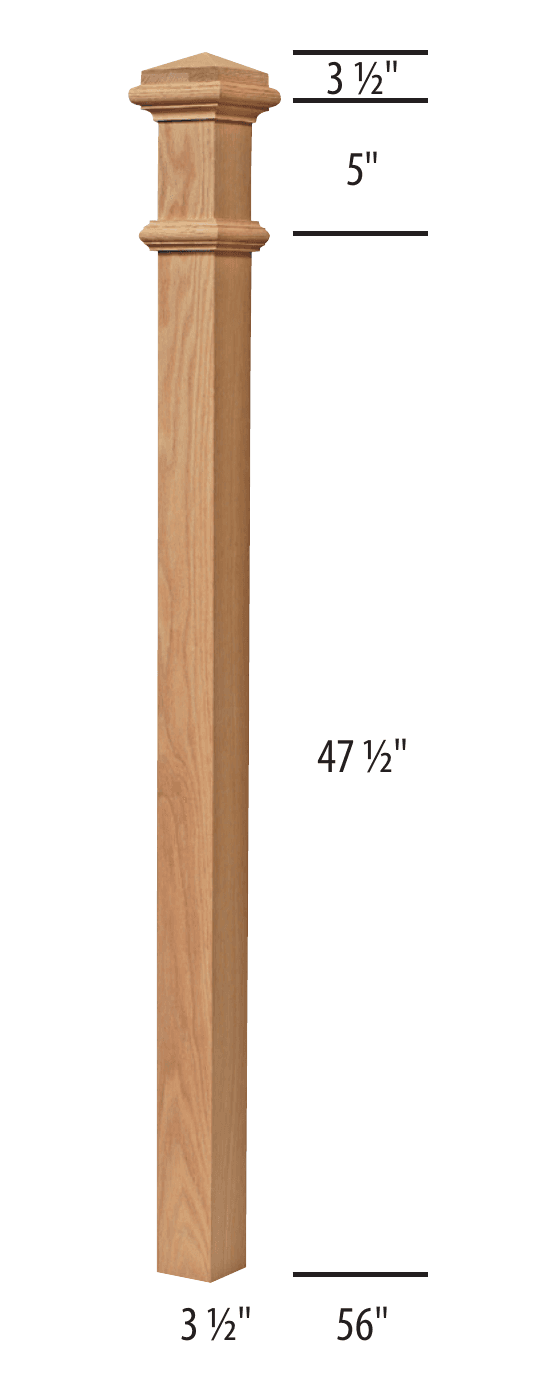
Detail: Compact starting newel — 3-1/2" sq × 43" oak, also in white oak
View 4010 Starting Newel →

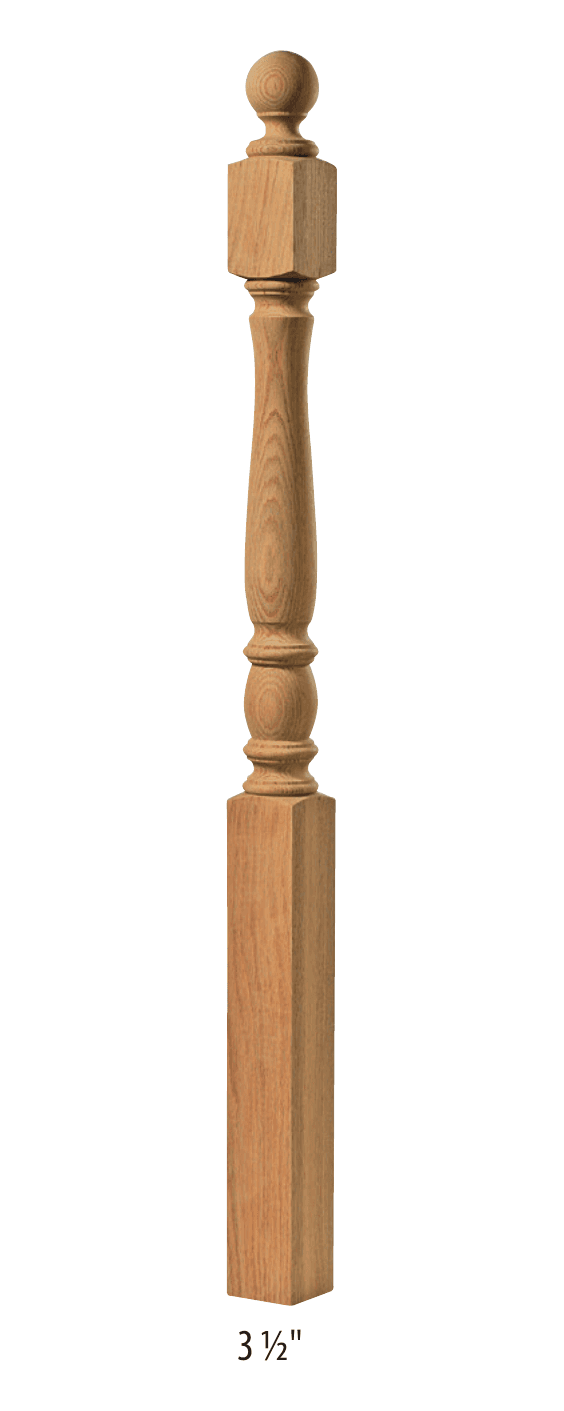
Detail: 3-1/2" square turned landing newel
View 3015 Landing Newel →
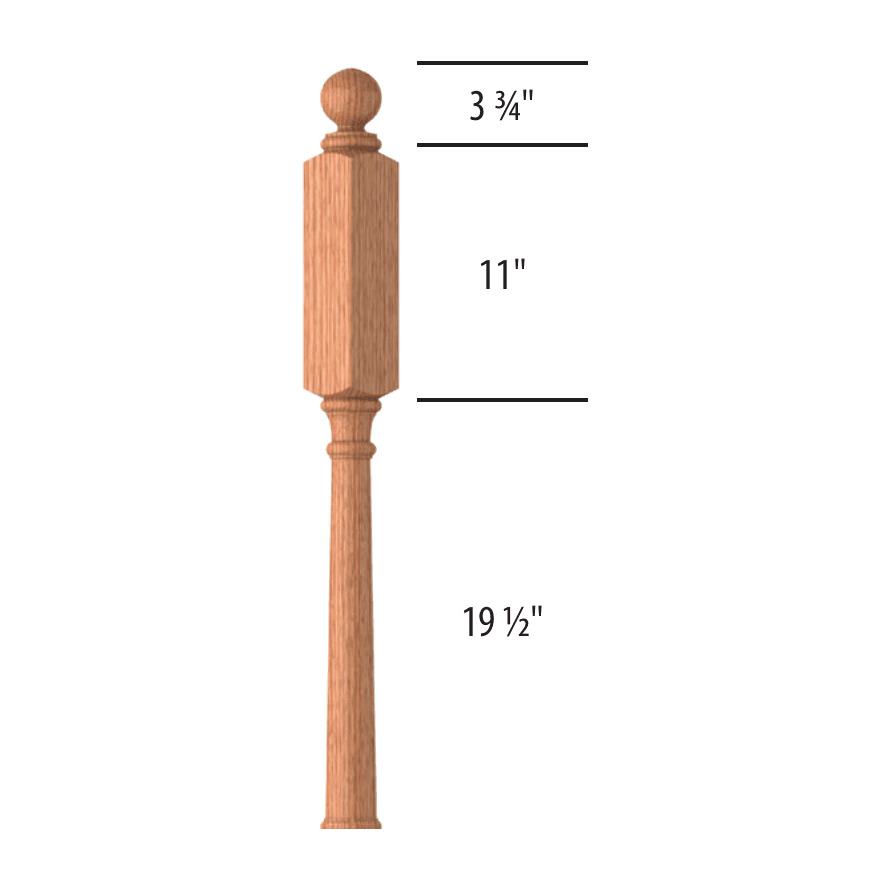
Detail: 4-1/2" square turned newel · ball top
View 4-1/2" Starting / Landing Newel →Rake-style starting/landing newels with the top cut at the rake angle to receive a sloped handrail directly.

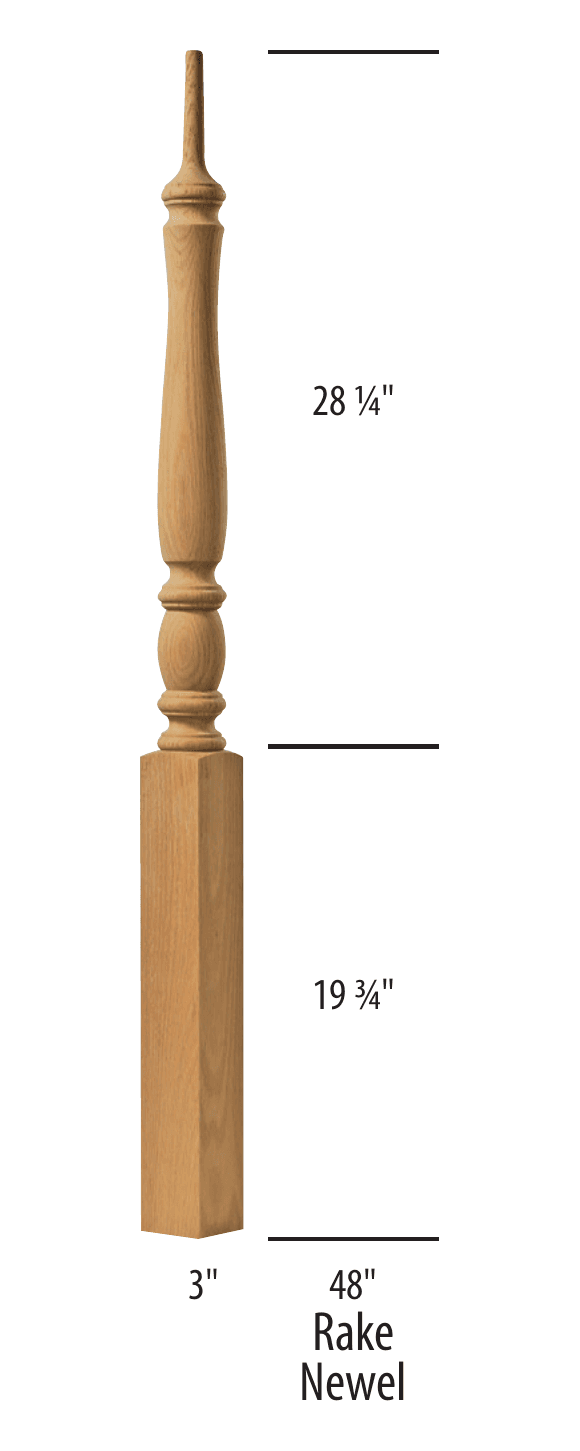
Detail: Rake-cut variant of 4010 — angled bottom matches the stair pitch
View 4010 Rake Newel →
Detail: 3" square post · tapered top · trim kit included
View 4076R Newel →
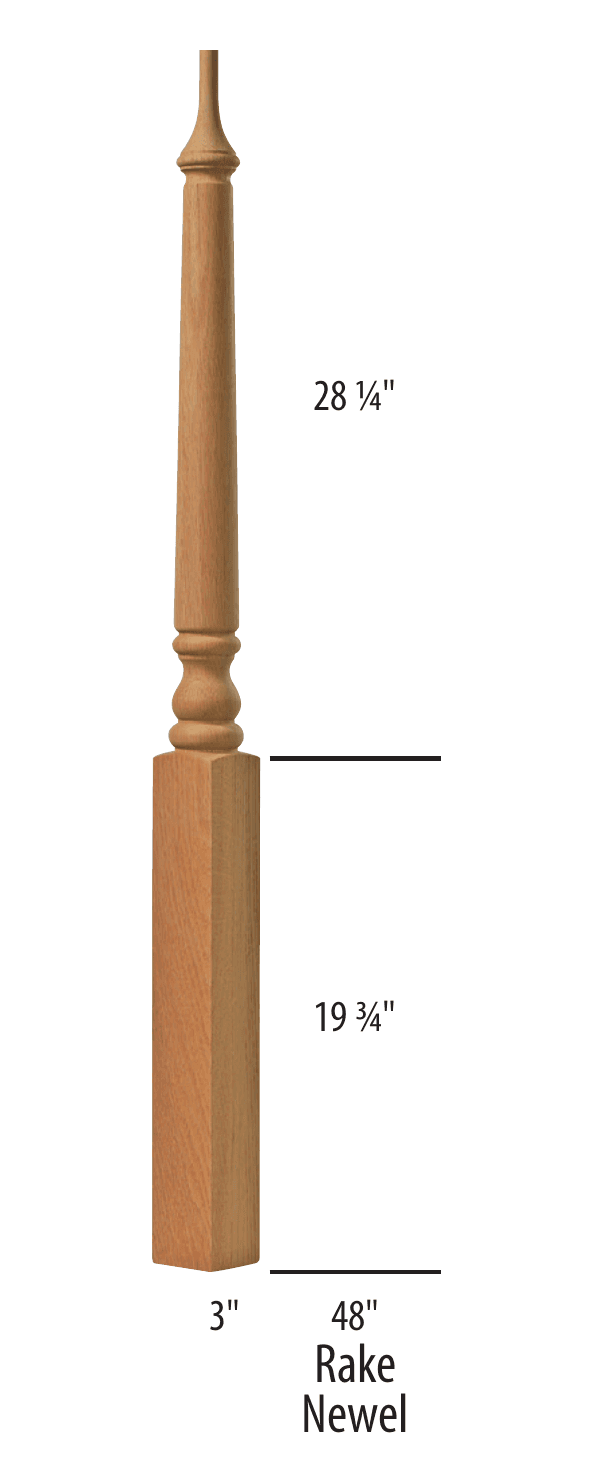
Detail: 3-1/4" square rake newel · pointed top
View BOXRK Rake Newel →The 4800-series — chunkier turned profile for traditional and Federal stairs.

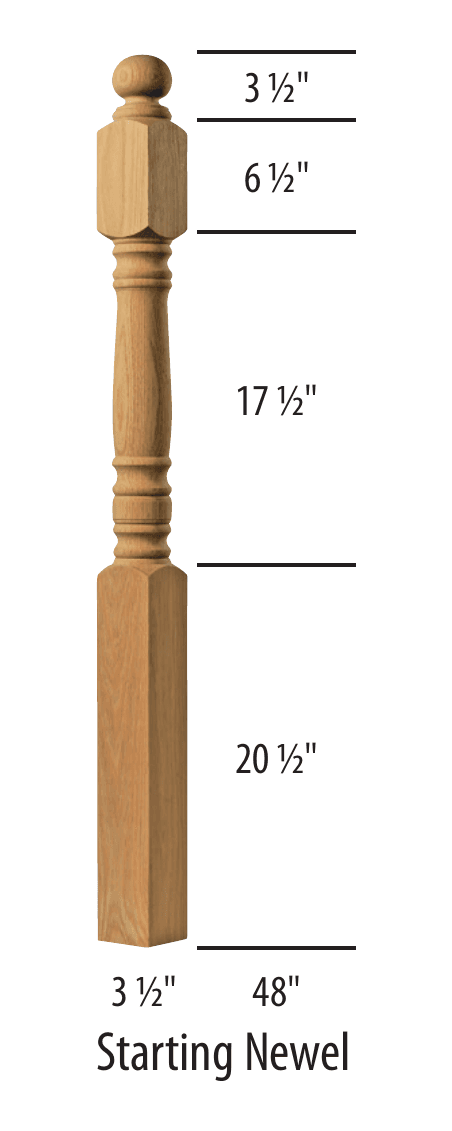
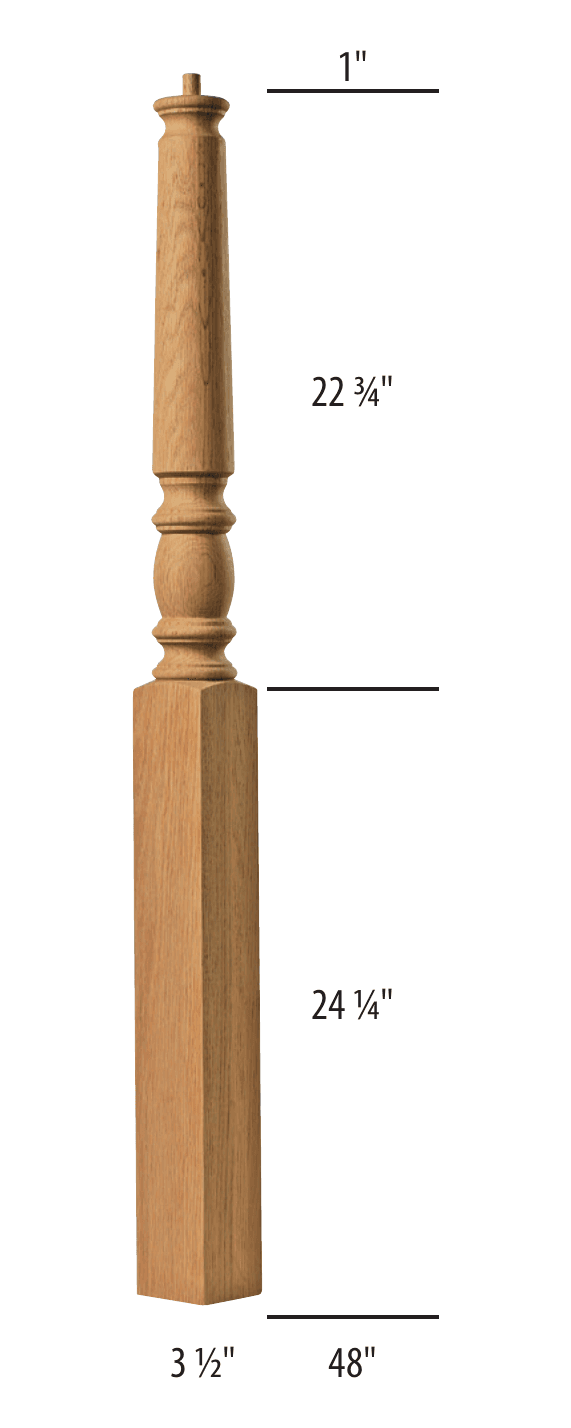
Detail: 3-1/2" sq × 48" oak · single-bead turned starting newel
View 4801 Starting Newel →
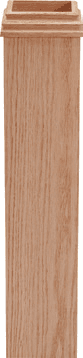
Detail: 3-1/2" sq × 54" oak — alt to the 4801, with a more compact head · single-piece SP
View 4808 Starting Newel →

Detail: Matched landing for 4808 — 3-1/2" sq × 54" oak · single-piece SP
View 4838 Landing Newel →
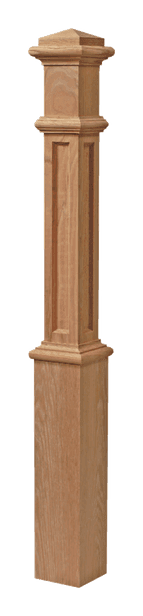
Detail: Simpler 3-1/2" sq × 48" oak starting newel with minimal turned detail
View 4800 Starting Newel →Rake-cut variants of the 4800-series for sloped handrail connections.

Detail: Rake-cut variant of 4800 — angled bottom for stair-pitch installs
View 4800 Rake Newel →Sloped pin-top (BT = bevel-top) newels — the pin-top is angled to match the rake of the handrail.

Detail: Sloped pin-top landing newel — 57-5/8" oak
View 4045BT Sloped Pin-Top Landing Newel →Chamfered box newels — flat-sided posts with chamfered (beveled) edges. Cleaner contemporary look than the turned families.

Detail: 3-1/4" sq × 56" chamfered box newel · oak, maple (M4000), white oak (WO4000)
View 4000 Chamfered Box Newel →

Detail: Heavier chamfered box newel than 4000 — 3-1/2" sq × 56" oak
View 4002 Chamfered Box Newel →
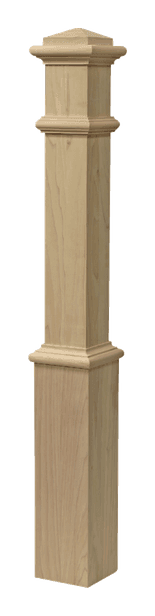
Detail: 3" square chamfered post
View 4110 Chamfered Newel →

Detail: 3-1/4" square chamfered post
View 4401 Chamfered Newel (Primed) →The 4075 box-newel family with applied decorative mouldings — paint-grade traditional work.

Detail: Smaller box newel than 4091 — 3-1/2" sq × 56", with a 22-1/4" sleeve · oak, maple, white oak
View 4075 Box Newel →

Detail: 3-1/2" box newel · tall shaft
View 3-1/2" Box Newel →
Detail: 4-1/2" sleeve · 22-3/8" long
View Sleeve for 4175 Box Newel →
Detail: 3-1/2" box newel · CR line
View 4075CR Box Newel →
Detail: 4-1/4" sleeve · 22-5/16" long
View Sleeve for 4075CR Box Newel →The 4091 box-newel family — heavier 5-1/2″ box posts with applied panel mouldings. The dominant box newel set for formal entries.

Detail: The most-specified box newel — 5-1/2" sq × 55" with interchangeable pyramid + flat caps
View 4091 Box Newel →
Detail: XL variant of 4091 — 6-1/4" sq × 55" for grand stairs and two-story foyers
View 4091XL Box Newel →
Detail: Reverse panel orientation of 4091 — decorative face flips for visible approach
View 4091R Box Newel (Reverse) →
Detail: Flat-machined top — for over-the-post handrail runs that terminate on the newel face
View 4091F Box Newel (Flat Top) →
Detail: 5-1/2" box newel · paneled
View 4391 Box Newel →
Detail: 6-1/4" box newel · paneled
View 6-1/4" Box Newel →
Detail: 7-1/2" box newel · paneled
View 4091XXL Box Newel →
Detail: 6-1/4" box newel · CR line
View 4091CR Box Newel →
Detail: 5-1/2" box newel · CR line
View 4391CR Box Newel →A newel post is the structural anchor at the top, bottom, and turns of a stair railing. The four main families are box newel (large rectangular, traditional), turned newel (classical with profile turning), modern square (clean tapered or straight), and craftsman (substantial square with shaker detail). Size to the stair scale (4 to 8 inches), match the baluster style, and use the same wood species as the handrail.
Read the answer →The IRC requires stair handrail height between 34 and 38 inches above the nosings — measured straight up from the front edge of each tread. Most installers land at 36 inches as a comfort default. Taller homes or households with taller users can go to 38; shorter occupants and accessibility-focused installs sometimes go to 34. Pick the height first, then size the grip profile to match the user’s hand.
Read the answer →Both red oak and white oak make excellent stair treads in Houston — once acclimated, indoor performance is nearly identical. The real choice is look and budget. Red oak runs warm pink-brown with a busy grain at a lower cost; white oak runs golden-tan, takes modern stains more cleanly, and costs more. White oak also needs stainless fasteners — its tannins react with steel.
Read the answer →UWP mills six hardwood species: red oak, white oak, hickory, hard maple, walnut, and brazilian cherry. Red oak is the affordable warm baseline; white oak runs golden-tan and takes modern stains cleanly; hickory shows the strongest grain contrast; hard maple is the tightest, lightest grain; walnut is rich chocolate; brazilian cherry is the hardest and reddest. Pick on look first, hardness second.
Read the answer →