

Product photo
UW-3005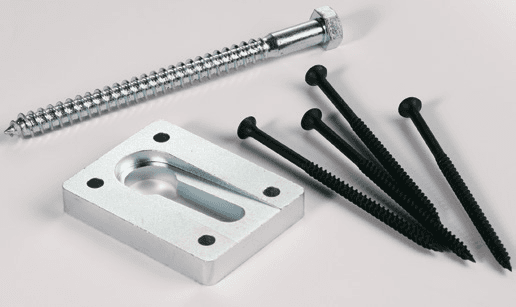
UW-3005 — Keylock plate · lag screws
Installation Hardware · Fasteners
UW-3005Keylock Newel Fastener
Keylock plate · lag screws
Order # 4300099
A keylock newel fastener — a steel keyed plate and screws that lock a newel post to the floor framing with no visible hardware.
- Keylock plate · lag screws
- Kit
- each
- Confirmed at quote
Standard — ships ready to install. Special order, timing confirmed at quote.
The full spec sheet. For the contractor who scrolled this far.
- SKU
- UW-3005
- Species
- Standard
- Material
- Steel / hardware
- Family
- Installation Hardware
- Profile
- Keylock plate · lag screws
- Sold as
- Kit · each
- Installation
- See the installation guide for the specific fastener
- Pairs with
- See compatible products below
- Use
- Wood-railing installation hardware
- Lead time
- Confirmed at quote
- Minimum
- 1 piece
- Warranty
- See Stair Parts warranty
- Custom runs
- Custom species, lengths, and match-to-existing profiles available — send a sketch or a sample stick.
Keylock Newel Fastener in your stair package.
A keylock newel fastener — a steel keyed plate and screws that lock a newel post to the floor framing with no visible hardware.
Rail-to-newel joints
Part of the standard connection kit for wood rail installs.
Trade installs
Keep a supply on the truck so a stair is not held up for one part.
Repairs
Tighten or rebuild a loose rail or newel connection.
Match the system
Use with the plugs and bolts from the same program.
Order these together
A baluster doesn't install alone. Most jobs need the epoxy plus the matching shoes for the flat run, rake, and top.
What contractors actually ask.
Straight answers to the questions we field at the will-call counter — not a marketing FAQ.
01What is UW-3005 cataloged in?
It is cataloged as one order line — the order number is on this page.
02What is the lead time?
Current material availability, production timing, pickup, and delivery are confirmed on the written quote after UWP reviews the exact SKU, species, quantity, geometry, and shop capacity.
03Do you show pricing here?
Not on this reference page yet. The builder/trade pricing tier is in development — when it ships, pricing will appear after login. For an immediate quote, call the Tanner Rd yard at (713) 462-5045 or use the Quote List.
Questions people ask about installation hardware
How do I install hardwood stair treads?
A confident DIYer can install a hardwood stair tread retrofit in a weekend. The sequence: pull carpet and staples, prep the substrate flat and quiet, acclimate the treads for 5 to 7 days, dry-fit each tread, glue with a urethane construction adhesive, fasten with stainless trim screws (countersunk), plug, sand, and finish. Risers go in before treads on a full build; after, on a retrofit.
Read the answer →How do I fix squeaky stairs?
Squeaky stairs are usually caused by wood components rubbing against each other or against loose fasteners — most often the tread-to-riser joint or the tread-to-stringer connection. Fix from below if your stairs have open underside access (basement stair), or from above by screwing through the tread into the riser and plugging the holes. Severe or widespread squeaks usually mean a re-tread job.
Read the answer →What height should my stair handrail be?
The IRC requires stair handrail height between 34 and 38 inches above the nosings — measured straight up from the front edge of each tread. Most installers land at 36 inches as a comfort default. Taller homes or households with taller users can go to 38; shorter occupants and accessibility-focused installs sometimes go to 34. Pick the height first, then size the grip profile to match the user’s hand.
Read the answer →Stair terminology glossary — tread, riser, stringer, nosing, and the rest
A staircase has more named parts than most people realize. The tread is the horizontal walking surface; the riser is the vertical board between treads; the stringer is the diagonal structural framing; the nosing is the front lip of the tread; the skirt board is the trim against the wall. Below: every term, plain English, with a note on where each one matters for ordering and installation.
Read the answer →