

Mapei Planipatch
Fast-Setting Patching CompoundFloor Prep
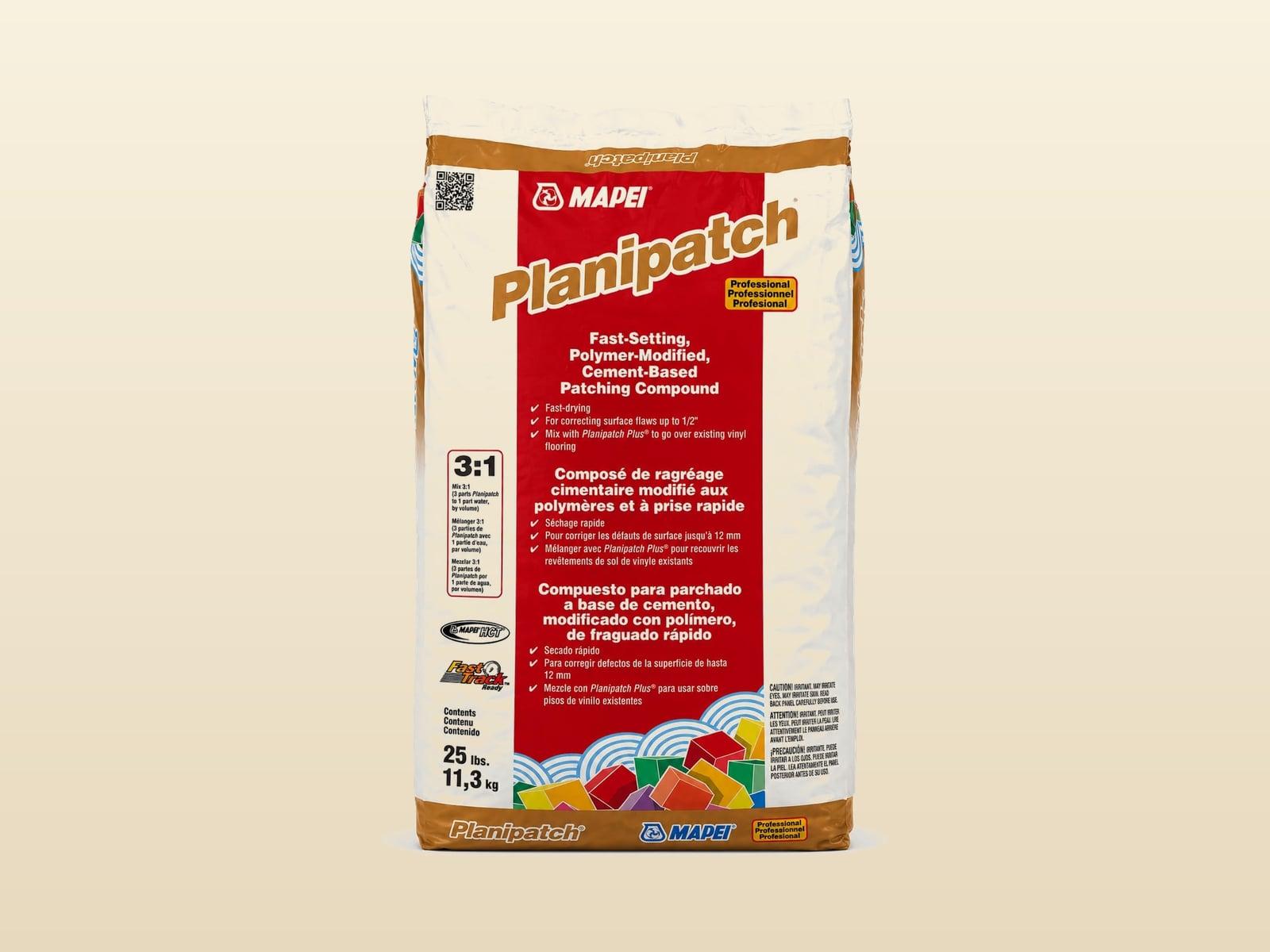
Patch the subfloor. Lay the floor. Same day.
Planipatch is Mapei's fast-setting polymer-modified patching compound for smoothing, patching, and feather-edging interior concrete and approved wood subfloors before flooring goes down. Mixed with water or Planipatch Plus liquid latex, it sets fast, cures self-supporting, and accepts most floor coverings as quickly as one hour after application — a workhorse for the floor-prep day on a tight install schedule.
- ·Feather edge to deep fill
- ·Pot life ~10 minutes
- ·Floor install in ~1 hour
- ·> 3,500 psi at 28 days
Built for the floor-prep day.
Pot life ~10 minutes at 73 °F; smoothed surfaces accept floor covering as fast as one hour after application. Keeps the job moving on tight install schedules.
Patches, levels, and smooths cracks, holes, voids, and depressions — from a true feather edge up through deeper repairs in a single product.
Polymer-modified, cement-based, self-curing. Bonds to concrete, approved wood underlayments, VCT, sheet vinyl, cement terrazzo, and residual cutback adhesive.
Technical data.
Specifications per Mapei's technical data sheet. Tolerances are nominal and subject to manufacturing variance. Always refer to the current Mapei TDS and SDS before installation.
What it goes over.
- ·Concrete · slab-on-grade and suspended
- ·Approved wood underlayments (APA-rated plywood)
- ·VCT (vinyl composition tile)
- ·Sheet vinyl flooring
- ·Cement terrazzo
- ·Properly prepared cutback adhesive residue
What goes on top.
- ·Engineered hardwood
- ·Laminate · luxury vinyl plank / tile (LVP / LVT)
- ·Sheet vinyl & VCT
- ·Carpet (broadloom and tile)
- ·Ceramic and porcelain tile
- ·Cementitious self-leveling underlayments
Confirm the substrate is structurally sound, clean, dry, and free of contaminants that could break the bond — old waxes, sealers, loose paint, and curing compounds in particular. Follow Mapei's published preparation, mixing, and application instructions in the current Planipatch TDS for warranty-compliant work.
Planipatch by the 25 lb bag — pulled at the Tanner Rd yard.
Questions people ask about the floor going over this
How do I install SPC flooring?
SPC installs as a click-lock floating floor over almost any substrate. The sequence: confirm the subfloor is flat (within 3/16″ over 10 feet), acclimate the planks 48 hours, lay an underlayment if needed, click planks together starting at the longest wall, leave a 1/4″ expansion gap at every wall and obstruction, finish with baseboard or quarter round. Most rooms install in a weekend.
Read the answer →Click-lock vs. glue-down flooring — which installation method should I choose?
Click-lock floats over the subfloor with no adhesive — fast to install, easy to remove for repair, but slightly hollow underfoot. Glue-down bonds the floor directly to the subfloor — feels more solid, transmits less sound, lasts longer, but is far harder to repair or replace and requires a perfect substrate. Pick click-lock for fast residential installs; glue-down for commercial and premium residential.
Read the answer →Can I use wood flooring over radiant heat?
Yes, wood flooring works over radiant heat — but with specific rules. Engineered hardwood is strongly preferred over solid; narrower planks (5″ or less) are safer than wide planks; quarter-sawn cuts move less than plain-sawn; floor temperature must stay under 80°F at the wood surface. Install with proper acclimation and a slow heat ramp-up. Solid hardwood is possible but requires careful species selection and width discipline.
Read the answer →How do I acclimate hardwood before installing it?
Acclimate hardwood by stacking the material in the install space — not the garage, not the porch — for 5 to 7 days before installation. The room must be HVAC-conditioned at typical living temperature and humidity. The wood reaches equilibrium moisture content with the room and will not move significantly after install. Skipping this step is the #1 cause of post-install gaps, cupping, and squeaks.
Read the answer →