

TEC Fortane MBA
Polyurethane Adhesive & Moisture BarrierGlue-Down Wood
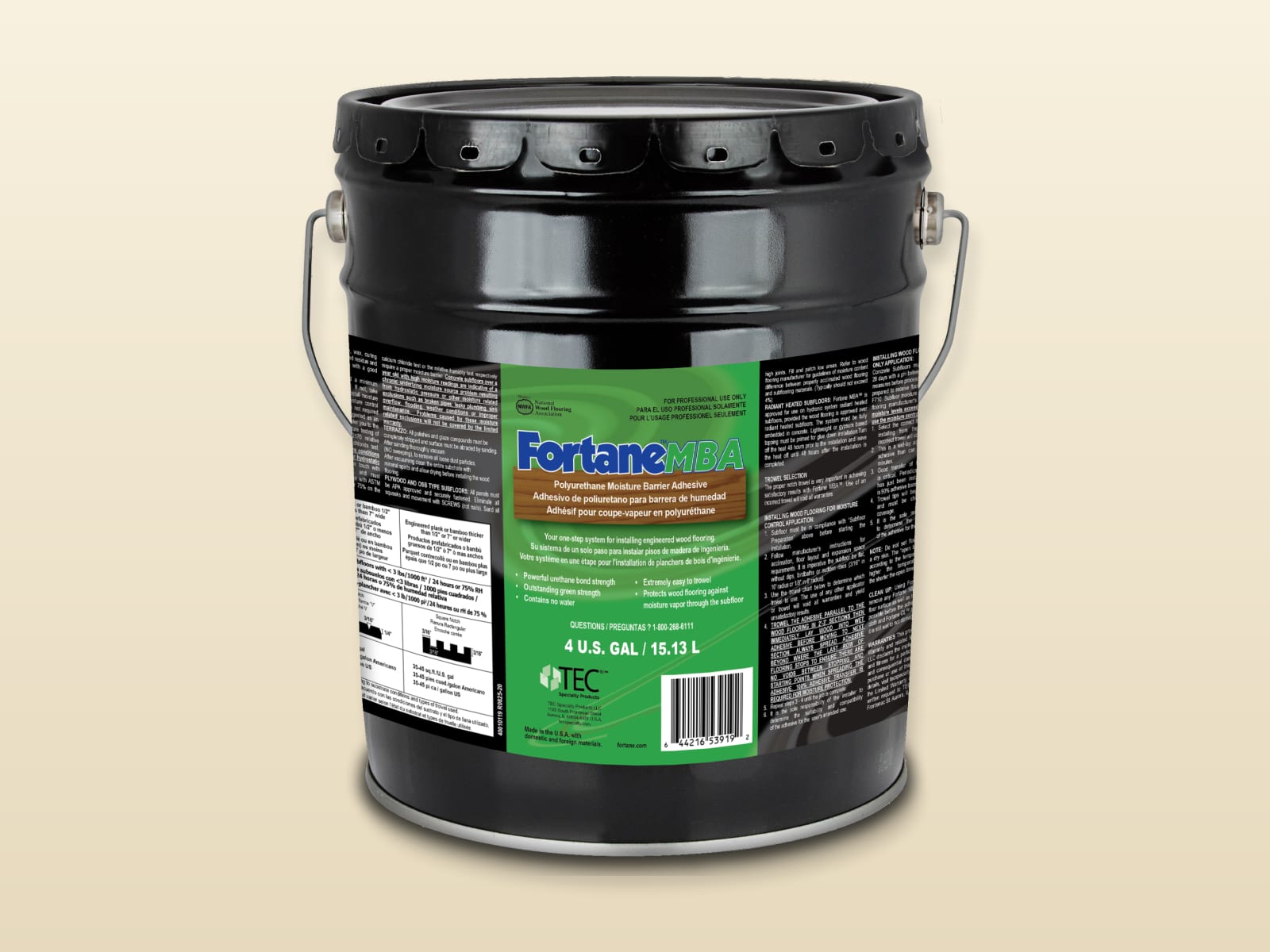
Bond the floor. Block the moisture. One pail.
Fortane MBA is TEC's premium, all-in-one urethane adhesive that bonds glue-down wood flooring while acting as the moisture barrier underneath — when installed as a moisture-control system, no pre-installation moisture testing is required. Water-free chemistry, fast tack, easy trowel. Ideal for engineered, solid, bamboo, and crumb-rubber/cork acoustic underlayments. 4 U.S. gal pails stocked at NW Houston / Tanner Rd.
- ·No moisture testing*
- ·Outstanding green strength
- ·Easy trowel · ridge retention
- ·Water-free urethane
* When the moisture-control installation method is used per the Fortane MBA TDS.
Glue-down wood, made simple.
Premium all-in-one urethane bonds the wood floor AND blocks subfloor moisture vapor — when installed as a moisture-control system, no pre-installation moisture testing is required.
Water-free urethane chemistry delivers outstanding green strength, fast set, and high tack — locks engineered, solid, bamboo, crumb-rubber, and cork acoustic underlayments to the subfloor.
Smooth, user-friendly trowel feel with superior ridge retention — keeps the trowel pattern crisp from spread to plank placement, no slumping in tack-up time.
Technical data.
Specifications per the current TEC Fortane MBA technical data sheet. Always refer to the current TDS and SDS before installation — warranty coverage requires the published method.
What it goes over.
- ·Concrete · slab-on-grade and suspended
- ·Portland cement patch
- ·Terrazzo
- ·Ceramic tile (existing, well-bonded)
- ·APA-approved wood panels
- ·Radiant heat flooring
- ·Cement backer board
What goes on top.
- ·Engineered hardwood (glue-down)
- ·Solid hardwood (glue-down)
- ·Bamboo flooring
- ·Crumb-rubber acoustic underlayment
- ·Cork acoustic underlayment
Verify the substrate is structurally sound, clean, dry, flat, and free of contaminants. The “no moisture testing” benefit only applies when the system is installed per the moisture-control method in the current Fortane MBA TDS. Use the correct trowel and spread rate for the flooring being installed.
Fortane MBA by the 4 U.S. gal pail — pulled at the Tanner Rd yard.
Questions people ask about the floor going over this
How do I install SPC flooring?
SPC installs as a click-lock floating floor over almost any substrate. The sequence: confirm the subfloor is flat (within 3/16″ over 10 feet), acclimate the planks 48 hours, lay an underlayment if needed, click planks together starting at the longest wall, leave a 1/4″ expansion gap at every wall and obstruction, finish with baseboard or quarter round. Most rooms install in a weekend.
Read the answer →Click-lock vs. glue-down flooring — which installation method should I choose?
Click-lock floats over the subfloor with no adhesive — fast to install, easy to remove for repair, but slightly hollow underfoot. Glue-down bonds the floor directly to the subfloor — feels more solid, transmits less sound, lasts longer, but is far harder to repair or replace and requires a perfect substrate. Pick click-lock for fast residential installs; glue-down for commercial and premium residential.
Read the answer →Can I use wood flooring over radiant heat?
Yes, wood flooring works over radiant heat — but with specific rules. Engineered hardwood is strongly preferred over solid; narrower planks (5″ or less) are safer than wide planks; quarter-sawn cuts move less than plain-sawn; floor temperature must stay under 80°F at the wood surface. Install with proper acclimation and a slow heat ramp-up. Solid hardwood is possible but requires careful species selection and width discipline.
Read the answer →How do I acclimate hardwood before installing it?
Acclimate hardwood by stacking the material in the install space — not the garage, not the porch — for 5 to 7 days before installation. The room must be HVAC-conditioned at typical living temperature and humidity. The wood reaches equilibrium moisture content with the room and will not move significantly after install. Skipping this step is the #1 cause of post-install gaps, cupping, and squeaks.
Read the answer →