

TEC Fortane LD
Polyurethane Wood Floor AdhesiveGlue-Down · 95% RH
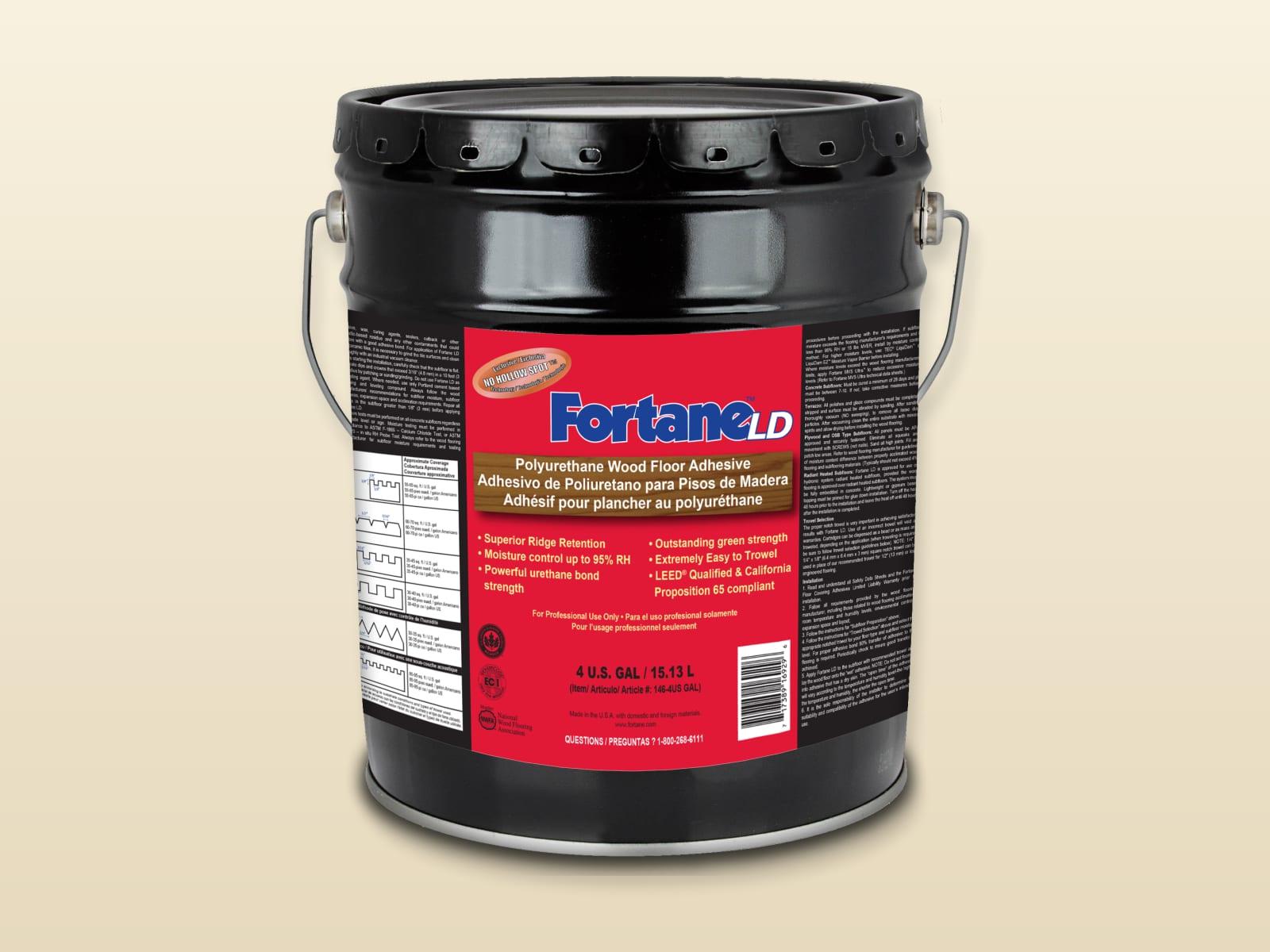
Glue-down wood, locked tight.
Fortane LD is TEC's high-performance, one-component, moisture-cure urethane for glue-down installations on all grades of all types of wood flooring. Built-in moisture control up to 95% RH and 15 lb MVER, powered by NO HOLLOW SPOT™ technology and water-free urethane chemistry that holds ridges and green strength right through plank placement. 4 U.S. gal pails stocked at NW Houston / Tanner Rd.
- ·NO HOLLOW SPOT™
- ·95% RH · 15 lb MVER
- ·NWFA-compliant subfloors
- ·VOC compliant · LEED-qualified
Built for the glue-down job.
Engineered ridge profile and adhesive chemistry that wets out the back of the plank — minimizes hollow spots and the call-backs that follow.
Built-in moisture control up to 95% relative humidity and 15 lb (6.80 kg) MVER — a single product that covers most wood-floor jobs over concrete.
Cures with no plank-separation memory — the bond locks the plank position without telegraphing seasonal movement back into the joint.
Technical data.
Specifications per the current TEC Fortane LD technical data sheet. Always refer to the current TDS and SDS before installation — warranty coverage requires the published method.
What it goes over.
- ·Concrete · slab-on-grade and suspended
- ·APA-rated plywood
- ·OSB
- ·Terrazzo
- ·Existing well-bonded ceramic tile
What goes on top.
- ·Engineered hardwood (all grades)
- ·Solid hardwood (all grades)
- ·Acrylic-impregnated wood flooring
- ·Bamboo flooring
- ·Crumb-rubber underlayment (≤ 5 mm)
- ·Cork underlayment (≤ 5 mm)
At a glance.
- ·NO HOLLOW SPOT™ technology
- ·Extremely easy to trowel
- ·Moisture control up to 95% RH and 15 lb MVER
- ·Superior ridge retention
- ·Contains no water
- ·Powerful urethane bond strength
- ·Outstanding green strength
- ·No plank-separation memory
- ·Durable
- ·VOC compliant
Verify the substrate meets NWFA® standards — structurally sound, clean, dry, and flat per the published flatness tolerances. Run moisture tests per ASTM F2170 (in-situ RH) or ASTM F1869 (calcium chloride) before install. For jobs exceeding 95% RH or 15 lb MVER, pair Fortane LD with Fortane MVS Ultra moisture control system.
Fortane LD by the 4 U.S. gal pail — pulled at the Tanner Rd yard.
Questions people ask about the floor going over this
How do I install SPC flooring?
SPC installs as a click-lock floating floor over almost any substrate. The sequence: confirm the subfloor is flat (within 3/16″ over 10 feet), acclimate the planks 48 hours, lay an underlayment if needed, click planks together starting at the longest wall, leave a 1/4″ expansion gap at every wall and obstruction, finish with baseboard or quarter round. Most rooms install in a weekend.
Read the answer →Click-lock vs. glue-down flooring — which installation method should I choose?
Click-lock floats over the subfloor with no adhesive — fast to install, easy to remove for repair, but slightly hollow underfoot. Glue-down bonds the floor directly to the subfloor — feels more solid, transmits less sound, lasts longer, but is far harder to repair or replace and requires a perfect substrate. Pick click-lock for fast residential installs; glue-down for commercial and premium residential.
Read the answer →Can I use wood flooring over radiant heat?
Yes, wood flooring works over radiant heat — but with specific rules. Engineered hardwood is strongly preferred over solid; narrower planks (5″ or less) are safer than wide planks; quarter-sawn cuts move less than plain-sawn; floor temperature must stay under 80°F at the wood surface. Install with proper acclimation and a slow heat ramp-up. Solid hardwood is possible but requires careful species selection and width discipline.
Read the answer →How do I acclimate hardwood before installing it?
Acclimate hardwood by stacking the material in the install space — not the garage, not the porch — for 5 to 7 days before installation. The room must be HVAC-conditioned at typical living temperature and humidity. The wood reaches equilibrium moisture content with the room and will not move significantly after install. Skipping this step is the #1 cause of post-install gaps, cupping, and squeaks.
Read the answer →