

Unique Wood Products

Milled in Houston · 8070 / 8072

Custom 1-inch
stair tread.

Solid hardwood, made to your length and depth. Choose a species, shape the edge, and specify the returns.
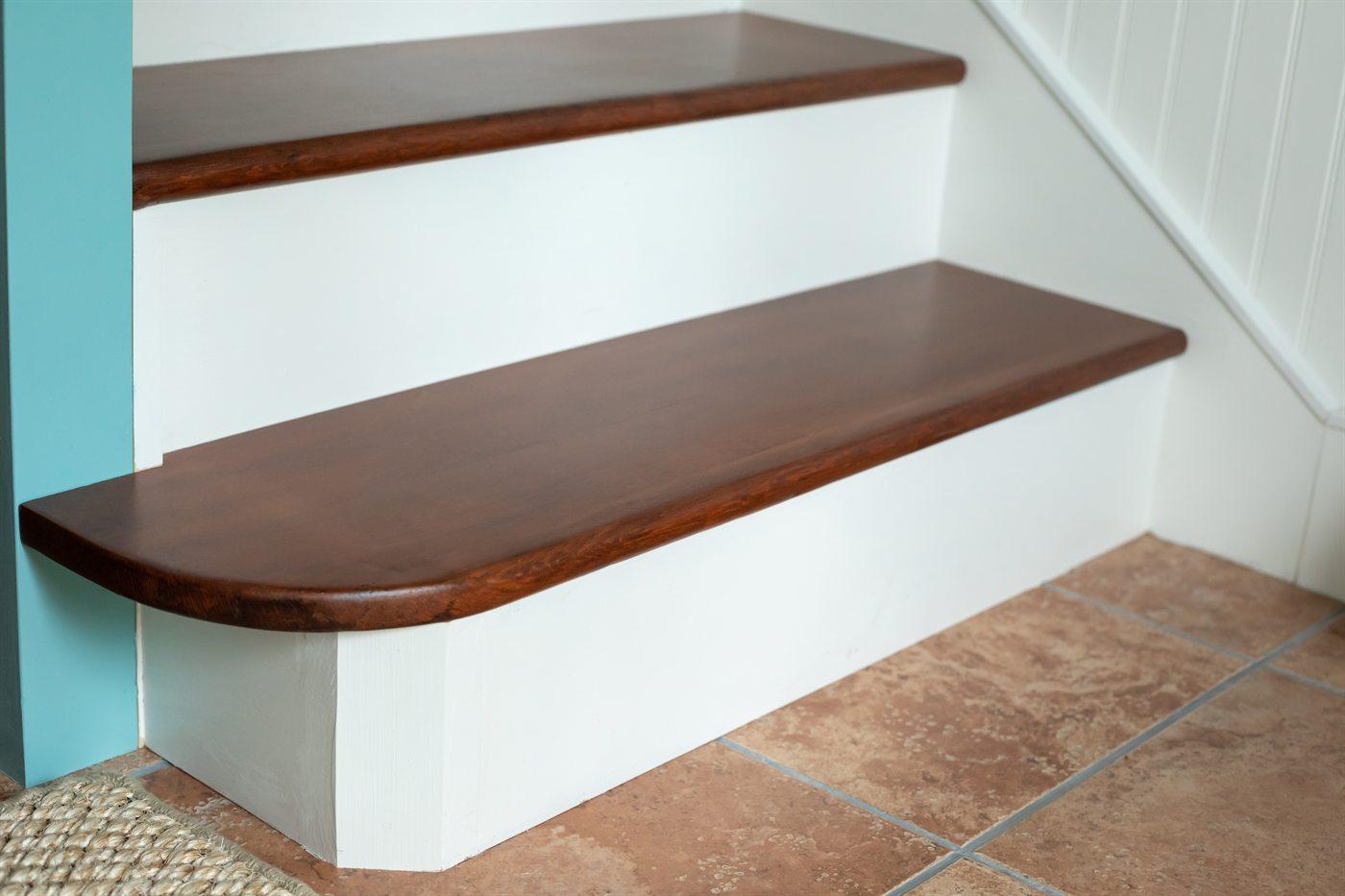
Material reference: rounded wood tread edge above a painted riser
Bullnose detail · Finished reference

Make it yours.

Adjust the options to update the model and planning estimate. All dimensions are in inches.

Loading configurator…

Before you order

One solid tread.
The right details.

This configurator builds a straight, 1-inch-thick tread. Each selection describes the part; your installer confirms how it fits the complete stair.

01 / Material

Solid hardwood. Unfinished.

Edge-glued hardwood, supplied unfinished for your project’s finishing process. Natural grain and color vary; the on-screen wood is a reference.

Compare Red Oak & White Oak
02 / Dimensions

Length × depth × 1 inch.

Length runs across the stair. Depth runs front to back, including the nose. The tool accepts half-inch increments; measure each step and confirm allowances with your installer.

See the measurement guide
03 / Fit

Finish the exposed ends.

Specify a left, right, or double return for ends that face the room. For a curved or irregular stair, discuss a template with UWP before choosing a standard rectangular tread.

Explore custom templating
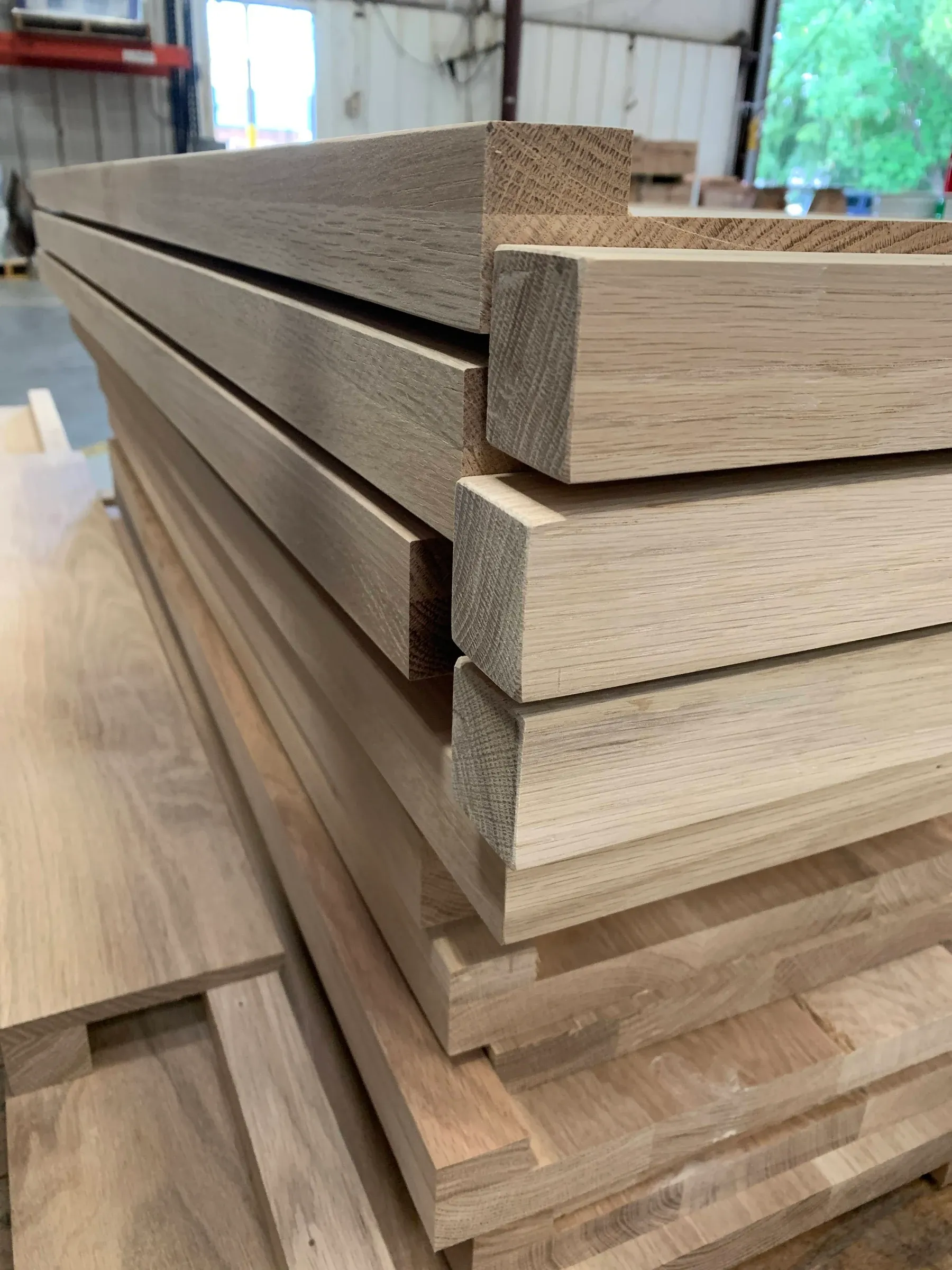
UWP hardwood tread profiles stacked in-house, showing their grain and return details.

Crafted in-house · NW Houston / Tanner Rd

Custom stair work, up close.

Explore photographs of UWP treads, curved details, and custom fabrication.

See our stair work
Where a 1" tread goes

One solid board
from riser to riser.

A straight stair is the same rectangle over and over: 1" solid hardwood sitting on the riser, with the bullnose running 1-1/4" past the riser face. Here is how it sits, and the two numbers you need to order it.

  1. Length, along the nose

    Closed stair: measure skirt board to skirt board. Open side: measure to the outside face of the stringer and add a mitered returned end — the 1-1/4" piece that wraps the nose around the end.

  2. Depth, nose to back

    Riser face to riser face, plus the 1-1/4" nose. Most stairs land at 11-1/2", the stocked depth; deeper runs are cut to order.

  3. Profile, nosing and returns

    Choose bullnose (8070) or eased edge (8072), then set which edges carry the nose and which ends get a return. The price is the same either way.

  4. Open side? Return the end

    Where the stair has no wall on one side, the tread runs 1-1/4" past the stringer and a mitered returned end carries the nose around the corner — no raw end grain shows. Stocked 8070 returned treads are reversible.

How a solid stair tread sits on the stair, and how to measure for oneSection through two steps of a stair showing 1 inch solid treads sitting on the risers with the nose running 1-1/4 inch past the riser face. A plan view below shows one tread with its length measured along the nose, its depth from nose to riser, and a returned end wrapping the nose around the open end.SECTION · THE TREAD ON THE STAIRSolid 1" hardwood on the riser; the bullnose runs 1-1/4" past the riser face.11-1/2" deepnose to riser face1"thick1-1/4" past the riserriserDrawn to scale · 7-1/2" rise · 10-1/4" run · 1-1/4" nosingPLAN · HOW TO MEASURETwo numbers: length along the nose, depth from nose to the riser behind.wall1-1/4" mitered returned endwraps the nose around the open end48" · length along the nose11-1/2"deepClosed stair: measure skirt board to skirt board for the length.Open side: measure to the outside of the stringer, then add the 1-1/4" mitered returned end.Depth: riser face to riser face, plus the 1-1/4" nose. Most stairs land at 11-1/2".THE MITERED RETURNED END · OPEN STAIRCASEOne side of the stair meets a wall; the other is open, so that end shows.The mitered returned end wraps the nose round the open end so no raw board end shows.1 · FROM ABOVEWALL SIDEclosed endcut square,butts the skirtBACKsits against the riser — the upright board of the step aboveFRONT · THE NOSEthe rounded edge you step overoutside face of the stringer(the board the treads sit on)1-1/4"OPEN SIDEno wall — you can seethis end of every stepmitered returned enda 1-1/4" piece with the samenose, fixed to the end so thenose turns the corner andthe raw board end is hidden.It runs 1-1/4" past the back,behind the riser above.2 · STANDING BESIDE THE OPEN SIDEThe same tread seen from the room, looking at its open end.FRONT · THE NOSE← the tread carries on to the wall sideBACK · against the riserOPEN SIDEthe mitered returned endthe same nose, wrappedround the corner — no rawend of the board showingMeasure: wall to the outside face of the open stringer, plus the 1-1/4" returned end.Reversible: flip the tread over and the returned end swaps to the other side.In the configurator: tick Left or Right return under Nosing & Returns.
Top: section through two steps — 1" solid treads on the risers, nose 1-1/4" past the riser face. Middle: one tread in plan with length along the nose and depth to the riser. Bottom: the returned end on an open staircase.
Frequently asked

Before you specify.

A few details to confirm before your configuration becomes an order.

What changes between the 8070 and 8072?
The front-edge profile. The 8070 has a rounded bullnose; the 8072 has an eased edge. Both are solid 1-inch hardwood treads, with the same species and dimensional options. The configurator uses the same base price for either profile.
Which dimensions should I enter?
Enter the overall tread length across the stair and the depth from front to back, including the nose. Measure each step separately. Confirm fit, nosing projection, and any scribing allowance with your installer before ordering.
When do I need a return?
A return carries the front-edge profile around an exposed end. Select the end that is open to the room, or both ends for a stair that is open on both sides. Check the drawing and confirm the left/right orientation before placing the order.
Is this tread suitable for a renovation?
The correct profile depends on what is being removed or retained. Have your installer check finished tread thickness, floor transitions, and riser heights across the whole flight. If you are covering an existing tread, compare the retro-fit tread options before specifying this solid 1-inch tread.
What finish is included?
Treads are supplied unfinished. Arrange sanding, staining, and sealing as part of the project’s finishing process. Grain and color vary naturally; use physical material samples when matching an existing floor.
Does adding a tread to the quote list place an order?
No. The displayed price is a planning estimate. Add the configuration to your quote list, set the required quantity, and send the request when ready. UWP confirms the specification, final price, and lead time before production.

A different stair detail?

Explore stock treads, landings, and other custom shapes.

View all stair treads